Thaipusam: The Sacred Festival of Divine Vel, Spiritual Penance, and Ultimate Surrender to Murugan
In the vast tapestry of Hindu festivals, Thaipusam stands apart, not as a celebration of joy alone, but as a sacred covenant between the devotee and the Divine. This is not a festival where one simply lights lamps, distributes sweets, or offers flowers from a distance. Thaipusam demands everything: your body, your mind, your ego, and your very sense of self.
For Tamil devotees across the world, Thaipusam represents the pinnacle of bhakti, not the gentle, melodious devotion of temple songs, but the fierce, uncompromising devotion that burns away impurities like fire purifies gold. It commemorates that sacred moment when Goddess Parvati, the Divine Mother herself, bestowed the radiant Vel (divine spear) upon her son Bhagawan Murugan to destroy the forces of adharma and restore cosmic balance.
But Thaipusam is not merely about celebrating a mythological event. It is about reliving that divine moment within ourselves about receiving the Vel of wisdom into our own consciousness and using it to pierce through our ignorance, ego, and attachments.
What is Thaipusam?Understanding the Sacred Timing
The Celestial Alignment
Thaipusam occurs when the full moon (Pournami) converges with Pusam nakshatra (Pushya star) during the Tamil month of Thai (January-February). This is not a random date chosen by humans but a divinely ordained celestial moment recognized by our ancestors through their profound understanding of Jyotisha (Vedic astrology).
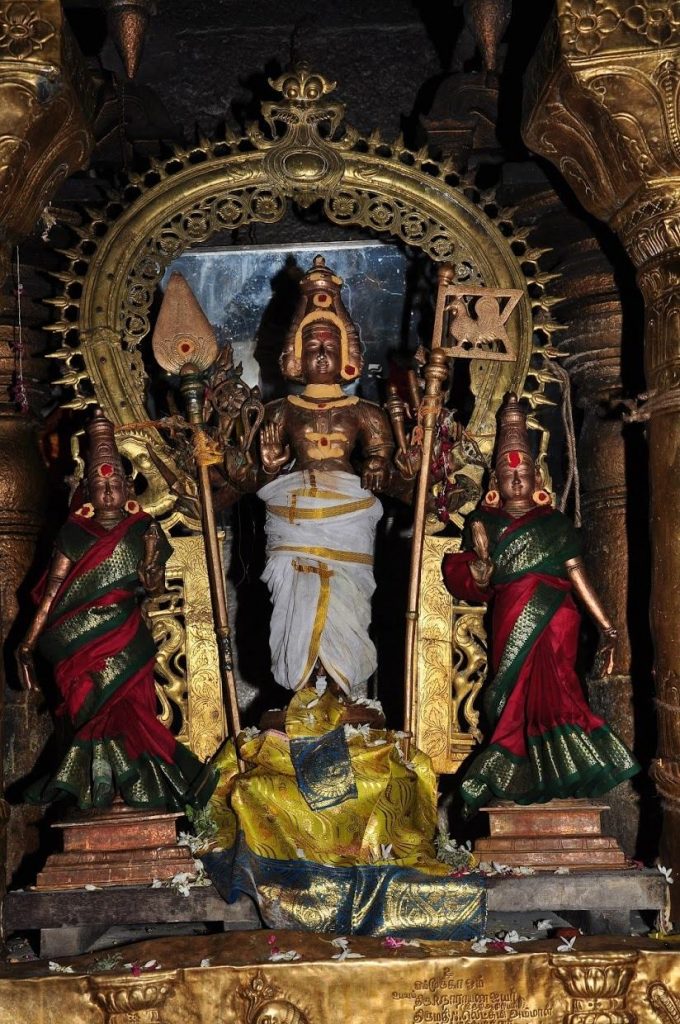
The Pusam nakshatra, governed by Brihaspati (Jupiter), is considered the most auspicious nakshatra for spiritual practices, vow-taking, and self-discipline. Ancient scriptures describe Pushya as the “nourisher,” the star that feeds spiritual growth through restraint and righteousness. When this powerful nakshatra aligns with the full moon—a time when our minds and emotions naturally intensify, the resulting energy becomes exceptionally potent for tapas (austerity) and inner purification.
Why This Day Is Different
Our ancestors, in their infinite wisdom, understood that certain days carry specific spiritual vibrations. Thaipusam is such a day, when the cosmic forces naturally support those who seek to transcend their limitations. The divine energies that assisted Murugan in his victory over the asuras become accessible to every sincere devotee who approaches this day with proper preparation and genuine intent.
The Divine Deities of Thaipusam
Bhawagan Murugan: The Eternal Youth and Divine Warrior
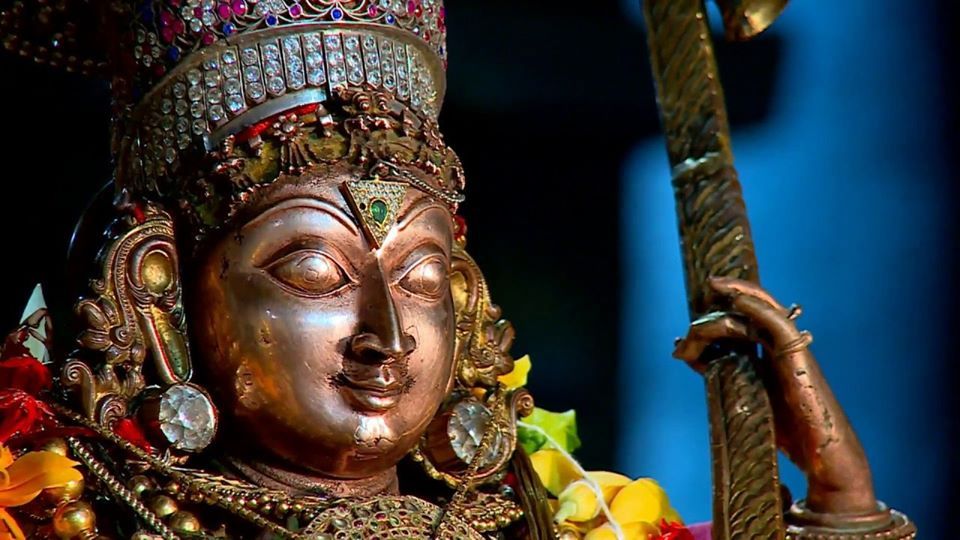
Thaipusam is primarily dedicated to Murugan, known by countless sacred names across India and Southeast Asia – Skanda, Subramanya, Kartikeya, Kumara, Shanmukha, Dhandayuthapani. Each name reveals a different aspect of his divine nature.
But who is Murugan truly? He is not merely a warrior deity who defeated demons in ancient times. Murugan represents:
- Divine Wisdom in Youth: Unlike other deities who are depicted as elderly sages, Murugan embodies the truth that spiritual wisdom is not about age but about consciousness
- The Destroyer of Ignorance: His Vel doesn’t just pierce demons; it pierces through avidya (ignorance), the root cause of all suffering
- The Perfect Brahmachari: His eternal youth and celibacy represent complete mastery over desires and attachments
- The Supreme Guru: He is the only deity who taught even his own father, Lord Shiva, the meaning of the Pranava mantra “Om”
When we worship Murugan during Thaipusam, we are not worshipping an external deity alone. We are invoking that aspect of divine consciousness within ourselves that can pierce through our own inner demons – anger, jealousy, pride, attachment, and fear.
Goddess Parvati: The Divine Mother and Source of Shakti
No understanding of Thaipusam is complete without honoring Goddess Parvati, who bestowed the Vel upon Murugan. In the profound Shaiva philosophy, Parvati represents Shakti, the dynamic, conscious force that transforms potential into manifestation.
Shiva represents pure consciousness, eternal and unchanging. But consciousness without Shakti remains dormant, inactive. It is Shakti that enables consciousness to act, to create, to transform. When Parvati gave Murugan the Vel, she was essentially empowering divine wisdom (jnana) to become divine action (karma).
This teaches us a crucial lesson: knowledge alone is insufficient. Spiritual wisdom must be empowered by devotion and discipline to become transformative. The Vel represents this perfect union of jnana and shakti.
The Sacred Origin and Timeless Significance
The Mythological Foundation: Birth of the Divine Commander
The Skanda Purana narrate this magnificent story in elaborate detail:
Once, three powerful asuras, Surapadman, Tarakasura, and Singamukha, performed severe tapas and obtained extraordinary boons from Brahma. These boons made them virtually invincible to all existing divine forces. Drunk on their power, they unleashed tyranny across all three worlds, tormenting devas, rishis, and righteous beings alike.
The cosmic balance tilted dangerously. Dharma itself seemed under threat. The devas, led by Indra, approached Lord Shiva for intervention. But the boons were ironclad – none of the existing deities could defeat these asuras.
Understanding the gravity of the situation, Maha Shiva opened his third eye. Six divine sparks emerged from his consciousness, each blazing with infinite power. These sparks were carried by Agni (fire) and placed in the Saravana Poigai (a sacred pond) where they were nurtured by the Krittikas (Pleiades constellation, represented as six mothers).
Goddess Parvati, the Divine Mother, then united these six divine sparks into one magnificent form—Shanmukha, the six-faced child. This was Murugan, born specifically to restore dharma.
But birth alone doesn’t make a warrior. Murugan needed the ultimate weapon. Goddess Parvati, in her infinite compassion and wisdom, manifested the Vel – a spear that wasn’t merely metal and blade, but concentrated divine consciousness shaped into a weapon. This Vel represented pure jnana (knowledge) capable of destroying avidya (ignorance) in all its forms.
The Deeper Meaning: Transformation, Not Destruction
When Murugan confronted Surapadman, the demon initially refused to surrender. A fierce battle ensued. Finally, Murugan’s Vel pierced Surapadman, but something extraordinary happened, instead of simply dying, Surapadman transformed.
The demon’s ego dissolved, and from his being emerged two creatures: a peacock (mayil) and a rooster (seval). Murugan accepted the peacock as his vahana (vehicle) and the rooster as his banner symbol.
This is profoundly significant. It teaches us that even our deepest negativities, pride, anger, lust, greed – when confronted by true spiritual wisdom, don’t simply disappear. They transform. They become vehicles for divine expression. The very ego that once separated us from God becomes, when purified, the vehicle that carries us toward God.
Historical Evolution: From Hill Deity to Universal Lord
The earliest Tamil Sangam literature (2nd century BCE to 3rd century CE) describes Murugan as Seyon, the hill deity worshipped by ancient Tamil people through dance, music, and bloodless sacrifice. These early devotees practiced intense austerities in the hills, communicating with the divine through verinadu (possession dance) and sacred offerings.
Over centuries, as temple culture systematized religious practices, these organic expressions of devotion evolved into structured festivals. Yet Thaipusam retained its essential character—it remained a vow-centered observance (vrata), not a courtly celebration or royal festival.
When Tamil people migrated to Malaysia, Singapore, Sri Lanka, and other Southeast Asian regions, they carried Thaipusam with them. Remarkably, diaspora communities often observe stricter discipline and more intense practices than contemporary urban celebrations in India. This demonstrates that Thaipusam’s power lies not in geography or institutions, but in pure faith and individual commitment.
Vedic Astrological Significance: The Science of Sacred Timing
In Jyotish (Vedic astrology), Pushya nakshatra is considered the king of nakshatras for spiritual activities. It is ruled by Brihaspati (Jupiter), the guru of the devas, and symbolizes:
- Nourishment through Discipline: Spiritual growth that comes from restraint, not indulgence
- Dharmic Strength: The capacity to maintain righteousness under pressure
- Inner Maturity: Wisdom that emerges through self-control and sacrifice
The full moon (Pournami) represents the complete illumination of consciousness. It amplifies all mental and emotional states both positive and negative. This is why Thaipusam is so powerful: the alignment of Pushya’s disciplining energy with the full moon’s amplifying energy creates the perfect spiritual storm for inner transformation.
Astrologically, Murugan is associated with Mars (Mangal) but Mars refined and purified by wisdom. While raw Mars energy manifests as aggression, impulsiveness, and conflict, Murugan-energy represents Mars transformed: courage without cruelty, strength without violence, passion channeled into purpose.
Thaipusam thus represents the alchemical process of transforming our base instincts into spiritual gold.
Sacred Customs, Traditions, and Transformative Rituals
Preparation: The Forty-Day Mandala Vrata
Thaipusam is not a single-day event that begins on the festival morning. True devotees understand that the real festival is the preparation, a minimum forty-day period of sustained discipline called mandala vrata.
During this sacred period, devotees observe:
- Brahmacharya: Complete celibacy in thought, word, and deed
- Satvik Ahara: Strictly vegetarian diet, avoiding onion, garlic, and all stimulating foods
- Sensory Restraint: Minimal entertainment, limited speech, no negative media consumption
- Daily Sadhana: Morning abhishekam (ritual bathing of deity), prolonged mantra japa, meditation
- Physical Austerity: Sleeping on the floor, bathing in cold water, walking barefoot
- Mental Discipline: Constant awareness of thoughts, immediate correction of negative patterns
This is not mere religious ritual. This is practical spiritual science. By restraining the body and senses for an extended period, we create the inner capacity to handle the intense energy that floods consciousness on Thaipusam day itself.
The Kavadi: Sacred Burden That Liberates
The word “kavadi” means “burden” in Tamil. But this is no ordinary burden, it is the conscious acceptance of suffering as a path to liberation.
Types of Kavadi:
- Paal Kavadi (Milk Kavadi): Two pots of milk suspended on a decorated pole, carried on shoulders
- Alagu Kavadi: Elaborately decorated semicircular frames attached to the body
- Vel Kavadi: Carrying the sacred vel itself
- Body Kavadi: The most intense form, involving multiple piercings with vel-shaped skewers
Why carry kavadi? The deeper philosophy is profound:
We all carry burdens—karmic debts, unfulfilled desires, guilt, regret, attachment. These invisible burdens weigh us down constantly. Through kavadi, we make the invisible visible. We consciously accept physical burden to represent and ultimately release the psychological and spiritual burdens we carry unconsciously.
Piercing: The Sacred Science of Transcendence
For outsiders, the sight of devotees with tongues, cheeks, and bodies pierced might seem extreme or even barbaric. But for the sincere devotee who has prepared properly, piercing represents multiple profound truths:
Tongue Piercing: Enforces sacred silence. Speech is humanity’s greatest power and greatest curse. By piercing the tongue, the devotee voluntarily surrenders the capacity for speech, entering into communion with the Divine beyond words.
Cheek Piercing: Represents endurance of suffering without complaint. The vel that pierces symbolizes divine wisdom piercing through our ego-driven complaints and victim consciousness.
Body Piercing: Demonstrates the impermanence of physical pain when consciousness transcends identification with the body. In deep meditative states, pain transforms into sensation without suffering.
Remarkably, devotees who have maintained proper vrata report minimal bleeding and rapid healing. This isn’t magic, it’s the result of sustained mental discipline that grants genuine control over autonomous bodily functions.
Regional Expressions of Universal Truth
In Tamil Nadu: Thaipusam reaches its peak intensity at hill temples. Devotees climb barefoot for kilometers, often through night, reaching the summit for dawn darshan. The Palani temple witnesses hundreds of thousands of kavadi-bearers annually.
In Kerala: Celebrated as Thaipooyam with rhythmic kavadi dance, a beautiful fusion of devotion and art where the kavadi becomes an extension of the dancer’s spiritual ecstasy.
In Andhra and Karnataka: Observed primarily within Subramanya temples through elaborate abhishekams, archanas, and individual vratas, with less emphasis on public processions.
In Southeast Asia: Malaysia’s Batu Caves hosts the world’s largest Thaipusam gathering outside India, where the practice maintains extraordinary purity and intensity, demonstrating that true devotion transcends geography.
Complete Puja Vidhi: Step-by-Step Sacred Procedure
Pre-Dawn Preparation (Brahma Muhurta)
1. Purification Bath: Rise before sunrise (ideally during brahma muhurta, 3:30-5:30 AM). Bathe in cold water while chanting Murugan mantras.
2. Sacred Attire: Wear fresh yellow or saffron clothing. Yellow represents spiritual energy, knowledge, and Murugan’s divine radiance.
3. Vibhuti and Kumkum: Apply sacred ash (vibhuti) on forehead, arms, and chest. Vibhuti represents the impermanence of the physical body and reminds us of our true immortal nature.
Temple Procedure
4. Sankalpa: Before beginning the procession or carrying kavadi, take a solemn vow (sankalpa) stating your intention clearly.
5. Kavadi Preparation: The kavadi is decorated with flowers, peacock feathers, and sacred symbols. Milk for abhishekam is placed in pots.
6. The Journey: Walk barefoot to the temple, maintaining silence or chanting “Om Saravanabhavaya Namah” continuously. Each step is a prayer, each breath a meditation.
7. Temple Entry: As you approach the sanctum, the energy intensifies. The kavadi that felt heavy becomes light. The pain that seemed unbearable transforms into bliss.
8. Abhishekam: Offer the milk carried in kavadi for Murugan’s abhishekam. This represents offering the fruits of your penance directly to the Divine.
9. Vel Archana: Perform special worship to the Vel with red flowers (representing Shakti) and sandalwood paste (representing cooling wisdom).
10. Pradakshina: Circumambulate the sanctum, ideally 6 times (representing Murugan’s six faces), in complete silence.
11. Darshan: Receive darshan that sacred moment when your eyes meet the deity’s eyes, when your consciousness merges with divine consciousness, when time stops.
12. Pierce Removal: Only after darshan are piercings removed. Devotees report that removal is often painless when done in the deity’s presence.
13. Prasad: Break your fast with prasad and immediately feed other devotees, emphasizing that personal blessings must be shared.
The Sacred Story of Kavadi: Idumban’s Eternal Boon
The kavadi tradition originates from Idumban, a devoted disciple of the great Sage Agastya. When Agastya wished to shift two sacred hills to South India, he instructed Idumban to carry them using a kavadi, a pole with the hills suspended on either end.
Idumban, with extraordinary devotion and strength, carried these mountains. When he reached Palani, he placed the kavadi down to rest. When he attempted to lift it again, it wouldn’t budge. Young Murugan had seated himself on one of the hills.
Not recognizing the divine child, Idumban demanded he move. Murugan refused. A battle ensued. Despite Idumban’s strength, Murugan defeated him and even took his life. But immediately, moved by Idumban’s pure devotion, Murugan restored him to life.
Recognizing the Bhagwan, Idumban surrendered completely and requested a boon: “Anyone who carries kavadi in your honor must receive your blessings first, and I shall forever guard this sacred hill.”
Murugan granted this wish. This is why devotees who carry kavadi with sincere devotion never fail to receive grace, they carry not just a physical structure, but the promise of Idumban and the blessing of Murugan himself.
How to Observe Thaipusam: Practical Guidance for Devotees
For Those Who Can Perform Full Traditional Observance:
- Begin your mandala vrata at least 40 days before Thaipusam
- Maintain strict vegetarian diet, avoiding all tamasic foods
- Practice brahmacharya completely
- Wake daily at brahma muhurta for sadhana
- Reduce speech progressively, practicing silence for longer periods
- Take a specific, meaningful vow aligned with your spiritual growth
- On Thaipusam, carry kavadi with complete devotion
- Maintain your discipline for at least 48 days total
For Those With Limitations (Family, Work, Health):
Remember: Sincerity matters more than external display. Even without kavadi or piercings, you can observe Thaipusam authentically:
- Observe strict fast on Thaipusam day
- Perform extended Murugan puja at home
- Chant “Om Saravanabhavaya Namah” 1008 times
- Read or listen to Kanda Puranam or Thiruppugazh
- Practice complete silence from dawn to evening
- Feed other devotees or the needy
- Donate to Murugan temples
For Complete Beginners:
- Visit a Murugan temple on Thaipusam
- Observe the devotees with respect and reverence
- Offer simple worship with flowers and fruits
- Learn the basic Murugan mantras
- Study the philosophy behind the festival
- Commit to deeper observation next year
Profound Benefits: Physical, Mental, and Spiritual Transformation
Spiritual Benefits
1. Karmic Purification: The intense tapas burns through accumulated karmic residues, creating genuine spiritual progress.
2. Grace Attraction: When you willingly accept suffering for the Divine, Divine grace flows naturally toward you.
3. Ego Dissolution: Nothing destroys ego faster than voluntarily accepting burden and pain while maintaining silence and humility.
4. Inner Strength: The willpower developed during the vrata period becomes permanent mental strength.
Mental and Emotional Benefits
1. Emotional Stability: Prolonged discipline creates genuine emotional maturity, reducing impulsive reactions.
2. Mental Clarity: Sensory restraint and silence clear mental clutter, enhancing decision-making capacity.
3. Anxiety Reduction: The surrender to Divine will through vrata releases the constant burden of trying to control everything.
4. Enhanced Focus: The concentration developed through mantra japa and meditation improves all areas of life.
Social and Relational Benefits
1. Humility Development: Seeing hundreds of devotees all engaged in the same struggle dissolves individual pride.
2. Community Connection: Shared suffering and shared devotion create bonds deeper than mere social relationships.
3. Service Orientation: The tradition of feeding others after receiving prasad instills permanent generosity.
Famous Murugan Temples for Thaipusam Celebration
The Arupadai Veedu (Six Abodes)
1. Palani Dhandayuthapani Temple (Tamil Nadu): The spiritual nucleus of Thaipusam observance, where Murugan stands as an eternal ascetic.
2. Tiruchendur Subramanya Temple (Tamil Nadu): Where Murugan defeated Surapadman, emphasizing the warrior aspect.
3. Swamimalai Swaminatha Temple (Tamil Nadu): Where young Murugan taught the meaning of “Om” to Shiva himself.
4. Tiruttani Subramanya Temple (Tamil Nadu): Where Murugan married Devasena, representing divine union.
5. Pazhamudircholai Temple (Tamil Nadu): The divine garden where Murugan resides with Valli.
6. Thiruthani Murugan Temple (Tamil Nadu): Where Murugan’s grandeur as supreme commander shines.
International Significance
Batu Caves (Malaysia): Hosts over 1.5 million devotees annually, making it the largest Thaipusam gathering globally outside India.
Frequently Asked Questions (FAQ)
1. What is the main significance of Thaipusam?
Thaipusam commemorates the day Goddess Parvati gave the divine Vel to Murugan to destroy evil forces. Spiritually, it represents receiving divine wisdom to destroy our inner enemies, ignorance, ego, and attachments.
2. Why do devotees pierce their bodies during Thaipusam?
Piercing represents transcending physical pain through spiritual discipline. When properly prepared through vrata, devotees experience minimal bleeding and pain, demonstrating mind’s mastery over matter. Tongue piercing enforces sacred silence, while body piercing symbolizes the impermanence of suffering.
3. Is it necessary to carry kavadi to observe Thaipusam?
Depends. While kavadi is the traditional expression, sincere vrata (vow), fasting, silence, and devoted worship are equally valid. What matters is internal purity and genuine devotion, not external display.
4. How long should one prepare before Thaipusam?
Traditional preparation involves a minimum 40-48 day mandala vrata involving celibacy, vegetarian diet, daily worship, and sensory restraint. However, even shorter periods of sincere preparation carry spiritual benefit.
5. Can women observe Thaipusam with kavadi?
Yes, absolutely. Many women carry kavadi and undergo piercing. During menstruation, women may adjust their observance according to personal comfort and traditional practices, but their devotion is equally valued.
6. What is the most important mantra for Thaipusam?
“Om Saravanabhavaya Namah” is the primary mantra. “Saravanabhava” refers to Murugan’s birth in the Saravana (reed forest). Continuous chanting of this mantra throughout the vrata period is highly recommended.
7. Do piercings really not bleed when done correctly?
Devotees who maintain strict vrata report minimal bleeding and rapid healing. This demonstrates the profound connection between mental discipline and physical response. However, modern medical hygiene should always be maintained.
8. What should one eat during Thaipusam vrata?
Strictly satvik vegetarian food: rice, lentils, vegetables (excluding onion and garlic), fruits, milk, and honey. Avoid tamasic (heavy, dulling) and rajasic (stimulating) foods completely.
9. Can Thaipusam be observed at home if I cannot go to a temple?
Yes. Perform extended puja at home, maintain fast, practice silence, chant mantras, and read sacred texts. Sincere home observance is spiritually valid.
10. What is the difference between Thaipusam and other Hindu festivals?
Most Hindu festivals celebrate divine joy, victory, or union. Thaipusam uniquely emphasizes tapas (austerity), self-sacrifice, and transformation through conscious suffering. It is sadhana more than celebration.
The Eternal Call of the Vel
Thaipusam is not a festival for the casual observer. It is a call, a divine summons to those who are ready to move beyond comfort-based spirituality into transformation-based sadhana.
In our modern world of instant gratification, where even spirituality is often reduced to feel-good practices and positive affirmations, Thaipusam stands as a fierce reminder of ancient truth: real transformation requires real sacrifice. Not the sacrifice of external possessions, but the sacrifice of internal attachments. Not the surrender of material wealth, but the surrender of ego itself.
When the Vel descends whether as the physical spear piercing the body or as spiritual wisdom piercing the consciousness something fundamental shifts. The seeker who was searching outside realizes that the Divine has always been within. The devotee who was begging for grace realizes they are already held in infinite grace. The warrior who was fighting external enemies realizes the only true battle is internal.
Thaipusam is not a ritual. It is a reckoning. Not a celebration. A transformation. Not a tradition. A transmission of eternal wisdom from generation to generation.
May the Divine Vel of Lord Murugan pierce through your ignorance. May the grace of Goddess Parvati empower your spiritual journey. May your kavadi whether physical or metaphorical become the vehicle of your liberation.
Om Saravanabhavaya Namah
Help Us Keep This Guide Accurate
At Temple Connect, we regularly update our content to ensure you receive the most relevant and authentic information. If you’d like to suggest improvements, share regional traditions, or report any updates, we’d love to hear from you at connect@templeconnect.com