Meena Sankranti: Complete Guide to the Final Solar Transition of the Hindu Year
Meena Sankranti marks the sacred moment when Surya Dev enters Meena Rashi (Pisces), signalling the final solar month before the Hindu new year begins at Mesha Sankranti. This transition, occurring around March each year, carries deep astrological and spiritual weight. Devotees observe Punya snana, Surya puja, daan, and vrat to purify accumulated karma and step into the new solar cycle with renewed dharmic resolve.
WHAT IS MEENA SANKRANTI
Meaning and Context of Meena Sankranti
In Sanatana Dharma, time is not merely a sequence of days and nights. It is a living, breathing divine order, a cosmic rhythm maintained by Surya Dev himself. Every time the Sun transitions from one rashi to the next, that moment is called a Sankranti. And when Surya moves from Kumbha Rashi into Meena Rashi, that sacred crossing is known as Meena Sankranti.
This is not simply an astronomical event recorded in panchangs. It is a tirtha in time – a sacred ford where the spiritually attentive soul can cross from one cycle of karma into a fresher, lighter beginning. The devout do not let this moment pass in sleep.
Position in the Hindu Solar Calendar
The Hindu solar calendar moves through twelve rashis, beginning with Mesha and concluding with Meena. Meena Sankranti therefore occupies the final position in this twelve-month solar cycle. It is the Sun’s last journey before He rises into the fire of Mesha Rashi and initiates a new year.
This position gives Meena Sankranti a unique spiritual character – it is a time of completion, reflection, and conscious release. What was left unfinished, what was carried as burden, what was accumulated as sin through speech, thought, or deed, all of it finds a window of release in the punya kala of Meena Sankranti.
Dharma Shastras and traditional panchang scholarship alike place Sankranti days in the highest tier of punya tithis. Meena Sankranti, being the last of the twelve, carries the cumulative weight and grace of an entire solar year’s close.
Astrologically, Meena Rashi is ruled by Guru (Jupiter), the planet of wisdom, compassion, and moksha. When Surya, the significator of atman, self-radiance, and dharma, travels through this sign, the inner life of the devotee is drawn toward reflection, surrender, and spiritual completion.
DATE, PANCHANG AND MUHURAT
Astronomical Event
Meena Sankranti is determined by one factor alone: the exact moment Surya enters Meena Rashi in the sidereal zodiac used in Vedic astronomy and Jyotish. This solar ingress, calculated to the precise minute by traditional panchang scholars, marks the beginning of the Meena solar month and the final phase of the Hindu solar year.
Because Sankranti is a solar event and not governed by the lunar calendar, its timing changes each year. It generally falls around the month of March in the Gregorian calendar but must be confirmed through a regional panchang each time.
Panchang Considerations
While the Sankranti moment itself is solar, traditional panchang elements also inform the overall character of the observance. These include:
- Tithi : the lunar day active during the transition period
- Nakshatra : the lunar constellation governing the moment of sankramana
- Yoga : the combined angular relationship of Sun and Moon
- Karana : the half-tithi division used to determine fine ritual timing
- Paksha : whether the period falls in the bright or dark fortnight
Priests and panchang scholars use these elements to advise devotees on the most suitable moments for snana, arghya, and daan.
Auspicious Time for Meena Sankranti Rituals – Punya Kala and Maha Punya Kala
The most sacred window for observances is the Punya Kala, the auspicious period that begins shortly after the exact moment of Sankranti. Within this, an even more powerful sub-window called the Maha Punya Kala is identified, usually spanning the first two hours of the morning on the day of observance.
During Punya Kala, devotees traditionally perform:
- Holy river snana
- Surya Arghya with mantras
- Puja and mantra japa
- Acts of charity and daan
If the Sankranti moment falls at night, most traditions recommend completing the rituals during the following sunrise period. Because these timings vary by geography and year, devotees should always consult a regional panchang or trusted temple calendar for the precise muhurat.
ASTROLOGICAL SIGNIFICANCE OF MEENA SANKRANTI
Importance of Meena Rashi in Jyotish
In Vedic astrology, Meena is the twelfth rashi of the zodiac, a dual, water sign ruled by Brihaspati, Guru, the planet of dharma, generosity, and spiritual wisdom. Meena is associated with the dissolving of boundaries, the turning inward of consciousness, and the preparing of the soul for liberation. It is the rashi of samapti – completion.
When Surya transits through this sign, the natural cosmic emphasis shifts from outward activity toward introspection, surrender, and karmic settlement. This is not a time for new ambitions. It is a time for forgiveness, gratitude, and the clearing of old accounts.
Planetary Influence During the Meena Solar Month
Surya in Meena operates in a sign owned by Guru, creating a dignified relationship between the two great luminaries of dharma – the Sun and Jupiter. Traditional Jyotish commentary holds that this combination elevates the fruits of satkarma performed during this period.
Charitable acts, japa, vrata, service to elders, and feeding of the hungry are all regarded as yielding multiplied results when performed while Surya traverses Meena Rashi. Astrologers also note that this transit activates different houses in a native’s birth chart, making personal consultation with a qualified Jyotishi worthwhile for those navigating significant life transitions.
Astrological Benefits of Observing Meena Sankranti
- Karmic purification through sincere snana and sankalpa
- Strengthening of Surya in the individual horoscope through arghya and Surya mantra
- Relief from Surya-related doshas through charity and upasana
- Clarity of dharmic direction for the coming year
- Grace for ancestors through pitru-tarpan performed during punya kala
Astrological Summary
Jyotish is not merely a predictive science – it is a map of dharma. Meena Sankranti, at the close of the solar year, is the cosmos extending an open hand to every soul: come, release what you have been carrying, receive light, and walk forward. Those who observe it with sincerity find that this cosmic transition mirrors the most important transition of all – the one happening within.
RELIGIOUS SIGNIFICANCE IN HINDU DHARMA
Scriptural and Traditional References
Classical Dharma Shastra traditions uniformly recognize Sankranti days as among the highest punya tithis in the Hindu calendar. The Puranic principle that bathing, charity, and worship performed at the exact moment of solar sankramana yields fruit many thousand times greater than the same acts on ordinary days applies directly to Meena Sankranti.
The themes of Meena Sankranti – sacred waters, compassion, ancestral liberation, and surrender to Surya are deeply woven into the fabric of Vedic and Puranic literature, even if the festival itself is observed more as a living tradition than a single scripture-bound ceremony.
Theological Meaning
In Sanatana Dharma, the Sun is not merely a celestial object. Surya is the visible face of the Brahman – Pratyaksha Devata, the one God you can see with your open eyes every morning. His movement through the rashis is the heartbeat of cosmic time, and to observe each Sankranti with devotion is to align one’s own rhythm with that cosmic heartbeat.
Meena Sankranti carries the theology of endings that make new beginnings possible. Just as the river empties into the ocean before the clouds gather and rain falls again to fill the streams, so the solar year empties itself at Meena before the fire of Mesha renews creation.
Significance Across Sampradayas
Shaiva tradition emphasises Shiva as the lord of sacred rivers and the granter of liberation. Pitru-tarpan, Ganga-snana, and Rudra-parayana are particularly meaningful for Shaiva devotees on this day.
Vaishnava tradition incorporates Satyanarayan Puja and Vishnu Sahasranama recitation, seeking Hari’s blessing for a smooth transition into the new solar year and peace for the family lineage.
Smarta tradition observes Meena Sankranti as a day for Surya-upasana, Gayatri japa, and comprehensive griha-puja that honours all devatas as manifestations of the one Brahman.
WHICH DEITY IS WORSHIPPED ON MEENA SANKRANTI
Primary Deity : Surya Dev
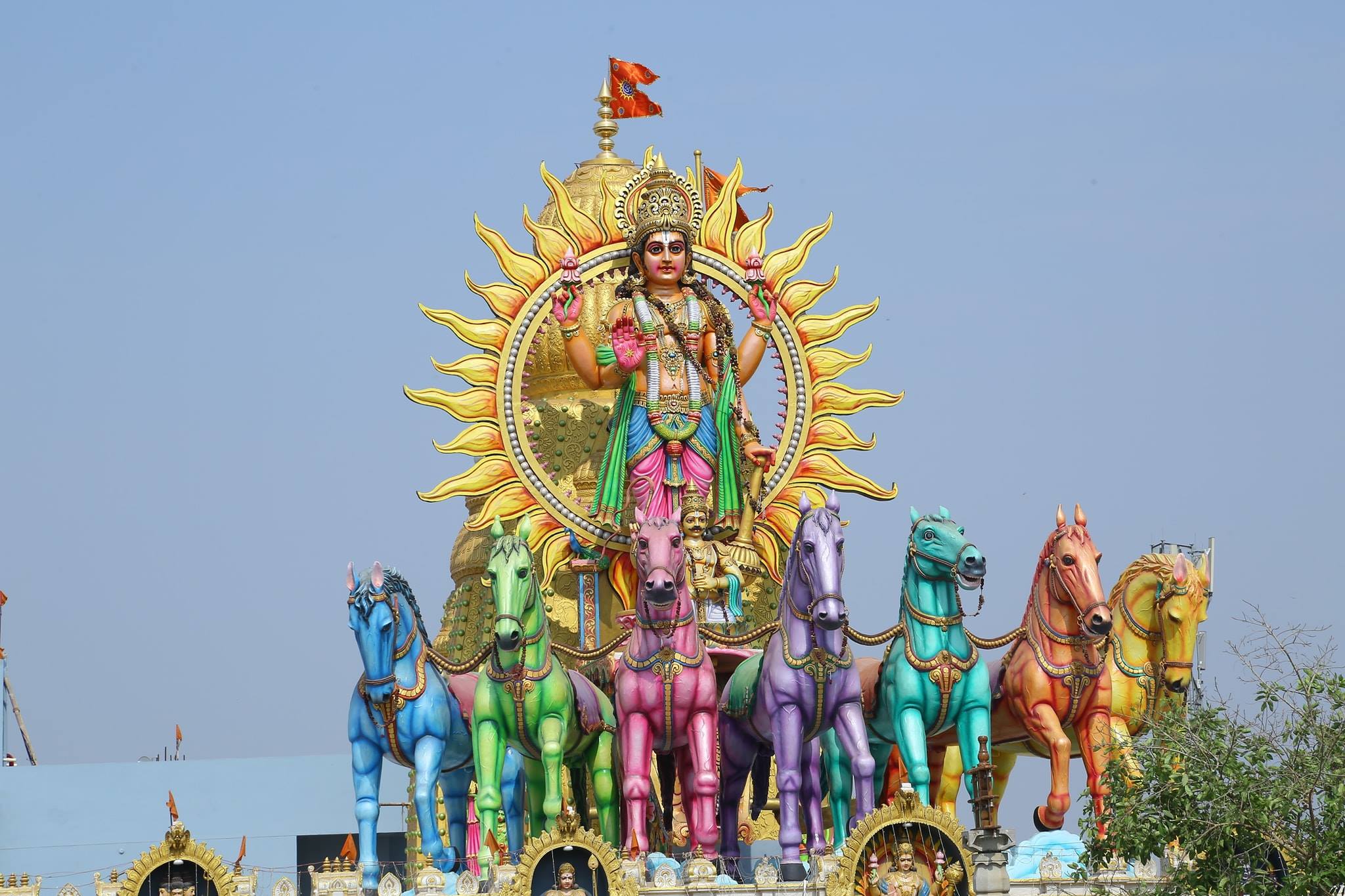
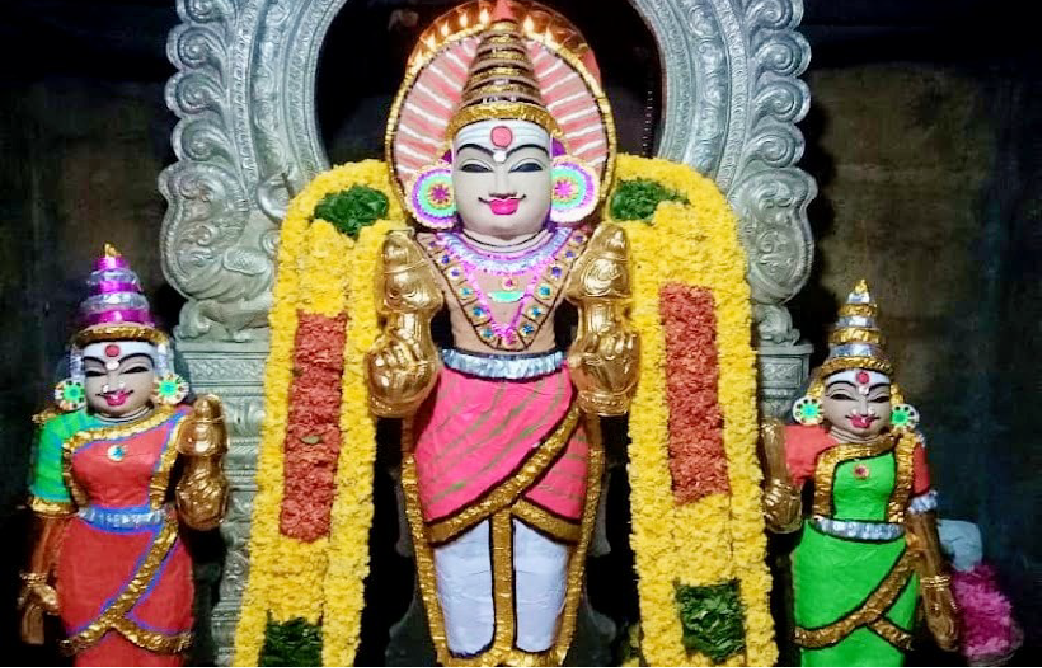
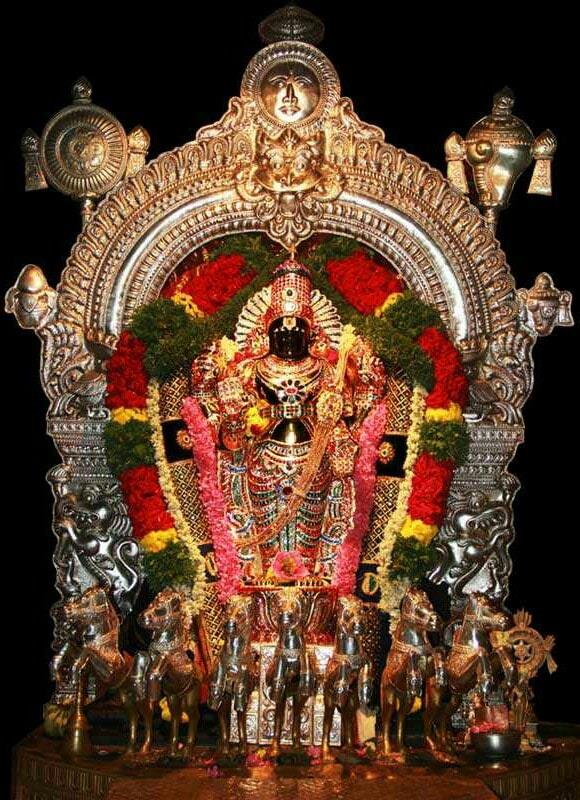
The central deity of Meena Sankranti is Surya Dev without question. It is His transit that creates this tirtha in time, and it is to Him that the morning arghya, the mantra japa, and the deepa are first offered. Surya is worshipped as Pratyaksha Brahman, the visible Supreme, who governs health, vitality, clarity, time, and the dharmic spine of human life.
Recitation of Aditya Hridaya Stotra, Surya Ashtakam, and the twelve names of Surya (Dvadasha Namaavali) are traditional on this day.
Associated Deities
- Sri Maha Vishnu through Satyanarayan Puja for family welfare and new beginnings
- Mahadev Shiva through abhishekam and Mahamrityunjaya mantra, especially for pitru-shanti
- Ganga Mata and river deities through tarpan, deep-daan, and ghat aarti
- Kuladevata and Gramadevata through simple naivedya and flower offerings as part of household puja
Regional Deity Variations
In Odisha, Surya temples including the Konark Sun Temple receive heightened devotion. In South India, the presiding deity of the temple – whether Shiva, Vishnu, or Devi, is worshipped with Sankranti-specific abhishekam while Surya remains the underlying sankranti deity. Coastal regions offer worship to river and ocean deities as an extension of the snana observance.
SACRED STORIES AND TRADITIONAL BELIEFS
Puranic Reference : Bhagiratha and the Descent of Ganga
The story most closely associated with the themes of Meena Sankranti is the Puranic narrative of Bhagiratha bringing Ganga to earth. King Bhagiratha performed fierce tapas to liberate his sixty thousand ancestors, the sons of Sagara, who had been reduced to ash by the wrath of Maharishi Kapila. Through his unbroken penance, he first won the consent of Ganga herself, then propitiated Lord Shiva to bear Ganga’s force in His matted locks.
When Ganga finally descended and flowed over the ashes of Sagara’s sons, their souls were liberated. This narrative is recited on Meena Sankranti because it captures everything the day represents: the power of sankalpa, the grace of sacred water, the liberation of ancestors, and the connection between sincere effort and divine compassion.
Symbolic Meaning
Meena Sankranti teaches that the soul, like the river, must be willing to dissolve its individual boundaries in order to serve a larger purpose. The twelfth rashi, Meena, is itself the symbol of that dissolution — the fish living entirely within the waters of divine grace, surrendered, fluid, and free.
COMPLETE PUJA VIDHI – STEP BY STEP
Preparation (Previous Evening)
Clean the home thoroughly, especially the puja space. Arrange a copper lota, a small kalasha with mango leaves and coconut, ghee lamp, incense, flowers, akshata, and simple naivedya items. Set aside clothes, grains, or money for daan. Keep Ganga-jal or tirtha water ready. Retire calmly, avoiding tamasic food, arguments, and unnecessary distraction.
Ritual Steps
- Wake in Brahma Muhurta approximately ninety minutes before sunrise
- Achaman and inner resolution – wash hands, feet, and face; remember Surya Dev and ishta-devata
- Dhyana – sit quietly, set the inner intention of shuddhi and gratitude
- Travel to tirtha for snana – Ganga, Yamuna, Godavari, Kaveri, Narmada, or local sacred river during Punya Kala
- River snana with mantra – three dips, chanting names of sacred rivers and Surya mantras
- Home snana if tirtha unavailable – mix Ganga-jal in bathing water; chant river names; visualise tirtha
- Wear clean, light-coloured clothes – yellow or white preferred for Surya puja
- Sankalpa – seated facing east, state name, gotra, place, tithi, and purpose of observance clearly
- Surya Arghya at sunrise – copper lota with water, akshata, red flowers; pour three times while chanting Gayatri or Om Ghrina Suryaya Namah
- Kalasha sthapana – place decorated kalasha at altar; invoke all devatas
- Avahana and dhyana of Surya Dev – visualise radiant Surya on seven-horse chariot
- Panchopachara or Shodashopachara puja – gandha, pushpa, dhoop, deepa, naivedya
- Stotra recitation – Aditya Hridayam, Surya Ashtakam, Vishnu Sahasranama, or Bhagavad Gita chapter
- Pitru-tarpan – facing south, offer water with black sesame for ancestors; chant lineage names
- Aarti, pranam, and prasad distribution
VRAT AND FASTING OBSERVANCE
Types of Fasting
Meena Sankranti does not prescribe a rigid nirjala (waterless) vrat for all devotees. Most householder traditions follow a partial fast — eating only once after puja, or observing phalahar (fruits, milk, and uncooked items) until midday rituals are completed.
Rules of the Vrat
- Avoid onion, garlic, meat, alcohol, and overly spicy food
- Eat only sattvic, light preparations
- Refrain from harsh speech, gossip, and worldly argument throughout the day
- Dedicate time to japa, scripture reading, satsang, or service to elders and the needy
Parana
The fast is broken after the main puja and daan are completed — typically after midday. The first meal should be simple, sattvic, and preceded by offering a portion as naivedya to the deity.
CHARITY AND RELIGIOUS REMEDIES
Importance of Daan on Meena Sankranti
Every traditional authority agrees: daan is the living heart of Meena Sankranti. Without charity, the snana and puja remain incomplete. The Puranic understanding is that wealth circulated in dharmic service on a Sankranti day multiplies its merit many times over and purifies the channel through which it flows.
Traditional Donations
- Anna-daan feeding the poor, sadhus, cows, and birds
- Vastra-daan donating clean clothes and blankets to those in need
- Tila-daan offering black sesame, associated with pitru-shanti and astrological purification
- Dhana-daan contributing to temples, gaushalas, or families in genuine distress
- Dhanya-daan donating grains, especially rice and wheat
Astrological Remedies
For those experiencing Surya-related doshas in their horoscope, Meena Sankranti offers a particularly effective window for remedy:
- Offering water (arghya) to Surya daily through this solar month
- Donating wheat, jaggery, or copper on Surya-related days
- Feeding twelve Brahmins or supporting a worthy spiritual institution
- Reciting Aditya Hridaya Stotra with sincerity each morning
REGIONAL CELEBRATIONS ACROSS INDIA
South India – Meena Sankramanam
In Tamil Nadu, Andhra Pradesh, Telangana, and Karnataka, Meena Sankranti is observed as Meena Sankramanam in traditional panchangs. Devout households perform early morning snana, Surya arghya, and family puja. Temples conduct special abhishekam for Surya shrines or the main deity, Veda-parayanam, and distribution of anna-prasada, panakam, and buttermilk. Observant families use this transition as a marker to complete ongoing sadhanas before Mesha Sankranti and take fresh sankalpas for the coming year.
North, East, West, and Central India
In North India, tirtha-kshetras along the Ganga — Haridwar, Rishikesh, Prayagraj, and Varanasi — see devotees gathering for early morning snan and daan on Meena Sankranti. In Odisha, the Konark Sun Temple receives heightened devotion, with pilgrims offering water and prayers to Surya. Maharashtra and Gujarat observe the day quietly with Surya puja and gratitude offerings by farming and business communities. Across these regions, community anna-daan, bhajan gatherings, and kirtan programmes mark the day as one of collective turning inward.
Famous Temples Celebrating Meena Sankranti
- Konark Sun Temple, Odisha — premier Surya temple with significant observances on this transit
- Suryanar Kovil, Tamil Nadu — dedicated Navagraha temple where Surya receives special worship
- Lolark Kund, Varanasi — ancient Sun shrine where devotees bathe on every Sankranti
- Surya shrines within major Shiva and Vishnu temples across India perform special deeparadhana
DO’S AND DON’TS
Recommended Practices
- Wake before sunrise and complete snana during Punya Kala
- Take sankalpa before beginning any ritual
- Offer Surya Arghya three times at sunrise with sincere mantra
- Perform pitru-tarpan or at least dedicate punya to ancestors
- Give charity generously and with humility
- Read scripture — Gita, Aditya Hridayam, Vishnu Sahasranama
- Maintain silence or reduced speech; use words only for japa and meaningful conversation
- Involve children in simple rituals to build samskara
Traditional Restrictions
- Avoid tamasic food — onion, garlic, meat, alcohol
- Do not cut hair or nails on this day
- Avoid harsh words, arguments, and emotional violence
- Do not engage in gossip or unnecessary entertainment
- Do not perform auspicious ceremonies like weddings during the Sankranti period itself
- Avoid sleeping during the Punya Kala window in the morning
FREQUENTLY ASKED QUESTIONS
1. What is Meena Sankranti? Meena Sankranti is the sacred solar transition when Surya Dev enters Meena Rashi (Pisces) in the Vedic sidereal zodiac. It marks the final solar month of the Hindu solar year before the new year begins at Mesha Sankranti.
2. Why is Meena Sankranti important in Hindu astrology? Meena Rashi is ruled by Guru (Jupiter) and associated with dharma, compassion, and moksha. When Surya transits this rashi, it creates a powerful window for karmic purification, ancestral peace, and strengthening of dharmic resolve for the coming year.
3. When does Meena Sankranti usually occur? It generally falls in the month of March in the Gregorian calendar. The exact date and muhurat should be confirmed through a regional panchang each year, as the precise moment of solar ingress varies.
4. Which deity is worshipped on Meena Sankranti? Surya Dev is the primary deity. Vishnu, Shiva, Ganga Mata, and family kuladevatas are also worshipped according to regional and sampradaya traditions.
5. What rituals are performed on Meena Sankranti? The core observances are snana in sacred waters, Surya Arghya at sunrise, sankalpa, Surya puja with mantra recitation, pitru-tarpan, and daan. These are performed during the Punya Kala or Maha Punya Kala.
6. Is fasting required on Meena Sankranti? A strict nirjala fast is not universally required. Most traditions recommend a partial fast — one sattvic meal after puja, or phalahar until midday. The emphasis is on purity of body, speech, and mind throughout the day.
7. What charity should be given on Meena Sankranti? Anna-daan (food), vastra-daan (clothes), tila-daan (black sesame), and dhana-daan (money to dharmic causes) are all traditional. The manner of giving — with humility and genuine care — matters as much as the quantity.
8. Can I observe Meena Sankranti at home if I cannot visit a river? Yes. Snan at home with Ganga-jal mixed into the bathing water is an accepted and widely described practice. The sankalpa, sincerity, and the mantra chanted during the bath carry the essential spiritual weight.
9. What is the significance of pitru-tarpan on Meena Sankranti? Because Meena Sankranti falls at the close of the solar year, it is considered especially suitable for offerings to departed ancestors. Tarpan performed during Punya Kala is believed to bring peace and upliftment to the pitrus.
10. What is Punya Kala? Punya Kala is the auspicious time window that begins after the exact moment of solar sankramana. It is the most powerful period for performing snana, arghya, puja, and daan on any Sankranti day.
11. What mantras are chanted on Meena Sankranti? Gayatri Mantra, Om Ghrina Suryaya Namah, the twelve names of Surya (Dvadasha Namaavali), and Aditya Hridaya Stotra are the most traditional. Mahamrityunjaya mantra is added for pitru-related intentions.
12. What foods are avoided on Meena Sankranti? Onion, garlic, meat, alcohol, and heavily spiced or tamasic preparations are avoided. Light, sattvic food — fruits, milk, rice, or simple vegetarian preparations — is recommended.
13. Is Meena Sankranti a public holiday? It is generally not a declared public holiday across India, but devout Hindus observe it as a significant punya tithi through private and community religious practice.
14. What is the difference between Meena Sankranti and Mesha Sankranti? Meena Sankranti is the Sun’s entry into Pisces, marking the final solar month of the year. Mesha Sankranti is the Sun’s entry into Aries, which marks the beginning of the new Hindu solar year and is celebrated in many regions as Ugadi, Puthandu, Vishu, and Baisakhi.
15. What is the spiritual benefit of observing Meena Sankranti? The sincere observance of snana, Surya upasana, charity, and vrat on Meena Sankranti is traditionally said to purify accumulated karmas, bring peace to ancestors, strengthen dharmic resolve, and help the devotee enter the new solar year with a lighter, clearer inner life.
CONCLUSION
Meena Sankranti is the universe’s quiet reminder that every cycle must be honoured in its completion before a new one can begin in its fullness. The Sun, in His infinite wisdom, moves through each of the twelve rashis carrying the cosmic order that sustains all life. When He enters the final rashi, Meena, He does not hurry past — He invites every soul to pause, to bathe, to bow, to give, and to release.
Astrologically, the Sun in Meena Rashi — governed by the wise and compassionate Guru — creates a month ideally suited for introspection, karmic settlement, and the renewal of dharmic intentions. The Punya Kala of Meena Sankranti is a tirtha not just in geography but in time itself.
Religiously, this festival sits at the heart of what Sanatana Dharma teaches: that human life is not an isolated journey but one woven into the larger fabric of cosmic dharma. To observe Meena Sankranti is to consciously align oneself with that fabric — to say to Surya Dev, to one’s ancestors, and to one’s own deepest self that the past is acknowledged, the present is offered in worship, and the future is entrusted to dharma.
As the great Telugu saint-scholars remind us — tirtha is less about the river’s address and more about the tears of genuine surrender that fall into it. On Meena Sankranti, may every devotee find that inner river, take that inner bath, and rise from it ready to walk once again into the light of a new solar year.
आदिदेव नमस्तुभ्यं प्रसीद मम भास्कर ।
दिवाकर नमस्तुभ्यं प्रभाकर नमोऽस्तु ते ॥!
Help Us Keep This Guide Accurate
At Temple Connect, we regularly update our content to ensure you receive the most relevant and authentic information. If you’d like to suggest improvements, share regional traditions, or report any updates, we’d love to hear from you at connect@templeconnect.com
Follow us on our X platform.
Note to Readers: This article is intended for educational and devotional purposes. The information presented is based on traditional Hindu scriptures, contemporary religious practice, and scholarly research.
Individual observance may vary based on family tradition, regional custom, and personal circumstance. For specific guidance, especially regarding complex astrological remedies, please consult qualified priests, pandits, or Vedic astrologers. The health-related aspects mentioned are traditional beliefs and should not replace professional medical advice.