Gangaur: The Sacred Festival of Gauri and Isar
Gangaur is one of the most beloved festivals of Rajasthan, observed with deep devotion by both married women and unmarried girls across sixteen to eighteen continuous days. It honors Goddess Gauri, the beloved consort of Bhagawan Shiva, and celebrates the sacred bond of marriage, conjugal fidelity, and the grace of the divine mother. The festival falls in the Hindu month of Chaitra and concludes on Chaitra Shukla Tritiya, the day known as Gangaur Tritiya.
What Is Gangaur and Why Is It Celebrated
The name Gangaur is drawn from two sacred words. “Gan” is a folk name for Bhagawan Shiva, and “Gaur” or “Gauri” is Parvati in her married, auspicious, and radiant form. Taken together, the name Gangaur points directly to the divine couple whose union is the festival’s very heart.
This is not simply a regional celebration. It is an expression of the deepest aspiration in grihastha dharma: that a woman’s household, her husband, her children, and her family may remain under the protection of the divine mother at all times. Women emulate Gauri’s tapasya, her devotion, and her patient love by observing the rigorous vrat that spans nearly three weeks.
The festival has its roots in the folk traditions of Rajasthan, but its spiritual basis lies firmly in the Puranas and in the Shaiva-Shakta sampradaya. It is sometimes also called Gauri Tritiya, Gangaur Teej, or simply Gaur Puja in different communities. In Telangana and Andhra Pradesh, a comparable observance is known as Saubhagya Gauri Vratam. In Maharashtra and Karnataka, it is observed as Chaitra Gauri Vrat.
The festival begins the very day after Holi, on Chaitra Krishna Pratipada, and continues with daily worship, folk songs, fasting, and ritual adornment. It culminates on Chaitra Shukla Tritiya with grand processions, the farewell of Gauri, and the immersion of the idols in a sacred water body.
Tithi, Timing, and Position in the Hindu Calendar
Gangaur spans from Chaitra Krishna Pratipada to Chaitra Shukla Tritiya, making it a sixteen-day vrat in most regional traditions. Newly married brides in certain communities observe eighteen days.
The concluding tithi, Chaitra Shukla Tritiya, is the most auspicious day of the entire festival. This is when the full puja, the recitation of the katha, and the visarjan of the idols are performed. The Tritiya tithi is considered especially favorable for vrats related to Gauri, marriage, and feminine auspiciousness.
The Chaitra month itself holds enormous importance. It is the first month of the Hindu lunar year in many regional calendars and is associated with the arrival of spring, the renewal of nature, and the beginning of the agricultural cycle. The energy of Chaitra is one of fresh abundance.
The puja is performed ideally in the early morning hours after a ritual bath, and again in the evening. On the final day, the main puja is performed during the day, with the procession and visarjan taking place in the late afternoon or at dusk, which is considered a deeply auspicious moment of transition.
Astrological Significance of Gangaur
From the standpoint of Vedic Jyotish, the timing of Gangaur carries layered significance that goes far beyond mere seasonal coincidence.
The Chaitra month falls when the Sun is moving through Meena or entering Mesha Rashi, the period of Mesha Sankranti, marking the solar new year. This is a time when solar energy is at its most potent for new beginnings, for sankalpa, and for prayers related to vitality and prosperity. The husband, represented by the Sun in a woman’s astrological chart, is naturally invoked during this period.
The Moon in Chaitra, especially during the Shukla Paksha leading to Tritiya, is in a waxing state. A waxing Moon in Vedic astrology represents growth, nourishment, emotional clarity, and the strengthening of the mind. Rituals performed under a growing Moon are considered far more effective for intentions related to family harmony and conjugal happiness.
The Tritiya tithi itself is directly connected to the Goddess Gauri in classical Jyotish literature. It is a Jaya tithi, one of the five categories of tithis, and is regarded as victorious and auspicious for beginning sacred undertakings. When Tritiya falls on a Wednesday, it is called Saubhagya Saptami in some regional almanacs, adding another layer of Shukra-related auspiciousness.
Shukra, the planet of love, beauty, relationships, and marital harmony, governs the themes that Gangaur directly addresses. The entire spirit of the festival, with its emphasis on solah shringar, mehendi, new clothes, and the adornment of Gauri, mirrors the Shukra principle in its purest devotional form.
Women observing this vrat with sincerity are said to reduce the malefic effects of afflictions to Venus or the Moon in their personal charts. The removal of Mangal dosha, Kuja dosha, and disturbances to the seventh house are among the astrological purposes that traditional families associate with this vrat.
Religious Significance of Gangaur
The religious significance of Gangaur rests on a foundation that is simultaneously Puranic, folk-traditional, and deeply personal.
In the Shaiva Agamic framework, Parvati is not merely Bhagawan Shiva’s wife. She is Shakti, the animating energy of the universe without whom Shiva himself remains inert. The union of Shiva and Parvati is the cosmic marriage upon which all creation depends. Every grihastha household is understood as a microcosm of this divine union. When a woman prays to Gauri during Gangaur, she is not simply praying for her husband’s health. She is invoking the very principle that sustains creation.
The Shakta tradition views Gauri as Jagadamba, the universal mother, who grants both worldly well-being and liberation. The Devi Bhagavata Purana and Shiva Purana both celebrate Parvati’s tapasya for Shiva in detail, and the Gangaur vrat is understood as women re-enacting this devotion in their own lives.
From the Smarta standpoint, Gangaur observance falls under saubhagya vrat, a category of religious practices specifically oriented toward the protection of the marital bond, the long life of the husband, the prosperity of children, and the overall dharmic functioning of the household.
The phala shruti of the Gangaur vrat, as preserved in oral tradition and folk literature, consistently promises the devotee freedom from premature widowhood, blessed progeny, a long-lived and righteous husband, abundance in the home, and Gauri’s direct protection throughout the woman’s married life.
The Deity Worshipped: Gauri and Isar
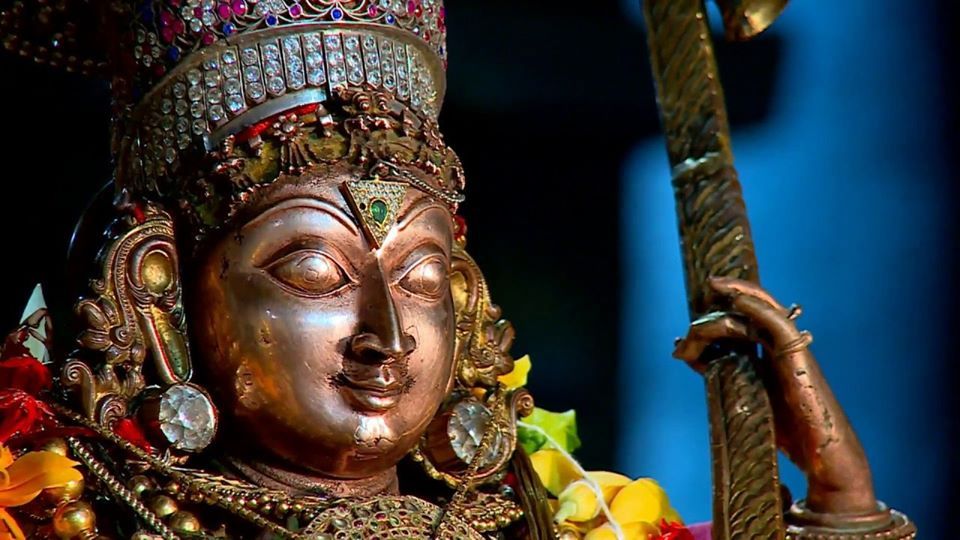
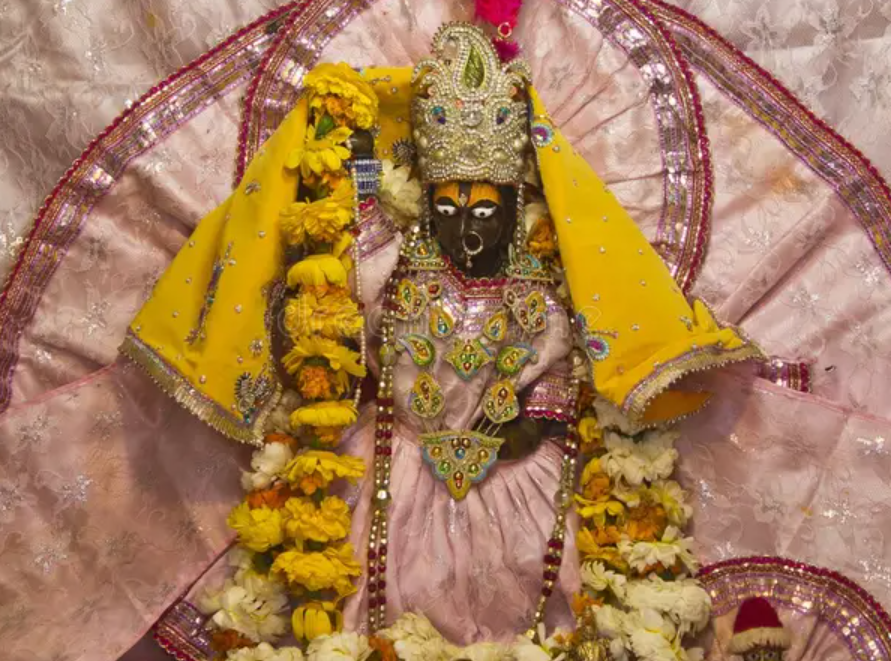
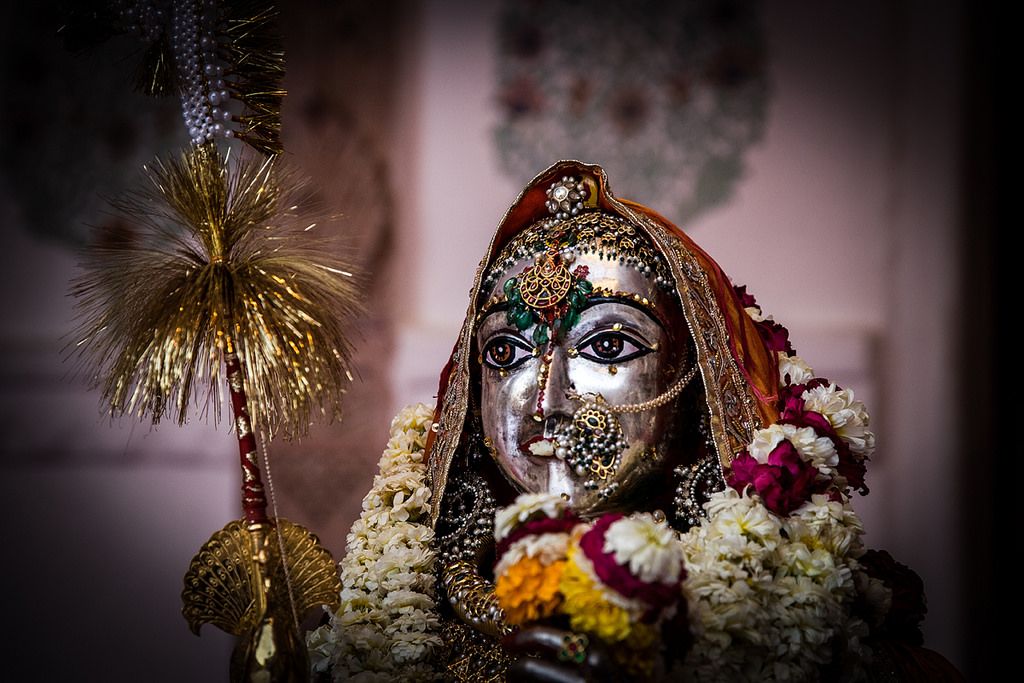
The primary deity of Gangaur is Gauri, worshipped in her most intimate and relatable form as the loving wife of Bhagawan Shiva. She is addressed in Rajasthan as Gawarja, a term of great tenderness. Women see her not as a distant cosmic goddess but as an elder sister, a friend, and a companion who deeply understands the emotional landscape of married life.
In her Gangaur form, Gauri is depicted as a beautiful young woman adorned with the solah shringar, the sixteen auspicious adornments of a married woman. She wears red and yellow garments, her forehead marked with sindoor, her hands decorated with mehendi. The idol is treated as a living guest throughout the festival, bathed, dressed in fresh clothes, and offered food and water each day.
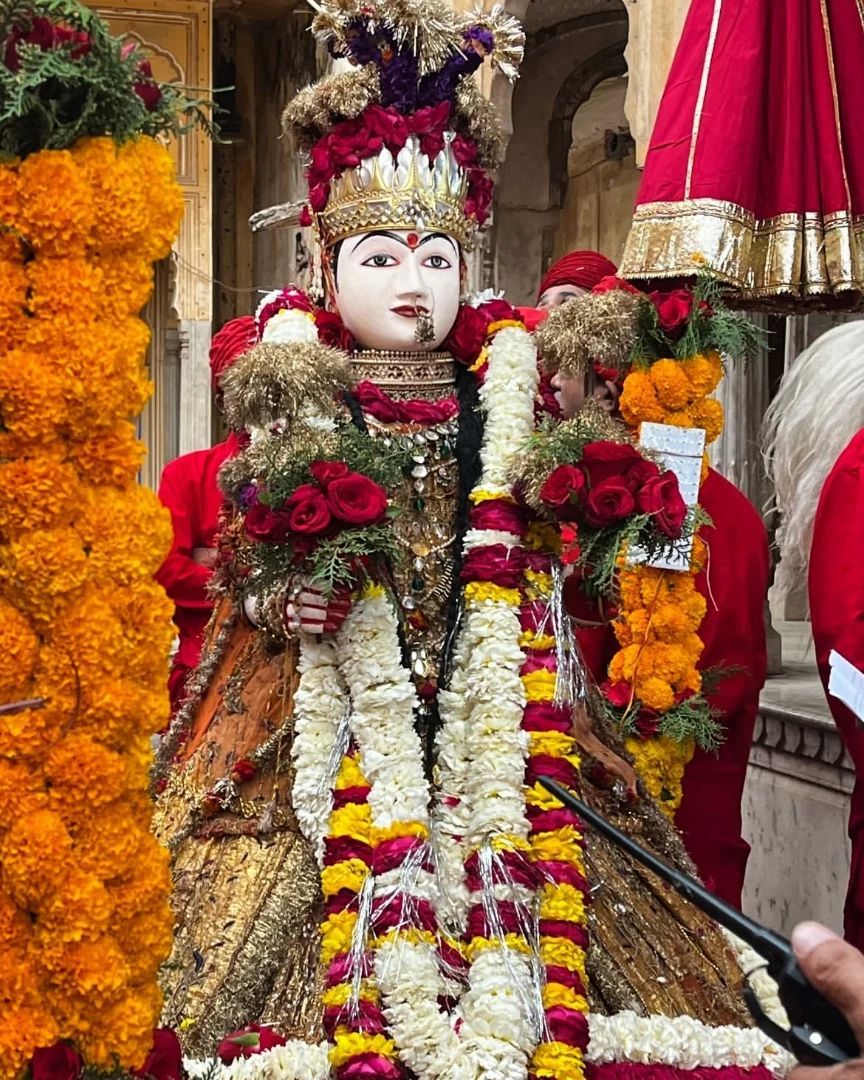
Isar, the regional Rajasthani name for Bhagawan Shiva, is always present alongside Gauri. He is depicted in folk style, wearing a turban and traditional male attire. Though the focus of worship and prayer is directed toward Gauri, Isar’s presence affirms the completeness of the divine pair. No worship of Gauri is considered complete without honoring Isar beside her.
In different regions, the same deities take slightly different names and iconographic forms. In Andhra Pradesh and Telangana, she is worshipped as Saubhagya Gauri. In Maharashtra, she is Chaitra Gauri. In Karnataka, the tradition continues as Gowri Habba. The essence remains the same across all these forms: she is the goddess of marital auspiciousness, the embodiment of a devoted yet supremely powerful wife.
Sacred Stories and Gangaur Vrat Katha
The vrat katha of Gangaur, as preserved across centuries in oral tradition and vernacular devotional literature, carries the emotional and theological heart of the entire festival.
The Story of the First Blessing
One day, Bhagawan Shiva and Goddess Parvati descended to the earthly realm in the company of Narada Muni. Women across the city heard of their arrival and rushed to seek the divine couple’s darshan. A group of women from humble backgrounds came first, offering only what they had: a little water, a few flowers, and some seasonal fruits. Their offerings were simple, but their devotion was pure and immediate.
Pleased by the sincerity of their bhava, Parvati was moved. She sprinkled upon them her suhagras, the nectar of conjugal bliss, blessing them with unending happiness in their marriages, health for their husbands, and peace in their households.
Moments later, women from wealthier families arrived carrying elaborate offerings, fine foods, and elaborate presentations. Bhagawan Shiva turned to Parvati and gently asked: “Devi, you have already distributed all your suhagras to the first group. What will you give to these devoted women now?”
Parvati smiled and said: “My Lord, I gave the first women a portion of my blessings. For these women, I shall give something far more precious.” She pricked her finger, and from that single drop of blood she created a divine essence more potent than the suhagras. She sprinkled it upon the waiting women, blessing them with a share of her own eternal marital auspiciousness.
This story carries a theological message of great depth. In Gauri’s eyes, social status is irrelevant. What she measures is bhava, inner feeling. The poverty of the first group was never an obstacle because their love was real. This is why Gangaur is celebrated by women of all communities, all economic backgrounds, and all walks of life.
The Story of Gauri’s Secret Vrat
In another strand of the katha, after blessing the women, Parvati went quietly to a riverbank and created a Shivalingam from sacred river sand. She worshipped Bhagawan Shiva with great devotion, keeping this vrat entirely to herself.
When Shiva came looking for her, Parvati, wishing to maintain the secrecy of her vrat, told him she had met her brother and sister-in-law. Shiva playfully tested her by going in search of the palace she described. A magnificent palace appeared before him through the power of Parvati’s divine maya. He stayed there two days.
When Narada was sent back to retrieve a forgotten garland, the palace had vanished entirely. Narada understood: this was all the play of the Goddess’s divine sankalpa. He proclaimed that any woman who observes this vrat with the same devotion, secrecy, and sincerity that Gauri herself once observed it will receive Gauri’s full grace and the blessings of a long and happy marriage.
Complete Puja Vidhi for Gangaur
Preparation
The puja space is cleaned and freshened on the first day after Holi. A low wooden platform or chowki is arranged facing east or north in the puja room. Women bathe early each morning throughout the festival before approaching the altar.
Altar Setup
An earthen pot is filled with clean soil. Wheat or barley seeds are sown in this pot. This becomes a living symbol of fertility and prosperity that grows alongside the devotee’s prayers throughout the festival.
The clay or wooden idols of Gauri and Isar are placed on the chowki, dressed in small pieces of red and yellow cloth, adorned with flowers and simple ornaments. In many families, artisans called matherans repaint and restore wooden idols passed down through generations.
Day-by-Day Ritual
Each morning, the devotee bathes, wears clean clothes, and approaches the altar with a quiet and focused mind.
A diya is lit. Water, roli, haldi, kumkum, akshata, and fresh flowers are offered to Gauri and Isar.
The sprouting wheat pot is watered and tended, as one would tend any living creature in the home.
Simple naivedya is offered: seasonal fruits, sweets like ghevar or ladoo, and water.
Traditional Gangaur geet, folk songs addressed to Gawarja, are sung. These songs narrate Gauri’s journey from her parental home to Shiva’s abode, her tapasya, and her boundless grace.
The Main Puja on Gangaur Tritiya
On Chaitra Shukla Tritiya, the most complete form of the puja is performed. The steps follow the Shodashopachara format.
- Avahan: Gauri is formally invited to be fully present. The devotee folds her hands and mentally or verbally invites the goddess to accept worship.
- Asana: A symbolic seat is offered to the goddess.
- Padya: Water is offered for washing the feet of the deity.
- Arghya: A respectful combined offering of water, flowers, and auspicious materials is made.
- Snana: The idols are given a ritual bath using Panchamrit, a mixture of milk, curd, honey, ghee, and sugar, followed by pure water.
- Vastra: Fresh clothing or a sacred thread is offered.
- Gandha: Sandalwood paste is applied.
- Pushpa: Fresh flowers, particularly marigold and jasmine, are offered.
- Dhoop: Incense is offered, filling the space with sacred fragrance.
- Deep: A lit lamp is circled before the deity.
- Naivedya: Prepared food is offered. Typical offerings include halwa, puri, chana, and seasonal sweets.
- Tambula: Betel leaves and areca nut are offered.
- Sindoor Samarpan: For married women, sindoor is offered to Gauri with a prayer for the husband’s long life and health. This step is performed with great reverence.
- Sankalpa: The devotee holds water, flowers, and rice in the right hand and formally states her name, gotra, and the purpose of her vrat before the goddess.
- Mantra Japa: The mantra “Om Hreem Shreem Kleem Gauri Devyai Namah” is chanted 108 times on a rosary.
- Vrat Katha Sravanam: The Gangaur katha is recited or heard in full.
- Aarti: The puja concludes with the singing of Gauri Aarti, with a lit camphor flame circled before the deity while a bell is rung. This marks the culmination of the worship.
Vrat Observance
Who Observes the Vrat
Both married women and unmarried girls observe the Gangaur vrat. Married women fast for the long life, health, and prosperity of their husbands. Unmarried girls pray to Gauri for a husband who embodies the qualities of Bhagawan Shiva: steady, devoted, and dharmic.
Types of Fasting
Women who observe strict upavasa consume nothing until the evening puja is complete. Others follow phalahar, eating only fruits and simple satvik food after the evening worship. Those with health conditions or advanced age may eat one light meal during the day, completing the sankalpa and the puja without compromising their wellbeing.
Sankalpa
Before beginning the vrat, the devotee performs sankalpa by holding water, flowers, and rice in the right hand and stating: “I am observing the Gangaur vrat in the name of Goddess Gauri and Bhagawan Isar, for the well-being of my husband, my family, and the prosperity of my household. May Gauri’s grace remain upon this home.”
Daytime Practice
During the day, the devotee avoids harsh speech, anger, and unnecessary distraction. The period is understood as an anushthan, a sustained spiritual practice, and personal conduct is considered as important as the external ritual.
Parana
The fast is broken after the evening puja is complete and the aarti is offered. Prasad from the puja, along with simple satvik food, is consumed. On the final day, after visarjan and the farewell of Gauri, the fast is formally concluded.
For Elderly and Unwell Devotees
Gauri is a mother, not a taskmaster. Elderly women and those who are unwell may observe a lighter form of the vrat by completing the sankalpa, listening to the katha, and offering a simple puja even if they cannot maintain a full fast. The sincere bhava is what Gauri receives.
Where Gangaur Is Celebrated
Rajasthan: The Core Region
Rajasthan is where Gangaur is most completely alive, from the grand royal cities to the smallest desert villages. Every region, Mewar, Marwar, Hadoti, Shekhawati, and the tribal belts, has its own distinctive expression of the festival.
In Jaipur, the procession begins at the Zanani Deodhi of the City Palace and moves through Tripolia Bazaar, Chhoti Chaupar, and Gangauri Bazaar in a magnificent display of palanquins, folk musicians, cultural troupes, and decorated chariots. The royal tradition is carried forward even today by local authorities, and thousands of people line the streets to witness it.
In Udaipur, the celebration is centered on Gangaur Ghat on the banks of Lake Pichola. The idols of Gauri and Isar are placed in beautifully decorated boats and taken out on the lake, creating a breathtaking reflection against the backdrop of the City Palace and the Aravalli hills. The Mewar Festival runs alongside Gangaur during the concluding days, with ghoomar and bhavai performances, cultural programs, and local crafts exhibitions.
In Jodhpur, Bikaner, and Jaisalmer, the processions are more rustic, featuring camels, horses, and village bands. The songs sung here carry the distinct flavors of Marwari dialects and folk poetry.
The Garasia tribal community in Sirohi district observes a unique form of Gangaur that has been maintained for several generations. An eternal flame is kept lit for the entire duration. The idol is crafted from neem fruits and branches, given a human form on the final day, and a symbolic wedding of Gaur-Isar is performed at the fairground with traditional dances like Gair, Walar, and Mor.
Other States
In Madhya Pradesh, particularly in the Malwa and Nimar regions, Gangaur is celebrated with the same devotional intensity, following the core rituals of idol worship, fasting, and processions.
In Gujarat and Haryana, Rajput and Marwari communities maintain the festival in full, both in urban temples and in households.
In Maharashtra and Karnataka, the tradition appears as Chaitra Gauri Vrat, where women worship Goddess Gauri for the well-being of their families during the same season.
In Telangana and Andhra Pradesh, the equivalent observance is Saubhagya Gauri Vratam, performed by women seeking the goddess’s blessings for family prosperity and the long life of their husbands.
Diaspora Celebrations
Rajasthani communities in Mumbai, Delhi, Ahmedabad, Kolkata, and abroad in the UAE, the United Kingdom, and the United States observe Gangaur in community halls and temples. The procession may be symbolic and the scale modest, but the vrat, the katha, the puja, and the singing of Gangaur geet are preserved with great care. For communities living far from their native soil, this festival is a profound anchor of cultural and spiritual identity.
Dana, Charity, and Do’s and Don’ts
Charity During Gangaur
Offering food to the hungry during this festival is considered highly meritorious. Anna dana, the gift of food, is one of the greatest acts of dharma, and during Gangaur it is particularly connected to Gauri’s own blessing of abundance. Feeding cows, especially on the mornings of the vrat, is also a common practice.
Gifting suhag items, sets of bangles, sindoor, bindi, and cloth, to married women who cannot afford them is a deeply auspicious act. It is understood as serving Gauri directly in the form of the suhagan woman.
Performing temple seva, particularly at Shiva-Parvati temples, offering flowers, oil for lamps, or helping in cleaning the temple premises, is another recommended form of service during this period.
Do’s
Bathe before each day’s puja. Keep the altar clean and fresh flowers offered daily. Speak gently and maintain a satvik environment throughout the vrat. Listen to or recite the Gangaur katha on every possible day, and certainly on the final day. Include other women in the worship whenever possible. The collective bhava of women singing and praying together multiplies the auspiciousness of the observance.
Don’ts
Avoid consuming meat, alcohol, onion, or garlic during the vrat days. Avoid harsh speech and quarrels. Do not neglect the daily puja even on busy days. Skipping worship midway is considered inauspicious. Do not perform the visarjan casually. The farewell of Gauri is to be done with the same emotional devotion as welcoming a beloved daughter back home and then watching her depart.
Frequently Asked Questions
What is Gangaur? Gangaur is a sixteen to eighteen day festival observed primarily in Rajasthan and several other regions, dedicated to Goddess Gauri and Bhagawan Isar, the regional names for Parvati and Shiva. It is a vrat centered on marital happiness, the long life of the husband, and the blessings of the divine mother.
Why is Gangaur celebrated? Gangaur is celebrated because women seek the blessings of Goddess Gauri for conjugal happiness, a devoted and long-lived husband, healthy children, and prosperity in the household. Unmarried girls pray to Gauri for an ideal husband. The festival also commemorates Gauri’s own tapasya to win Bhagawan Shiva as her husband.
Which deity is worshipped during Gangaur? Goddess Gauri is the primary deity. She is worshipped alongside Isar, the folk name for Bhagawan Shiva in Rajasthan. Together they represent the ideal of married life and divine union.
When does Gangaur begin and end? Gangaur begins on Chaitra Krishna Pratipada, the day after Holi, and concludes on Chaitra Shukla Tritiya, also called Gangaur Tritiya or Gauri Tritiya. The duration is sixteen to eighteen days depending on regional tradition.
What is the astrological significance of Gangaur? The festival falls during Chaitra, when the Sun’s energy is at its most potent for new beginnings. The waxing Moon during Shukla Paksha strengthens the mind and emotional life. The Tritiya tithi is directly associated with Gauri’s energy and is classified as a Jaya tithi in Jyotish, meaning it is victorious and favorable for sacred undertakings.
Who can observe the Gangaur vrat? Both married women and unmarried girls can observe the Gangaur vrat. Elderly women and those with health conditions may observe a lighter form of the fast while still completing the puja and katha.
What is the significance of Sinjara in Gangaur? Sinjara is the day before Gangaur Tritiya. Parents send gifts to married daughters, and in-laws present new clothes, jewelry, and sweets to newly married brides. Women apply mehendi in intricate patterns on this evening as part of their preparation for the main day.
What is the Ghudlia ritual? Ghudlia is a ritual observed primarily by unmarried girls. They carry earthen pots with small holes, inside which a lit lamp is placed. Carrying these lanterns on their heads in the evening, they go through the neighborhood singing songs. This ritual continues for ten days and ends when the girls break the pots on the final day of the festival.
What is offered to Goddess Gauri during Gangaur puja? Standard offerings include water, roli, haldi, kumkum, akshata, fresh flowers, sindoor, sandalwood paste, fruits, and cooked sweets. Panchamrit is offered during the ritual bath of the idol. Specific sweets like ghevar are closely associated with the festival.
What is the significance of the Gangaur procession? The procession, particularly on Chaitra Shukla Tritiya, represents Gauri departing from her parental home to return to Shiva’s abode. It is a moment of joy and tender emotion for the women who have spent weeks in intimate worship of the goddess. Grand processions in Jaipur and Udaipur have become celebrated spectacles that attract visitors from across the country.
What is visarjan in Gangaur? Visarjan is the ceremonial immersion of the Gauri and Isar idols in a sacred water body at the conclusion of the festival. It symbolizes the dissolution of the clay forms back into the five elements and Gauri’s return to Shiva’s realm. Women pray that their beloved goddess will return the following year with the same grace.
How is Gangaur connected to the Gangaur Katha? The Gangaur Vrat Katha narrates the stories of how Gauri blessed devoted women with suhagras and how she herself once observed the vrat secretly to honor Bhagawan Shiva. Listening to or reciting this katha is considered essential to the vrat’s fulfilment. The katha is recited daily during worship and in full on the final day.
Is Gangaur only a Rajasthani festival? While Rajasthan is its core region, Gangaur or its equivalent is observed across Madhya Pradesh, Gujarat, Haryana, Maharashtra, Karnataka, Andhra Pradesh, and Telangana. Rajasthani communities across India and abroad also maintain the tradition with great devotion.
What mantra is chanted during Gangaur puja? The mantra “Om Hreem Shreem Kleem Gauri Devyai Namah” is chanted 108 times during the puja as part of the mantra japa portion of the ritual. General Parvati mantras and Shiva-Parvati stotras are also recited.
What is the deeper spiritual meaning of Gangaur? At its deepest level, Gangaur is an invitation to every woman to emulate the quality of Gauri’s devotion: patient, unflinching, pure, and unshakeable. It affirms that the grihastha life is not separate from the spiritual life but is in fact a complete path of sadhana when lived with the awareness of the divine in the husband, the home, and every relationship within it.
Conclusion
Gangaur is not simply a festival. It is a sustained act of devotion, a living conversation between a woman and her goddess, stretched across sixteen days of fasting, singing, worshipping, and waiting for the final farewell.
Every ritual in Gangaur, whether the sowing of seeds, the daily dressing of Gauri’s idol, the singing of folk songs at dusk, or the bittersweet immersion at the water’s edge, carries the same essential truth: that Gauri’s grace is accessible to every sincere heart, regardless of social position, wealth, or education.
The women who once rushed to the roadside with water and flowers and received the suhagras of the goddess were not queens or scholars. They were simply present, simply honest, and simply devoted. Gangaur exists to remind every woman that this quality of bhava, this immediacy of the heart, is all that Gauri has ever asked for.
May Goddess Gauri bless every home that opens its doors to her during this sacred season. May Bhagawan Isar’s grace sustain every household that honors their divine union. And may the tradition of Gangaur, ancient as the Himalayas and tender as the first green shoots of spring, continue to live in every generation of devoted women who carry it forward.
ॐ नमः पार्वती पतये हर हर महादेव!
Help Us Keep This Guide Accurate
At Temple Connect, we regularly update our content to ensure you receive the most relevant and authentic information. If you’d like to suggest improvements, share regional traditions, or report any updates, we’d love to hear from you at connect@templeconnect.com
Follow us on our X platform.
Note to Readers: This article is intended for educational and devotional purposes. The information presented is based on traditional Hindu scriptures, contemporary religious practice, and scholarly research.
Individual observance may vary based on family tradition, regional custom, and personal circumstance. For specific guidance, especially regarding complex astrological remedies, please consult qualified priests, pandits, or Vedic astrologers. The health-related aspects mentioned are traditional beliefs and should not replace professional medical advice.