Gudi Padwa 2026: Date, Timings, Puja Vidhi, Vrat Katha and Rituals
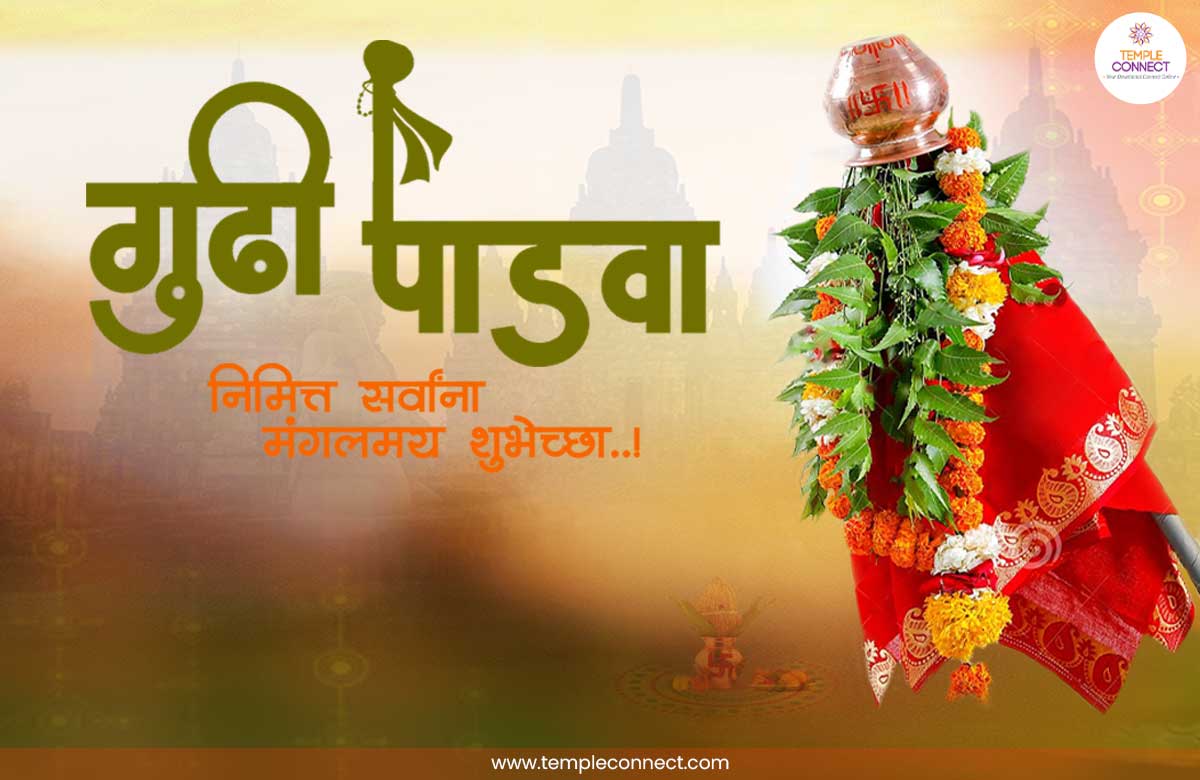
Gudi Padwa 2026 brings with it the same sacred energy that Maharashtra and the Konkan belt have welcomed for countless generations. This year the festival falls on Thursday, March 19, 2026, and with it begins the new samvatsara in the Shalivahana Shaka calendar.
Gudi Padwa 2026 is not merely a date on the calendar. It is the morning when Brahma’s creation begins its fresh cycle, when every household raises the victory flag of dharma at its doorstep, and when the devout step into the new Hindu year with prayer, gratitude, and renewed resolve.
Gudi Padwa 2026 Date and Tithi Timings
Gudi Padwa 2026 falls on Thursday, March 19, 2026.
The festival is observed on Chaitra Shukla Pratipada, the first tithi of the bright fortnight of the month of Chaitra. This is the foundational tithi of the Hindu lunisolar year in the Shalivahana Shaka tradition. For Gudi Padwa 2026, the tithi details are as follows.
Gudi Padwa 2026 Tithi Timings
| Detail | Timing |
|---|---|
| Festival Name | Gudi Padwa 2026 |
| Day | Thursday |
| Date | March 19, 2026 |
| Padyami Tithi Begins | 06:52 AM on March 19, 2026 |
| Padyami Tithi Ends | 04:52 AM on March 20, 2026 |
| Gudi Hoisting | Morning, after sunrise on March 19 |
| Gudi Brought Down | At sunset on March 19 |
Since the Pratipada tithi begins at 06:52 AM on March 19, 2026, devotees can perform the gudi hoisting shortly after sunrise on that day. The entire day of March 19 is available for the complete observance, which includes the gudi puja, neem-jaggery ritual, panchanga sravana, festive cooking, and family prayers.
In the Shalivahana Shaka tradition, Gudi Padwa 2026 marks the beginning of a new samvatsara. The new samvatsara name should be confirmed from your local panchanga, which will also carry the detailed yearly forecast that is traditionally read aloud as part of the Gudi Padwa 2026 observance. Reading or listening to the new panchanga on Gudi Padwa 2026 is itself considered a deeply auspicious act.
Every moment of the Pratipada tithi on Gudi Padwa is considered inherently shubha. Jyotisha texts describe Chaitra Shukla Pratipada as one of the rare tithis when no separate muhurta calculation is needed for beginning auspicious work, because the tithi itself is a muhurta. This makes Gudi Padwa 2026 one of the most important days in the entire Hindu year for starting new ventures, making significant life decisions, and offering sincere prayers.
Significance of Gudi Padwa 2026
Gudi Padwa 2026 carries all the religious weight that this tithi has carried since the age of the Puranas. When we observe Gudi Padwa 2026, we are aligning ourselves with a truth recorded in the Brahma Purana: Chaitra Shukla Pratipada is the day Brahma the Creator set time itself in motion. Every Gudi Padwa, including Gudi Padwa 2026, is a reenactment of that first cosmic morning.
For devotees of Bhagwan Rama, Gudi Padwa 2026 is also the day to remember that triumphant return to Ayodhya when flags and festoons flew across the city and dharma was restored to the throne. The gudi every family raises on Gudi Padwa 2026 is a direct echo of those victory flags. For Maharashtrians who hold the memory of Chatrapati Shivaji Maharaj in their hearts, the gudi on Gudi Padwa 2026 also carries the pride of a civilization that fought to protect its dharmic identity.
On a broader spiritual plane, Gudi Padwa 2026 marks the end of the outgoing samvatsara and the beginning of the new one. It is an invitation to close accounts with the past year and open fresh ones. Gudi Padwa is the day for sankalpas, for new beginnings in business and family life, and for recommitting to sadhana and seva.
How to Observe Gudi Padwa 2026
Observing Gudi Padwa 2026 is not complicated, but it is intentional. Every act on this day carries a meaning that goes beyond the ritual itself. Here is a clear guide for how to observe Gudi Padwa 2026 at home.
Morning Purification and Preparation
Rise before or at sunrise on March 19, 2026. Perform abhyanga snana, the traditional oil bath, before bathing with warm water. Sesame oil or coconut oil is applied to the body, massaged in gently, and then washed off. This is the first act of purification that prepares the body and mind to receive the new year with freshness. After bathing, wear new or freshly washed traditional clothes. Women traditionally wear the nauvari saree. Men wear dhoti or kurta-pyjama, often with a pheta.
Decorating the Home for Gudi Padwa 2026
- Draw rangoli at the entrance and in the courtyard with colored powder or flower petals, using motifs of swastika, lotus, and diyas
- Hang mango leaf and marigold torans on the main door frame
- Clean and arrange the puja space with fresh flowers and incense
- In traditional homes, the threshold may be cleaned with a mix of water and gomutra
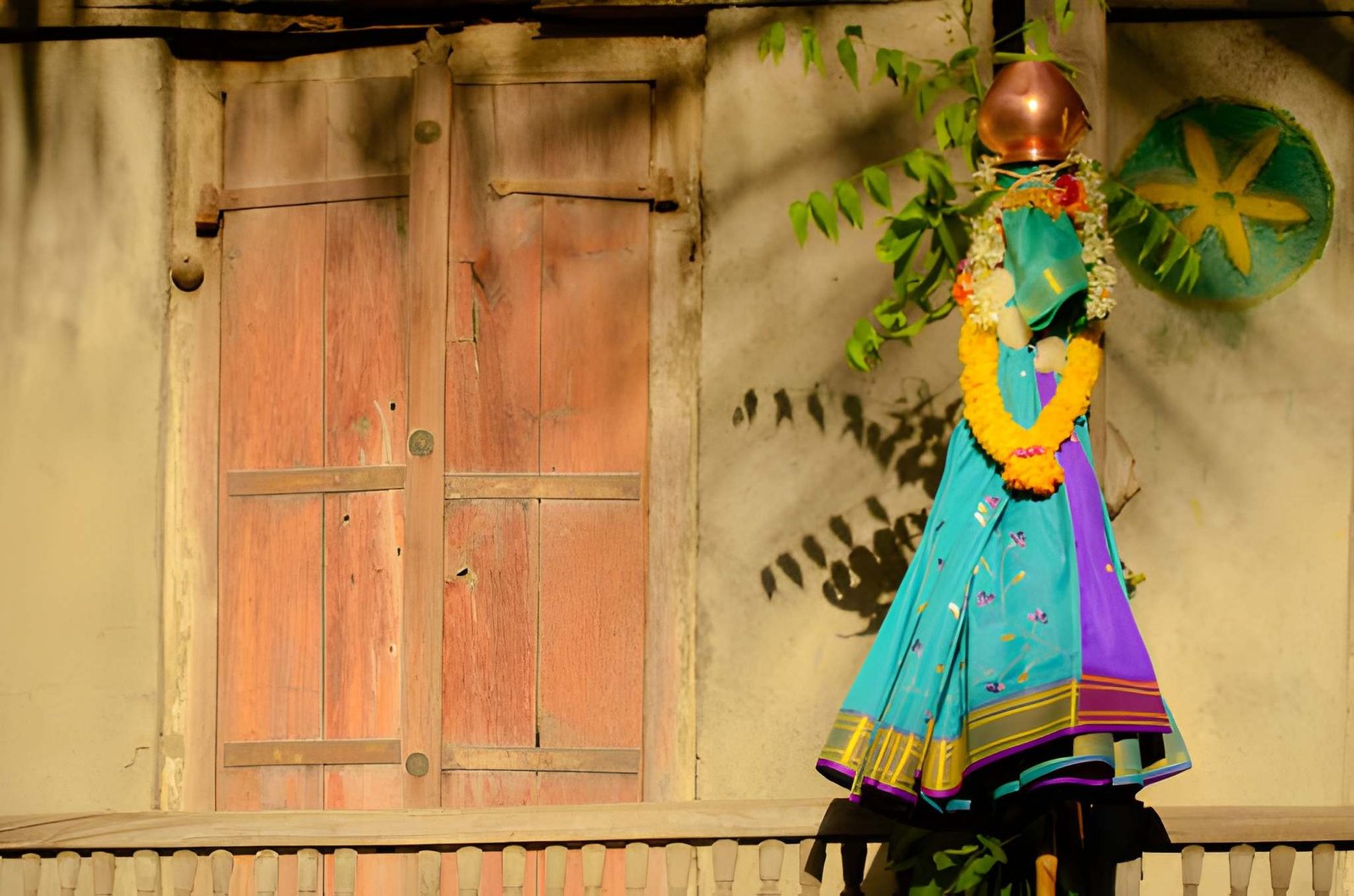
Assembling and Hoisting the Gudi
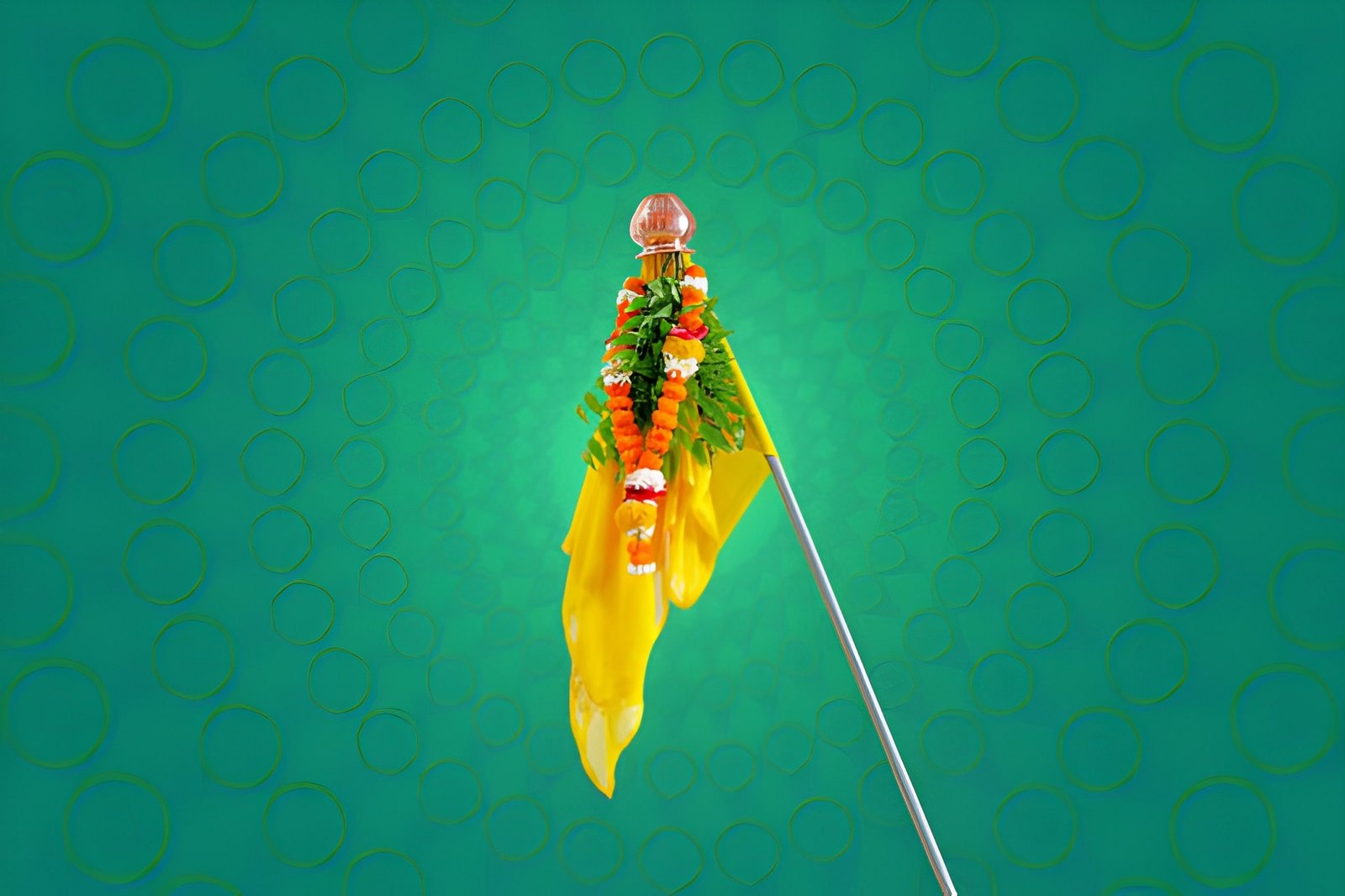
Prepare the gudi indoors before taking it to the entrance. The correct sequence for Gudi Padwa 2026 gudi preparation:
- Take a bamboo pole, five to ten feet in length
- Tie a piece of bright silk or brocade cloth, preferably in yellow, saffron, green, or red, near the top
- Attach fresh neem leaves and mango leaves at the top
- Add a garland of marigold and red flowers
- Thread a string of sugar crystals or mishri around the upper portion
- Place an inverted copper, silver, or brass kalasha at the very top
- Draw a swastika on the kalasha with kumkum
Place the assembled gudi on the right side of the main entrance or on a balcony, leaning slightly outward so it is clearly visible. Offer akshata, kumkum, and flowers to it. Light an oil lamp and incense at its base. Perform aarti. The gudi remains in place until sunset on March 19, 2026, when it is respectfully brought down after a short evening prayer.
Puja Guidelines for Gudi Padwa 2026
Devotees who wish to observe a vrat on Gudi Padwa 2026 may do so in one of the following ways:
- Nirjala: no food or water until the main puja is completed after sunrise
- Phalahar: fruits, milk, nuts, and dry fruits through the day until the fast is broken after puja
- Satvik bhojan: simple vegetarian food without onion, garlic, or strong spices throughout the day
During the vrat period, engage in japa, listening to katha, and charity to someone in need. The fast is broken after the complete puja and aarti with prasad and a light satvik meal.
Neem and Jaggery Ritual on Gudi Padwa 2026
After the gudi puja on the morning of Gudi Padwa 2026, every family member consumes a mixture of tender neem leaves and jaggery. Sometimes a small amount of tamarind, coriander seeds, cumin seeds, salt, and asafoetida are added to this preparation. This is one of the most distinctive practices of Gudi Padwa 2026. The bitterness of neem and the sweetness of jaggery together carry a teaching: the new year will contain both kinds of moments, and the wise devotee receives both as Ishvara’s prasad.
From an Ayurvedic standpoint, consuming neem at the onset of the hot season purifies the blood, strengthens immunity, and prepares the body for summer.
What to Offer as Bhog on Gudi Padwa 2026
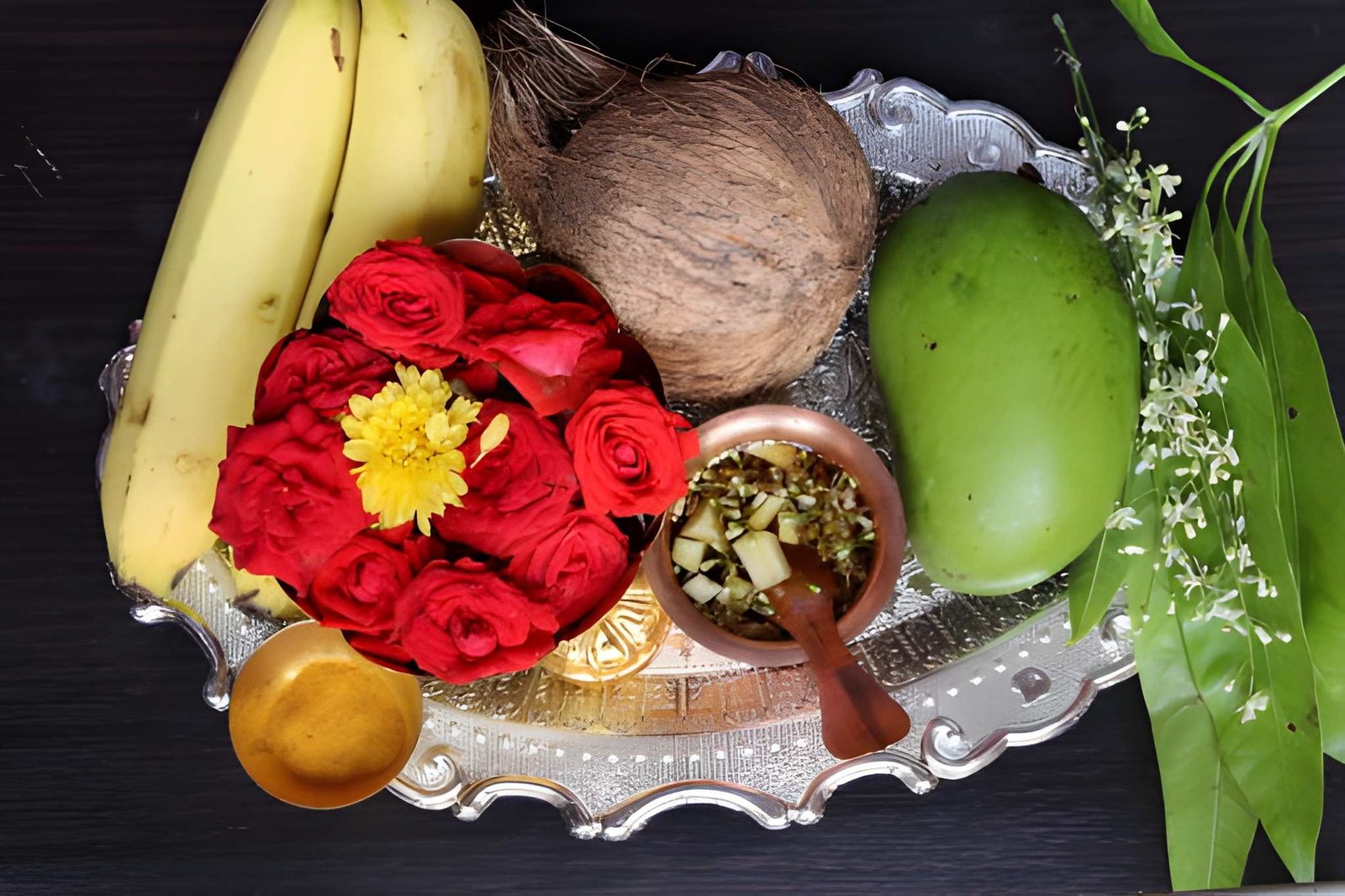
- Neem-jaggery mixture as the first naivedya
- Puran poli with ghee
- Shrikhand with poori
- Fresh seasonal fruits
- Other sweet preparations according to family tradition
All naivedya is first offered to the household deity and the gudi before being partaken as prasad by the family.
Gudi Padwa 2026 Puja Katha: Why Listening to It Matters
On Gudi Padwa 2026, after the gudi puja and aarti, the tradition of reading or listening to the Vrat Katha holds a special place. The Gudi Padwa Vrat Katha is not simply a narration of old events. It is a living transmission of the values that this festival carries: the courage of Rama, the faith of Shalivahana, the gratitude of a civilization that remembers its dharmic roots.
The two principal kathas associated with Gudi Padwa 2026 observance are the account of Bhagwan Rama’s return to Ayodhya after the defeat of Ravana and the coronation that began a new era of righteous rule, and the story of King Shalivahana’s miraculous clay army and his establishment of the Shaka Samvat.
The best time to read or listen to the katha on Gudi Padwa 2026 is immediately after the morning puja, while the lamp is still burning and the family is gathered together. Listening with full attention and bhava, not as a ritual to be completed quickly, but as an act of sravanam, is what gives the katha its full potency. Whatever samskara the katha places in the mind on the first morning of the new year stays with the listener through the months ahead.
Where Gudi Padwa 2026 Will Be Celebrated
Gudi Padwa 2026 will be observed across Maharashtra, Goa, and the Konkan belt in homes and temples alike. The celebrations are both domestic and communal, making the festival visible not just inside the puja room but across the streets and neighborhoods.
Home Celebrations
Every devout household in Maharashtra will observe Gudi Padwa 2026 with the full sequence: oil bath, rangoli, gudi hoisting, puja, katha, neem-jaggery, festive meal, and panchanga sravana. Even in apartments in Mumbai, Pune, Nagpur, and other cities, the gudi will appear on balconies and window ledges, announcing the arrival of the new year.
Temple Celebrations for Gudi Padwa 2026
Several important temples observe Gudi Padwa 2026 as a major annual event with special pujas, processions, and community gatherings:
- Renuka Mata Mandir: Special puja and celebrations on the occasion of Gudi Padwa 2026
- Saptashringhi Mandir: One of Maharashtra’s most visited Shakti shaktipeethas, where Gudi Padwa 2026 is celebrated with particular devotion
- Tuljha Bhavani Mandir: The kuldevata of the Bhonsle clan, where Gudi Padwa 2026 carries deep historical and devotional significance
Devotees planning to visit these temples on Gudi Padwa are advised to check for special darshan timings and puja schedules closer to the date.
Community Shobha Yatras
In cities across Maharashtra, Gudi Padwa 2026 will see shobha yatras, community processions through streets with groups in traditional Maharashtrian attire, dhol-tasha teams, lezim performances, and collective displays of Maratha cultural pride. These processions bring the festival out of the home and into the public life of the community, reinforcing the sense of shared identity that Gudi Padwa 2026 carries.
Benefits of Observing Gudi Padwa 2026
Religious Benefits
Observing Gudi Padwa 2026 with sincerity and devotion is believed to invite the blessings of Brahma, Vishnu, and Lakshmi into the household for the entire samvatsara. The gudi raised at the threshold is understood as a protective marker that keeps negative forces away and draws divine grace into the home. Taking a sankalpa on Gudi Padwa 2026 for sadhana, charity, or dharmic conduct gives that vow the added strength of being made on a tithi specially charged by the Creator’s own act of cosmic initiation.
The day is also significant for grihastha dharma. Starting the year with puja performed with full family participation creates a foundation of shared values and mutual blessing that strengthens family bonds through the year.
Astrological Benefits of Gudi Padwa 2026
Jyotisha identifies Chaitra Shukla Pratipada as one of the few tithis where every moment is inherently auspicious, without the need for a separately calculated muhurta. On Gudi Padwa 2026, the combination of the first tithi of the Shukla Paksha, the season of Vasant Ritu, and the energy of the new samvatsara makes this an especially powerful day for:
- Beginning new businesses or professional projects
- Purchasing property, gold, or a vehicle
- Signing significant agreements or making major financial decisions
- Performing griha pravesh and other samskaras
- Sowing seeds and beginning the new agricultural cycle
Farmers in Maharashtra observe Gudi Padwa 2026 by ploughing their fields on this day, believing that what is begun in the earth on Chaitra Shukla Pratipada will bear good fruit through the year.
Do’s and Don’ts on Gudi Padwa 2026
Do’s
- Wake up before sunrise and perform abhyanga snana on Gudi Padwa 2026
- Wear new or clean traditional clothes for the gudi puja
- Assemble the gudi with all its elements: silk cloth, neem and mango leaves, flower garland, sugar crystals, and kalasha
- Place the gudi on the right side of the entrance or on the balcony before beginning puja
- Consume the neem-jaggery mixture after puja as a ritual and as an Ayurvedic practice
- Listen to or read the Gudi Padwa Vrat Katha with full attention
- Read the new panchanga or listen to samvatsar phal to understand the year ahead
- Offer puran poli, shrikhand, and fruits as naivedya
- Give daan to someone in need on Gudi Padwa 2026
- Touch the feet of elders and receive their blessings for the new year
- Bring the gudi down respectfully at sunset on March 19, 2026
Don’ts
- Do not hoist the gudi before performing the morning puja and sankalpa
- Do not use cloth that is torn, dirty, or of a dark color for the gudi
- Do not skip the neem-jaggery ritual, as it is both a sacred and a medicinal observance
- Do not leave the gudi hoisted after sunset on Gudi Padwa 2026
- Do not consume non-vegetarian food on Gudi Padwa 2026
- Do not begin the day’s activities before the snana and morning prayer
- Do not treat the day as an ordinary holiday; the entire Pratipada tithi is a period of active devotion and intention
- Do not postpone the puja to afternoon without reason; the morning hours after sunrise are the most auspicious window on Gudi Padwa 2026
Frequently Asked Questions About Gudi Padwa 2026
What is the date of Gudi Padwa 2026? Gudi Padwa 2026 is on Thursday, March 19, 2026. The Pratipada tithi begins at 06:52 AM on March 19, 2026, and ends at 04:52 AM on March 20, 2026.
At what time should the gudi be hoisted on Gudi Padwa 2026? The gudi should be hoisted in the morning after sunrise on March 19, 2026. Since the tithi begins at 06:52 AM on that day, devotees can perform the gudi hoisting shortly after that time, ideally before or during the first prahar of the day.
Which deities are worshipped on Gudi Padwa 2026? On Gudi Padwa 2026, Bhagwan Ganesha is invoked at the beginning of all puja. Bhagwan Brahma is worshipped as the Creator who initiated creation on this tithi. Bhagwan Vishnu is honored in his forms as Matsya and Rama. Goddess Lakshmi is worshipped for prosperity and abundance in the new samvatsara.
Can Gudi Padwa 2026 puja be performed in an apartment? Yes, absolutely. Even in apartments with limited space, a smaller gudi can be placed on the balcony or attached to a window facing outward. The bhava and sincerity of the devotee matter more than the scale of the setup. What is essential is the correct elements on the gudi, the morning puja, the neem-jaggery ritual, and the sankalpa.
What is the significance of the inverted kalasha on the gudi? The inverted kalasha at the top of the gudi is identified in tradition as the purna-kalasha of auspiciousness placed as a victorious crown. It is also associated with Brahma’s flag-top, indicating divine sovereignty at the threshold. Some commentaries also see the inversion as a teaching about ego: turn yourself upside down, empty your inner vessel, and hold it up to the sky of divinity.
Is Gudi Padwa 2026 the same day as Ugadi? Yes. Both Gudi Padwa 2026 and Ugadi 2026 fall on the same tithi, Chaitra Shukla Pratipada, which is March 19, 2026. The theological foundation is shared: the beginning of the new Hindu year and the renewal of creation. The ritual forms differ. Maharashtra and Konkan observe the gudi hoisting. Andhra Pradesh, Telangana, and Karnataka celebrate with Ugadi Pachadi and panchanga sravanam.
What is the new samvatsara beginning on Gudi Padwa 2026? Gudi Padwa 2026 marks the beginning of Shri Shalivahan Shaka 1948. The samvatsara name for the year should be confirmed from your local panchanga. The detailed astrological forecast for the new samvatsara is traditionally read aloud on Gudi Padwa 2026 as part of the observance.
Conclusion
Gudi Padwa 2026 arrives on Thursday, March 19, 2026, with the Pratipada tithi beginning at 06:52 AM. As the gudi goes up at every doorstep that morning, it carries with it the memory of Brahma’s creation, Rama’s victory, Shalivahana’s triumph, and the unbroken chain of Maharashtrian dharmic tradition. Gudi Padwa 2026 is an invitation to step into the new samvatsara not with noise and distraction but with genuine prayer, clean intention, and the sincere wish for the year ahead to be lived well.
May Gudi Padwa 2026 bring your household the blessings of Brahma’s grace, Vishnu’s protection, and Lakshmi’s abundance. May the gudi you raise stand as a true victory flag of dharma at your threshold.
Explore full rituals, puja vidhi, vrat katha, and the complete significance of this sacred festival here.
Shubamastu!
Help Us Keep This Guide Accurate
At Temple Connect, we regularly update our content to ensure you receive the most relevant and authentic information. If you’d like to suggest improvements, share regional traditions, or report any updates, we’d love to hear from you at connect@templeconnect.com
Follow us on our X platform.
Note to Readers: This article is intended for educational and devotional purposes. The information presented is based on traditional Hindu scriptures, contemporary religious practice, and scholarly research.
Individual observance may vary based on family tradition, regional custom, and personal circumstance. For specific guidance, especially regarding complex astrological remedies, please consult qualified priests, pandits, or Vedic astrologers. The health-related aspects mentioned are traditional beliefs and should not replace professional medical advice.