Bhalachandra Sankashti Chaturthi: Complete Guide to Rituals, Significance, and Vrat Vidhi
Bhalachandra Sankashti Chaturthi is one of the most revered among the twelve monthly Sankashti Chaturthis in the Hindu calendar, observed with deep devotion, fasting from sunrise to moonrise, and heartfelt worship of Bhalachandra Ganapati. This festival holds the power to dissolve hardship, restore inner peace, and bless devotees with wisdom, prosperity, and the grace of Ganesha in his most luminous form.
What Is Bhalachandra Sankashti Chaturthi?
There is a beautiful practice in Sanatana Dharma where each lunar month offers a dedicated day to approach Ganapati and seek his grace. This day is called Sankashti Chaturthi. Among all twelve such monthly observances in a year, the one that falls in the month of Chaitra holds a special place, because on this day, devotees worship Ganesha in his Bhalachandra form, the one who wears the crescent moon on his forehead.
The word Bhalachandra itself tells you everything. Bhala means forehead, and Chandra means the moon. So Bhalachandra is “the one with the moon on his forehead.” This is not just a decorative description. There is a profound mythological and philosophical reason why Ganesha carries the crescent moon, and understanding that story changes the entire way you experience this festival.
Sankashti comes from the Sanskrit word Sankashta, which means hardship, crisis, or a difficult situation from which one cannot easily escape. When life places you in such a situation, when confusion clouds your mind, when obstacles pile up before every effort, when relationships suffer and decisions become impossible, this is precisely the kind of moment this vrat was designed for. Devotees fast through the day, perform sincere puja in the evening, and wait patiently to sight the moon before breaking their fast. This simple act of surrender and devotion, done with full faith, is said to dissolve even long-standing obstacles by the grace of Bhalachandra Ganapati.
Chaitra is a month of fresh beginnings in the Hindu calendar. It marks the onset of the Hindu new year in many traditions, and it carries within it a natural energy of renewal and new starts. Worshipping the Bhalachandra form during this time connects the devotee to that same energy of renewal, the waning-waxing rhythm of life that the crescent moon itself represents.
The Name and Its Deeper Meaning
Every name in our tradition carries layers. When the great acharyas and kathakars explain these names, they do not merely translate them. They unfold the philosophy hidden within the syllables.
Bhalachandra Ganapati is also sometimes referred to as Bhalachandra Maha Ganapati in certain Agamic texts and temple traditions. This Maha prefix tells you that this form of Ganesha is not a minor or secondary aspect. He is the complete, sovereign form worshipped specifically when the seeker needs emotional grounding, mental clarity, and relief from the kind of obstacles that arise from inner confusion rather than external circumstances alone.
The crescent moon on Ganesha’s forehead is deeply symbolic. In our tradition, the moon governs the mind. The Sanskrit word for mind, Manas, is linked to the moon, Chandra. When the moon is afflicted or agitated, the mind reflects that agitation. When the moon is serene and balanced, the mind too becomes capable of sound judgment, clear thinking, and compassionate feeling. By wearing the crescent moon on his own forehead, Bhalachandra Ganapati essentially declares: I am the master of the mind. I am the one who governs what the moon represents. Come to me when your mind is troubled, and I will restore its equilibrium.
This is not merely poetic. In Vedic astrology, there is a condition called Chandra dosha, an affliction in one’s birth chart caused by an unfavorably placed or weakened Moon. Devotees who suffer from emotional instability, anxiety, indecisiveness, troubled relationships, or difficulty in forming sound judgments are specifically advised to observe Bhalachandra Sankashti Chaturthi with full sincerity, because this vrat directly invokes the deity who holds dominion over the moon and its effects.
Religious Significance of Bhalachandra Sankashti Chaturthi
Ganapati holds a unique place in the entire structure of Hindu worship. He is Pratham Pujya, the first among all deities to be invoked in any ritual, any auspicious beginning, any prayer. Whether you are beginning a business venture, a wedding ceremony, a journey, an educational pursuit, or a temple consecration, you begin with Ganesha. This is not merely tradition for tradition’s sake. There is a reason embedded in dharmic understanding.
Ganesha is Vighnaharta, the remover of obstacles. And he is also Vighnakarta, the one who creates obstacles when the time is not right or when the seeker is not prepared. This dual power makes him the supreme gatekeeper of all auspicious undertakings. To have his grace means your path opens. To ignore him or act in ways that displease him means obstacles appear. This is why every Sankashti Chaturthi is so important, and why Bhalachandra Sankashti Chaturthi in Chaitra holds particular significance.
The Mudgala Purana, which is the primary Purana devoted entirely to Ganesha, describes in detail the power and merit of each Sankashti vrat. It speaks of how observing these fasts with sincerity and proper vidhi can dissolve accumulated sins, clear karmic burdens, and open the path for material and spiritual fulfillment. The Shiva Purana also praises the Sankashti vrat as one that grants peace, success, and family welfare when observed faithfully.
What makes the Chaitra Bhalachandra Sankashti especially significant, as narrated in the vrat katha itself, is that Ganesha tells Parvati directly: this particular fast in the month of Chaitra is unparalleled across all worlds. When a deity himself declares the greatness of a vrat, the tradition receives it with the highest reverence.
The practice also embodies a core teaching of our dharma: surrender before pride. The mythological origin of the Bhalachandra form is itself a story about what happens when arrogance is left unchecked and what happens when humility is embraced. Every aspect of this festival points back to that teaching.
Bhalachandra Sankashti Chaturthi Origin: The Story of the Moon’s Curse
To understand why Ganesha wears the moon on his forehead, you need to know this story. It is one of the most instructive and beloved stories in the Ganesha Purana tradition.
Once, during a grand feast hosted by Indra, the king of the devas, the Moon God Chandra was present along with all the devas and celestial beings. Ganesha was also present at this gathering. Now, Chandra, who was known for his beauty, his brilliant radiance, and his pride in his own appearance, looked at Ganesha and laughed. He mocked the elephant-headed deity, finding his form ridiculous. He made fun of Ganesha openly, showing no restraint or respect.
This was not just an act of bad manners. In our tradition, mocking any divine form, especially one as revered as Ganapati, is considered an act of great spiritual ignorance. The beauty of a form in our dharma is not measured by conventional aesthetics. Every divine form carries a sacred meaning, a cosmic function, and an inner beauty that goes far beyond what the physical eye perceives. To mock it reflects a person who is imprisoned in surface appearances and who lacks the wisdom to see deeper.
Ganesha, responding to this insult, cursed Chandra: you who pride yourself on your beauty and light shall lose all your luster. The moon began to wane immediately. The celestial world fell into distress. Without the moon’s light, the nights became completely dark, the tides of the oceans went out of balance, plants and living beings who depend on moonlight were affected. The devas and rishis pleaded with Ganesha to have mercy.
Ganesha, who is ever compassionate, heard their prayers. He did not fully reverse the curse, but he modified it. Instead of permanent darkness, the moon would wax and wane in cycles. It would diminish and then return to fullness, over and over again, through every month. This is the origin of the lunar cycle as understood in our tradition.
And as a reminder of this entire episode, a reminder of humility, of the consequences of pride, and of the grace that follows surrender, Ganesha adorned the waning crescent moon on his own forehead. This is Bhalachandra. The crescent on his brow is simultaneously a symbol of correction given to arrogance and an assurance given to the humble: I will restore what has been lost. I will bring the light back.
This is the mythology. But its teaching is entirely practical. How many of us mock what we do not understand? How many of us judge others by appearance alone? And how many of us have faced situations in life where our own pride, or someone else’s, caused serious damage to relationships, opportunities, and peace of mind? The Bhalachandra story is not just a celestial event. It is the story of every human life at some point.
Bhalachandra Ganapati: The Form and Its Iconography
When you sit before the murti or pratima of Bhalachandra Ganapati on this sacred day, it helps to understand what you are looking at. Every element of this divine form has meaning.
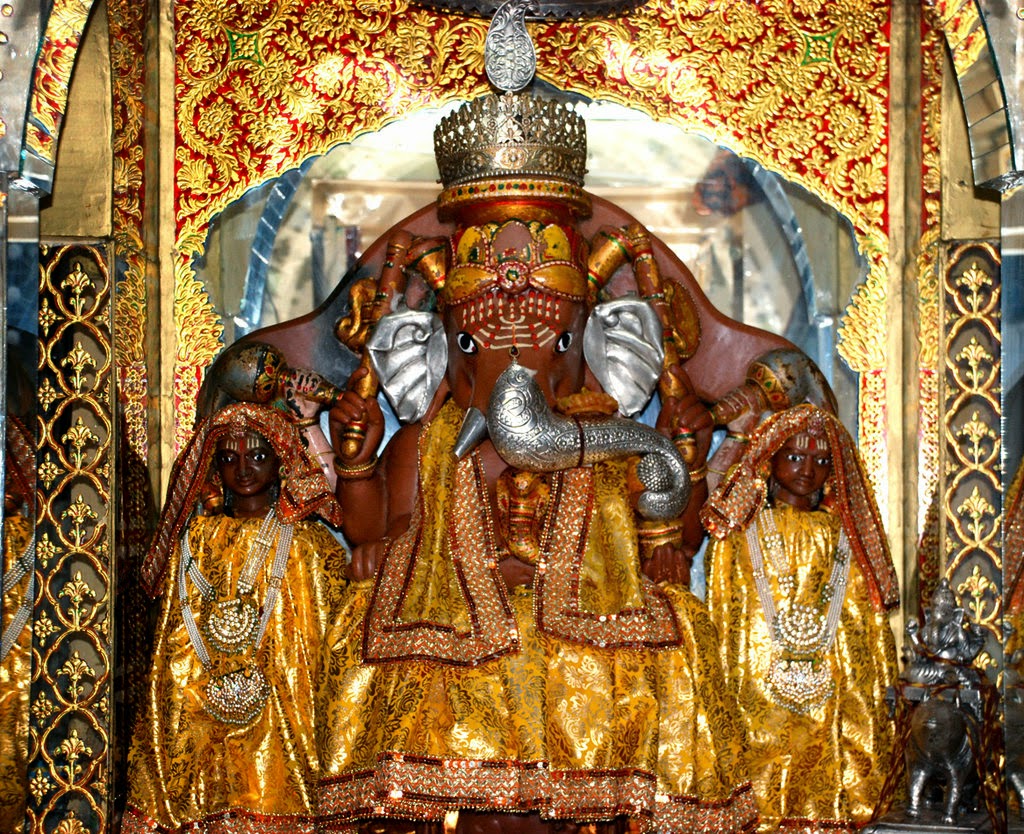
The crescent moon on the forehead, as we have already understood, represents mastery over the mind and the lunar forces that govern it. The tilak on the forehead represents purity of thought and divine grace descending upon the devotee. The elephant head itself represents the perfect combination of immense power and deep wisdom. No other animal in our world is both as powerful and as intelligent as the elephant. Ganapati carries both.
The large belly of Ganapati is not simply a physical feature. It symbolizes the capacity to hold within oneself all experiences, good and bad, without being disturbed. A devotee who has Ganesha’s grace develops this same quality: the ability to contain life’s contradictions without losing equilibrium. The modak held in Ganesha’s hand represents the sweetness of spiritual realization, the joy that comes not from outer pleasures but from inner awakening.
The curved trunk represents adaptability and the divine capacity to navigate around obstacles rather than always confronting them head-on. There is wisdom in knowing when to push forward and when to find a different path. Ganesha’s trunk teaches this.
Bhalachandra Ganapati is identified as one of the 32 forms of Ganesha described in the Mudgala Purana. His Peeta, or sacred seat, is called Agama Peeta, which connects this form directly to the Agamic traditions of temple worship, grounding him in the most authoritative streams of Hindu ritual practice.
When you worship Bhalachandra Ganapati, you are worshipping the full power of Ganesha as he who governs both intellect and intuition, both the rational and the emotional dimensions of human consciousness.
Bhalachandra Sankashti Chaturthi Among the Twelve Sankashti Observances
Each month in the Hindu lunar calendar has its own Sankashti Chaturthi, and each one honors a different form of Ganesha with a different katha, different specific benefits, and different iconographic focus. Here is how the different Sankashti Chaturthis compare:
| Month (Purnimanta) | Ganesha Form | Primary Focus |
|---|---|---|
| Chaitra | Bhalachandra Ganapati | Emotional balance, Chandra dosha relief, mental clarity |
| Vaishakha | Chakraraaja Ekadanta Ganapati | Protection from enemies, focus |
| Ashadha | Gajaanana Ganapati | Removal of greed |
| Shravana | Heramba Maha Ganapati | Protection for the weak |
| Bhadrapada | Vignaraja Maha Ganapati | Fame, obstacle dissolution |
| Ashwayuja | Vakratunda Maha Ganapati | Eradication of jealousy |
| Karthika | Ganadipa Maha Ganapati | Spiritual enlightenment |
| Margashira | Akuratha Maha Ganapati | Courage and strength |
| Pushya | Lambodara Maha Ganapati | Anger control |
| Magha | Dwijapriya Maha Ganapati | Knowledge and purity |
| Phalguna | Vikata Maha Ganapati | Mastery over desire |
| Adhika (intercalary) | Vibhuvana Palaka Ganapati | Universal protection |
What sets Bhalachandra apart from all these forms is the direct connection to the moon, the emotional mind, and the specific mythology of Chandra’s pride and redemption. All Sankashti Chaturthis share the core practice of fasting till moonrise and offering arghya to the moon, but on Bhalachandra Sankashti Chaturthi, this moon worship takes on a heightened significance because the very form of Ganesha being worshipped carries the moon as his own ornament.
When Is Bhalachandra Sankashti Chaturthi Observed?
Bhalachandra Sankashti Chaturthi falls on the Chaturthi tithi of Krishna Paksha in the Hindu month of Chaitra. This is the waning fourth day of the lunar fortnight following Holi.
In the Purnimanta calendar followed in North India, the month is called Chaitra. In the Amanta calendar followed in Maharashtra, Karnataka, and other southern regions, the same lunar period falls in Phalguna. Devotees should always verify the exact tithi and moonrise time in their local Panchang, as these vary by region and are essential for the correct timing of puja and breaking the fast.
The moonrise timing on this night is especially important. The fast must not be broken before the moon is sighted and arghya is offered. In some regions, the moon rises late in the night, and sincere devotees wait patiently however long it takes. This patience itself is considered part of the spiritual practice.
How to Observe Bhalachandra Sankashti Chaturthi: Complete Vrat Vidhi
Preparation the Day Before
The preparation for this Bhalachandra Sankashti Chaturthi vrat ideally begins a day earlier. Devotees who wish to observe it sincerely prepare the puja items in advance: fresh flowers, especially red flowers and durva grass which are very dear to Ganesha, modak or the ingredients to prepare it, coconut, jaggery, betel leaves, betel nut, sandalwood paste, kumkum, camphor, incense, a lamp with ghee or oil, and a clean murti or pratima of Bhalachandra Ganapati.
The home should be clean. The puja space should be arranged with care. The mind should be gently turned toward the purpose of the day, which is surrender, devotion, and sincere prayer.
Morning Rituals on the Day of the Vrat
- Wake up before sunrise, ideally during Brahma Muhurta
- Take a full bath with the intention of purification, both physical and mental
- Wear clean, preferably white or yellow clothes which are sattvic in nature
- Set up the puja space: place the Bhalachandra Ganapati murti or pratima, arrange flowers, light the lamp and incense
- Take the Sankalpa: formally state your intention for the vrat before the murti, naming yourself, your family, and the purpose of the observance, whether it is obstacle removal, family welfare, clarity in a decision, recovery from difficulty, or simply devotion
- Chant the Ganapati Atharvashirsha in the morning as the primary prayer to begin the day
- Read or listen to the Bhalachandra Sankashti vrat katha once in the morning if possible
Fasting Rules Throughout the Day
The fast begins at sunrise and continues until after moonrise and the offering of arghya to the moon. There are two levels of fasting practice:
Phalahar Upavasa: Permitted foods include fruits, milk, buttermilk, nuts, and foods made without grains. No onion, garlic, or non-vegetarian food under any circumstances. This is the commonly observed form.
Nirjala Upavasa: No food or water at all until after moonrise. This is the stricter form observed by deeply committed devotees. It is considered to yield greater merit but should only be attempted by those who are physically capable.
Important: Pregnant women, the elderly, those with medical conditions, and young children are permitted to take light fruits and milk without compromising the spiritual merit of the vrat. The intention and devotion matter more than physical rigidity in such cases.
Throughout the day, spend time in prayer, reading Ganesha Purana, listening to katha, or simply sitting quietly with the awareness of Ganesha’s presence. Avoid arguments, harsh speech, entertainment, and activities that pull the mind into distraction.
Evening Puja Vidhi: Shodashopachara Worship
The main puja is performed in the evening, ideally beginning after sunset and completing around the time of moonrise. Shodashopachara means sixteen forms of service or offerings, which together constitute a complete and royal reception offered to the deity.
The Sixteen Offerings in sequence:
- Avahana: Invoke Bhalachandra Ganapati with folded hands and prayer, welcoming him into the murti before you
- Asana: Offer a seat by placing a clean cloth or sacred base beneath the murti
- Padya: Offer water symbolically to wash the deity’s feet
- Arghya: Offer water mixed with flowers and sandalwood to honor the arrival
- Achamana: Offer water for sipping, symbolizing inner purification
- Snanam: Bathe the murti with Panchamrit: milk, curd, honey, ghee, and sugar, followed by plain water
- Vastra: Offer a fresh cloth or sacred thread
- Yajnopavita: Offer the sacred thread
- Gandha: Apply sandalwood paste to the murti
- Pushpa: Offer fresh flowers, with special importance given to red flowers and durva grass. Durva is especially dear to Ganesha and should be offered in sets of three or five blades
- Dhupa: Offer incense
- Dipa: Offer the lamp
- Naivedya: Offer cooked food items: modak, kheer prepared with milk and rice or vermicelli, coconut, jaggery, seasonal fruits. Modak holds the greatest significance as it is described as Ganesha’s most beloved food
- Achamana: Again offer water after the food
- Tambulam: Offer betel leaf and betel nut
- Pradakshina and Namaskara: Circumambulate the murti three times (or mentally if space is limited) and prostrate fully
After completing the Shodashopachara, chant “Om Bhalachandraya Namah” 108 times with full concentration. Also recite the Sankata Nashana Ganesha Stotra and the Ganapati Atharvashirsha if time permits.
Post-Moonrise Ritual: Chandra Arghya
This is a central and non-negotiable part of the Bhalachandra Sankashti Chaturthi vrat.
After the moon rises and becomes visible in the sky, step outside or go to a place where you can see it clearly. Prepare a copper or silver vessel with a mixture of water, milk, flowers preferably white, and sandalwood. Stand facing the moon with this vessel held in both hands.
Offer the arghya by pouring it out gently while chanting:
“Om Somaya Namah” or “Om Chandrashekaraya Namah” or “Om Chandraaya Namah”
After the arghya, fold your hands before the moon and offer a simple prayer from the heart. Thank Ganesha for his presence through the day. Pray for what you sincerely need. Let this be unhurried. This moment of standing before the moon after a full day of fasting and devotion has a quality of stillness that is hard to describe and must be experienced.
Only after this arghya is the fast to be broken.
Breaking the Fast
Break the fast with prasad from the puja: kheer, modak, fruits. If possible, offer food to a Brahmin or to the needy before eating yourself. This act of charity multiplies the merit of the vrat manifold according to the scriptural tradition.
Bhalachandra Sankashti Chaturthi Vrat Katha

Every Sankashti Chaturthi puja is incomplete without the recitation of the vrat katha specific to that month. The katha for Bhalachandra Sankashti Chaturthi is narrated as a dialogue between Ganesha and Parvati, and it carries within it the entire teaching of what this vrat can do and why.
Mother Parvati once approached her son Ganesha and asked him with great curiosity: “My dear child, tell me about the Chaturthi that falls in Krishna Paksha of Chaitra. What form should devotees worship? What should they observe? What is the fruit of this vrat?”
Ganesha replied with love and authority: “O Mother, on this day, a devotee should rise early, take a purifying bath, observe a full-day fast, and in the evening perform Shodashopachara puja to my Bhalachandra form. If possible, begin after observing Panchagavya purification in the morning. This vrat destroys all obstacles without exception and grants the seeker whatever they sincerely desire.”
Then Ganesha narrated the following story to illustrate the power of this vrat.
In a prosperous kingdom lived a righteous king called Mayurdhwaj. His rule was just and his heart was devoted to dharma. His kingdom flourished. However, despite performing many yajnas and prayers, he and his queen remained childless. This was the one sorrow in an otherwise blessed life.
After prolonged prayers and austerities, the great sage Yajnavalkya appeared before the king and blessed him. “You shall have a son,” the sage promised. And in time, a prince was indeed born to the royal couple, filling the palace with joy.
As the prince grew, King Mayurdhwaj decided to entrust the administration of his kingdom to his trusted minister Dharampal, in order to devote more time to the upbringing and guidance of the young prince. Dharampal was capable, loyal, and virtuous, and the transition was smooth.
Now, in Dharampal’s own family, there was his youngest daughter-in-law. This young woman was deeply devout, particularly devoted to Ganesha. She observed every Sankashti Chaturthi with great sincerity. She fasted through the day, performed puja in the evening, offered arghya to the moon, and dedicated her fasting to the welfare of her family.
Her mother-in-law, however, did not understand this devotion. In fact, she suspected it. She began to spread suspicion within the household, accusing her daughter-in-law of practicing some form of tantra or black magic through these rituals. This was entirely false, but it created a tense atmosphere in the home. Instigated by these accusations, her husband too began to torment her, pressuring her to stop these observances.
The daughter-in-law bore all of this with patience. She did not argue, she did not retaliate, she did not abandon her faith. She continued to observe the Bhalachandra Sankashti Chaturthi vrat with full devotion. And in her heart, she quietly prayed to Ganesha: “O Gajaanana, you see everything. Please show your grace. Open the eyes of this family so they can understand your glory.”
Ganesha heard her prayer. And then he did what Ganesha does when a devotee has been insulted on his account: he created a situation that would force understanding upon those who refused to see.
The young prince of the kingdom was mysteriously hidden by Ganesha’s divine arrangement. The prince disappeared without a trace. Only his clothes and jewels were found scattered inside Dharampal’s palace. When the king heard of this, he was beside himself with grief and fury. He sent investigators immediately. They found the prince’s belongings inside Dharampal’s house. This was enough for the king to conclude, in his panic and grief, that Dharampal had orchestrated the disappearance of his son.
The king threatened Dharampal with execution if the prince was not returned. The minister was terrified. He had no idea what was happening. He interrogated his entire household. Everyone was equally confused and frightened. No one knew where the prince was.
Then the youngest daughter-in-law, that same woman who had been mocked and tormented for her devotion, spoke up.
She said to her father-in-law with calm clarity: “Father, this is not a human conspiracy. This is the consequence of having insulted the Sankashti vrat of Ganesha. My puja was mocked in this household. Those who ridiculed it brought this trouble upon all of us. There is only one way out. The entire family must observe the Bhalachandra Sankashti Chaturthi vrat together, with sincere hearts and without any remaining doubt or contempt. Only then will Ganesha restore the prince.”
Dharampal listened. There was nothing else he could do. He approached the king, explained the situation honestly, and the king, desperate for his son’s return, agreed to declare a kingdom-wide observance of this vrat.
The entire kingdom fasted on that Chaturthi. Every household performed the Shodashopachara puja. The vrat katha was recited in every home. Modak and durva were offered with full devotion. Arghya was given to the moon at moonrise. The prayers rose to Ganesha with collective sincerity.
Ganesha was pleased. The prince was restored, appearing suddenly as though he had never been away. The joy in the kingdom was immeasurable. The king came personally to Dharampal’s home and honored the daughter-in-law who had guided them all through this crisis. He also decreed that Bhalachandra Sankashti Chaturthi would be observed annually throughout his kingdom in perpetuity.
Ganesha concluded this story to Parvati saying: “This fast in the month of Chaitra is unparalleled across all three worlds. It was this same katha that Sri Krishna narrated to Yudhishthira when the Pandavas had lost their kingdom and were searching for a path back. The one who observes this vrat with faith, fasts sincerely, performs puja with devotion, and recites this katha, will find that even what appears completely lost can be restored.”
This is the Bhalachandra Sankashti Chaturthi Vrat Katha. It must be recited or heard during the puja on this day for the vrat to yield its complete fruit.
Key Mantras and Stotras for This Day
The following mantras and stotras hold special potency when recited on Bhalachandra Sankashti Chaturthi:
Primary Mantra for the Day: Om Bhalachandraya Namah (Chant 108 times during evening puja)
Beej Mantra of Ganesha: Om Gam Ganapataye Namah
Dhyana Mantra: Om Vakratunda Mahakaya Suryakoti Samaprabha Nirvighnam Kuru Me Deva Sarva Karyeshu Sarvada
For Moon Arghya: Om Somaya Namah Om Chandrashekaraya Namah
Stotras to Recite:
- Sankata Nashana Ganesha Stotra: This stotra specifically addresses crisis resolution and is perfectly aligned with the Sankashti theme
- Ganapati Atharvashirsha: The Upanishadic hymn of Ganesha, considered the most powerful text for invoking Ganesha’s presence
- Sri Ganesha Ashtottara Shata Namavali: The 108 names of Ganesha, any of which can be used for flower or durva offering during puja
Astrological Significance: Moon, Mind, and Ganesha
The connection between Bhalachandra Sankashti Chaturthi and Vedic astrology is significant and worth understanding, especially for devotees who may be experiencing certain kinds of difficulties in life.
In Jyotisha, the Moon represents the mind, emotions, mother, relationships, and the rhythm of life. When the Moon is weak, afflicted, or poorly placed in a birth chart, the native experiences restlessness, emotional instability, trouble with maternal figures, difficulty in forming lasting relationships, indecisiveness, and a general sense of being unsettled. This is Chandra dosha in its various forms.
The Bhalachandra Sankashti vrat is considered one of the most effective remedies within the devotional framework for such conditions. The Chaturthi tithi in Krishna Paksha, the waning moon phase, is itself astrologically charged with lunar energy. Performing the Chandra arghya during this tithi with Ganesha mantras, combining the planetary remedy of moon worship with the devotional surrender to Bhalachandra Ganapati, creates a powerful alignment.
Panchang timings matter here. The Chaturthi tithi should be current during the puja hours and ideally at moonrise. Devotees are advised to consult the Panchang for their region for exact tithi timings and the precise moonrise time, since these vary significantly across different cities and regions.
Celebration Practices: At Home and in Temples
Home Celebrations
Most devotees observe Bhalachandra Sankashti Chaturthi in the home itself. The home puja, performed by the family together, with the vrat katha being recited aloud, the modak being prepared with care, the arghya being offered together under the open sky at moonrise, carries a specific beauty and intimacy that is hard to replicate elsewhere.
In Maharashtra and Karnataka, where Ganesha worship is especially deep in the cultural fabric, this day sees entire neighborhoods coming together. Families invite neighbors and relatives for the katha recitation. Modak is distributed as prasad. Children participate in the evening puja. The collective arghya offered to the moon by multiple families together creates a powerful atmosphere of shared devotion.
Temple Observances
Major Ganesha temples across India observe Bhalachandra Sankashti Chaturthi with special programs:
| Temple | Location | Highlights |
|---|---|---|
| Siddhivinayak Temple | Mumbai, Maharashtra | Special abisheka, long queues of devotees, midnight moonrise puja |
| Chintamani Temple | Theur, Pune | One of Ashtavinayaka, special katha programs |
| Ranjangaon Mahaganapati | Near Pune | Ashtavinayaka temple, large gatherings |
| Shri Mahaganapati Temple | Gokarna, Karnataka | Unique coastal Ganesha tradition |
| Kanipakam Vinayaka | Andhra Pradesh | Mass abhisheka and annadanam |
| Rockfort Ucchi Pillayar | Tiruchirappalli | Ancient hilltop temple, special evening puja |
| Moti Dungri Ganesh | Jaipur, Rajasthan | Large North Indian Ganesha shrine |
Visiting a Ganesha temple on this day, even outside your city, is considered very meritorious. Many devotees combine temple darshan in the early evening with home puja for the moonrise ritual.
Charity and Service
Feeding the needy on this day is considered an act that multiplies the merit of the entire vrat. The tradition specifically mentions feeding Brahmins, the poor, animals especially cows, and distributing food in Ganesha’s name. Even in urban settings, many devotees arrange for food distribution to workers, donate to food drives, or offer food to the birds and animals on this day.
Benefits of Observing This Vrat Sincerely
The Puranas and tradition attribute the following benefits to sincere observance of Bhalachandra Sankashti Chaturthi:
- Relief from obstacles that have persisted despite effort and sincere intention
- Emotional stabilization: a calmer, more grounded mental state in daily life
- Improvement in relationships affected by communication difficulties or misunderstandings
- Relief from Chandra dosha related difficulties in one’s birth chart
- Clarity in decision-making, especially in situations where one has been confused or paralyzed by choices
- Restoration of what has been lost, whether a relationship, an opportunity, a position, or one’s sense of direction in life
- The dissolution of past karmic burdens that have been creating recurring patterns of difficulty
- Progress in spiritual practice: deeper meditation, more consistent sadhana, and a felt sense of Ganesha’s presence
What the tradition consistently emphasizes is that these benefits come not merely through the mechanical performance of the puja, but through the combination of sincere fasting, devoted prayer, and genuine surrender. Ganesha responds to the heart. The vrat katha itself demonstrates this: the daughter-in-law received Ganesha’s grace not because her puja was elaborate, but because her faith was unshakable and her heart was pure even under pressure.
Frequently Asked Questions About Bhalachandra Sankashti Chaturthi
Q: What if I cannot sight the moon due to cloudy weather? If the moon is not visible due to clouds but the moonrise time is confirmed in the Panchang, devotees may offer the arghya in the direction of the moon at the given moonrise time, trusting that the offering reaches its destination even without visual contact. The intention and timing matter, not just the sighting.
Q: Is it necessary to do Shodashopachara or can I do a simpler puja? Shodashopachara represents the ideal and complete form of worship. However, if resources, time, or circumstances do not permit the full sixteen-step puja, offering what you sincerely have, with full devotion, flowers, lamp, incense, modak, and the mantra, is entirely acceptable. Ganesha receives the devotion behind the offering, not only the offering itself.
Q: How many times should one observe this vrat before stopping? The traditional practice is to observe it consistently across multiple months and years. Some devotees take a vow to observe it for a specific number of months, typically 11 or 21 consecutive Sankashti Chaturthis, often completing it with an Udyapan, a special concluding puja and feast. However, there is no rule against observing it throughout one’s life without any set endpoint.
Q: Can men observe this vrat equally, or is it more associated with women? Bhalachandra Sankashti Chaturthi is observed by both men and women. The vrat katha features a woman as the central devotee, which has perhaps created an impression in some communities that it is women’s practice. But there is no such restriction in scripture. The Purana stories show kings, ministers, and entire communities observing it. Anyone seeking Ganesha’s grace can and should observe it.
Q: What should not be done on this day? Avoid consuming non-vegetarian food, alcohol, onion, and garlic on this day. Avoid harsh speech, arguments, and any activity that agitates the mind. Avoid watching entertainment content that pulls the mind away from devotion. Physical and mental purity together make this day meaningful.
Q: If I have never observed this vrat before, how do I begin? Simply begin. Take the sankalpa in the morning, stating clearly before Ganesha that you are observing this vrat for the first time and seeking his blessings. Fast as much as you are able. Perform the puja in the evening with whatever you have. Read or listen to the katha. Offer arghya at moonrise. Ganesha is accessible to every sincere seeker regardless of experience or expertise in ritual.
Q: What is the relationship between Sankashti Chaturthi and Vinayaka Chaturthi? These are two different observances. Sankashti Chaturthi falls in Krishna Paksha, the waning fortnight, and is observed monthly. Vinayaka Chaturthi falls in Shukla Paksha, the waxing fortnight, and is also observed monthly. The most famous Vinayaka Chaturthi is in the month of Bhadrapada, celebrated as the grand public festival of Ganesh Chaturthi. Sankashti Chaturthi has a more personal, introspective character focused on fasting and prayer, while Vinayaka Chaturthi is more celebratory. Both are equally valid and beloved.
Bhalachandra Sankashti Chaturthi in Maharashtra and Karnataka: Regional Traditions
Maharashtra and Karnataka have the richest living traditions of Sankashti Chaturthi observance. In Maharashtra, this vrat is considered one of the most important Ganesha-related observances of the year, with Siddhivinayak temple in Mumbai and the eight Ashtavinayaka temples across Pune and its surrounding districts seeing massive attendance.
In Karnataka, particularly in the Gokarna region and in old Mysuru, the Ganesha tradition is deeply intertwined with the Shaiva tradition, and the Bhalachandra form resonates especially because of the Shiva connection: Ganesha is Shiva’s son, and the crescent moon is also Shiva’s ornament. Devotees of Shiva who also observe Ganesha vrats find the Bhalachandra form to be a particularly natural object of devotion.
In Andhra Pradesh and Telangana, the tradition is equally strong, though perhaps less publicized. The Kanipakam Vinayaka temple in Chittoor draws large numbers on every Sankashti Chaturthi, and the annadanam, feeding of devotees, on this day is a major act of community devotion.
In Tamil Nadu, Ganesha is Pillayar, and the Sankashti observance known locally as Sankatahara Chaturthi is among the most widely observed fasts in the state.
Conclusion
There is a tendency in modern life to approach festivals as events to be attended and rituals to be completed. But Bhalachandra Sankashti Chaturthi, understood deeply, asks something more from the devotee.
It asks: Are you willing to hold your faith even when the people around you mock it? The daughter-in-law in the vrat katha did. Are you willing to wait with patience for Ganesha’s timing, even when circumstances look hopeless? She did. Are you willing to serve as a guide to others who are struggling, even when they have been unkind to you? She did that too.
Ganesha’s grace did not come to her because her puja was perfect. It came because her devotion was genuine and her character was rooted in dharma. The external ritual was the expression of an internal state of surrender and faith.
This is what every Bhalachandra Sankashti Chaturthi is calling the devotee toward: not merely a day of fasting and puja, but a genuine act of turning toward Ganapati with the full weight of one’s trust, laying before him the burden of whatever hardship or confusion one is carrying, and trusting completely that the same Ganesha who restored the waning moon, who brought back the missing prince, who has been invoked at the beginning of every sacred undertaking since the beginning of time, is capable of illuminating your path too.
Bhalachandra Ganapati, the one who wears the crescent moon in humility, watches over all who come to him with an honest heart.
Ganapati Bappa Morya!
Help Us Keep This Guide Accurate
At Temple Connect, we regularly update our content to ensure you receive the most relevant and authentic information. If you’d like to suggest improvements, share regional traditions, or report any updates, we’d love to hear from you at connect@templeconnect.com
Follow us on our X platform.
Note to Readers: This article is intended for educational and devotional purposes. The information presented is based on traditional Hindu scriptures, contemporary religious practice, and scholarly research.
Individual observance may vary based on family tradition, regional custom, and personal circumstance. For specific guidance, especially regarding complex astrological remedies, please consult qualified priests, pandits, or Vedic astrologers. The health-related aspects mentioned are traditional beliefs and should not replace professional medical advice.