Chaitra Navaratri: Nine Nights of the Divine Mother, Sacred Rituals, Puja Vidhi, and Complete Observance Guide
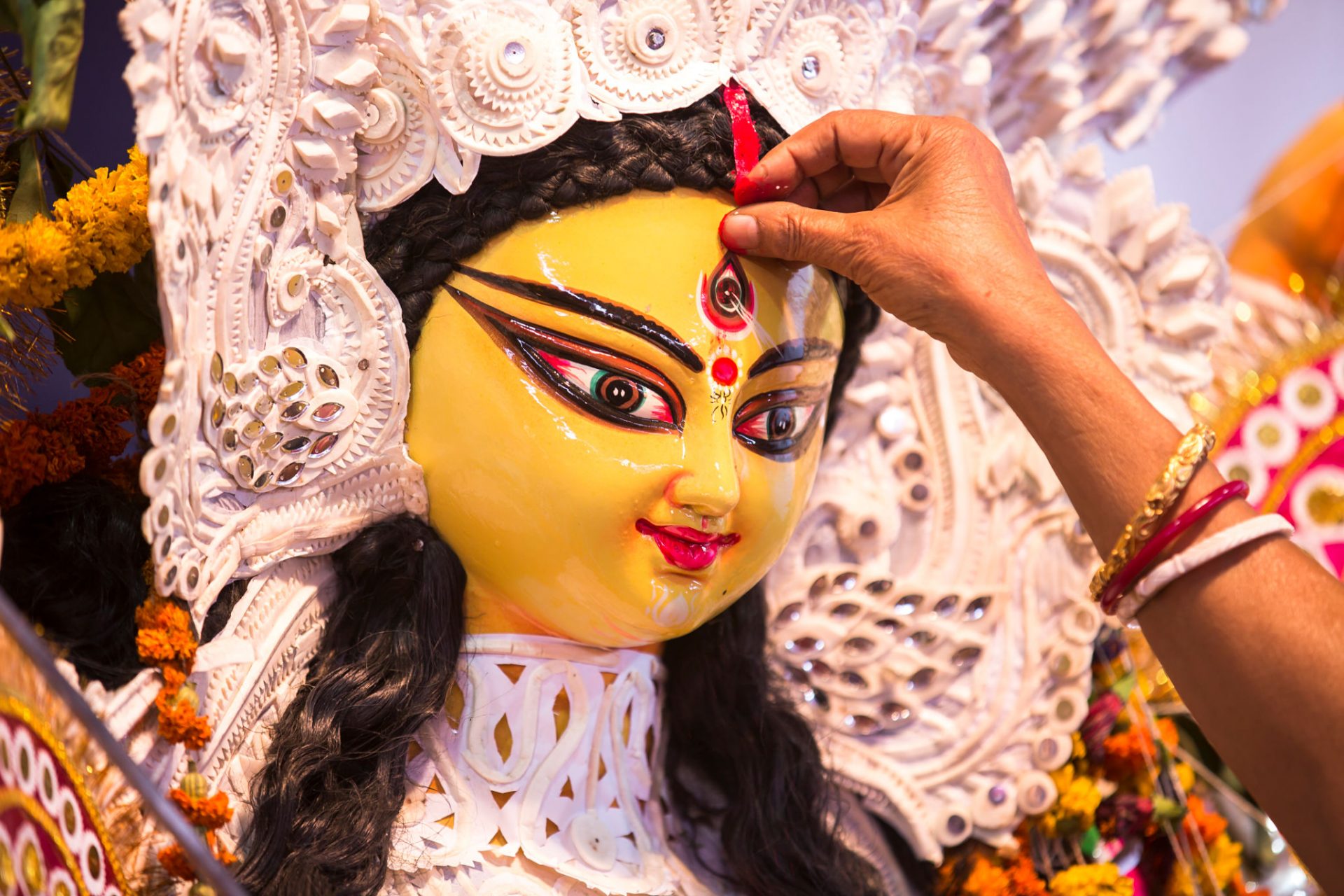
Chaitra Navaratri is a nine-night festival of the Divine Mother observed in the Hindu month of Chaitra, beginning on Shukla Pratipada and concluding on Ram Navami. It marks the start of creation according to Puranic tradition, aligns with the astrological transition into Vasanta Ritu, and invites every devotee into a complete cycle of worship, fasting, and inner purification through the nine forms of Maa Durga.
What is Chaitra Navaratri
The word Navaratri is formed from two Sanskrit roots: Nava, meaning nine, and Ratri, meaning night. Chaitra Navaratri is the nine-night worship of the Divine Mother that begins on the first day of the waxing fortnight of the Chaitra month. It is also called Vasant Navaratri or Vasanta Navratri, because it coincides with Vasanta Ritu, the season of spring in the Indian subcontinent.
This festival is one of the four Navaratris observed in a Hindu year. Among the four, Chaitra and Sharada Navaratri are openly celebrated across the country, while Magha Gupt Navaratri and Ashadha Gupt Navaratri are observed more quietly and are associated with advanced tantric sadhana and Mahavidya upasana. The term Gupt means hidden, indicating their esoteric character.
The Four Navaratris in the Hindu Year
| Navaratri | Month | Nature |
|---|---|---|
| Chaitra Navaratri | Chaitra (March–April) | Manifest, publicly celebrated |
| Ashadha Gupt Navaratri | Ashadha (June–July) | Esoteric, tantric sadhana |
| Sharada Navaratri | Ashwin (September–October) | Manifest, publicly celebrated |
| Magha Gupt Navaratri | Magha (January–February) | Esoteric, Mahavidya worship |
Alternative Names and Calendar Position
Chaitra Navaratri is known by several names in different regions and traditions. It is called Vasant Navratri, Chaitra Navratri, and Rama Navami Navaratri in various devotional and scriptural contexts. It falls in the Chaitra Shukla Paksha, the bright fortnight of the Chaitra month, which is the first month of the Hindu lunisolar year as per most regional panchang traditions.
The festival begins on Chaitra Shukla Pratipada and concludes on Chaitra Shukla Navami, which is Ram Navami. This placement in the calendar is itself deeply significant: the Hindu new year in most regional traditions, including Ugadi in Andhra Pradesh and Telangana, Gudi Padwa in Maharashtra, and Navreh in Kashmir, falls on this very Pratipada tithi, making the first day of Chaitra Navaratri simultaneously the first day of a new cosmic cycle.
Tithi and Timing
Paksha, Tithi, and Nakshatra Details
Chaitra Navaratri falls entirely in the Shukla Paksha of Chaitra month. Each of the nine days is governed by a tithi from Pratipada to Navami. Among these, the Ashtami and Navami tithis carry the highest ritual weight during Navaratri. Ashtami is the day of Durga Ashtami, when intense Devi worship and Kanya Puja are performed, and Navami is Ram Navami, the culminating day of the entire festival.
The festival typically unfolds under the Ashwini and Bharani nakshatras in the early days and moves toward Rohini and Mrigashira as the nine days progress, depending on the lunar calendar of that year. The waxing moon throughout these nine days is itself considered an auspicious backdrop for all forms of upasana.
Most Auspicious Timing for Rituals
Ghatasthapana, the foundational ritual of Day 1, must be performed within the first one-third of the day, specifically in the Pratipada tithi, after sunrise. Performing it during Amavasya or in nighttime hours is prohibited in the shastras. The Abhijit muhurta, which falls roughly at midday, is considered highly auspicious for sankalpa and havan if the devotee misses the early-morning window.
Kanya Puja on Ashtami or Navami should be completed before noon. Ram Navami puja on the ninth day is traditionally timed to the Madhyahna period, the middle portion of the day, because Bhagawan Rama is believed to have taken birth at noon.
Astrological Significance of Chaitra Navaratri
Chaitra Month and Its Planetary Character
The month of Chaitra holds a distinguished position in Vedic astrology. This is the month when the sun transitions toward Mesha Rashi (Aries), a powerful rashi ruled by Mars. The shift of the sun into Mesha is called Mesha Sankranti and marks one of the most significant solar transitions of the year in Jyotish. This solar movement brings solar energy into direct alignment with the fire element, making it a time of heightened vitality, courage, and new beginnings.
The waxing moon of Chaitra Shukla Paksha represents growing luminosity, which in Jyotish corresponds to increasing prana, clarity of mind, and receptivity to higher influences. Performing mantra japa, vrat, and puja during the waxing fortnight amplifies the spiritual merit of each act, because the tidal forces of the lunar cycle support inward accumulation rather than dissipation.
Nakshatra Importance During Chaitra Navaratri
Certain nakshatras during Chaitra are particularly significant. Ashwini nakshatra, governed by the twin physician gods called the Ashwini Kumaras, is associated with healing, new beginnings, and swift blessings. When Pratipada falls in Ashwini, it is considered doubly auspicious for starting new spiritual disciplines. Rohini nakshatra, beloved of the Moon, brings abundance, creativity, and prosperity when invoked through Devi worship during these days.
The Puranas and traditional jyotish texts also note Chaitra Shukla Pratipada as a Manvadi tithi, a day linked to the beginning of a new Manvantara cycle, which makes charitable acts, dana, and punya karma performed on this day yield results multiplied many times over.
Planetary Positions and Their Influence in Chaitra
In the Chaitra month, Jupiter, the planet of dharma, wisdom, and spiritual grace, transitions or operates in ways that influence how swiftly prayers are answered. When Jupiter occupies a benefic position during Navaratri, prayers for children, education, and spiritual growth carry extraordinary results. The sun’s approach to its exaltation sign of Aries during Chaitra energizes all acts of courage, leadership, and dharmic resolve undertaken in this period.
The moon’s transit through each nakshatra during the nine days creates a daily rhythm of shifting energies: days with the moon in Hasta or Pushya are especially favorable for puja, while days with the moon in Ardra or Ashlesha call for greater inner discipline. Traditional panchang consultations for Chaitra Navaratri help devotees identify the most powerful muhurtas within each of the nine days.
Religious Significance of Chaitra Navaratri
Scriptural Foundations
The religious importance of Chaitra Navaratri rests on firm scriptural authority. The Brahma Purana and the Narada Purana state explicitly that Lord Brahma initiated the act of creation on Chaitra Shukla Pratipada, at sunrise, making this the first moment of cosmic existence. The Devi Bhagavata Purana establishes that Maa Durga, in her role as Jagatjanani or the Mother of the Universe, is the ultimate source of all creation and the sustaining power behind every living being.
The Markandeya Purana, which contains the celebrated Devi Mahatmyam (also called the Durga Saptashati or Chandi), provides the most authoritative account of the Goddess’s victories over the asuras and the spiritual benefits of her worship. The phala-shruti of the Devi Mahatmyam states that one who recites this text with devotion and regularity is freed from great sins, liberated from calamities, and granted long life, wealth, and ultimately moksha.
The Shiva Purana also references the slaying of Mahishasura by Maa Durga during these nine days, establishing the festival as a commemoration of the victory of dharma over adharma, of divine power over the rajasic and tamasic forces that afflict the world.
Theological Meaning in Hindu Dharma
Chaitra Navaratri holds a unique theological position because it sits at the intersection of Shakta, Vaishnava, and Saura traditions. From the Shakta perspective, these nine days are a complete sadhana of the Divine Mother in her triple manifestation as Durga, Lakshmi, and Saraswati. From the Vaishnava perspective, the ninth day is Ram Navami, the birth of Bhagawan Rama, the seventh avatara of Vishnu. From the Saura perspective, the solar entry into Mesha is among the most powerful solar transitions of the year.
This convergence means that Chaitra Navaratri is not the exclusive property of any single sampradaya. It belongs to the entire Hindu dharmic family.
Importance in Different Sampradayas
In the Shakta sampradaya, Chaitra Navaratri is a central festival. The nine forms of the Goddess are worshipped through the Navadurga sequence, the recitation of Durga Saptashati, and the performance of Chandi Homa and Kumari Puja. The Shaktipeethas across India observe extended pujas during both Chaitra and Sharada Navaratri.
In the Vaishnava sampradaya, the focus gradually shifts toward Ram Navami from about the sixth day onward. Devotees read the Ramayana continuously, perform Rama nama japa, and celebrate the birth of Bhagawan Rama with great devotion on the ninth day. Many Vaishnava temples conduct Ram Navami Brahmotsavam for multiple days during this period.
In the Shaiva sampradaya, the presence of Maa Parvati in her Navadurga forms is central. The second day of Navaratri, dedicated to Brahmacharini, is particularly sacred in Shaiva households, as it commemorates Parvati’s tapasya before her marriage to Bhagawan Shiva.
In the Smarta sampradaya, all five deities, Shiva, Vishnu, Devi, Ganesha, and Surya, receive veneration during these nine days, with the daily panchayatana puja continuing uninterrupted alongside the Navaratri-specific worship.
Phala-Shruti: Spiritual Fruits of Observance
The Devi Mahatmyam’s phala-shruti declares that one who reads or hears this scripture during Navaratri is freed from every form of suffering, whether arising from enemies, natural disasters, illness, or sin. Poverty is removed, family discord is resolved, fear is dissolved, and the mind is purified. The highest fruit declared is moksha, liberation from the cycle of birth and death, through the grace of the Divine Mother.
Which Form of the Goddess is Worshipped
The Navadurga: Nine Forms of the Divine Mother
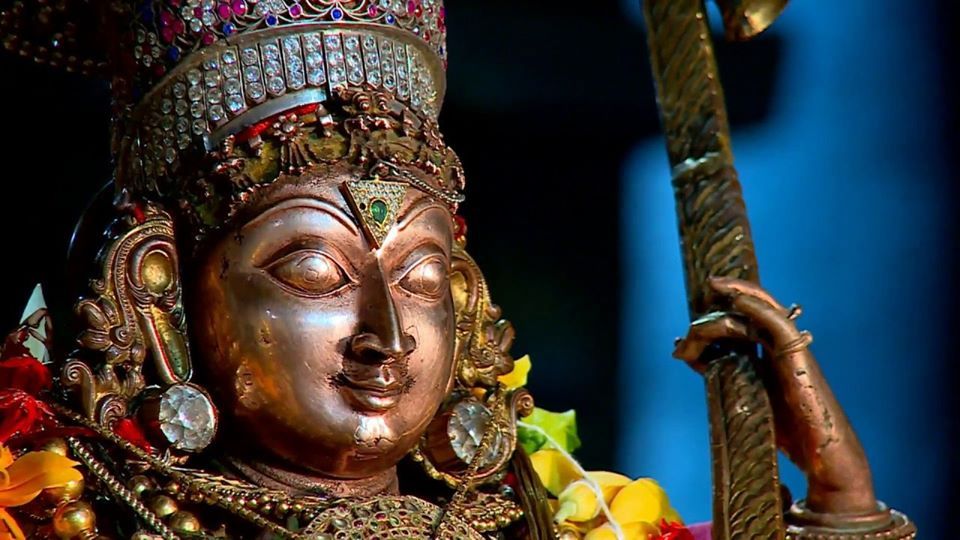
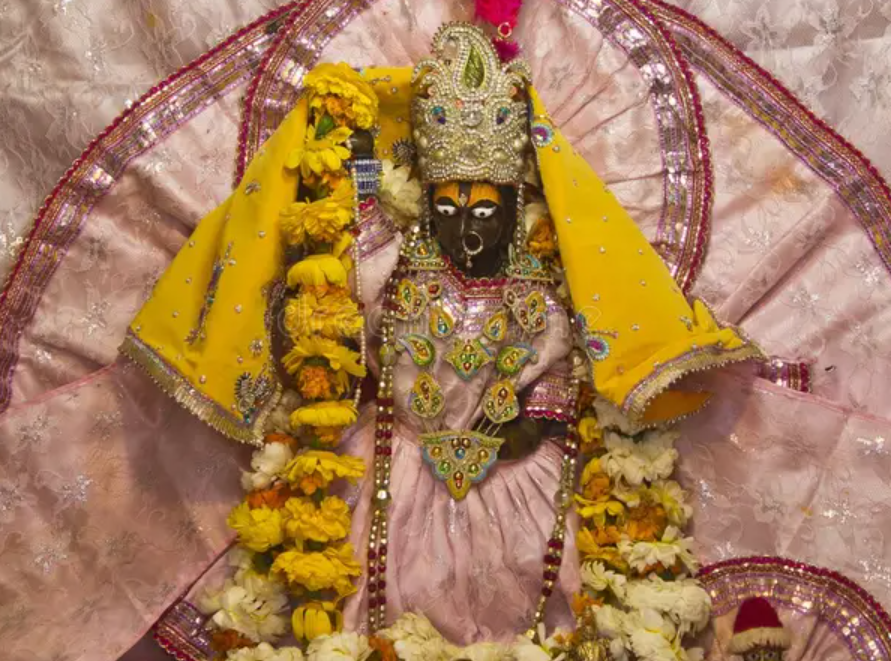
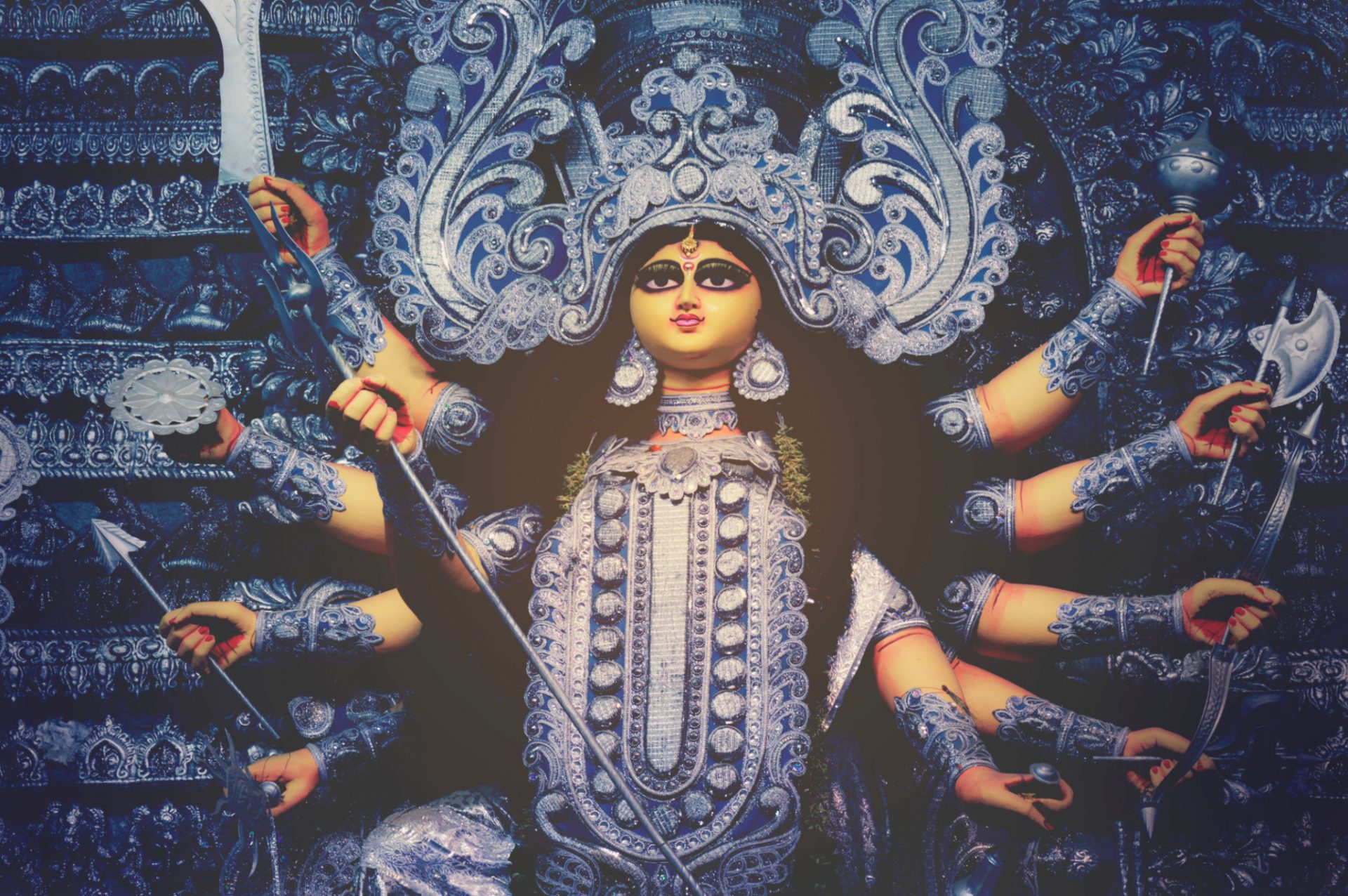
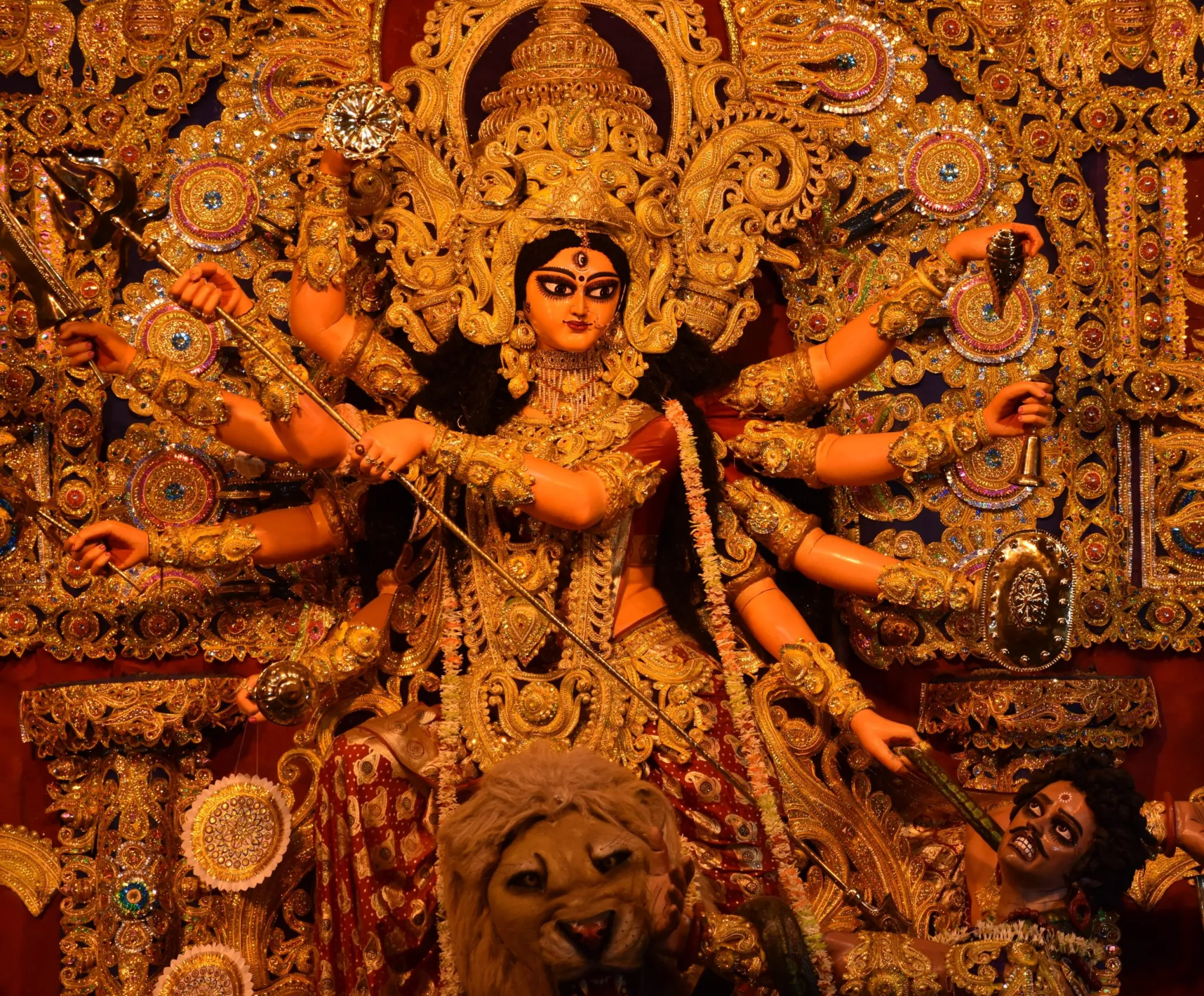
Chaitra Navaratri is primarily a festival of Navadurga, the nine forms of Maa Durga worshipped sequentially over the nine days. Each form represents a distinct aspect of the Goddess’s power, a particular quality of divine Shakti that she transmits to the devotee who approaches her with sincerity and devotion.
The Devi Bhagavata Purana, the Markandeya Purana, and various regional Shakta Agamas provide detailed accounts of each form, her iconography, her mythological origin, her preferred bhog, and the specific blessings she bestows.
Day-Wise Navadurga (North Indian Tradition)
| Day | Form | Primary Blessing |
|---|---|---|
| Day 1 | Shailaputri | Strength, grounding, new beginnings |
| Day 2 | Brahmacharini | Tapasya, determination, moksha |
| Day 3 | Chandraghanta | Courage, removal of fear |
| Day 4 | Kushmanda | Vitality, prosperity, creative power |
| Day 5 | Skandamata | Knowledge, family welfare |
| Day 6 | Katyayani | Removal of major obstacles |
| Day 7 | Kalaratri | Dissolution of negativity |
| Day 8 | Mahagauri | Purification, grace, serenity |
| Day 9 | Siddhidatri | Siddhis, wisdom, ultimate fulfilment |
Day-Wise Worship in Telugu Tradition (Andhra Pradesh and Telangana)
The Telugu tradition, which follows the Shakta Agama lineage of South India, observes a distinct sequence of forms during Chaitra Navaratri. This sequence is followed in major Devi temples of Andhra Pradesh and Telangana and in traditional households of the region.
| Day | Form |
|---|---|
| Day 1 | Sri Swarna Kavachalankrita Durga Devi |
| Day 2 | Sri Bala Tripura Sundari Devi |
| Day 3 | Sri Gayatri Devi |
| Day 4 | Sri Annapoorna Devi |
| Day 5 | Sri Lalitha Tripura Sundari Devi |
| Day 6 | Sri Maha Lakshmi Devi |
| Day 7 | Sri Maha Saraswati Devi |
| Day 8 | Sri Durga Devi |
| Day 9 | Sri Mahishasura Mardhini Devi |
Threefold Classification: Durga, Lakshmi, Saraswati
Alongside the Navadurga sequence, the nine days are traditionally divided into three groups of three, each representing a distinct phase of the devotee’s inner journey.
The first three days are dedicated to Maa Durga in her fierce and purifying aspect. She removes the accumulated tamas, the inertia, impurity, and karmic weight, that obstructs the devotee’s path.
The middle three days honor Maa Lakshmi, who harmonizes the rajasic energies and bestows dharmic prosperity, auspiciousness in family life, and abundance in both material and spiritual forms.
The final three days belong to Maa Saraswati, the goddess of knowledge, wisdom, and liberation. She elevates the purified and harmonized mind into sattva and guides the devotee toward jnana and inner illumination.
This progression is not merely symbolic. It reflects the actual stages of inner transformation that take place in a sincere devotee who observes the full nine days with discipline and surrender.
Ram Navami and the Vaishnava Dimension
The ninth day, Navami, is Ram Navami, the birth anniversary of Bhagawan Rama. The Devi Mahatmyam and other scriptural sources do not separate Shakta and Vaishnava bhakti. Maa Durga herself granted Rama the power to defeat Ravana in the war described in the Valmiki Ramayana, establishing a deep theological link between Devi worship and Rama’s victory. Chaitra Navaratri thus begins in Shakti and culminates in Rama, completing a devotional arc from power to dharma, from the mother to the king.
Sacred Stories and Katha
The Slaying of Mahishasura
The central katha of Navaratri is the story of Maa Durga’s war against Mahishasura, narrated in the Markandeya Purana in the Devi Mahatmyam. Mahishasura, the buffalo demon, had obtained a boon that no man or god could kill him. He drove the devas from Svarga and established his dominion over the three worlds. The devas, led by Brahma, Vishnu, and Shiva, combined their energies and produced a blinding radiance from which emerged Maa Durga, the embodiment of all divine Shakti.
Riding her lion, bearing weapons given by each of the gods, Maa Durga fought Mahishasura for nine days and on the tenth day severed his head, restoring dharma to the cosmos. This event is the theological core of the Navaratri festival. The nine days of worship are the nine days of that cosmic war, and the tenth day, Dashami, is the day of victory.
The deeper meaning of this katha is that Mahishasura represents the buffalo-minded ego within each devotee: slow, powerful, stubborn, and difficult to dislodge. The nine days of Navaratri are an invitation to let the Mother wage that inner war within the devotee’s consciousness.
The Story of Brahma’s Creation
The Brahma Purana narrates that on Chaitra Shukla Pratipada, at the very moment of sunrise, Lord Brahma received the shakti and sankalpa to begin the act of creation. The universe was darkness and potential before this moment. It was on this tithi that the first word of creation was spoken, the first ray of light entered the cosmos, and the great wheel of time began to turn. Devotees who worship the Devi on this day are said to receive a share of that creative power, enabling them to begin their own lives afresh under the Mother’s protection.
Vrat Katha of Chaitra Navaratri
The vrat katha associated with Chaitra Navaratri speaks of a poor Brahmin who observed the nine-day fast with complete dedication despite having nothing to offer except his bhakti and water. The Goddess appeared in his dream on the ninth night, blessed him with abundance in the next year, and declared that whoever observes this vrat with a pure heart, without deceit or desire for others’ harm, shall receive her protection in every life. This katha is recited before the parana on the ninth day in many households.
Complete Puja Vidhi: Step-by-Step Guide
Preparation (Previous Evening and Morning of Day 1)
The evening before Chaitra Navaratri begins, the home is thoroughly cleaned. This is not merely a physical act. In Vedic understanding, a clean home is an invitation to the Devi to enter and reside for nine days. The altar area is washed with water mixed with gangajal, cow dung, and turmeric.
New cloth, preferably red or yellow, is laid on the altar. Images or yantras of Maa Durga, Maa Lakshmi, and Maa Saraswati are placed. A Kalash is prepared and kept ready for Ghatasthapana the next morning.
Setting Up the Altar
The altar faces east or north. A clean wooden plank or raised platform serves as the base. The arrangement is as follows:
- Place a small mound of clean soil or clean sand at the center of the altar
- Sow barley seeds or wheat in this soil for the Navadha Sthapana
- Set the Kalash on top of this sown soil
- Place the Devi murti or framed image behind the Kalash
- Arrange a ghee lamp, incense holder, and offering plates on either side
- Decorate with marigold garlands, mango leaves, and fresh flowers
Detailed Puja Procedure (10-15 Steps)
Step 1: Shuddhi and Achamana Begin with three sips of water from the palm of the right hand, chanting the names of Vishnu. This purifies the body and makes the devotee eligible to perform the puja.
Step 2: Sankalpa Take water in the right hand and state the sankalpa, the formal declaration of intent. The sankalpa names the devotee, the gotra, the tithi, the deity, and the purpose of worship. The most commonly used Sankalpa for Chaitra Navaratri is:
“Mama samasta duritakshayadvara Sri Jagadamba Durga Prasada Siddhyartham Chaitra Navaratri Vratotsavange Ghatasthapanampurvakam Navadurga Puja Karishye.”
After the sankalpa, the water is poured on the earth.
Step 3: Ghatasthapana Place the Kalash on the altar. The Kalash should be filled with sacred water, a coin, supari, and turmeric. Mango leaves are placed around the neck of the Kalash, and a coconut wrapped in red cloth is placed on top. Invoke the Goddess into the Kalash with this mantra:
“Om Aayantu Deva Deveshim Kalasham Purnamastu Me | Sthanam Kuru Maheshani Puja Kaale Sada Mama ||”
Step 4: Devi Avahana Invite the Goddess into the murti or image with flowers and mantra. Sprinkle water on the murti while chanting her names.
Step 5: Shodashopachara Puja Offer the sixteen services: padya (water for feet), arghya (water for hands), achamana (water for sipping), snana (bathing), vastra (cloth), gandha (sandalwood paste), pushpa (flowers), dhupa (incense), dipa (lamp), naivedya (food offering), tambula (betel), phala (fruit), and finally deepa aarti.
Step 6: Panchamrit Abhisheka (Optional on Ashtami) On Ashtami, a special abhisheka with five sacred substances is performed: milk, curd, honey, ghee, and sugar. Each is poured over the murti or the Kalash while chanting the Devi’s name.
Step 7: Pushpanjali Offer handfuls of flowers to the Devi three times while chanting:
“Om Namah Chandikaayai Namah | Maa Jagadambike Namah |”
Step 8: Durga Saptashati Parayana Recite chapters from the Durga Saptashati. A complete reading of all thirteen chapters can be distributed across the nine days. Many devotees follow the pattern of reading one chapter on Day 1, three chapters on Day 2, and so on, completing the full text by the ninth day.
Step 9: Devi Kavach, Argala, and Keelakam Before beginning the main Saptashati reading each day, recite the Devi Kavach (protective armor), the Argala Stotra (verse of fulfillment), and the Keelakam (verse that removes obstacles from the path of benefit). These three stotras are called the Anga Stotras and are considered prerequisites to the Saptashati recitation.
Step 10: Mantra Japa Perform japa of the Devi’s bija mantra 108 times using a rudraksha or crystal mala:
“Om Aim Hrim Klim Chamundayai Vichche Namah” — Navarna Mantra of Devi Mahatmyam
For the day-specific form, use the form’s own mantra. For example, for Shailaputri on Day 1: “Om Devi Shailaputryai Namah”
Step 11: Stotra Recitation Recite the Mahishasura Mardini Stotra, the Aigiri Nandini prayer, or the Devi Suktam from the Rigveda. These stotras directly invoke the Goddess’s grace and are considered highly potent when recited during Navaratri.
Step 12: Bhog Offering Place the day’s specific bhog in a clean plate before the Goddess. Offer it with this mantra: “Idam Naivedyam Sri Devi Maa Durga Devi Priyataam Namah”
Do not consume the bhog until after the aarti.
Step 13: Aarti Perform aarti with a ghee lamp, moving the flame in clockwise circles before the murti. The traditional aartis sung during Chaitra Navaratri include the Jai Ambe Gauri aarti and the Om Jai Jagdish Hare aarti on the Navami day for Bhagawan Rama. The Shailaputri, Brahmacharini, and other Navadurga form-specific aartis are also widely available in traditional puja books.
Step 14: Pradakshina and Namaskara Circumambulate the altar three or seven times with folded hands. Prostrate before the Goddess completely with the full body touching the ground (Sashtanga Namaskara) while saying:
“Sarva Mangala Maangalye Shive Sarvartha Sadhike | Sharanye Tryambake Gauri Narayani Namostute ||”
Step 15: Prasad Distribution Distribute the bhog as prasad to all members of the household and to any guests. The prasad of the Goddess is never to be refused and is considered protective and purifying.
Bhog Offerings Day by Day
| Day | Devi Form | Bhog Offering |
|---|---|---|
| Day 1 | Shailaputri | Pure Ghee |
| Day 2 | Brahmacharini | Sugar or Misri |
| Day 3 | Chandraghanta | Milk / Kheer |
| Day 4 | Kushmanda | Malpua |
| Day 5 | Skandamata | Banana / Fruits |
| Day 6 | Katyayani | Honey |
| Day 7 | Kalaratri | Jaggery preparations |
| Day 8 | Mahagauri | Coconut / White sweets |
| Day 9 | Siddhidatri | Halwa, Chana, Puri |
Vrat Observance
Types of Fasting
The Nirjala vrat is the strictest form: no water, no food, for the entire day. This is observed by highly austere devotees on Ashtami, Navami, or the full nine days, and is considered the most potent form of vrat.
The Phalahari vrat allows consumption of fruits, milk, buttermilk, sweet potatoes, and sendha namak (rock salt). Cereals, grains, onions, garlic, and meat are completely avoided. This is the most common form of Navaratri fasting.
The Ek-Bhukt vrat involves eating one satvik meal per day, usually in the evening after the puja is complete.
Who Should Observe
The Navaratri vrat is appropriate for all devotees regardless of age or gender. Children, elderly devotees, and those with health conditions may observe a modified form with fruits and fluids. Pregnant women are generally advised to observe a lighter fast and should not undertake Nirjala. The intention and sincerity of the vrat matter more than its physical strictness, according to the scriptural tradition.
Morning Sankalpa for Vrat
“Mama Sakala Papa Kshayapurvakam Sarva-Abheeshta Siddhyartham Sri Durga Devi Preetaye Chaitra Navaratri Pratyaham Vrata-anushthanam Karishye”
This sankalpa is taken each morning after the morning bath, before sunrise or at sunrise.
Rules and Restrictions During Vrat
- Avoid non-vegetarian food completely
- Avoid onion, garlic, and all pungent roots
- Do not consume alcohol in any form
- Avoid sleeping during the day
- Maintain brahmacharya for the duration of the vrat
- Speak truth at all times and avoid harsh words
- Do not cut hair or nails during the nine days in strict observance
- Wear clean, preferably freshly washed clothes each day
Parana: Breaking the Fast
The vrat is broken on the ninth day after the completion of the Navami puja, Kanya Puja, and Kalash Visarjan. Before breaking the fast, the devotee offers food to a Brahmin, feeds young girls as the living Devi, and distributes the prasad. Only then is the fast broken with satvik food. Many devotees also observe the parana on the Ashtami evening if they are observing only an eight-day vrat.
Where Chaitra Navaratri is Celebrated
North India
In Uttar Pradesh, Uttarakhand, Rajasthan, Punjab, Delhi, and across North India, Chaitra Navaratri is observed with the full Navadurga sequence, daily ghatasthapana puja, and community kirtans. Kanya Puja (Kanjak) on Ashtami is the most visible social ritual of this festival in North India. Nine young girls are invited, their feet are washed, tika is applied, they are offered halwa-chana-puri and gifts, and they are worshipped as the nine forms of the Goddess herself.
Ram Navami is celebrated with enormous gatherings at Rama temples, Ramayana recitations, processions, and the ritual birth ceremony of Bhagawan Rama at noon.
South India
In Andhra Pradesh and Telangana, Chaitra Navaratri coincides with Ugadi, the Telugu New Year on Pratipada. Ugadi is marked by Panchang shravana, Ugadi pachadi, and special prayers. Over the nine days, temples conduct elaborate alankarams of the Devi in the sequence specific to the Telugu tradition listed above. The Kanaka Durga temple in Vijayawada, the Bhramaramba Mallikarjuna temple in Srisailam, and numerous regional Devi temples observe extended seva programs during this period.
In Karnataka, Ugadi and the associated Devi worship similarly mark the opening days. Major Shakti temples like the Chamundeshwari temple in Mysuru conduct special rituals.
In Tamil Nadu, the festival is observed more quietly in temple settings, with special archanas and Devi stotras recited during the nine days.
West India
In Maharashtra, Chaitra Shukla Pratipada is Gudi Padwa, the Marathi New Year, celebrated with the raising of the Gudi (an adorned bamboo staff) outside homes as a symbol of victory and auspiciousness. Many Maharashtrian households perform Ghat Sthapana and observe a modified Navaratri alongside the New Year celebrations.
In Gujarat, while Sharada Navaratri with Garba is the grander public festival, Chaitra Navaratri is observed at home and in local Amba and Durga temples with daily puja and bhajans.
East India
In West Bengal and Assam, the primary Durga celebration is the Sharada Navaratri. Chaitra Navaratri is observed in temples and by devoted households. Some Bengali families perform Annapurna Puja during this time, venerating the Goddess as the giver of food and nourishment. Bihu, the Assamese New Year, coincides with the beginning of Chaitra Navaratri in some years.
Famous Temples and Their Chaitra Navaratri Celebrations
| Temple | Location | Special Feature |
|---|---|---|
| Vaishno Devi Mandir | Katra, Jammu | Lakh pilgrims, special aarti, continuous bhajan |
| Jwala Ji Temple | Kangra, Himachal Pradesh | Eternal flame, special Chandi Homa |
| Naina Devi Temple | Bilaspur, Himachal Pradesh | Mass Kanya Puja, abhisheka |
| Chintpurni Devi Temple | Una, Himachal Pradesh | Charan darshan, extended aarti |
| Kanaka Durga Temple | Vijayawada, Andhra Pradesh | Telugu sequence alankaram, Mahashivaratri-scale rush |
| Ram Janmabhoomi Temple | Ayodhya, Uttar Pradesh | Ram Navami Brahmotsavam |
| Amba Mata Temple | Ambaji, Gujarat | Community mahapuja, bhajans |
International Celebrations
Hindu diaspora communities in the United States, United Kingdom, Canada, Australia, Singapore, and across Southeast Asia observe Chaitra Navaratri through temple programs, community puja, online Durga Saptashati recitations, and organized Kanya Puja. Many temples in these regions conduct the Navadurga sequence with all nine-day worship and conclude with Ram Navami programs.
Charitable Acts (Dana) and Remedial Practices
Dana and Its Specific Benefits
Dana, charitable giving, during Navaratri is described in the Puranas as yielding results far exceeding what the same act would yield at other times of the year. The Navaratri period is a spiritually charged window when the merit of every good deed is amplified by the Devi’s grace.
- Annadana (feeding the hungry): removes the sins of many past lives and ensures that the family never faces food scarcity
- Vastradana (gifting cloth): especially gifting red cloth or new sarees to poor women, pleases Maa Lakshmi
- Pustakadana (gifting books): pleases Maa Saraswati and removes obstacles in education
- Go-seva (serving cows): considered equivalent to major pilgrimages when done during Navaratri
- Kanya Puja with gifts: the single most meritorious act of the entire Navaratri
Astrological Remedies During Chaitra Navaratri
For those facing malefic effects of Rahu: offer black sesame and coconut to the Devi and light a sesame oil lamp on the Navaratri days.
For those suffering from Saturn’s malefic period: recite the Kalaratri mantra with 108 counts daily and offer mustard oil lamps.
For those facing obstacles due to Mars: worship Maa Durga with red flowers and offer jaggery prasad to young children.
For those with Moon-related afflictions: recite the Chandraghanta mantra and offer milk-based bhog on the third day.
FAQ Section
What is Chaitra Navaratri and why is it celebrated? Chaitra Navaratri is a nine-night Hindu festival dedicated to the nine forms of Maa Durga, observed in the Chaitra month of the Hindu calendar. It is celebrated because Chaitra Shukla Pratipada is the day when Lord Brahma commenced creation, making it the most powerful new beginning of the cosmic cycle. Devotees worship the Divine Mother for protection, blessings, and spiritual liberation during these nine days.
What is the difference between Chaitra Navaratri and Sharada Navaratri? Both observe the Navadurga sequence and follow similar ritual structures, but they differ in season, mood, and culmination. Chaitra Navaratri falls in spring and culminates in Ram Navami, integrating Shakta and Vaishnava bhakti. Sharada Navaratri falls in autumn and culminates in Vijayadashami. Sharada Navaratri is larger in public scale, particularly in eastern India, while Chaitra Navaratri tends to be more home-centered and introspective.
Which goddess is worshipped during Chaitra Navaratri? The primary deity is Maa Durga in her nine forms, collectively called the Navadurga. These are Shailaputri, Brahmacharini, Chandraghanta, Kushmanda, Skandamata, Katyayani, Kalaratri, Mahagauri, and Siddhidatri. In the Telugu tradition of Andhra Pradesh and Telangana, a different sequence of nine forms is worshipped. On the ninth day, Bhagawan Rama is also worshipped as the festival culminates in Ram Navami.
What is the astrological significance of Chaitra Navaratri? Chaitra Navaratri coincides with the solar approach to Mesha Rashi, the waxing lunar fortnight of Chaitra, and Manvadi tithis, creating a rare convergence of solar, lunar, and planetary cycles. Devotees who observe this period with sincere worship receive relief from planetary doshas, dissolution of Rahu, Saturn, and Mars-related afflictions, and strengthening of benefic planets in their birth charts.
What is Ghatasthapana and why is it important? Ghatasthapana is the foundational ritual of Day 1 of Navaratri. It involves installing a sacred Kalash filled with water, mango leaves, and a coconut as the formal seat of the Goddess for the nine days. Barley seeds are sown in soil beneath the Kalash. The growth of these sprouts through the nine days is considered a divine omen of prosperity in the coming year. This ritual must be performed during auspicious muhurta on Pratipada tithi and not during nighttime or Amavasya.
What foods are allowed during the Chaitra Navaratri fast? During the Phalahari vrat, devotees consume fruits, milk, buttermilk, sweet potatoes, arbi (colocasia), singhara flour (water chestnut flour), sendha namak (rock salt), and preparations made without grain, onion, or garlic. Common fasting preparations include kuttu ki puri, sabudana khichdi, makhana kheer, and potato-based dishes. Grains, regular salt, onion, garlic, and non-vegetarian food are strictly avoided.
What is Kanya Puja and on which day is it performed? Kanya Puja, also called Kanjak, is the ritual worship of nine young pre-pubescent girls as the living embodiments of the nine forms of Navadurga. It is performed on the eighth day (Durga Ashtami) or the ninth day (Maha Navami). The girls’ feet are washed, tika is applied, they are offered halwa, chana, and puri, and they receive gifts. This ritual is considered one of the most meritorious acts of the entire Navaratri and is an expression of the Hindu understanding that the Goddess is present in every woman.
What is the significance of Ram Navami at the end of Chaitra Navaratri? Ram Navami on the ninth day marks the birth of Bhagawan Rama, the seventh avatara of Vishnu. Chaitra Navaratri thus begins with Shakti and concludes with Bhagawan Rama, reflecting the theological truth that Vishnu and Shakti are inseparable. The Goddess herself empowered Rama in the war against Ravana. Worshipping both the Devi through the nine days and Rama on the ninth day completes a full arc of devotion.
Which scriptures should be recited during Chaitra Navaratri? The primary text for Navaratri worship is the Devi Mahatmyam (Durga Saptashati), found in the Markandeya Purana. Before each day’s recitation, the three Anga Stotras, Kavach, Argala, and Keelakam, should be recited. The Devi Suktam from the Rigveda, the Mahishasura Mardini Stotra, and the form-specific dhyana mantras for each Navadurga form are also highly recommended. On the ninth day, recitation from the Valmiki Ramayana is traditional in many households.
How is Chaitra Navaratri connected to the Hindu New Year? Chaitra Shukla Pratipada, the first day of Chaitra Navaratri, is the Hindu New Year day as per most regional lunisolar calendars. It is called Ugadi in Andhra Pradesh and Telangana, Gudi Padwa in Maharashtra, Navreh in Kashmir, and Cheti Chand among the Sindhi community. The Brahma Purana states that Brahma began creation on this very tithi, making it the most powerful new beginning in the Hindu calendar. Chaitra Navaratri thus carries the energy of both the new year and the Divine Mother’s grace simultaneously.
What charitable acts yield the most merit during Chaitra Navaratri? The Puranas rank Kanya Puja and Annadana as the highest acts of merit during Navaratri. Feeding the poor, gifting red cloth or new clothes to women, donating books to students, and serving cows are all highly meritorious. Dana performed during Navaratri is said to yield results many times greater than the same act performed at ordinary times, because the Goddess is present in her fullness during these nine days.
Can women observe the Chaitra Navaratri vrat during menstruation? Traditional shastraic guidance advises that women observe external ritual restrictions during this period but continue their inner devotion through nama japa, listening to Devi katha, and mental worship. Many traditional households have a senior female member or another devotee complete the external puja on those days. The Devi’s compassion is absolute, and her grace is never withheld from a sincere devotee regardless of physical circumstance.
What is the correct way to break the Navaratri fast on the ninth day? The fast is broken after the completion of the Navami puja, the Kanya Puja, and the Kalash Visarjan. Before eating anything, the devotee should offer prasad to the household, feed a Brahmin or a poor person, and distribute prasad to neighbors. The first food eaten after the fast should be satvik, preferably the prasad of the Devi herself. Many devotees offer and receive the halwa-chana-puri prasad from the Kanya Puja as their first meal of the parana.
Is Chaitra Navaratri observed differently in South India compared to North India? Yes. In North India, the full Navadurga sequence with Ghatasthapana, day-wise colors, bhog, and Kanya Puja is the standard observance. In South India, particularly in Andhra Pradesh and Telangana, a different sequence of nine Devi forms is worshipped, tied to the Shakta Agama tradition of the region. Chaitra Navaratri also overlaps with Ugadi in Telugu states, giving it an additional dimension of New Year celebrations alongside Devi worship. The structured nine-deity daily mapping is less emphasized in some South Indian households, where the focus is on temple rituals and general Devi archanas.
Conclusion
Chaitra Navaratri is not merely a festival on the calendar. It is a living, breathing invitation from the Divine Mother to her children to return to her, to shed what has accumulated and no longer serves, to begin again with her protection overhead and her grace beneath every step. The Brahma Purana says that Brahma began creation with her energy. The Devi Mahatmyam says that she sustains every atom of the universe. And Ram Navami, the culminating day, reminds us that even Bhagawan Rama needed her grace to accomplish his dharma.
What the nine days offer every sincere devotee is exactly this: a structured, scripturally grounded, cosmically timed opportunity to purify, to surrender, and to be renewed. Whether one observes the full nine-day Nirjala vrat or lights a single ghee lamp each evening and recites one shloka with folded hands, the Mother accepts every offering made in sincerity. She is Jagatjanani. She has no favorites. She only sees the bhakti in the heart.
Perform the Ghatasthapana on the first day, worship each form of the Goddess with the prescribed bhog and mantra, recite the Devi Mahatmyam with reverence, perform the Kanya Puja on Ashtami, and surrender to Bhagawan Rama on Navami. This is the complete observance of Chaitra Navaratri, and this alone is enough to invite the grace that changes a life from the inside out.
Sarva Mangala Maangalye Shive Sarvartha Sadhike |
Sharanye Tryambake Gauri Narayani Namostute ||
Help Us Keep This Guide Accurate
At Temple Connect, we regularly update our content to ensure you receive the most relevant and authentic information. If you’d like to suggest improvements, share regional traditions, or report any updates, we’d love to hear from you at connect@templeconnect.com
Follow us on our X platform.
Note to Readers: This article is intended for educational and devotional purposes. The information presented is based on traditional Hindu scriptures, contemporary religious practice, and scholarly research.
Individual observance may vary based on family tradition, regional custom, and personal circumstance. For specific guidance, especially regarding complex astrological remedies, please consult qualified priests, pandits, or Vedic astrologers. The health-related aspects mentioned are traditional beliefs and should not replace professional medical advice.