
Gudi Padwa: The Sacred New Year of Maharashtra and the Victory Flag of Dharma
Gudi Padwa falls on Chaitra Shukla Pratipada, the first day of the bright fortnight of the Hindu month of Chaitra. It is the New Year of Maharashtra, Goa and the Konkan belt, and one of the most auspicious tithis in the entire Hindu calendar. On this day, millions of households hoist the gudi, that decorated bamboo flag with its inverted kalasha, welcoming the new samvatsara with prayer, ritual, and gratitude.
This is not simply a regional festival. Chaitra Shukla Pratipada is recognized across Bharatavarsha as a cosmic reset point, a day when creation itself was set in motion and time began its forward march. Whether one calls it Gudi Padwa, Ugadi, Navreh or Samvatsar Padvo, the underlying truth is the same: this tithi belongs to Brahma, to Vishnu, to the Sun entering the season of spring, and to every householder who wants to begin the year standing upright under the banner of dharma.
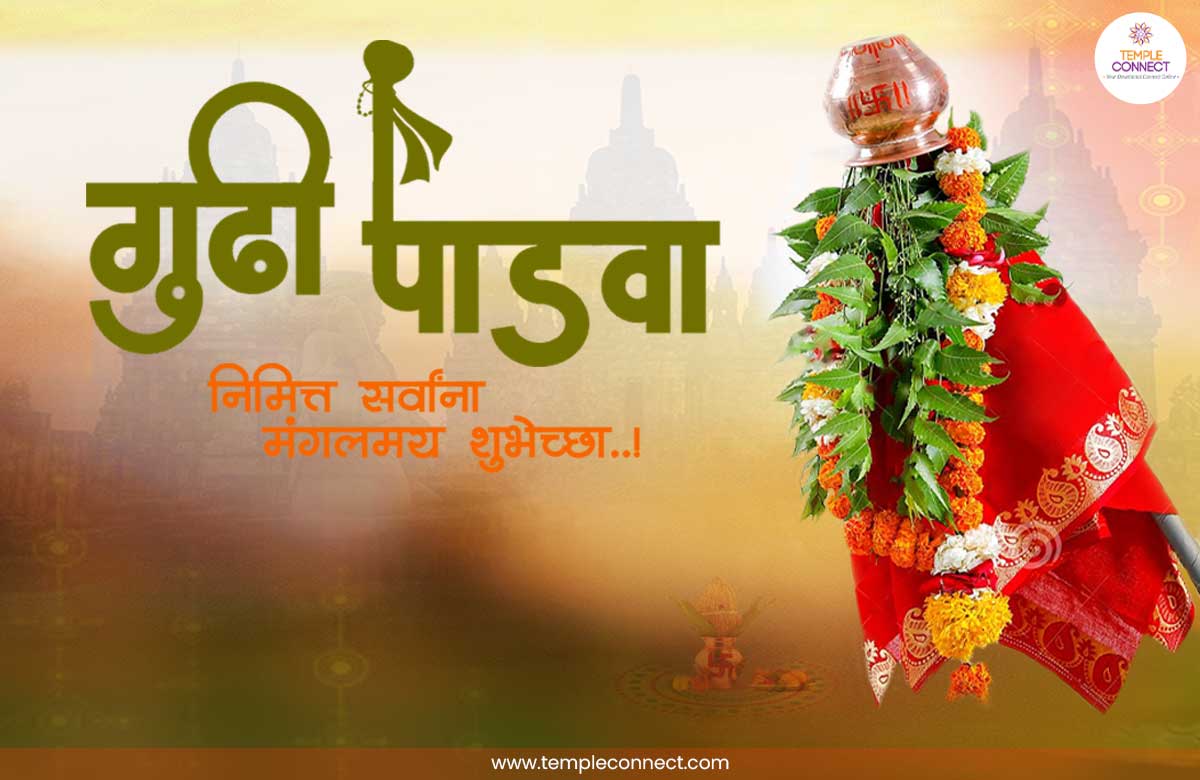
What Is Gudi Padwa
Gudi Padwa is the traditional New Year celebrated by Marathi and Konkani Hindu communities. It falls on Chaitra Shukla Pratipada, the first tithi of the first month of the Hindu lunisolar calendar. In Maharashtra it is commonly known as Gudi Padwa or Samvatsar Padva. Among Konkani Hindus of Goa and coastal Karnataka, the same day is observed as Sausara Padvo or Samvatsar Padvo.
The festival marks the beginning of the new samvatsara in the Shalivahana Shaka era, the era predominantly followed across the Deccan region. Every year on this day, temples resound with special puja, families perform the gudi hoisting at home, and the new panchanga is read aloud to understand the year’s astrological character. For a devout Maharashtrian household, Gudi Padwa is not just a holiday. It is a spiritual starting point.
The day also marks the transition of seasons. Vasant Ritu has arrived. The rabi crops have been harvested. The mango tree begins to bear fruit. The earth carries the fragrance of fresh possibilities. The coming together of cosmic, agricultural, and religious renewal on a single tithi gives Gudi Padwa its extraordinary depth in the lives of those who observe it.
What Does “Gudi Padwa” Mean
The name itself carries the soul of the festival.
Gudi means a flag or a standard, specifically the decorated victory banner raised outside every home on this day. The word traces its lineage through South Indian usage where it denoted a flag or ensign, eventually acquiring this specialized ritual meaning in Marathi and Konkani traditions.
Padwa, also written as Padva or Padvo, comes from the Sanskrit Pratipada, meaning the first lunar day of a fortnight. In Marathi tradition, the first day of the Shukla Paksha is called Padwa. So Gudi Padwa literally means the flag or banner of the first day, the victory standard of the new beginning.
When you understand the name this way, the act of hoisting the gudi is no longer a custom performed out of habit. It becomes an announcement, made with the language of victory, that a new year has arrived and the household stands ready under the protection of dharma.
The Origins and Legends Behind Gudi Padwa
No single legend claims exclusive ownership of this day. Multiple streams of Puranic memory and historical tradition converge on Chaitra Shukla Pratipada, and each one enriches the festival in its own way. A devotee who understands all of them approaches Gudi Padwa with far greater depth than one who knows only one story.
Brahma’s Creation and the Beginning of Time
The Brahma Purana states that Chaitra Shukla Pratipada is the day when Brahma the Creator began creation after a great dissolution. The cosmos had returned to unmanifest darkness. Time itself had ceased. Then on this tithi, Brahma set the universe in motion again. Days, nights, seasons, yugas, all of it was initiated in this first moment of divine will.
This is why Gudi Padwa is observed as the birthday of the universe in many devotional traditions. The gudi raised at one’s doorstep is identified in several texts as Brahma-dhvaja, the flag of the Creator. Hoisting it is an act of acknowledgment that we live within a divinely ordered creation, and the new year we are entering is not merely a number but a fresh chapter in that cosmic story that Brahma himself authored.
Lord Rama’s Victorious Return to Ayodhya
The second and perhaps most beloved narrative connects Gudi Padwa to Lord Rama’s triumphant return to Ayodhya after vanquishing Ravana and completing fourteen years of vanavas. When Rama entered Ayodhya with Sita, Lakshmana, and the Vanara sena, the people of the city came out in overwhelming joy. They decorated their doorways with flags and festoons, lit lamps, drew rangolis, and welcomed their king home.
The gudi is understood as a direct echo of those victory flags that flew across Ayodhya when dharma returned to the throne. Gudi Padwa, in this reading, is also the day of Rama’s Pattabhisheka, his coronation, marking the beginning of a new era of righteous rule. The hoisting of the gudi at every home becomes an invitation: may that same victorious energy of Rama enter this household and bless the year ahead.
King Shalivahana and the Shaka Era
Maharashtrian tradition carries a deeply rooted legend connected to King Shalivahana, from whom the Shalivahana Shaka era takes its name. According to the vrat-katha, Shalivahana fashioned soldiers from clay and through divine grace brought them to life. With this miraculous army he defeated his enemies, established his sovereignty over the Deccan, and inaugurated the Shaka Samvat, a new era of time, beginning on Chaitra Shukla Pratipada.
The gudi is the victory standard of Shalivahana Maharaj. This is why in Maharashtra the festival carries not just a religious but also a deep cultural identity. Raising the gudi is raising the flag of one’s history, one’s language, one’s civilization.
The Matsya Avatar Connection
Some scriptural and devotional sources also associate Gudi Padwa with the Matsya avatar of Bhagwan Vishnu. On this day, it is said, Vishnu took the form of a fish to rescue the Vedas from a demon who had stolen them and submerged them in the cosmic ocean. By saving the Vedas, Vishnu preserved all knowledge and all dharma for the coming creation.
In this reading, Gudi Padwa honors Vishnu as Matsya, the first of the Dashavatara, who protected the very foundation of dharmic life on earth. The day invites both the Creator and the Preserver into the new year, and the household that observes it stands under the shelter of both.
Religious and Astrological Significance
Chaitra Shukla Pratipada occupies a singular position in Jyotisha and the Hindu calendar. This is when the new moon transitions into the waxing phase, the Shukla Paksha begins, and the energy of growth, expansion, and auspicious beginning enters the lunar cycle. The balance of the panchabhuta elements on this tithi is considered especially harmonious, making it ideal for sankalpas and new endeavors.
The Sun at this time of year is associated with the approach of Mesha Rashi, and Hindu almanac writers have long observed that this period is one of the most powerful for initiating matters of importance. Gudi Padwa is considered among the most shubha muhurtas of the entire year for:
- Starting a new business or enterprise
- Purchasing property, gold, or a vehicle
- Griha pravesh into a newly built home
- Beginning spiritual vows and sadhana practices
- Performing samskaras and auspicious family ceremonies
Families across Maharashtra observe the tradition of panchanga sravana, listening to the new almanac read aloud by a learned Brahmin or jyotishi. The tithi, nakshatra, yoga, karana, and vara of the new samvatsara are all proclaimed, and families listen with attention so they can align their decisions with the year’s energy. This listening itself is considered a spiritual act.
The Gudi: Sacred Symbol of Victory and Grace
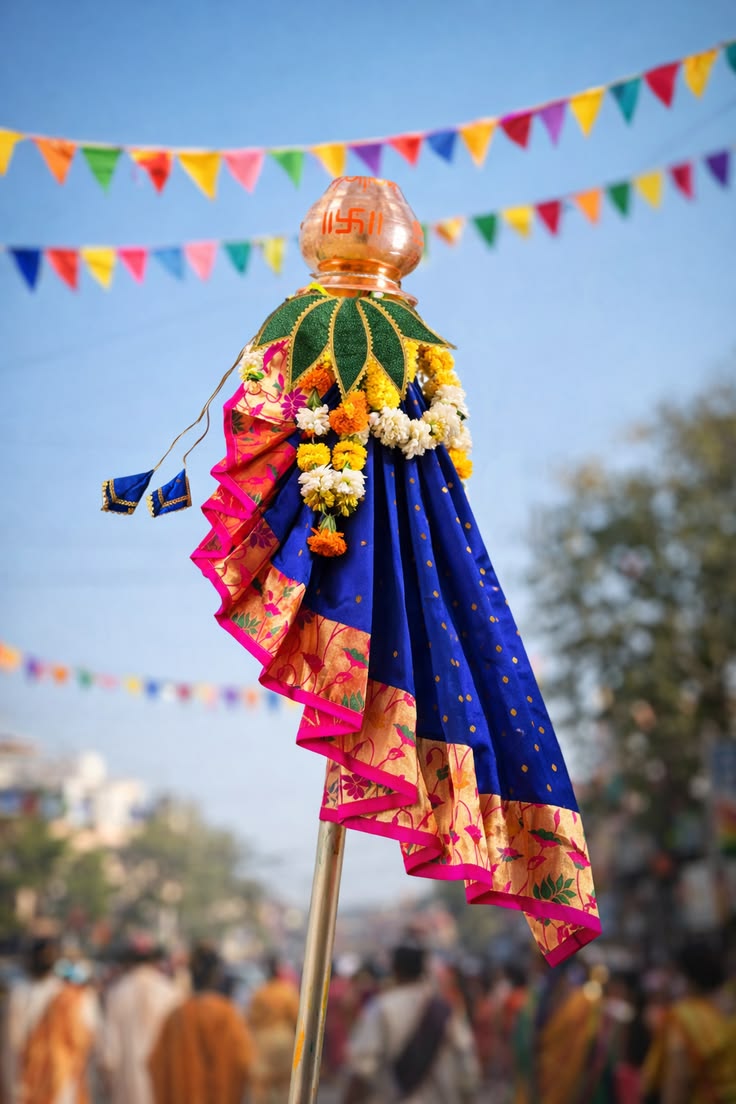
The gudi is the soul of this festival. It is prepared with care, assembled with meaning, and hoisted with devotion. Understanding what each element represents transforms the act of raising it from a household custom into a deeply intentional prayer.
How the Gudi Is Constructed
- A bamboo pole of moderate height forms the central staff
- A rich silk or brocade cloth, often yellow, green, saffron, or red with a zari border, is tied near the top. In many households, this is an actual silk sari or dhoti
- Fresh neem leaves and mango leaves are tied at the top
- A garland of marigold and red flowers is added
- A string of sugar crystals called gathi or mishri is threaded around the top
- An inverted copper, silver, or bronze kalasha is placed at the very top as a crown
- A swastika is drawn on the kalasha with kumkum
The assembled gudi is placed on the right side of the main entrance or on a balcony, leaning slightly outward so it is visible to all who pass by.
What Each Element Represents
- Bamboo staff: The upright pillar of dharma, standing firm and unshaken against adversity
- Silk cloth in yellow or saffron: The fire of tapas, sattva guna, and the burning away of tamas and ignorance
- Neem leaves: Purification of body and mind, and the willingness to accept life’s bitterness and still remain whole
- Mango leaves: Fertility, abundance, and continuity across generations, the standard toran element at every auspicious threshold
- Flower garland: Beauty offered to the divine, and passion transformed into positive shakti
- Gathi or sugar crystals: Sweetness in word and conduct, the ideal of humility and gentleness that characterizes sattvic character
- Inverted kalasha: The purna-kalasha of auspiciousness placed as a victorious crown, identified in tradition as Brahma’s flag-top, indicating divine sovereignty at the threshold of the home
The gudi in its entirety is understood as a sacred marker at the boundary of the household, a declaration that this home stands under the banner of dharma, and that whatever enters here does so under the blessings of the Creator and the Protector.
How Gudi Padwa Is Observed: Rituals and Puja Vidhi
The observance of Gudi Padwa follows a beautiful, unhurried sequence that begins before sunrise and carries through the day. There is an inner logic to every step.
Morning Purification
Devotees rise before sunrise and perform abhyanga snana, an oil bath where sesame or coconut oil is massaged into the body before bathing with warm water. This is not merely a hygiene practice. The oil bath is said to draw out the accumulated fatigue and heaviness of the departing year, preparing the body and mind to receive the new samvatsara clean and ready. After bathing, family members wear new traditional clothes. Women wear the nauvari saree, the traditional nine-yard Maharashtrian drape. Men wear kurta-pyjama or dhoti with a pheta, the traditional turban in saffron or white.
Decorating the Home
- Rangoli is drawn at the entrance and in the courtyard with colored powders or flower petals, featuring motifs of swastika, lotus, diya, and geometric patterns believed to invite Lakshmi
- Mango leaf and marigold torans are hung on the main doorframe
- The puja space is cleaned and freshly arranged with fresh flowers
- In traditional rural homes, the threshold is plastered with cow dung to purify and protect the space
Hoisting the Gudi
The hoisting is the central act of the day. The family assembles the gudi indoors while quietly invoking Brahma and Vishnu. The assembled gudi is then carried to the entrance with care.
Many households treat the gudi itself as a murti for the day. A small altar is arranged at its base with an oil lamp, incense, flowers, and naivedya. Akshata, kumkum, and flowers are offered to the staff and kalasha. Aarti is performed before it. The gudi stands as guardian at the threshold until sunset, when it is respectfully brought down after a brief evening prayer.
Consuming Neem and Jaggery
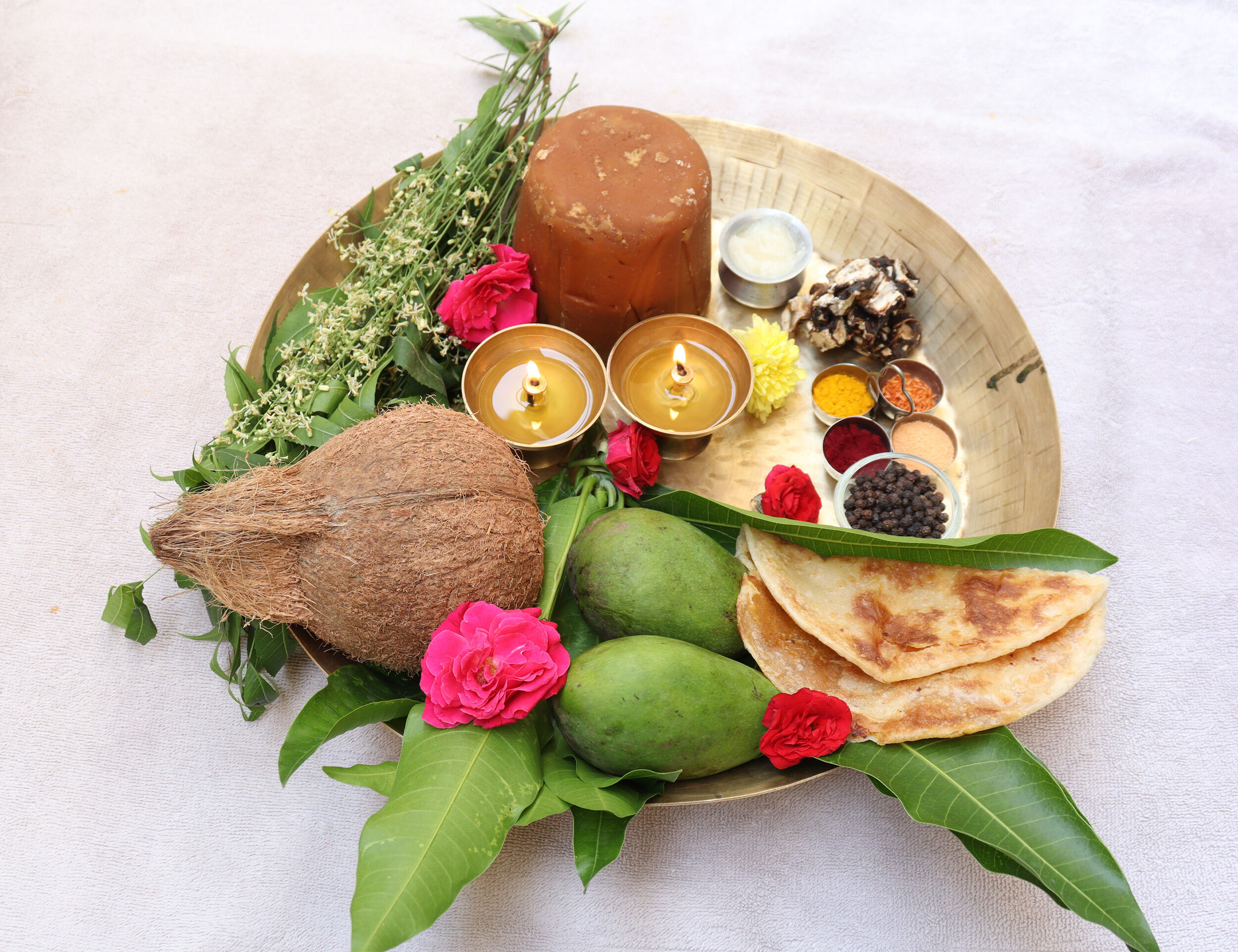
One of the most distinctive rituals of Gudi Padwa is eating a mixture of tender neem leaves and jaggery. Sometimes tamarind, coriander seeds, and a little salt are added. Every family member takes this mixture early in the morning.
On a physical level, neem at the onset of the hot season purifies the blood and prepares the body for summer. On a spiritual level, the bitterness of neem and the sweetness of jaggery together say something profound: the coming year will contain both kinds of moments, and the devotee who accepts both with equanimity has understood what it truly means to begin a new year.
Gudi Padwa Puja Vidhi: Step by Step
Deities Worshipped
A complete Gudi Padwa puja in a traditional household honors:
- Bhagwan Brahma as the Creator who initiated creation and time on this day
- Bhagwan Vishnu in his role as Preserver, invoked as Matsya, as Rama, and in his general Vishnu form
- Goddess Lakshmi for wealth, grain, and prosperity in the coming year
- Bhagwan Ganesha, invoked at the start of all Hindu ceremonies to remove obstacles
Puja Steps
- Sit facing east or north, perform achaman, and take sankalpa with water in hand, stating your name, gotra, place, and the intention of the puja
- Invoke Bhagwan Ganesha first with flowers and akshata
- Place images or murtis of Brahma, Vishnu or Rama, and Lakshmi in the puja space
- Light an oil or ghee lamp and incense sticks
- Perform panchamrit abhisheka for the deities: milk, curd, ghee, honey, sugar, followed by clean water
- Offer the gudi-kalasha flowers, kumkum, and akshata, treating it as you would a murti
- Chant: Om Namo Brahmane Namah, Om Namo Bhagavate Vasudevaya, Om Shreem Mahalakshmyai Namah
- If possible, recite selections from Vishnu Sahasranama or Ramayana
- Read or listen to the Gudi Padwa Vrat Katha
- Offer naivedya of neem-jaggery mixture, fruits, puran poli, shrikhand, and festive dishes
- Perform aarti with camphor and lamps
- Distribute prasad and seek blessings from elders
Vrat and Vrat Katha
Some householders observe a vrat on Gudi Padwa, either nirjala until puja is complete, or phalahar through the day on fruits and milk. The fast is broken after the main puja with prasad and a satvik meal.
The Gudi Padwa Vrat Katha commonly narrated contains two main stories: the story of Lord Rama’s victory over Ravana and the joyful welcome given by the people of Ayodhya, and the story of King Shalivahana’s miraculous clay army and his establishment of the Shaka era. The katha is not merely a retelling of events. It is a transmission of values, courage, faith, and adherence to dharma, that the listener is meant to carry into the new year.
Festive Foods of Gudi Padwa
The food prepared on Gudi Padwa is both naivedya for the deity and a celebration of the season’s abundance.
- Puran Poli: Sweet stuffed flatbread made with chana dal and jaggery, the most iconic festive dish of Maharashtra, served warm with generous ghee
- Shrikhand: Sweetened and flavored hung curd, offered alongside poori as the signature new year combination in most Maharashtrian homes
- Neem-jaggery mixture: Consumed at the start of the day as both ritual and medicinal tonic
- Seasonal koshimbirs, vegetable preparations, and additional sweets based on family tradition
These dishes are first offered as naivedya to the household deity and the gudi before being consumed by the family, honoring the principle that Ishvara receives first and the family partakes of what He blesses.
Gudi Padwa and Regional New Year Celebrations Across Bharatavarsha
Chaitra Shukla Pratipada is recognized across the country as a new year tithi, though each region celebrates it in its own form. The theological idea underneath is shared: this is the start of creation’s new cycle, a point of cosmic reordering and personal reorientation.
| Region | Festival Name | Distinctive Practice |
|---|---|---|
| Maharashtra, Goa, Konkan | Gudi Padwa / Samvatsar Padvo | Gudi hoisting, neem-jaggery ritual |
| Andhra Pradesh, Telangana, Karnataka | Ugadi / Yugadi | Ugadi Pachadi, panchanga sravanam |
| Kashmir | Navreh | Thali offering with rice, coins, and symbolic items |
| Sindhi community | Cheti Chand | Honoring Jhulelal, water-centered traditions |
Temples Celebrating Gudi Padwa
Several temples across Maharashtra observe Gudi Padwa as a major annual celebration with special puja and community gatherings:
- Renuka Mata Mandir
- Saptashringhi Mandir
- Tuljha Bhavani Mandir
Frequently Asked Questions About Gudi Padwa
Why is Gudi Padwa celebrated? Gudi Padwa marks the Hindu New Year as per the Shalivahana Shaka calendar. It commemorates Brahma’s act of creation, Lord Rama’s victory and return to Ayodhya, and King Shalivahana’s historical triumph. It is observed as a day of new beginnings, the victory of dharma over adharma, and the renewal of the cosmic and agricultural cycle.
On which day does Gudi Padwa fall? Gudi Padwa is observed on Chaitra Shukla Pratipada, the first day of the bright fortnight of the Hindu month of Chaitra. As per the Gregorian calendar, this generally falls between late March and early April depending on the lunar cycle of that year.
Which direction should the gudi face? The gudi is placed on the right side of the main entrance or on a balcony, tilted slightly outward so that it is clearly visible from outside. It faces outward as an announcement to the world that this household is observing the new year under the banner of dharma and victory.
What is the significance of the neem and jaggery ritual? Every family member consumes a mixture of tender neem leaves and jaggery on the morning of Gudi Padwa. On a physical level, neem purifies the blood and strengthens immunity at the onset of the hot season. On a spiritual level, the bitterness of neem paired with the sweetness of jaggery teaches acceptance: life will bring both hardship and sweetness, and both must be received as Ishvara’s prasad.
Which deities are worshipped on Gudi Padwa? Bhagwan Brahma is worshipped as the Creator who initiated time on this day. Bhagwan Vishnu is honored as Preserver in forms like Matsya and Rama. Goddess Lakshmi is invoked for prosperity and abundance. Bhagwan Ganesha is worshipped at the beginning of all puja as the remover of obstacles.
Is Gudi Padwa the same as Ugadi? Both Gudi Padwa and Ugadi fall on Chaitra Shukla Pratipada and mark the Hindu New Year. They share the same theological foundation: creation’s renewal and the reading of the new panchanga. The gudi hoisting is specific to Maharashtra and Konkan, while the Ugadi Pachadi, the six-taste mixture, is the corresponding ritual in Andhra, Telangana, and Karnataka. Different forms, the same sacred source.
When is the gudi brought down? The gudi is hoisted in the morning after puja and brought down respectfully at sunset after a brief evening prayer. It is not left standing overnight.
Om Namo Bhagavate Vasudevaya!
Help Us Keep This Guide Accurate
At Temple Connect, we regularly update our content to ensure you receive the most relevant and authentic information. If you’d like to suggest improvements, share regional traditions, or report any updates, we’d love to hear from you at connect@templeconnect.com
Follow us on our X platform.
Note to Readers: This article is intended for educational and devotional purposes. The information presented is based on traditional Hindu scriptures, contemporary religious practice, and scholarly research.
Individual observance may vary based on family tradition, regional custom, and personal circumstance. For specific guidance, especially regarding complex astrological remedies, please consult qualified priests, pandits, or Vedic astrologers. The health-related aspects mentioned are traditional beliefs and should not replace professional medical advice.


One Response
Happy gudipadva navvarsh ki hardik shubhkamnay aap sabhi ko 🌹🙇🏻♀️🙇🏻♀️🙏