Holika Dahan: The Sacred Night of Divine Victory and Spiritual Purification
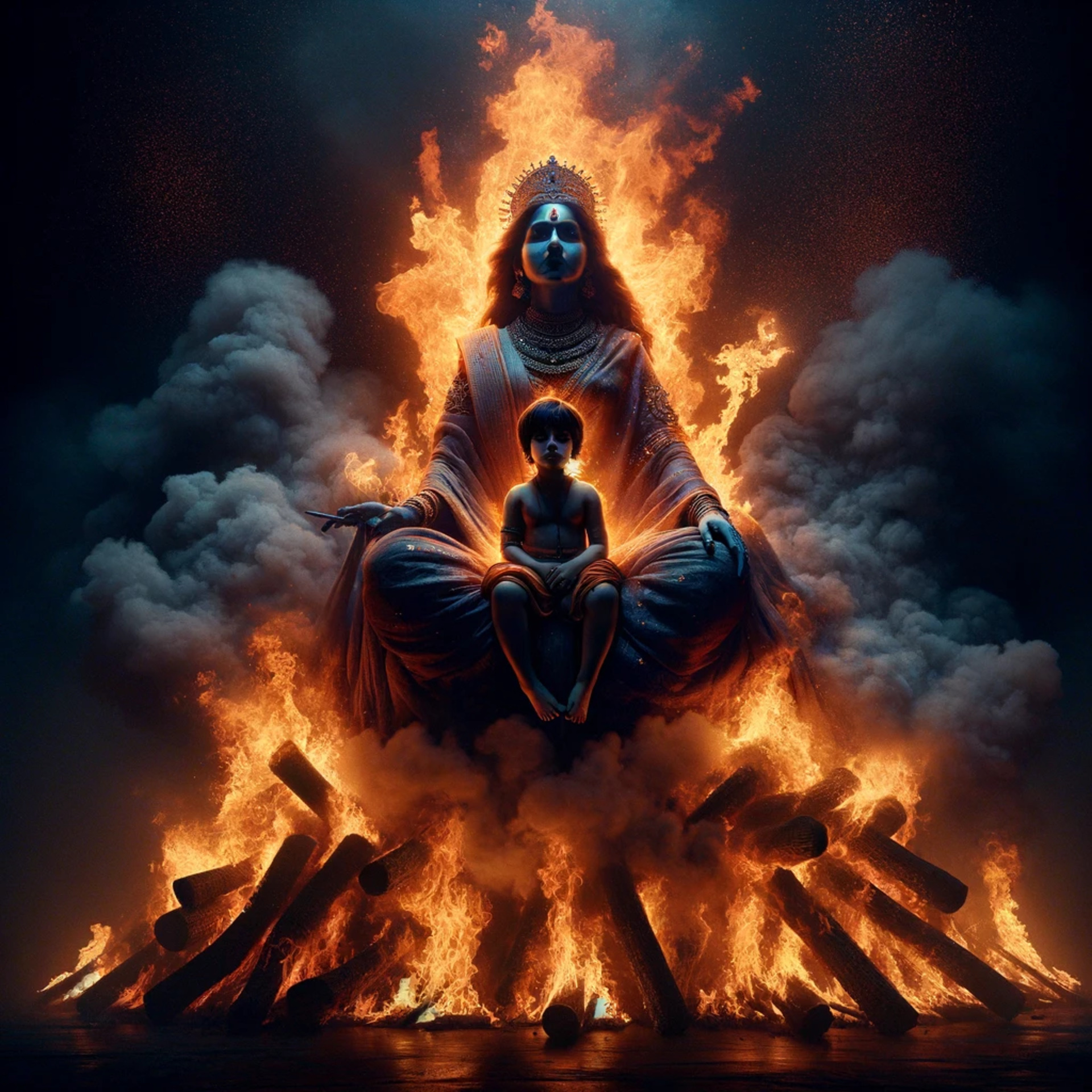
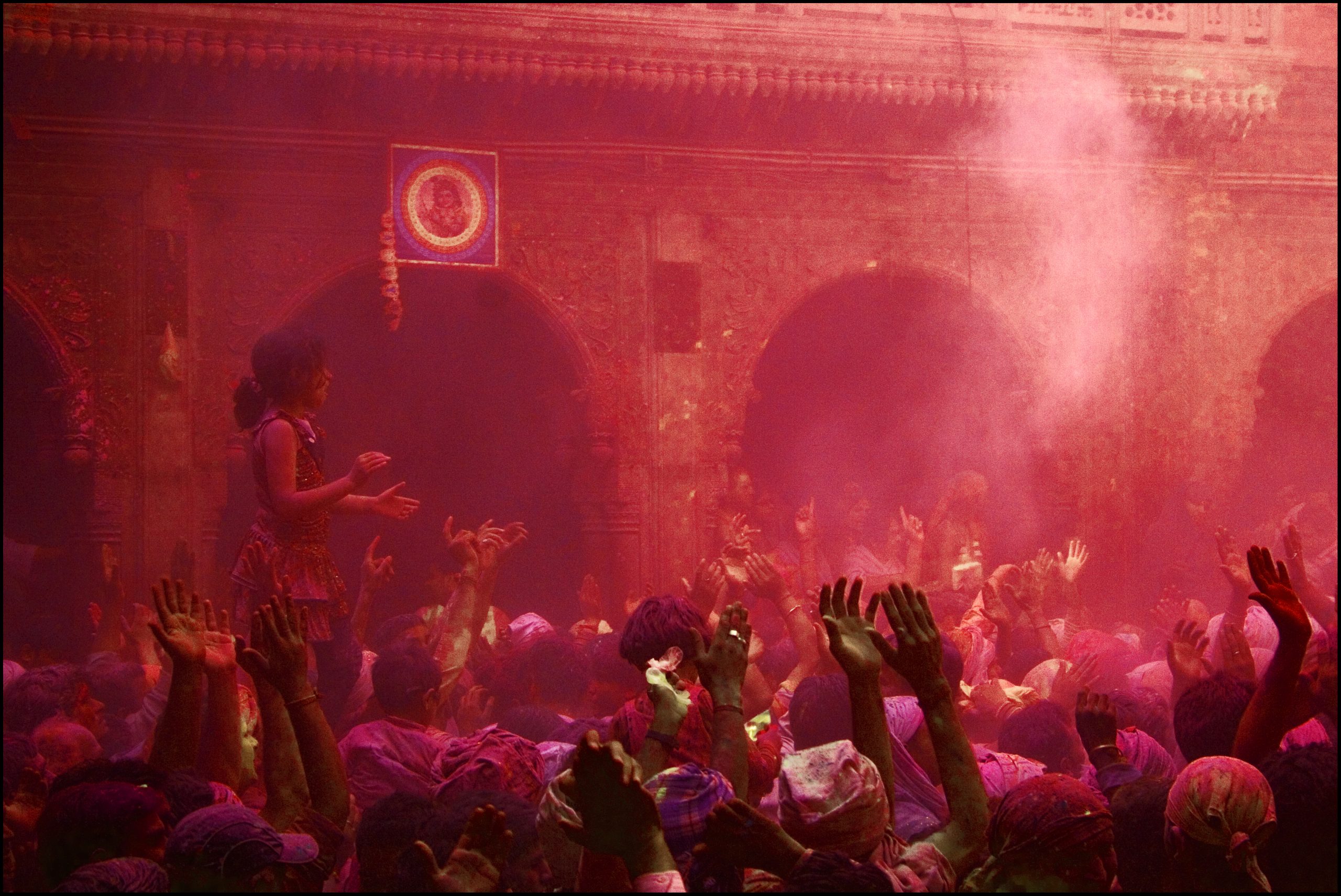
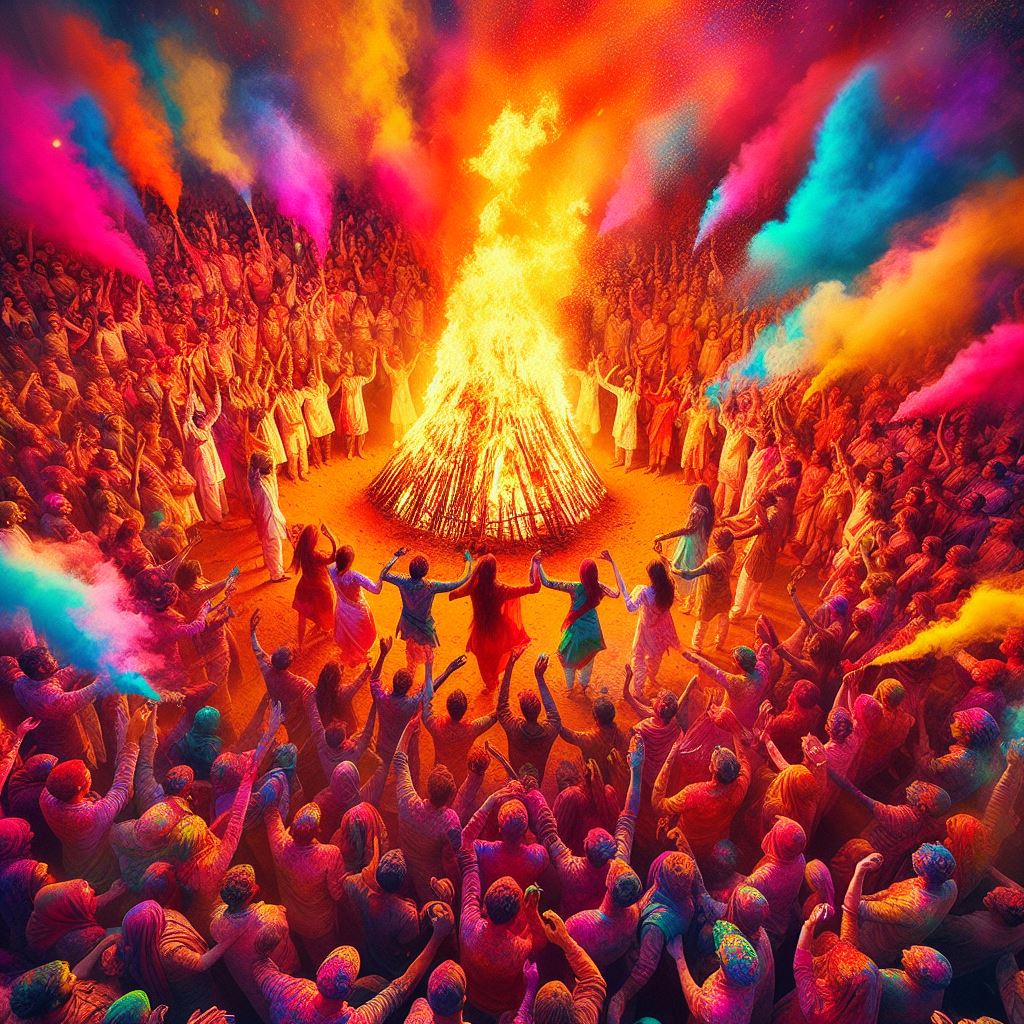
Holika Dahan, celebrated on the auspicious Phalguna Purnima, marks the sacred bonfire ritual that precedes Holi. This profound ceremony occurs when the full moon illuminates the night sky, the Sun transitions into Meena Rashi, and planetary configurations align to amplify spiritual energies.
Scripturally rooted in the Bhagavata Purana and Vishnu Purana, Holika Dahan symbolizes the eternal triumph of devotion over arrogance, dharma over adharma. The ritual of lighting the ceremonial pyre carries deep astrological significance for karmic purification and religious importance for invoking Bhagwan Vishnu’s protective grace, particularly through His Narasimha avatar.
What is Holika Dahan
Holika Dahan derives from two Sanskrit words: “Holika” (the demoness aunt of Prahlada) and “Dahan” (combustion or burning). The festival is also known by several regional names:
- Chhoti Holi – emphasizing it as the prelude to the main Holi festival
- Holika Combustion – literal translation highlighting the burning ritual
- Kama-Dahanam – in South India, referring to Mahadev Shiva burning Kamadeva
- Sammat Jaarna – in Purvanchal region of Uttar Pradesh
- Chanchor – in West Bengal, where dry twigs are heaped and burned
Position in Hindu Calendar
Holika Dahan occupies a precise position in the Hindu lunar calendar. It falls on Phalguna Purnima (the full moon day of Phalguna month), which corresponds to February-March in the Gregorian calendar. This timing marks the transition from winter’s cold to spring’s warmth, symbolizing nature’s renewal and spiritual rebirth.
The ritual is performed during Pradosh Kaal (twilight period after sunset), specifically avoiding Bhadra Kaal – an inauspicious time ruled by malefic planetary influences. The celebration concludes with the next morning’s Holi festivities, making it a two-day observance of devotion and joy.
Date and Timing of Holika Dahan
Tithi and Paksha Details
Holika Dahan is strictly observed on Phalguna Purnima Tithi during Shukla Paksha (waxing moon phase). The Purnima tithi must be prevailing during Pradosh Kaal for the ritual to be most efficacious.
Key Timing Considerations:
- Purnima Tithi should be active during twilight (Pradosh Kaal)
- The ritual begins after sunset and before midnight
- Bhadra Mukha and Bhadra Puccha timings must be avoided
- The bonfire is lit when the nakshatra and yoga are favorable
Nakshatra and Yogas
The full moon typically occurs in Hasta, Chitra, or Swati nakshatra depending on the year. These nakshatras belong to Virgo-Libra zodiac belt, enhancing qualities of purity, balance, and divine grace.
Favorable Yogas for Holika Dahan:
- Siddha Yoga – perfection in spiritual endeavors
- Amrita Yoga – nectar of immortality
- Brahma Yoga – connection with cosmic consciousness
- Ravi Yoga – Sun’s auspicious position
Celebration Duration
The bonfire burns through the night, with devotees gathering for several hours. Communities begin preparations in the evening, perform the lighting ceremony during muhurat, and continue with parikrama (circumambulation), prayers, and prasad distribution until late night. The ashes remain sacred until morning, when they’re collected as vibhuti for tilak.
Most Auspicious Muhurat
The Pradosh Kaal Muhurat is calculated based on sunset timing at each location. Generally, the ideal time falls between 6:30 PM to 9:30 PM, but precise timing varies by:
- Geographical location’s sunset
- Purnima Tithi prevalence
- Bhadra Kaal conclusion
- Local panchang specifications
Devotees consult regional panchangs or temple priests for exact muhurat, as lighting the fire during Bhadra Kaal nullifies spiritual benefits and invites obstacles.
Astrological Significance of Holika Dahan
Planetary Positions and Their Influence
The astrological configuration during Phalguna Purnima creates a powerful spiritual window. The Sun’s transit into Meena Rashi (Pisces) around this period brings spiritual awakening, compassion, and moksha-oriented energies. Pisces, ruled by Guru (Jupiter), is the final sign of the zodiac, representing completion and transcendence.
Key Planetary Influences:
Surya (Sun) in Meena Rashi:
- Dissolves ego and arrogance (Hiranyakashipu’s traits)
- Enhances spiritual insight and devotion
- Marks the end of winter’s cold, inert energies
- Activates pitta dosha for renewed vitality
Chandra (Moon) – Full Moon Strength:
- Purnima represents complete illumination of consciousness
- Moon’s fullness in Virgo-Libra axis brings mental clarity
- Dispels tamas (darkness) with sattvic (pure) energies
- Emotional fulfillment and peace of mind
Mangal (Mars) – Courage and Protection:
- Mars provides strength to overcome adharmic forces
- Protects devotees like Prahlada from evil influences
- Enhances courage to burn inner enemies (kama, krodha, lobha)
Guru (Jupiter) – Wisdom and Fortune:
- Jupiter’s blessings amplify during this period
- Wisdom to distinguish right from wrong
- Fortune in spiritual and material endeavors
- Protection from negative karma
Rahu-Ketu Axis – Karmic Release:
- The nodal axis facilitates burning of past karma
- Release from ancestral burdens and pitru dosha
- Transformation of shadripus (six inner enemies)
Nakshatra Importance
The Purnima occurring in Hasta Nakshatra (ruled by Chandra) is considered most auspicious as it represents the hands of cosmic artisan Savitar, enabling creation and destruction. Chitra Nakshatra (ruled by Mangal) brings brilliance and transformative power, while Swati Nakshatra (ruled by Rahu) offers independence and karmic liberation.
Astrological Benefits of Observing Holika Dahan
Karmic Purification:
- Burns prarabdha karma through Agni (fire element)
- Neutralizes sanchita karma accumulated over lifetimes
- Prevents formation of new negative karma
Dosha Removal:
- Pitru Dosha – appeased through fire offerings and remembering ancestors
- Graha Dosha – malefic planetary influences reduced
- Vastu Dosha – environmental negativity cleared through sacred fire
- Nazar Dosha – evil eye effects burned away
Rashi-Specific Benefits:
- Mesha to Mithuna (Aries-Gemini): Enhanced courage and communication
- Karka to Kanya (Cancer-Virgo): Emotional healing and mental clarity
- Tula to Dhanu (Libra-Sagittarius): Relationship harmony and spiritual growth
- Makara to Meena (Capricorn-Pisces): Material stability and moksha progress
Why This Specific Tithi is Chosen
Purnima (Full Moon) Significance: The full moon represents complete manifestation of divine light. Just as Chandra reflects Surya’s light fully on Purnima, the devotee’s consciousness should reflect divine qualities completely. This tithi symbolizes:
- Poornatva (completeness) in spiritual practice
- Maximum cosmic energy available for transformation
- Balance of masculine (Sun) and feminine (Moon) energies
- Mind’s capacity to receive highest spiritual illumination
Phalguna Month Importance: Phalguna marks the end of winter (sheet ritu) and beginning of spring (vasant ritu). This seasonal transition mirrors spiritual transformation – leaving behind cold lethargy for vibrant growth. Scripturally, Phalguna is dear to Bhagwan Vishnu, making worship during this month particularly fruitful.
Astronomical Context: The Sun-Moon opposition on Purnima creates a powerful energetic axis. The fire ritual on Earth aligns with this cosmic opposition, creating a trinity of transformation (Sun-Moon-Agni), multiplying the spiritual potency manifold.
Religious Significance of Holika Dahan
Scriptural Importance
Holika Dahan finds primary mention in the Bhagavata Purana (Seventh Canto) where the complete narrative of Prahlada and Hiranyakashipu is elaborated. The Vishnu Purana also recounts this episode, emphasizing Vishnu’s role as protector of devotees. The Padma Purana prescribes the ritual observance, while Naradiya Purana discusses its spiritual fruits.
Vedic Connection: Though not explicitly mentioned in Vedas, the principle of Agni as purifier appears extensively in Rigveda and Yajurveda. The Holika Dahan fire represents the Yajña concept – sacrificing impurities in sacred fire for divine grace.
Theological Meaning in Hindu Dharma
In Hindu theological framework, Holika Dahan represents several profound truths:
Bhakti Over Shakti (Devotion Over Power): Hiranyakashipu possessed immense power through Lord Brahma’s boon, yet his young son’s simple devotion proved superior. This teaches that divine grace through surrender exceeds any material or supernatural power.
Dharma Sthapana (Establishing Righteousness): Whenever adharma threatens to overwhelm dharma, divine intervention restores balance. Prahlada’s rescue exemplifies Bhagwan Krishna’s Gita promise: “Paritranaya sadhunam vinashaya ca dushkritam” (protecting the good and destroying the wicked).
Saranagati (Surrender) as Supreme Path: Prahlada’s complete surrender to Vishnu, chanting “Narayana” even in fire, demonstrates the essence of saranagati. His fearlessness came from absolute faith, not personal strength.
Connection to Purusharthas
Dharma: Observing Holika Dahan reinforces righteous conduct. The ritual reminds devotees to uphold dharma even against family opposition (as Prahlada did).
Artha: New grain offerings and prayers for prosperity connect to legitimate wealth acquisition blessed by divine grace.
Kama: Burning Kamadeva (in South Indian version) teaches kama’s sublimation, not suppression – channeling desire toward divine love.
Moksha: The fire symbolizes jnana-agni (fire of knowledge) burning ignorance. Circumambulating the fire represents the soul’s journey toward liberation, leaving behind karmic bondage.
Importance in Different Sampradayas
Vaishnava Tradition: Central festival for Vaishnavas who worship Bhagawan Narasimha. The Madhva, Ramanuja, and Chaitanya sampradayas conduct elaborate Narasimha puja. ISKCON centers worldwide celebrate with kirtan, katha, and bonfire, emphasizing Prahlada’s exemplary bhakti.
Shaiva Tradition: In Shaiva understanding, particularly in South India, the ritual connects to Shiva burning Kamadeva with his third eye. This represents mastery over senses and mental discipline through tapasya.
Shakta Tradition: Shaktas view Holika as a manifestation of maya-shakti being destroyed by knowledge-fire. The ritual represents Devi’s grace in removing avidya (ignorance).
Smarta Tradition: Smartas integrate all these perspectives, seeing the fire as representing Agni Devata while honoring both Vishnu and Shiva through the ritual.
Phala-Shruti (Fruits of Observance)
According to Puranic texts, observing Holika Dahan with devotion yields:
- Sarva-papa-kshaya – Destruction of all sins
- Ayur-arogya-sampatti – Long life, health, and prosperity
- Bhaya-nashana – Removal of all fears
- Vishnu-kripa – Grace of Lord Vishnu
- Pitru-tarpti – Satisfaction of ancestors
- Moksha-prapti – Progress toward liberation
Connection to Hindu Cosmology
In the context of yugas, this event occurred in Satya Yuga but is commemorated in Kali Yuga to remind devotees that divine protection remains constant across all ages. The burning of Holika represents the cyclic destruction of adharma that maintains cosmic order through each mahayuga.
Which Form of God is Worshipped
Primary Deity: Narasimha Swamy
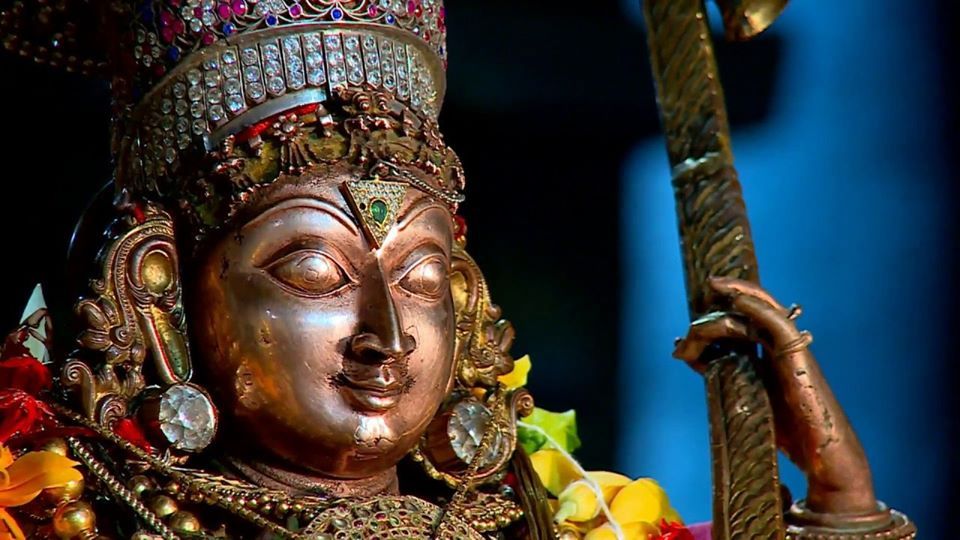
The primary deity worshipped during Holika Dahan is Bhagwan Vishnu in His Narasimha Avatar (half-man, half-lion form). This fierce yet compassionate manifestation appeared specifically to protect Prahlada and destroy Hiranyakashipu.
Manifestation Details
Narasimha Avatar Characteristics:
- Simha-mukha (lion face) – representing fearlessness and sovereignty
- Nara-sharira (human body) – showing divine descent for devotee protection
- Ati-ugra-rupa (extremely fierce form) – destroying evil without mercy
- Bhakta-vatsala (devotee-loving) – gentle embrace of Prahlada post-battle
Scriptural Description from Bhagavata Purana (7.8): “Nrisimham dishamano dikshu yasmad disham na janmabhut | Gambhira-nada-vibhinnah karnaavaranah” – The Lord whose terrifying roar pierced all directions, whose form had not been seen before in any direction, appeared as Narasimha.
Iconography and Symbolism
Visual Elements:
- Jvala-mala (garland of flames) – representing fire that purifies
- Hiranyakashipu’s body on lap – shown in ugra (fierce) poses
- Prahlada standing nearby – hands folded in prayer
- Sthamba (pillar) – often shown behind, referencing emergence
- Yogapatta (meditation strap) – in some peaceful Narasimha forms
Mudras (Hand Positions):
- Abhaya mudra (protection) – reassuring devotees
- Varada mudra (boon-giving) – blessing devotees
- Prahlada-paripalana (protecting Prahlada) – specific iconographic pose
Regional Deity Variations
North India: Narasimha worship predominates, with effigies of both Holika and Prahlada placed in the pyre.
South India: Lord Shiva as Kamantaka (destroyer of Kama) is emphasized, particularly in Tamil Nadu. The story focuses on Shiva burning Kamadeva with His third eye.
Eastern India: Agni Devata (Fire God) receives primary worship, with Narasimha invoked secondarily.
Western India: Both Narasimha and Krishna are worshipped, especially in Gujarat and Rajasthan, linking to Braj traditions.
Associated Deities
Prahlada: Though not a deity, Prahlada is honored as the maha-bhakta (great devotee), setting the standard for devotional surrender.
Agni Devata: Fire itself is worshipped as Agni, the purifying divine element that transforms offerings into divine connection.
Lakshmi (as Narasimhi): Maha-Lakshmi appears in Narasimha Lila as His consort, blessing devotees with prosperity.
Sacred Stories and Katha
Primary Legend from Bhagavata Purana
The foundational narrative appears in Shrimad Bhagavata Purana, Seventh Canto (Saptama Skandha), Chapters 4-10, narrated by Sage Narada.
The Complete Katha:
Hiranyakashipu’s Ascent: In ancient times, the demon brothers Hiranyaksha and Hiranyakashipu terrorized the three worlds. When Bhagwan Vishnu as Varaha Avatar slew Hiranyaksha, his brother Hiranyakashipu swore revenge. He performed severe tapasya to Brahma for thousands of years, standing on one toe with arms raised, unmoving.
The Boon: Pleased by his penance, Brahma appeared and offered a boon. Hiranyakashipu cunningly requested: “Let me not die by man or beast, demigod or demon, inside or outside, on earth or sky, day or night, by any weapon.” Brahma granted this, making him virtually invincible.
Prahlada’s Birth and Divine Nature: Hiranyakashipu’s wife Kayadhu, while pregnant, was captured by Devarshi Narada who instructed the unborn child in Vishnu bhakti. The child, named Prahlada, emerged as a pure devotee, constantly chanting Vishnu’s names from infancy itself.
Father-Son Conflict: As Prahlada grew, his unwavering devotion infuriated his father. “Where is your Vishnu?” roared Hiranyakashipu. “He is everywhere – in this pillar, in the air, in fire, in water,” replied Prahlada calmly. “If He is in this pillar, let Him save you!” screamed the demon king, striking a palace pillar with his mace.
Multiple Torture Attempts: Before the Holika incident, Hiranyakashipu tried various methods to kill Prahlada:
- Vishapanam (poison feeding) – but poison turned to nectar
- Gaja-vidaranam (elephant trampling) – but elephants bowed before the boy
- Parvata-patana (throwing from cliff) – but divine hands cushioned his fall
- Bhujanga-damsha (snake bites) – but serpents’ fangs became flowers
- Agni-pravesha (previous fires) – but flames cooled around him
The Holika Conspiracy: Frustrated, Hiranyakashipu summoned his sister Holika, who possessed a divine shawl (or cloak) blessed by Brahma that granted fire immunity. The plan was simple yet deadly: Holika would sit on a blazing pyre with Prahlada on her lap. The fire would consume the boy while the shawl protected her.
The Night of Destiny: On Phalguna Purnima, a massive pyre was erected in the palace courtyard. Citizens gathered, forced to witness. Holika, adorned with the protective shawl, seated herself on the pyre with little Prahlada. As flames were lit, she smiled wickedly.
Divine Reversal: But Prahlada, eyes closed, continued chanting: “Om Namo Narayanaya, Om Namo Narayanaya…” His faith never wavered even as fire roared around him. At that moment, Vayu Devata (Wind God), moved by compassion, sent a powerful gust. The protective shawl flew from Holika and wrapped around Prahlada instead.
Holika screamed in terror as flames engulfed her. Her boon had one condition she’d forgotten: it worked only when used for dharmic purposes. Using it to harm an innocent child negated the protection. Within moments, she was reduced to ashes, while Prahlada sat untouched, still chanting, his face glowing with divine grace.
Narasimha Avatar: Enraged further, Hiranyakashipu demanded Prahlada show him Vishnu in the pillar. At twilight (neither day nor night), from a palace doorway (neither inside nor outside), emerged Narasimha – neither man nor beast. With His sharp claws (not weapons), on His lap (neither earth nor sky), He tore apart Hiranyakashipu, protecting His devotee and restoring cosmic order.
Vrat Katha Recitation
On Holika Dahan night, families gather to recite this katha before lighting the bonfire. The recitation follows this structure:
- Invocation to Ganesha
- Narration of Hiranyakashipu’s penance and boon
- Prahlada’s birth and devotion
- Description of tortures endured
- The Holika conspiracy
- Divine protection in fire
- Narasimha Avatar’s appearance
- Moral teachings and phala-shruti
The katha concludes with: “Prahlada-charitra-shravanam sarva-papa-haram, sarva-sampatti-karam” (Hearing Prahlada’s story destroys all sins and grants all prosperity).
Regional Variations: Kama-Dahanam
South Indian Version: Lord Shiva sat in deep meditation atop Mount Kailash, grieving Sati’s death. The world needed Him to marry Parvati to produce Kartikeya, who would defeat the demon Tarakasura. The Devas sent Kamadeva (god of desire) to shoot his flower-arrows at Shiva, breaking His meditation.
Disturbed, Shiva opened His third eye (jnana-netra), emitting a fierce flame that reduced Kamadeva to ashes instantly. Rati, his wife, pleaded for mercy. Shiva relented, promising Kama would be reborn bodiless (Ananga) to continue his duties.
This version teaches control over kama (desire), sublimating it through tapas rather than suppression. In Tamil Nadu villages, Kamadeva effigies are burned with theatrical performances depicting this story.
Spiritual Teachings from Katha
Faith Conquers Fear: Prahlada’s absolute faith in Vishnu removed all fear. The katha teaches: “Bhayam na vidyate tasya yo vishnum sharanam gatah” (Fear does not exist for one who has taken refuge in Vishnu).
Misused Boons Fail: Both Hiranyakashipu’s invincibility and Holika’s fire immunity were divine gifts, yet both failed when used for adharma. Power without righteousness leads to destruction.
Divine Grace Transcends Laws: Natural laws (fire burns) bend before divine will when protecting devotees. The katha establishes Vishnu’s supreme position above all cosmic forces.
Children’s Dharma: Even when father commands adharma, children must follow dharma. Prahlada respectfully disobeyed his father to uphold truth, setting precedent for righteous resistance.
Navadha Bhakti Model: Prahlada exemplified all nine forms of devotion: shravanam (hearing), kirtanam (chanting), smaranam (remembering), pada-sevanam (serving feet), archanam (worship), vandanam (praying), dasyam (servitude), sakhyam (friendship), atma-nivedanam (complete surrender).
Complete Puja Vidhi: Step-by-Step Guide
Preparation (Previous Evening and Morning)
Day Before:
- Select open space for pyre construction (courtyard, community ground)
- Collect wood logs, cow dung cakes (upale), dry twigs, hay
- Prepare Holika-Prahlada effigies using dough, clay, or cow dung
- Gather puja materials and new grains
Morning of Holika Dahan:
- Bathe before sunrise, wear fresh clothes (yellow, orange, or red preferred)
- Clean puja area with Ganga jal or clean water
- Draw rangoli around pyre location
- Keep puja thali ready with all samagri
Setting Up Pyre (Chita)
Materials Required:
- Wood logs (mango, neem, or any auspicious wood)
- 7-11 cow dung cakes arranged in circle
- Dry grass, hay, and small twigs for easy ignition
- Cotton thread (suta) – 7 strands wound together
- Holika effigy (seated figure)
- Prahlada effigy (smaller, seated on Holika’s lap)
Construction Method:
- Mark circular area with cow dung paste
- Place larger logs forming base structure (4-5 feet high)
- Arrange cow dung cakes in pyramid shape
- Position Holika effigy facing east or north
- Place Prahlad effigy on her lap or beside
- Fill gaps with smaller twigs and dry leaves
- Keep opening at base for ignition
Detailed Puja Procedure
Step 1: Achamana and Sankalpa
Perform achamana (sipping water from right palm) three times, then take sankalpa (resolve):
Sankalpa Mantra: “Om tat sat. Adya Phalguna Purnima titau, mama sarva-papa-kshaya-dwara shri Vishnu-preeti-artham Holika-dahanam karishye.”
(Today on Phalguna Purnima, for destruction of all sins and pleasing Lord Vishnu, I shall perform Holika Dahan.)
Step 2: Ganesh-Kalash Puja
- Invoke Lord Ganesha for obstacle-free ritual
- Chant: “Om Gam Ganapataye Namah” (11 times)
- Establish water-filled kalash with mango leaves, coconut
- Worship kalash as presence of all deities
Step 3: Panchopachara Puja of Pyre
Perform symbolic worship of the unlit pyre:
- Gandha (sandalwood paste) – apply to base
- Pushpa (flowers) – offer at Prahlada’s position
- Dhupa (incense) – circle around pyre 3 times
- Dipa (lamp) – show ghee lamp
- Naivedya (offering) – place sweets at base
Step 4: Nyasa and Dhyana
Touch body parts while chanting (ang nyasa):
- Heart: “Om Narasimhaya hridayaya namah”
- Head: “Om Prahlada-palakaya shirase swaha”
- Crown: “Om Hiranyakashipu-hansaya shikhayai vashat”
Dhyana Shloka: “Prahlada-mukhya bhaktebhyo varado narasimhakah | Holika-dahanasyante sada sannidhir bhavatu ||”
(May fierce Narasimha, giver of boons to devotees like Prahlada, remain present throughout Holika burning.)
Step 5: Thread Binding (Suta Bandan)
- Take 7-strand cotton thread soaked in water
- Circle pyre 7 times clockwise while chanting: “Om Namo Bhagavate Narasimhaya”
- Tie thread loosely around pyre middle
Step 6: Grain and Offering Placement
Items to Offer (placing in pyre base):
- Nav-dhanya (9 grains): wheat, rice, barley, chickpea, black gram, green gram, sesame, mustard, cumin
- Gud (jaggery) – for sweetness in life
- Nariyel (coconut) – ego surrender
- Supari (betel nut) – focus and clarity
- Phool (flowers) – devotion
- Haldi-kumkum – auspiciousness
- Chandan (sandalwood) – cooling influence
- Kapoor (camphor) – purification
- Dried fruits and nuts – prosperity
While placing each item, say: “Om idam na mama” (This is not mine, I offer to divine).
Step 7: Holika Dahan Katha Recitation
Sit facing the pyre with family members. Senior member narrates the complete story of Prahlada-Hiranyakashipu-Holika from Bhagavata Purana. All listen with devotion. Conclude with:
“Iti Holika-dahan-katha sampurnam” (Thus ends the story of Holika burning.)
Step 8: Mantra Japa
Chant these mantras specific number of times:
Primary Mantra (108 times): “Om Namo Bhagavate Narasimhaya Namah”
Additional Mantras: “Om Ugram Viram Maha-Vishnum Jvalantam Sarvato Mukham | Nrisimham Bhishanam Bhadram Mrityuh-Mrityum Namamy-Aham ||” (11 times)
(I bow to fierce, heroic Maha-Vishnu, blazing with fire, all-facing Narasimha, terrifying yet auspicious, death of death itself.)
“Om Hreem Kshraum Om Namo Bhagavate Narasimhaya | Sarva Jvara Vinashaya Sarva Roga Vinashaya | Sarva Dushtana Nashanaya Phat Swaha ||” (21 times)
(For destruction of all fevers, diseases, and evil forces)
Step 9: Pradakshina with Water Pot (Parikrama)
- Fill copper/brass pot with water, turmeric, flowers
- Each family member circles the pyre 3, 5, or 7 times clockwise
- On final round, sprinkle water from pot around pyre
- Women carry pot on head or hip, men in hands
- Chant “Narayana” continuously during parikrama
Step 10: Ignition of Pyre (Agni Sthaapana)
Most Critical Step – Timing is Crucial:
Check Panchang for exact muhurat. Ignition should occur:
- After Bhadra Kaal ends
- During Pradosh Kaal (twilight period)
- When Moon is strong
Ignition Method:
- Senior male member (or priest) approaches from south side
- Light camphor mixed with ghee on cotton wick
- While lighting, chant: “Om agnaye swaha, idam na mama” “Om Purnamadah Purnamidam Purnat Purnamudachyate | Purnasya Purnamadaya Purnameva-Vashishyate ||”
(That is complete, this is complete. From completeness comes completeness. Taking completeness from completeness, only completeness remains.)
- Touch fire to base of pyre simultaneously in 2-3 spots
- Step back as flames rise
Step 11: Holika Dahan Stotram
As fire blazes, recite or listen to traditional stotras:
“Yada yada hi dharmasya glanirbhavati Bharata | Abhyutthanam-adharmasya tadatmanam srijamy-aham ||”
(Whenever dharma declines and adharma rises, I manifest Myself – Bhagavad Gita 4.7)
“Asankhya-klesha-samhara sarva-roga-vinashanam | Narasimha-smaranad-eva sarva-siddhi-pradam bhavet ||”
(By remembering Narasimha alone, infinite troubles are removed, all diseases destroyed, and all siddhis attained.)
Step 12: Parikrama During Burning
Continue circling the blazing fire:
- 3 rounds for general devotees
- 5 rounds for family protection
- 7 rounds for complete purification
Hold right hand toward fire, left hand on heart. Mentally offer all negativity into flames: “Om agnaye sarva-papa-dahaya swaha”
Step 13: Naivedya and Aarti
When fire is well-established, offer naivedya:
- Kheer (sweet rice pudding)
- Gur-chana (jaggery-chickpea)
- Fresh fruits
- Panchamrit (milk, curd, ghee, honey, sugar)
Aarti: “Jai Narasimha Jai Narasimha Jai Narasimha Bhagwan | Prahlada-ke Prabhu Prahlada-ke Swami Prahlada-ke Prabhu Bhagwan ||”
Continue until fire naturally subsides.
Step 14: Vibhuti Collection and Application
Next morning, collect cooled ash (vibhuti) from pyre center, avoiding edges. Store in clean container.
Vibhuti Application:
- Apply three horizontal lines on forehead (Vaishnavas)
- Apply as tilak mark (Shaivas)
- Mix small amount in water for purification
- Sprinkle in home corners for protection
Step 15: Prasad Distribution
Distribute roasted grains (especially chickpeas, wheat) collected from pyre edges as prasad. Share sweets offered during puja. The prasad carries blessings of:
- Fire purification
- Narasimha’s protection
- Community bonding
- Spring’s abundance
Evening/Night Rituals
Post-Dahan Activities:
- Sit around fire sharing devotional songs (bhajans)
- Children enact Prahlada-Hiranyakashipu drama
- Elders narrate additional stories from Puranas
- Youth perform folk dances in some regions
- Feast preparation for next day’s Holi
Before Sleeping:
- Chant Narasimha Kavacham for protection
- Keep vibhuti near sleeping area
- Plan next morning’s Holi colors and celebrations
Vrat Observance
Types of Fasting
While Holika Dahan doesn’t typically require full-day fasting like Ekadashi or Shivratri, some devoted families observe partial fasting:
Nirjala Vrat (Waterless Fast): Not commonly observed for this occasion. If undertaken, begin at sunrise and break only after Holika ignition and darshan.
Phalahar (Fruit-Based Fast): Most common approach:
- Consume only fruits, milk, dry fruits
- One meal of sabudana (sago), potatoes, peanuts
- Avoid grains, salt, onion-garlic until puja completion
Partial Fast:
- Light breakfast
- No lunch or only fruits
- Full dinner after puja and prasad distribution
Who Should Observe
Recommended For:
- Devotees with special sankalpa (resolve) for specific boons
- Those suffering from prolonged difficulties seeking divine intervention
- Families conducting first Holika Dahan in new home
- People with Narasimha as ishta-devata
Optional For:
- General celebrants (can participate without vrat)
- Children under 12
- Elderly with health issues
- Pregnant and nursing women
Vrat Procedure
Morning Sankalpa (If Observing Vrat): After bathing, face east, hold water in right palm with flower and rice:
“Om mama sarva-papa-kshaya-dwara, sarva-dukhha-nivritti-dwara, sarva-mangala-siddhi-dwara, shri Narasimha-prasannata-artham, adya Phalguna-Purnima-sthitam Holika-dahan-vratam karishye.”
(For removal of all sins and sorrows, for attainment of all auspiciousness, to please Lord Narasimha, I undertake Holika Dahan vrat today on Phalguna Purnima.)
Release water to ground or into plate.
Rules and Restrictions During Vrat
Do’s:
- Maintain cleanliness and purity
- Chant Vishnu mantras throughout day
- Read Bhagavata Purana’s Seventh Canto
- Meditate on Narasimha form
- Prepare puja materials with devotion
- Maintain silence or minimal speech
- Think positive, devotional thoughts
Don’ts:
- Avoid non-vegetarian food, eggs
- No alcohol or intoxicants
- No harsh speech, anger, or conflicts
- Avoid tamasic foods (onion, garlic, leftover food)
- No cutting hair or nails
- Avoid sleeping during day
- Don’t eat from others’ homes (except family)
Parana (Breaking Fast)
Timing: Vrat concludes naturally after Holika Dahan ritual completion and prasad distribution. If observed strictly until morning, break fast after sunrise next day with:
Parana Method:
- Wake early, bathe
- Brief prayer to Narasimha thanking for vrat completion
- Eat prasad from last night’s offering first
- Then consume normal Holi feast foods
Parana Mantra: “Om Namo Narasimhaya, krita-vrata-samaptaye namah” (Salutations to Narasimha, upon completion of vrat undertaken.)
Benefits of Vrat
Religious Benefits:
- Pleasing Lord Narasimha directly
- Protection from enemies and negative forces
- Destruction of sins accumulated over many births
- Enhanced devotion and spiritual progress
- Family unity and ancestral blessings
Astrological Benefits:
- Neutralizing malefic planetary periods
- Strengthening benefic planet influences
- Removing obstacles in important undertakings
- Health recovery and disease prevention
- Mental peace and emotional balance
Contraindications and Exemptions
Exempt Categories:
- Children under 8 years
- People with chronic illnesses (diabetes, BP issues)
- Those on mandatory medications requiring food
- Elderly above 75 years
- Pregnant women (first and third trimester)
- Women during menstruation
Alternative Observance: If unable to fast, these individuals can:
- Maintain sattvic vegetarian diet
- Increase mantra japa
- Listen to Holika katha recordings
- Offer seva in pyre preparation
- Donate food to devotees observing full vrat
Where Holika Dahan is Celebrated
Mathura-Vrindavan (Uttar Pradesh)
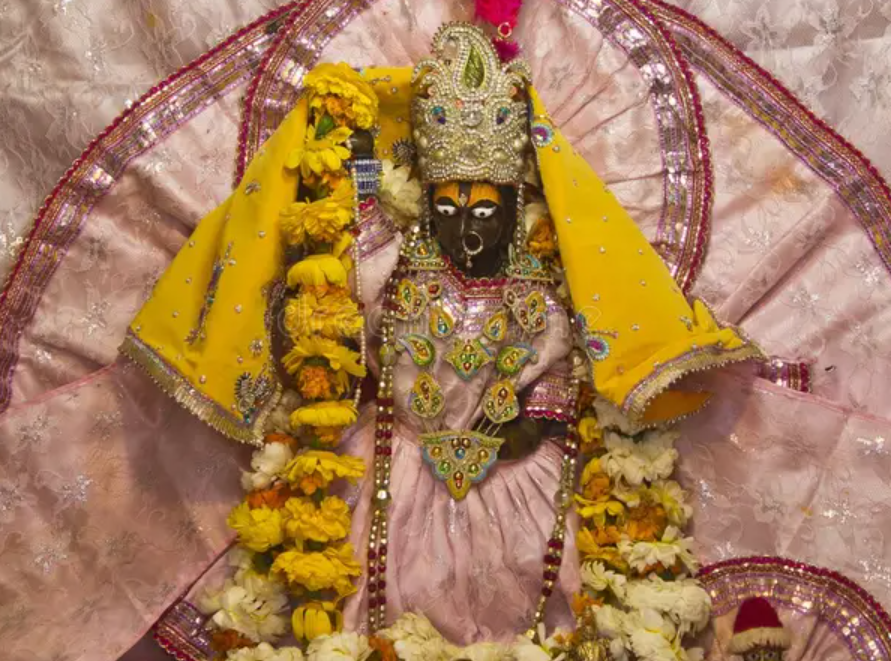
The most significant celebrations occur in Krishna’s birthplace and surrounding Braj region.
Banke Bihari Temple, Vrindavan:
- Massive pyre lit in temple courtyard
- Thousands gather for midnight celebration
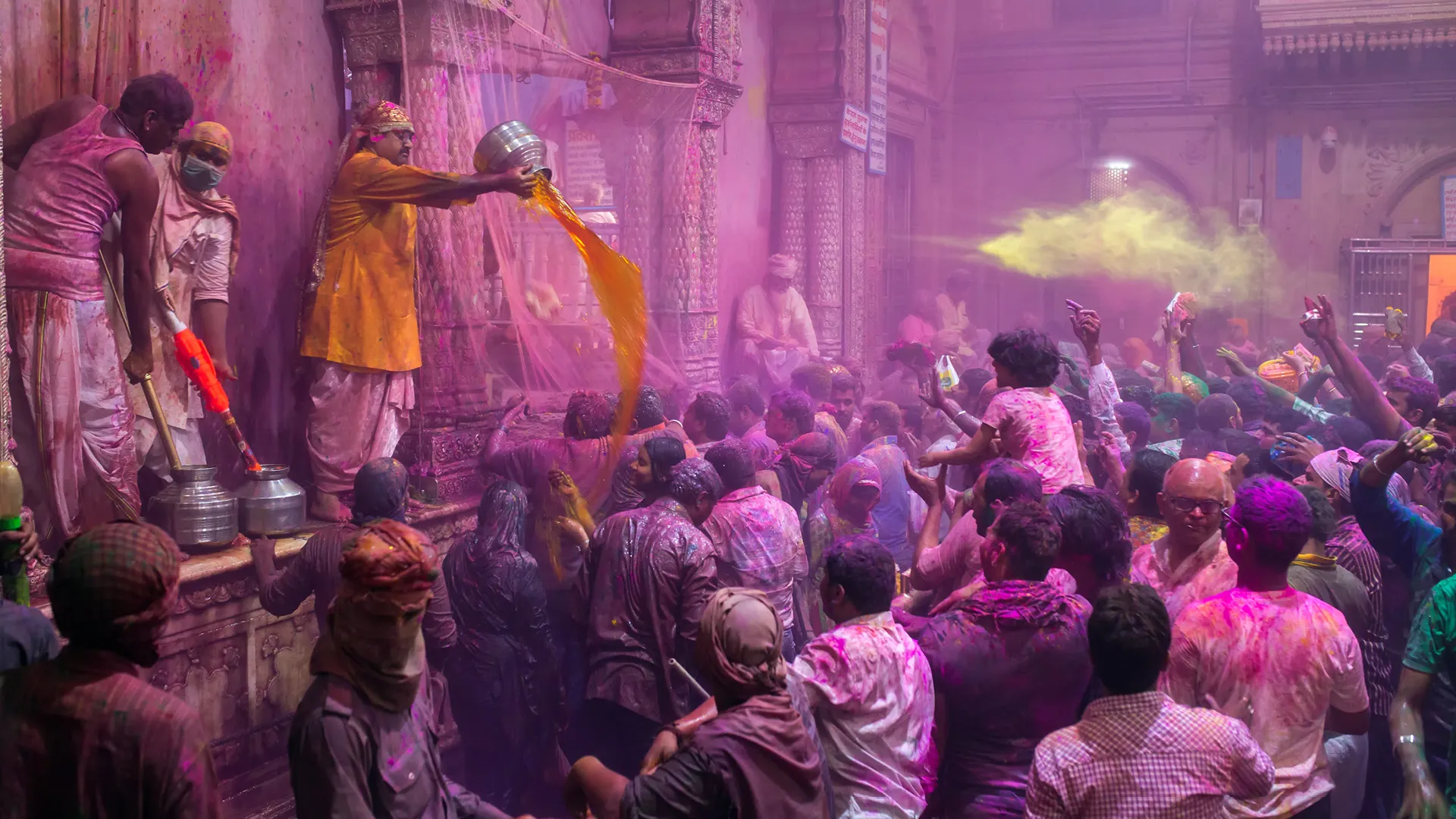
- Special Phoolwali Holi precedes Holika Dahan
- Temple remains open all night for darshan
- Continuous kirtan: “Hare Krishna Hare Krishna Krishna Krishna Hare Hare”
- Prasad distribution until dawn
Dwarkadheesh Temple, Mathura:
- Royal-style Holika Dahan with decorated pyre
- Priests perform elaborate Vishnu puja before ignition
- Temple elephants parade around fire
- Free prasad for thousands of devotees
Radha-Vallabh Temple:
- Focus on Radha-Krishna’s divine love
- Pyre arranged with 108 cow dung cakes
- Abhishekam of Narasimha vigraha
- Distribution of sattu (roasted gram flour)
Barsana and Nandgaon (Uttar Pradesh)
Famous for Lathmar Holi that follows Holika Dahan.
Barsana (Radha’s Birthplace):
- Community pyre at Radha Rani Temple complex
- Women lead the rituals here, unique reversal of usual practice
- Folk songs about Holika-Prahlada sung all night
- Preparation for next day’s lathi (stick) play between villages
Nandgaon (Krishna’s Village):
- Multiple pyres throughout village
- Men from Nandgaon visit Barsana next day
- Traditional singing competitions around fire
- Younger generation enacts the mythology through street plays
Jaipur (Rajasthan)
Rajasthan’s royal heritage infuses grandeur into Holika Dahan.
City Palace:
- Royal family (Mewar dynasty) conducts private ceremony
- Public viewing of maharaja’s pyre ignition
- Traditional Rajasthani folk performances
- Decorated camels and horses in procession
Khasa Kothi Circle:
- Massive public bonfire organized by municipality
- Thousands participate in parikrama
- Free gulal (colored powder) distribution
- Rajasthani folk dance (Ghoomar) performances
Ujjain (Madhya Pradesh)
Mahakaleshwar Temple:
- India’s first Holika Dahan (due to timezone) occurs here
- Special connection to Lord Shiva
- Pyre lit during evening Mahakal aarti
- Herbal gulal and shakkar mala (sugar garlands) traditions
- Lakhs of devotees for this Jyotirlinga temple’s celebration
- Shipra River banks filled with smaller pyres
Varanasi (Uttar Pradesh)
Ghats of Ganga:
- Multiple pyres at Assi, Dashashwamedh, Manikarnika ghats
- Combining Holika Dahan with Ganga aarti creates spectacular sight
- Priests perform vedic rituals alongside bonfire
- Boat rides offering ghat-hopping to see different pyres
- Classical music concerts post-midnight
Pushkar (Rajasthan)
- Lake city transforms into festival hub
- International tourist participation
- Pyres on desert sand dunes
- Camel safaris combined with Holika viewing
- Fusion of traditional rituals with contemporary celebrations
Anandpur Sahib (Punjab)
Holika Dahan coincides with Hola Mohalla, Sikh celebration.
- Bonfire followed by martial arts displays
- Demonstration of Sikh warrior traditions
- Communal langar (free meal) for thousands
- Processions with Nihangs (Sikh warriors)
Gujarat Region
Vadodara and Ahmedabad:
- Emphasis on agricultural new year celebration
- New crop offerings in pyre
- Garba dance around fire in some villages
- Sweet traditional dishes: undhiyu, jalebi distribution
South India Variations
Tamil Nadu:
- Kama Dahanam focus with Kamadeva effigies
- Temple priests burn symbolic figures
- Less elaborate than North but spiritually significant
- Shiva temples conduct special puja
Karnataka:
- Called Kamana Habba in some regions
- Turmeric and kumkum used extensively
- Women-centric rituals in villages
- Sugarcane offerings in fire
West Bengal and Assam
Bengal:
- Known as Dol Purnima or Chanchor
- Pyres use forest twigs and sal leaves
- Swing rituals for Radha-Krishna next day
- Bhang (cannabis drink) traditional in some communities
Assam:
- Similar to Bengal traditions
- Bihu folk dance around fire
- Community feasting preparation
- Rice beer sharing (traditional, not encouraged everywhere)
Nepal
Terai Region:
- Hindu communities celebrate identical to North India
- Janakpur (Sita’s birthplace) has significant celebrations
- Government holiday status
- Temple-organized mass gatherings
International Celebrations (Diaspora)
ISKCON Centers Worldwide:
- London (Bhaktivedanta Manor)
- Los Angeles (New Dwarka)
- Melbourne (New Govardhana)
- Mauritius (entire island celebrates)
- Trinidad & Tobago (public holiday)
- Fiji, Guyana, South Africa
Adaptation in Western Countries:
- Indoor symbolic fire using lamps (fire code restrictions)
- Community halls host gatherings
- Katha narration and cultural programs
- Next day Holi with eco-friendly colors
Regional Variations and Traditions
North India Traditions
Uttar Pradesh:
- Effigies mandatory in most celebrations
- Women carry dough balls around fire for family protection
- Roasted grain (chana, makka) distribution as prasad
- Next morning’s Dhulivandan (color play)
Purvanchal (Eastern UP):
- Sammat Jaarna – burning old harvested crop waste
- Agricultural connection emphasized
- Cattle adorned with colors and led around fire
- Folk songs in Bhojpuri dialect
Haryana:
- Similar to Western UP
- Focus on valor and strength in prayers
- Wrestlers perform strength demonstrations
- Traditional sweets: gujiya, malpua distribution
South India Variations
Tamil Nadu:
- Kama-Dahanam or Kamadahana
- Emphasis on self-control and defeating desires
- Theatrical performances in villages depicting Shiva burning Kamadeva
- Less prominence compared to Panguni Uthiram festival
- Temple pyres smaller, symbolic
Andhra Pradesh & Telangana:
- Mixed traditions – both Prahlada and Kamadeva stories narrated
- Special dishes: pulihora (tamarind rice), bobbattu (sweet flatbread)
- Temple pujas more elaborate than bonfire
Kerala:
- Minimal Holika Dahan observance
- Focus on temple rituals rather than public bonfires
- Some communities celebrate as part of Vishu preparation
East India Customs
West Bengal:
- Dol Jatra and Basanta Utsav primary focus
- Chanchor fire using specific wood types
- Radha-Krishna swing ceremonies more prominent
- Rabindranath Tagore’s influence on “Basant Utsav” cultural programs
- Santiniketan celebrations famous
Odisha:
- Called Dola Purnima
- Jagannath temples conduct special rituals
- Chandan Yatra preparation begins
- Pyres smaller, family-oriented
Jharkhand:
- Tribal communities integrate indigenous practices
- Sarna (nature worship) elements combined
- Dance forms: Jhumar, Paika around fire
- Mahua flower offerings
West India Patterns
Rajasthan:
- Royal grandeur in celebrations
- Folk dance: Ghoomar, Kalbelia around fires
- Puppetry performances narrating katha
- Desert communities celebrate under stars
Gujarat:
- New year (Vikram Samvat) connection
- Business account books closed, new ones started
- Traditional dress mandatory in many communities
- Garba in some regions post-bonfire
Maharashtra:
- Rangapanchami follows (5 days later)
- Holi relatively low-key compared to North
- Family-oriented, less public revelry
- Temple pyres in Nashik, Pune significant
Central India
Madhya Pradesh:
- Tribal Bhil, Gond communities have unique traditions
- Mahua liquor traditionally consumed (controversial)
- Forest produce offerings in fire
- Pachmarhi, Amarkantak region celebrations
Unique Temple Celebrations
Prem Mandir, Vrindavan:
- Modern architectural marvel hosts grand celebration
- Light and sound show depicting katha
- Synchronized pyre lighting at multiple locations
- International devotee participation
Jagannath Temple, Puri:
- Though Holi less prominent in Odisha, this temple celebrates
- Special Narasimha deity darshan
- Pyre inside temple complex, controlled ritual
Meenakshi Temple, Madurai:
- South’s perspective: subdued Holika Dahan
- Focus on daily rituals continuing without interruption
- Devotees visit for general blessings, not specifically for Holi
Traditional Practices and Beliefs
Agricultural Connections
Harvest Gratitude:
- Phalguna marks rabi crop maturity
- Offerings of new wheat, barley, gram in fire
- Thanks to Bhudevi (Earth Goddess) for abundance
- Prediction of next season based on fire direction and behavior
Cattle Worship:
- Animals adorned with turmeric, kumkum
- Garlanded and led around pyre
- Ash applied to cattle for health and protection
- Milk, curd offered in fire for dairy prosperity
Astronomical Observations
Fire Behavior Predictions:
- Flames bending east: good rains expected
- Strong upward flames: prosperity coming
- Crackling sounds: obstacles will arise, need more prayers
- Quick burning: fast resolution of problems
- Slow burning: patience required in endeavors
Astrological Remedies
Graha Shanti (Planet Pacification):
For Shani (Saturn) affliction:
- Offer black sesame seeds, urad dal in fire
- Circle pyre 7 times
- Donate iron utensils to poor next day
For Rahu-Ketu problems:
- Burn blue and brown cloth pieces
- Offer sarson (mustard) seeds
- Recite Rahu-Ketu mantras during burning
For Mangal (Mars) dosha:
- Wear red clothes
- Offer jaggery-wheat mixture
- Distribute red gulal next day
For weak Jupiter:
- Wear yellow clothes
- Offer turmeric, chana dal
- Donate yellow items to priests
For Sun-related issues:
- Face fire directly (safely) absorbing light
- Offer wheat grains
- Recite Surya mantras
Pitru Tarpanam (Ancestor Appeasement)
Some families perform shraddha-like rituals during Holika Dahan:
- Offering pinda (rice balls) in fire
- Calling ancestor names with “Swadha namah”
- Belief that pitrus visit during Purnima
- Seeking their blessings for family prosperity
Women’s Specific Rituals
For Marital Bliss (Suhagan):
- Married women circle fire with filled water pots
- Pray for husband’s long life and prosperity
- Apply sacred ash as sindoor afterward
- Exchange sweets with other married women
For Conceiving Child:
- Women desiring pregnancy offer special items
- Seven types of sweets in fire
- Pray to Prahlada for devotion in future child
- Take ash home, mix small amount in milk monthly
Newly Married First Holi:
- Bride’s first Holika Dahan at in-laws significant
- Mother-in-law guides through rituals
- Special sweets prepared: gujiya, malpua
- Gifts exchanged, new clothes worn
Do’s and Don’ts
Do’s:
- Participate with family, build community bonds
- Donate generously: food, clothes, money
- Forgive past grievances, reconcile disputes
- Wear traditional attire showing cultural pride
- Supervise children near fire for safety
- Use eco-friendly materials for pyre
- Chant mantras with devotion
- Share prasad with neighbors
- Welcome spring’s energy positively
Don’ts:
- Never circle pyre counter-clockwise (left side)
- Avoid non-vegetarian food entire day
- Don’t use plastic, synthetic materials in pyre
- Never mock or disrespect the ritual
- Avoid intoxication before puja completion
- Don’t forget fire safety measures
- Never ignore Bhadra Kaal timing
- Avoid conflicts and negative emotions
- Don’t waste food or resources
Charitable Acts (Dana)
Types of Dana on Holika Dahan:
Vastra Dana (Clothing):
- Donate clothes to poor before pyre lighting
- Yellow, orange, red colors preferred
- Earns blessings of Lakshmi
Anna Dana (Food):
- Feed Brahmins and devotees
- Distribute raw grains (wheat, rice, dal)
- Cook and serve meals to needy
- Considered most meritorious dana
Go-Dana (Cow Donation):
- If affordable, donate cow or support goshala
- Feed cows with jaggery, green fodder
- Symbolic of protecting dharma
Diya Dana (Lamp Donation):
- Donate oil lamps to temples
- Light lamps in own home
- Represents removing ignorance
Benefits of Dana:
- Removes papa (sin) accumulated
- Generates punya (merit)
- Improves financial karma
- Pleases ancestors and deities
- Brings unexpected prosperity
Practical Preparation Checklist
One Week Before:
- Check local panchang for exact timing
- Gather family for planning discussion
- Shop for puja materials gradually
- Read or watch content about significance
Day Before:
- Finalize pyre location and construction plan
- Prepare effigies if making at home
- Cook/buy sweets for naivedya
- Arrange new clothes for family
Day Of:
- Morning: bath, clean puja area, arrange materials
- Afternoon: rest, light meal if fasting
- Evening: timely start, no rushing
- Night: joyful participation, safe burning, prasad sharing
Next Morning:
- Collect vibhuti carefully
- Apply as tilak to family
- Prepare for Holi colors and celebration
- Reflect on experience, note special moments
Frequently Asked Questions (FAQ)
Basic Questions
1. What is Holika Dahan and why is it celebrated?
Holika Dahan is a sacred Hindu ritual where a ceremonial bonfire is lit on Phalguna Purnima night, one day before Holi. It commemorates the burning of demoness Holika who attempted to kill devotee Prahlada but was herself consumed by fire due to divine intervention. The festival celebrates devotion’s victory over evil, faith’s triumph over tyranny, and the protective power of surrendering to Bhagwan Vishnu. It marks the transition from winter to spring, symbolizing spiritual renewal and purification.
2. When is Holika Dahan celebrated in 2024?
Holika Dahan is celebrated annually on Phalguna Purnima (full moon day of Phalguna month), which typically falls in February or March. The ritual is performed during Pradosh Kaal (twilight period after sunset) when the Purnima Tithi prevails, avoiding Bhadra Kaal. The exact date varies each year according to the Hindu lunar calendar, so consulting a local panchang or temple calendar is essential for precise timing in your region.
3. Which deity is primarily worshipped during Holika Dahan?
The primary deity worshipped is Lord Vishnu in His Narasimha Avatar (half-man, half-lion form) who protected young Prahlada from the fire. Narasimha represents divine protection for devotees. Additionally, Agni Devata (Fire God) is honored as the purifying element. In South India, some regions worship Lord Shiva in His Kamantaka form (destroyer of Kamadeva). Prahlada himself is revered as the exemplar of pure devotion, though not as a deity but as a maha-bhakta (great devotee).
4. What is the story behind Holika Dahan?
The legend comes from Bhagavata Purana: Demon king Hiranyakashipu’s son Prahlada was an unwavering devotee of Vishnu, angering his father who forbade Vishnu worship. After multiple failed attempts to kill Prahlada, Hiranyakashipu enlisted his sister Holika, who possessed fire immunity from a divine boon. She sat on a blazing pyre with Prahlada on her lap, confident the flames would consume him. However, divine winds shifted the protective shawl from Holika to Prahlada. Her boon failed because it worked only for righteous purposes. Holika burned to ashes while Prahlada emerged unharmed, his faith protecting him. This miracle prompted Vishnu’s appearance as Narasimha to destroy the demon king.
5. How is Holika Dahan different from Holi?
Holika Dahan occurs one night before the main Holi festival. It is a solemn, devotional ritual involving bonfire, prayers, circumambulation, and katha narration, focused on spiritual purification and divine protection. Holi, celebrated the next morning, is the joyous festival of colors where people play with gulal (colored powders) and water, symbolizing spring’s vibrancy, love, and social equality. Holika Dahan represents introspection and burning negativity, while Holi expresses joy and celebration of life.
Astrological Significance Questions
6. What is the astrological significance of celebrating Holika Dahan on Purnima?
Purnima (full moon) represents complete illumination of consciousness, maximum lunar energy, and balance between solar-lunar forces. Astrologically, this is when the Moon is strongest, dispelling mental darkness (tamas) with clarity (sattva). The Sun-Moon opposition creates a powerful energetic axis for transformation. Fire rituals performed on Purnima have amplified effects for burning negative karma (prarabdha), neutralizing malefic planetary influences (graha dosha), and invoking benefic energies. The full moon in Virgo-Libra axis during Phalguna enhances purity, analytical clarity, and balanced judgment, making it ideal for spiritual practices.
7. How does Holika Dahan help in removing doshas?
The sacred fire acts as a cosmic purifier for various doshas. Pitru Dosha (ancestral afflictions) are appeased through fire offerings and prayers for ancestors who are believed to visit on Purnima. Graha Doshas (planetary afflictions) are mitigated as Agni neutralizes malefic influences of Saturn, Rahu, Ketu, and Mars. Vastu Dosha (environmental negativity) clears through ash application at home. Nazar Dosha (evil eye effects) burn away symbolically. The ritual’s timing during favorable nakshatra and yoga combinations, combined with mantras and sankalpas, creates powerful karmic purification, releasing past misdeeds’ shadows and inviting protective planetary blessings.
8. What are the favorable planetary positions during Holika Dahan?
During Phalguna Purnima, the Sun’s transit into Meena Rashi (Pisces) brings spiritual awakening and compassion. Pisces, ruled by Jupiter, carries moksha energies. The full Moon in Virgo-Libra provides mental clarity and balance. Jupiter’s blessing amplifies wisdom and protection. Mars gives courage to overcome adharmic forces. The Rahu-Ketu axis facilitates karmic release. The ritual should occur during Pradosh Kaal when twilight energies are potent, avoiding Bhadra Kaal when malefic influences peak. Favorable yogas like Siddha, Amrita, and Brahma Yoga multiply spiritual benefits when present.
9. Does Holika Dahan have benefits for specific zodiac signs (rashis)?
Yes, different rashis benefit distinctly. Mesha to Mithuna (Aries-Gemini) gain enhanced courage, confidence, and communication abilities. Karka to Kanya (Cancer-Virgo) experience emotional healing, mental clarity, and health improvements. Tula to Dhanu (Libra-Sagittarius) find relationship harmony, prosperity, and spiritual growth acceleration. Makara to Meena (Capricorn-Pisces) receive material stability, career progress, and moksha-path advancement. Those undergoing difficult dasha periods (Saturn, Rahu-Ketu, Mars) gain maximum relief. Consult a Jyotishi for personalized rashi-based remedies during the ritual.
10. Can Holika Dahan be performed at any time or only during muhurat?
Strictly during prescribed muhurat only for maximum spiritual and astrological benefits. The muhurat is calculated based on Purnima Tithi prevalence during Pradosh Kaal (post-sunset twilight), avoiding Bhadra Kaal entirely. Bhadra Kaal is ruled by malefic forces; rituals performed then yield obstacles rather than blessings. If lit randomly without muhurat consideration, the bonfire becomes mere social event without spiritual potency. The precise timing aligns human action with cosmic energies, multiplying ritual effectiveness. Always consult local panchang or temple for exact muhurat in your geographical location.
Religious Importance Questions
11. Which Purana describes the Holika Dahan story in detail?
The complete narrative appears in Shrimad Bhagavata Purana, Seventh Canto (Saptama Skandha), Chapters 4-10, narrated by Sage Narada to Yudhishthira. This section elaborates Hiranyakashipu’s tapasya, his boon from Brahma, Prahlada’s unwavering devotion, multiple torture attempts, the Holika conspiracy, divine protection in fire, and finally Narasimha Avatar’s appearance. The Vishnu Purana also recounts this episode with slightly different details. Padma Purana prescribes the ritual observance while Naradiya Purana discusses spiritual fruits (phala-shruti) of celebrating Holika Dahan.
12. What is the religious significance of the fire in Holika Dahan?
Fire (Agni) represents the divine purifying element in Vedic tradition. Religiously, the Holika bonfire symbolizes: Jnana-Agni (fire of knowledge) destroying avidya (ignorance). Tapas (austerity’s heat) burning away karmic impurities. Yajna (sacrifice) transforming material offerings into spiritual blessings. Witness to truth, as fire reveals reality by consuming falseness. The flames represent divine anger against adharma while simultaneously being divine grace protecting devotees like Prahlada. Circumambulating the fire is parikrama of the divine presence. Ashes (vibhuti) symbolize impermanence and rebirth, applied as sacred blessing.
13. Why is devotion (bhakti) emphasized in the Holika Dahan story?
Prahlada exemplifies Navadha Bhakti (nine forms of devotion): shravanam (hearing), kirtanam (chanting), smaranam (remembering), pada-sevanam (serving feet), archanam (worship), vandanam (praying), dasyam (servitude), sakhyam (friendship), and atma-nivedanam (complete surrender). His absolute faith in Vishnu’s omnipresence—even in fire—demonstrates that devotion transcends all material circumstances. The story teaches that divine grace through surrender (saranagati) exceeds any power, boon, or material strength. Holika’s boon and Hiranyakashipu’s invincibility failed against Prahlada’s simple, pure devotion, establishing bhakti as the supreme spiritual path in Hindu dharma.
14. What is the connection between Holika Dahan and karma theory?
Holika Dahan vividly demonstrates karma’s principles. Hiranyakashipu’s past punya earned Brahma’s boon, but misusing it for adharma created negative karma leading to his destruction. Holika’s fire immunity was divine grace, but employing it to harm an innocent child negated the boon—showing that righteous use determines boons’ effectiveness. Prahlada’s accumulated punya from devotion manifested as divine protection. The ritual teaches that performing Holika Dahan with proper devotion burns sanchita karma (accumulated), reduces prarabdha karma (manifesting), and prevents kriyamana karma (new) formation, offering karmic reset opportunity annually.
15. How does Holika Dahan relate to the four purusharthas?
Dharma: Upholding righteousness even against opposition, as Prahlada did. Artha: Prosperity gained through dharmic means; new grain offerings seek legitimate wealth blessed by divine. Kama: Proper desire sublimation, not suppression; South Indian Kamadeva burning teaches channeling kama toward divine love. Moksha: Ultimate liberation through burning ignorance in jnana-agni, represented by the purifying fire. The ritual integrates all four goals—establishing dharma, blessing artha, purifying kama, and progressing toward moksha—making it a complete spiritual practice supporting householder and renunciant alike.
Puja Procedure Questions
16. What materials are needed for Holika Dahan puja?
For Pyre: Wood logs, cow dung cakes (7-11), dry twigs, hay, cotton thread (7 strands), Holika-Prahlada effigies. For Puja Thali: Kumkum, haldi, chandan, akshat (unbroken rice), flowers, durva grass, betel nuts, camphor, ghee, incense, diya, coconut, jaggery, new grains (wheat, barley, chickpeas, sesame, mustard), gulal, fruits, sweets, honey, water in copper pot. For Naivedya: Kheer (sweet rice pudding), gur-chana (jaggery chickpeas), panchamrit, fresh fruits. Personal: Clean clothes (yellow, orange, red preferred), mala for japa, panchang for muhurat, space for family to sit.
17. Can women lead Holika Dahan rituals?
Traditionally, senior male family members or priests light the pyre, but women play crucial roles in preparation, puja, and parikrama. In Barsana and some progressive communities, women lead entire rituals, reflecting evolving traditions. Married women (suhagans) have specific ceremonies for marital blessings. Menstruating women traditionally abstain from touching fire or direct puja but can observe from distance and participate mentally through prayer. Modern practitioners debate this, with some temples allowing full participation regardless. Ultimately, devotion matters more than gender; family and community traditions guide practice.
18. How many times should we circle the Holika pyre?
Standard practice is 3, 5, or 7 times clockwise (pradakshina) based on personal/family tradition. 3 parikramas: For general purification and blessings. 5 parikramas: For family protection and prosperity. 7 parikramas: For complete karmic cleansing, removing seven lifetimes of obstacles. Some perform 21 or 108 for specific sankalpas. The final parikrama should conclude with water offering from pot. Direction is always clockwise (keeping fire on right side), never counter-clockwise as that’s considered inauspicious. Elderly and children can do fewer rounds; intention matters more than exact count.
19. What mantras should be chanted during Holika Dahan?
Primary Mantra (108 times): “Om Namo Bhagavate Narasimhaya Namah” During Parikrama: “Om Narayanaya Namah” or “Narayana, Narayana” Ugra Narasimha Mantra: “Om Ugram Viram Maha-Vishnum Jvalantam Sarvato Mukham | Nrisimham Bhishanam Bhadram Mrityuh-Mrityum Namamy-Aham” Protection Mantra: “Om Hreem Kshraum Om Namo Bhagavate Narasimhaya Sarva Jvara Vinashaya Sarva Roga Vinashaya Sarva Dushtana Nashanaya Phat Swaha” Purnamadah (during ignition): “Om Purnamadah Purnamidam…” Agni Offering: “Om agnaye swaha, idam na mama”
20. What should be done with the ashes (vibhuti) from Holika Dahan?
Collect cooled ash next morning from pyre center (most sacred). Uses: Apply three horizontal lines on forehead as tilak for Narasimha’s protection. Mix small amount in bathing water for purification. Sprinkle in home corners, doorways for vastu cleansing. Mix tiny amount in drinking water (consult Ayurvedic expert). Apply to plants for growth blessing. Store remainder in clean container near home deity. Never: Discard as garbage, step on, use for cooking, apply before proper cooling. Some traditions immerse remaining vibhuti in flowing river after keeping home portion.
Fasting and Observance Questions
21. Is fasting mandatory for Holika Dahan?
Not mandatory for general celebrants, but recommended for those seeking specific spiritual benefits. Common approach is partial fasting—fruits, milk, light sabudana meal—until puja completion. Complete fasting (Nirjala) is rare, undertaken only by serious devotees with specific sankalpas. Children under 8, elderly with health issues, pregnant/nursing women, people on medication are exempt. Those unable to fast can maintain strict sattvic vegetarian diet, avoid tamasic foods, and increase devotional activities. The essential element is devotional participation, not necessarily fasting. Consult with family elders or priest for personal guidance.
22. What foods should be avoided on Holika Dahan day?
Strictly Avoid: Non-vegetarian food (meat, fish, eggs), alcohol, intoxicants, tobacco. Tamasic Foods: Onion, garlic (considered rajasic/tamasic), leftover food from previous day, excessively spicy or salty preparations. Grains (if observing strict vrat): Wheat, rice, pulses until puja completion; instead consume fruits, milk, dry fruits, sabudana, potatoes, peanuts. After Puja: Can resume normal sattvic vegetarian food. Next Day (Holi): Special sweets (gujiya, malpua) and festive meals are traditional. Maintaining sattvic diet enhances ritual’s spiritual benefits and mental clarity for prayers.
23. Can children participate in Holika Dahan rituals?
Absolutely yes! Children are encouraged to participate with appropriate precautions. Suitable Activities: Helping prepare effigies, arranging flowers in thali, learning simple mantras, listening to katha storytelling, walking in parikrama with parents, singing bhajans. Safety Measures: Always under adult supervision near fire, maintain safe distance from flames, teach fire safety basics, dress in non-synthetic clothes, no running near pyre. Educational Value: Builds cultural identity, teaches values through stories, creates family memories, introduces devotional practices. Even toddlers can participate by watching from safe distance and eating prasad. Age-appropriate involvement ensures tradition continuity.
24. What is the best time to light the Holika fire?
Pradosh Kaal (twilight period after sunset) when Purnima Tithi prevails, strictly avoiding Bhadra Kaal. Exact timing varies by location’s sunset and Tithi calculations. Generally 6:30 PM – 9:30 PM range, but local panchang must be consulted for precision. Some regions prefer midnight (Nishita Kaal) for deeper spiritual practices. The muhurat ensures alignment with favorable planetary positions, enhancing ritual effectiveness. Lighting outside muhurat reduces spiritual benefits to mere social celebration. Temple priests and panchang makers provide location-specific timings; follow those for maximum blessings.
25. Should Holika Dahan be celebrated at home or in community?
Ideally community celebration for several reasons: Larger fire has more energy and visibility, strengthens social bonds, shares resources, ensures proper ritual knowledge transmission, creates joyous atmosphere, safer fire management. Home celebration acceptable when: Living far from Indian communities (diaspora), mobility issues preventing travel, pandemic restrictions, prefer intimate family observation. Home Method: Smaller pyre in courtyard/balcony (with fire safety), or symbolic lamp-lighting indoors, complete with katha, mantras, family participation. Hybrid: Attend community bonfire, conduct home puja separately. Choose based on circumstances; devotion matters more than location.
Regional and Modern Questions
26. Why is Holika Dahan more prominent in North India than South?
Historical Reasons: North India, especially Braj-Mathura region, is directly connected to Krishna-Vishnu traditions where Holi and Holika Dahan originated. Cultural Emphasis: Vaishnavism dominates Northern regions; Prahlada-Narasimha stories are central. Climate Factor: North India’s colder winters make spring transition more pronounced, celebrating warmth’s return. South India Variations: Focus more on temple rituals, Kamadeva burning, and local festival calendars (Ugadi, Pongal take precedence). Some South Indian communities do celebrate but less elaborately. Neither superior: Both regions honor the underlying spiritual principles through different expressions appropriate to local culture and history.
27. How do Indian diaspora communities celebrate Holika Dahan abroad?
Temple/Community Centers: ISKCON temples, Hindu associations organize collective celebrations with modified pyres (following local fire codes), indoor lamp ceremonies, cultural programs. Private Homes: Families host gatherings with katha narration, devotional music, traditional food, symbolic lighting. Outdoor Adaptations: Some communities get permits for bonfires in parks, maintaining safety protocols. Virtual Participation: Livestreaming Indian temple celebrations, video calling family in India during rituals. Cultural Education: Extra emphasis on teaching children about significance through workshops, skits, storytelling. Challenges: Fire restrictions, lack of traditional materials, smaller community size—overcome through creativity and devotion.
28. What are eco-friendly ways to celebrate Holika Dahan?
Sustainable Pyre: Use only fallen/dead wood, never cut trees. Minimize pyre size appropriate to gathering. Natural cow dung cakes, avoid kerosene/chemical accelerants. Community Coordination: Single large pyre instead of multiple small ones reducing overall environmental impact. Air Quality: Choose open areas away from residential zones, minimize smoke through proper wood arrangement, add purifying herbs (neem, tulsi). Waste Management: Complete cleanup next day, proper ash disposal (flowing water or burial), no plastic debris. Alternative Celebrations: Indoor lamp ceremonies where outdoor bonfires impractical, focus on devotional aspects over material burning. Modern practice can honor tradition while respecting environmental concerns.
29. Can Holika Dahan be observed if someone is mourning (in sutaka period)?
Traditional View: Those in sutaka (pollution period after death in family—typically 10-13 days) or asaucha (birth pollution) traditionally abstain from participating in auspicious rituals including Holika Dahan. They don’t light fire, touch puja items, or perform circumambulation. Can Do: Observe from distance, listen to katha, mentally participate through prayer. Modern Perspective: Some practitioners feel devotion transcends ritual purity concepts, allowing mental participation. After Sutaka: Once purification rituals completed, full participation resumes next year. Consult: Family priest or tradition gives specific guidance based on sampradaya. The spiritual essence remains accessible even during restriction periods through internal devotion.
30. What is the significance of roasted grains (sattu) distributed as prasad?
Roasted grains, especially chickpeas (chana), collected from pyre edges are considered Agni prasad (blessed by sacred fire). Nutritional: High protein, energy-boosting, Ayurvedic view: balances doshas during seasonal transition. Spiritual: Carries blessings of ritual, Narasimha’s protection, community bonding. Symbolic: Grains transform through fire from hard to digestible representing spiritual transformation making rough tendencies palatable. Health: Consuming fire-roasted food strengthens digestive fire (agni), prevents seasonal illnesses. Agricultural: First fruits of harvest offered, then received back as divine blessing for family consumption. Sattu prasad embodies complete cycle of offering, transformation, blessing, nourishment.
Conclusion
Holika Dahan stands as a luminous pillar in Hindu tradition, bridging ancient wisdom with contemporary practice, individual devotion with community celebration, and earthly ritual with cosmic significance. As the sacred bonfire blazes on Phalguna Purnima night, it illuminates not merely the darkness around us but the shadows within – ego, fear, negativity – inviting them to dissolve in flames of divine grace.
The story of young Prahlada’s unwavering faith surviving the inferno while powerful Holika perished teaches us that true strength lies not in supernatural boons or worldly power, but in simple, pure devotion. Every year, as families gather around the fire, circling it with prayers and offerings, they reaffirm this eternal truth: faith conquers fear, devotion defeats demons, and divine protection remains constant for those who surrender completely.
May the sacred fire of Holika Dahan illuminate your path, burn away your sorrows, protect your loved ones, and guide you steadily toward truth, righteousness, and ultimate liberation. As the ashes cool and Holi’s colors await, carry forward the warmth of this blessing, the protection of Narasimha’s grace, and the inspiration of Prahlada’s faith throughout the year ahead.
Om Namo Bhagavate Vaudevaya!
Help Us Keep This Guide Accurate
At Temple Connect, we regularly update our content to ensure you receive the most relevant and authentic information. If you’d like to suggest improvements, share regional traditions, or report any updates, we’d love to hear from you at connect@templeconnect.com
Follow us on our X platform.
Note to Readers: This article is intended for educational and devotional purposes. The information presented is based on traditional Hindu scriptures, contemporary religious practice, and scholarly research.
Individual observance may vary based on family tradition, regional custom, and personal circumstance. For specific guidance, especially regarding complex astrological remedies, please consult qualified priests, pandits, or Vedic astrologers. The health-related aspects mentioned are traditional beliefs and should not replace professional medical advice.