Holika Dahan 2026: Date, Muhurat, Puja Vidhi & Significance
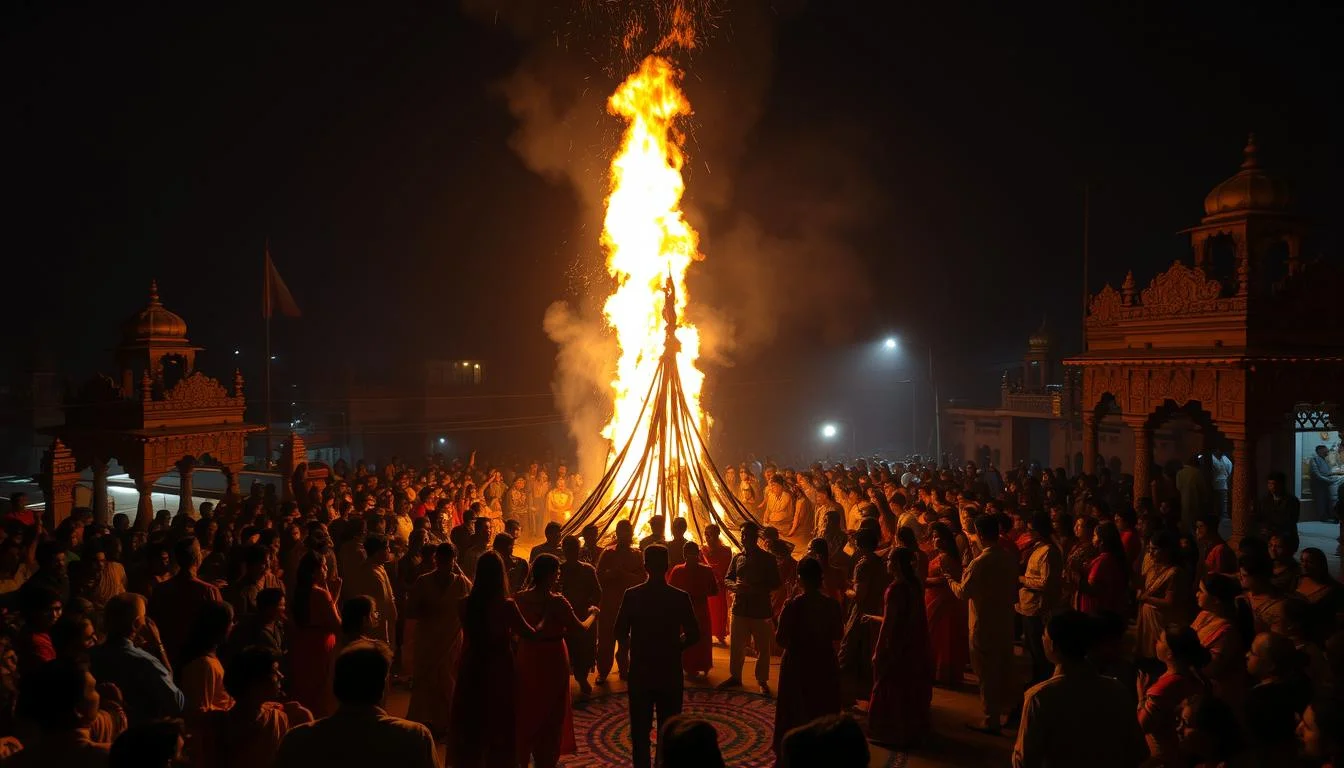
Holika Dahan 2026 arrives on the sacred night of Phalguna Purnima, bringing with it the promise of spiritual purification and divine protection. This year, devotees across India and worldwide will gather on Monday, March 2, 2026, to witness the ceremonial bonfire that commemorates young Prahlada’s miraculous survival and demoness Holika’s destruction.
Holika Dahan 2026 offers devotees a powerful opportunity for karmic cleansing, invoking Bhagwan Narasimha’s protective grace, and burning away accumulated negativities before welcoming Holi’s joyous colors the next morning.
Read Complete Holika Dahan Guide →
Holika Dahan 2026 Date and Timings
Holika Dahan 2026 will be observed on Monday, March 2, 2026, marking the eve of the vibrant Holi festival. The timing this year requires special attention as the muhurat falls during evening hours with specific Bhadra Kaal considerations that devotees must carefully navigate.
Key Timings for Holika Dahan 2026:
Holika Dahan Muhurta: 06:44 PM to 09:11 PM
Duration: 2 Hours 26 Minutes
Day: Monday
Purnima Tithi (Full Moon):
Begins: 05:55 PM on March 2, 2026
Ends: 05:07 PM on March 3, 2026
Bhadra Timings (Must Avoid):
Bhadra Punchha: 01:25 AM to 02:35 AM, March 3
Bhadra Mukha: 02:35 AM to 04:30 AM, March 3
Important Note: Holika Dahan 2026 occurs during Pradosh Kaal (twilight period) even though Bhadra Kaal exists later in the night. The evening muhurat from 6:44 PM to 9:11 PM is considered highly auspicious as it precedes the inauspicious Bhadra period. Devotees should strictly light the pyre within this specified time window for maximum spiritual benefits.
The Purnima Tithi prevalence during evening hours makes this year’s observance particularly powerful for Agni-based purification rituals. Since the tithi begins in the evening itself (5:55 PM), the entire ritual can be completed on the same day when Purnima commences, amplifying the karmic cleansing effects.
Significance of Holika Dahan
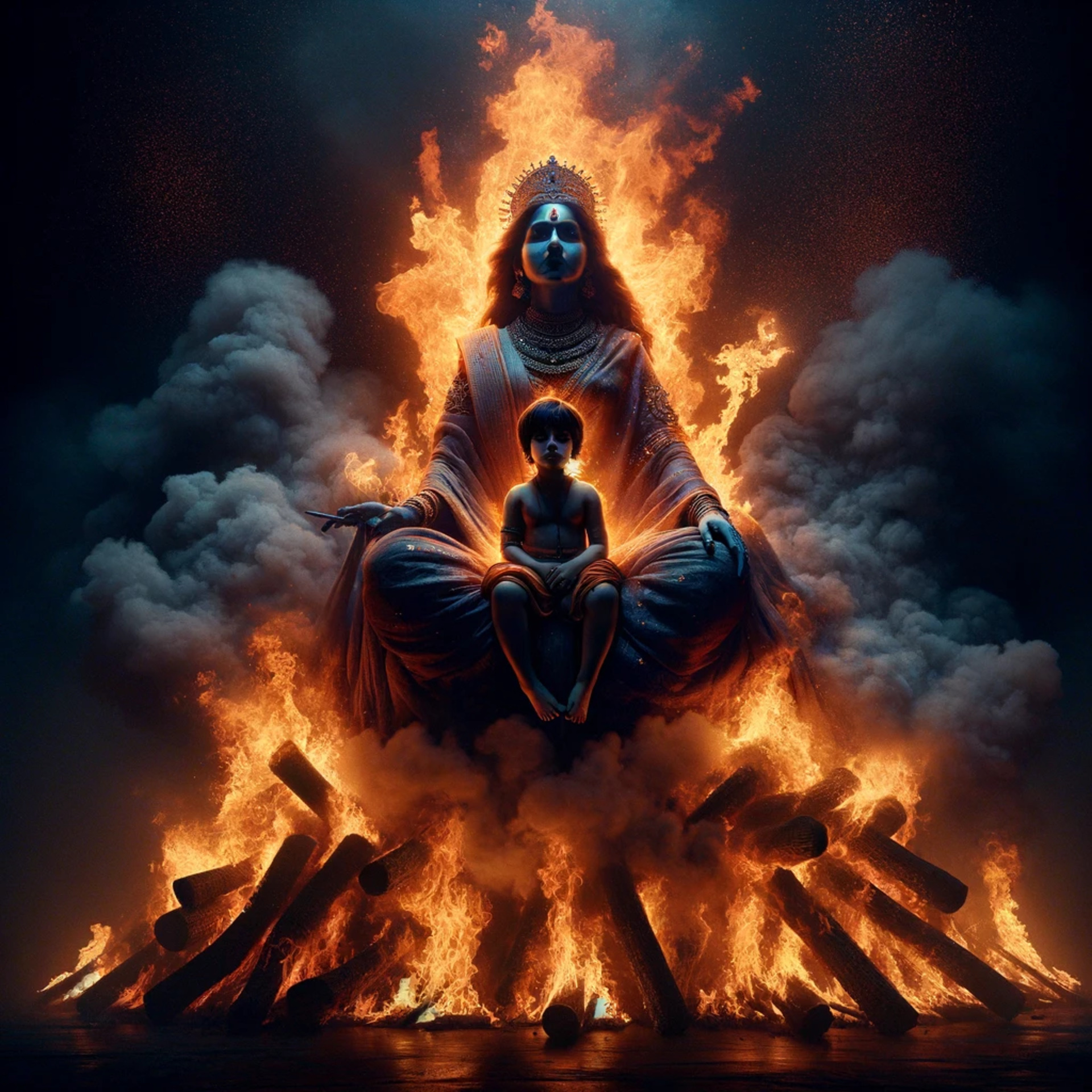
Holika Dahan represents the eternal victory of unwavering devotion over demonic arrogance, pure faith over worldly power. The ritual commemorates the night when young Prahlada, seated on demoness Holika’s lap amidst roaring flames, emerged unscathed through divine intervention while Holika herself turned to ash despite her fire-immunity boon. This miraculous event from Bhagavata Purana’s Seventh Canto establishes the supreme principle that divine grace through surrender transcends all material powers and supernatural boons.
Religiously, the sacred bonfire symbolizes Agni (fire element) as the great purifier consuming our inner demons – ego, jealousy, anger, greed – leaving behind only the ash of humility. The ritual invokes Bhagwan Vishnu’s fierce Narasimha Avatar, who appeared specifically to protect His devotee, teaching us that divine protection remains constant for those who maintain absolute faith even in life’s greatest trials.
Astrologically, observing Holika Dahan during Phalguna Purnima offers profound benefits as the full moon in Virgo-Libra axis enhances mental clarity and karmic purification. The Sun’s transition into compassionate Pisces around this time amplifies spiritual awakening energies. Fire rituals performed during this configuration neutralize malefic planetary influences (graha dosha), remove ancestral afflictions (pitru dosha), and burn away past negative karma accumulated over lifetimes.
The celebration also marks nature’s transition from winter’s lethargy to spring’s vibrant energy, symbolizing our own spiritual rebirth—leaving behind cold darkness for warm illumination, ending stagnation for renewed growth.
Learn Detailed Puja Vidhi & Religious Significance →
How to Observe Holika Dahan 2026
Observing Holika Dahan 2026 properly requires preparation beginning the day before, ensuring all puja materials are gathered and the pyre location is selected. Here’s a practical guide for meaningful celebration:
Puja Vidhi Overview
Morning Preparation:
Wake early on March 2, bathe before sunrise, and wear fresh clothes in auspicious colors—yellow, orange, or red. Clean the pyre area with Ganga jal or pure water, drawing rangoli designs around the designated spot. Prepare Holika and Prahlada effigies using dough, clay, or cow dung if making at home, or purchase them from local markets.
Pyre Construction:
Arrange wood logs, 7-11 cow dung cakes, and dry twigs in a stable pyramid structure 4-5 feet high. Position the Holika effigy facing east or north with Prahlada placed on her lap or beside her. Keep the pyre ready by afternoon so you can focus on puja preparation.
Evening Ritual (6:44 PM – 9:11 PM):
- Sankalpa: Hold water in right palm with rice and flower, state your intention for performing the ritual
- Ganesh Puja: Invoke Lord Ganesha for obstacle-free observance
- Panchopachara: Offer sandalwood paste, flowers, incense, lamp, and sweets to the unlit pyre
- Katha Recitation: Narrate or listen to the complete Prahlada-Holika story from Bhagavata Purana
- Thread Binding: Circle the pyre 7 times clockwise with cotton thread soaked in water, chanting “Om Namo Bhagavate Narasimhaya”
- Grain Offerings: Place new grains (wheat, barley, chickpeas, sesame), jaggery, coconut, and flowers at pyre base
- Mantra Japa: Chant Narasimha mantra 108 times: “Om Namo Bhagavate Narasimhaya Namah”
- Ignition: Light the pyre from south side using camphor-ghee wick during the specified muhurat, chanting “Purnamadah Purnamidam…”
- Parikrama: Circle the blazing fire 3, 5, or 7 times with water pot, offering water on final round
- Vibhuti Collection: Next morning, collect cooled ash for tilak application
Vrat Rules (Fasting Guidelines)
While full-day fasting isn’t mandatory for Holika Dahan, many devotees observe partial fasting for enhanced spiritual benefits. Phalahar (fruit-based fast) is most common, consuming only fruits, milk, dry fruits, sabudana, and potatoes throughout the day, avoiding grains and regular meals until puja completion.
Fasting Do’s:
Maintain purity, chant Vishnu mantras, read Bhagavata Purana, prepare puja materials with devotion, think positive thoughts
Fasting Don’ts:
Avoid non-vegetarian food, alcohol, onion-garlic, harsh speech, anger, daytime sleeping, eating from outside
Children under 8, elderly with health conditions, pregnant women, and those on essential medications are exempt from fasting and can participate with normal sattvic vegetarian meals.
Bhog Offerings
Traditional Items for Naivedya:
- Kheer (sweet rice pudding with milk, sugar, cardamom)
- Gur-chana (jaggery mixed with roasted chickpeas)
- Panchamrit (mixture of milk, curd, ghee, honey, sugar)
- Fresh seasonal fruits
- Homemade sweets like gujiya, malpua, or ladoo
- Roasted grains collected from pyre edges as prasad
Offer the bhog to Narasimha Bhagwan after lighting the fire, distribute to all participants, and save some for next morning’s Holi celebration.
Holika Dahan Puja Katha for 2026
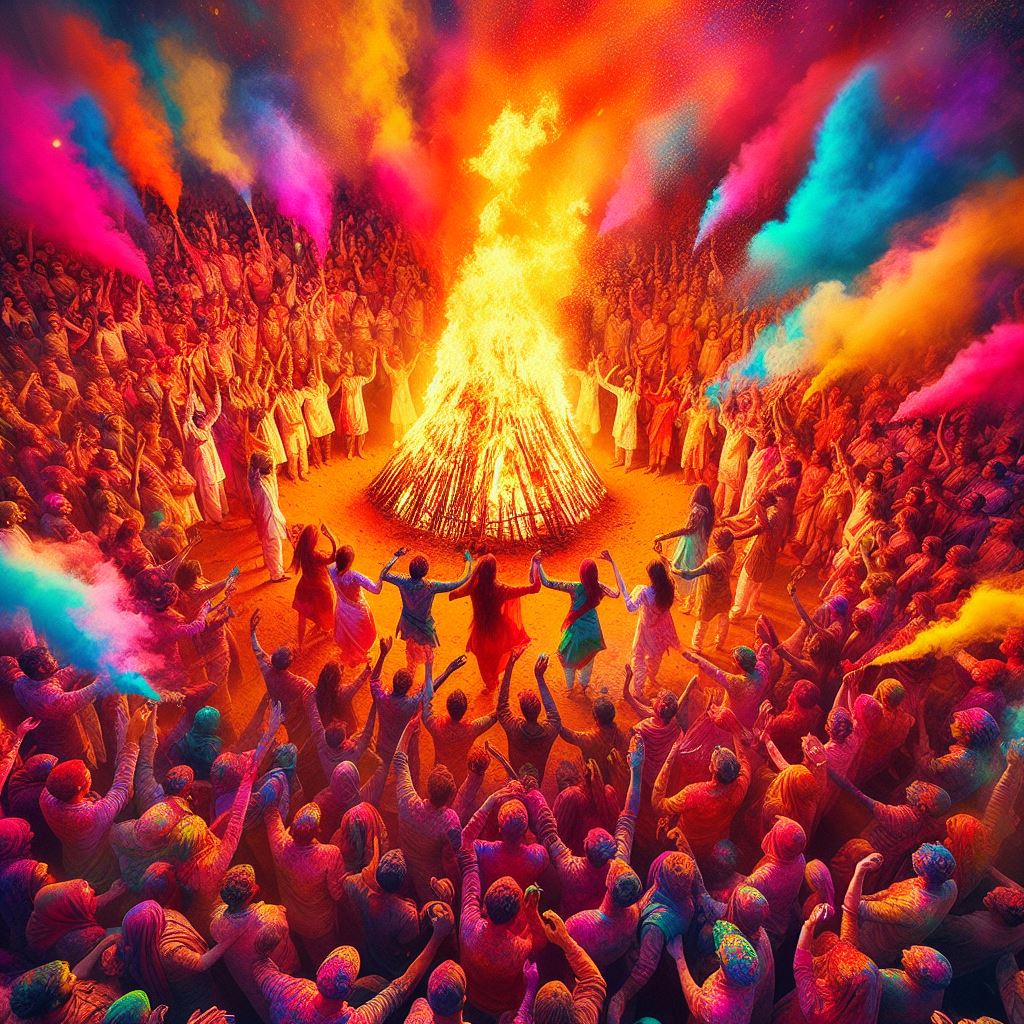
The katha (sacred story) recitation forms the heart of Holika Dahan observance, transforming the ritual from mere fire-lighting to profound spiritual communion. On the evening of March 2, 2026, families should gather before the unlit pyre as twilight descends, creating an atmosphere of devotion and attention.
Why Katha Matters:
Listening to Prahlada’s story with full concentration invokes the same divine protection that saved him from fire. The narrative’s power lies not just in entertainment but in activating bhakti (devotion) within listeners’ hearts. Scriptural tradition holds that hearing this katha destroys accumulated sins and grants prosperity.
The Core Story:
Narrate how demon king Hiranyakashipu’s son Prahlada refused to abandon Vishnu worship despite brutal tortures. Describe the Holika conspiracy – how she sat with Prahlada in flames confident of her protective boon, only to burn while the boy survived through his unwavering chanting of “Narayana.” Conclude with Narasimha Avatar’s appearance and the establishment of dharma.
Best Time to Recite:
The ideal moment is immediately after setting up the pyre and completing initial puja steps, but before igniting the fire. This should occur between 6:00-6:30 PM on March 2, giving sufficient time for the complete narration before the muhurat begins. Senior family members traditionally recite, though recorded versions by spiritual scholars are acceptable. After katha, everyone should sit quietly for a few moments absorbing the teaching before proceeding with fire-lighting.
Where Holika Dahan 2026 Will Be Celebrated
Holika Dahan 2026 will illuminate India’s landscape with countless bonfires, but certain locations hold special significance for this ancient observance.
Braj Region Celebrations
Mathura-Vrindavan:
The epicenter of Krishna devotion hosts the grandest Holika Dahan ceremonies. Banke Bihari Temple in Vrindavan will conduct midnight celebrations with continuous kirtan, while Dwarkadheesh Temple in Mathura features royal-style pyre decoration with temple elephants parading around flames. Thousands of devotees flood these towns, creating an electric atmosphere of devotion.
Barsana-Nandgaon:
These villages celebrate Holika Dahan as the prelude to their famous Lathmar Holi. Community pyres at Radha Rani Temple in Barsana and multiple village fires in Nandgaon create spectacular sights. Women lead rituals in Barsana—a unique reversal of typical practice—with folk songs about Prahlada-Holika sung throughout the night.
Other Major Locations
Ujjain (Madhya Pradesh):
Mahakaleshwar Temple ignites India’s first Holika Dahan due to time zone positioning. The ceremony occurs during evening Mahakal aarti with herbal gulal and shakkar mala distribution, drawing lakhs of devotees to this Jyotirlinga site.
Jaipur (Rajasthan):
City Palace hosts royal ceremonies with the Mewar family, while Khasa Kothi Circle features massive public bonfires with Rajasthani folk dance performances and free gulal distribution.
Varanasi (Uttar Pradesh):
Multiple pyres blaze along Ganga ghats – Assi, Dashashwamedh, Manikarnika, combining the bonfire ritual with evening Ganga aarti for spectacular visual grandeur.
Home Celebration Guidelines
For those unable to attend temple or community events, home celebrations remain equally valid. Create a smaller pyre in your courtyard or terrace (following fire safety), prepare all puja materials, invite family members, and conduct the complete ritual within the proper muhurat. If outdoor fire is impossible, light 108 oil lamps collectively in your prayer room, perform the katha and mantras, and focus on the devotional essence rather than material flames.
Benefits of Observing Holika Dahan 2026
Religious Benefits
Observing Holika Dahan 2026 with proper devotion and fasting yields immense spiritual rewards as described in Puranic scriptures. The primary benefit is sarva-papa-kshaya (destruction of all sins)—the sacred fire symbolically burns away negative karmas accumulated over lifetimes. Devotees receive Vishnu-kripa (Lord Vishnu’s grace), particularly Narasimha’s protective blessings against enemies, evil forces, and life’s obstacles.
The ritual also brings pitru-tarpti (ancestral satisfaction), as ancestors are believed to visit on Purnima and receive offerings through the fire. This appeases any pitru dosha and earns their blessings for family prosperity. Regular observers experience enhanced bhakti (devotion), finding their faith strengthened and spiritual practices deepening naturally.
For householders, the vrat ensures grihasta-sukha (household happiness), protecting family members from diseases, accidents, and misfortunes throughout the year. The promise extends to moksha-prapti (liberation progress), each sincere observance moves the soul closer to ultimate freedom from the cycle of birth and death.
Astrological Benefits
From a Jyotish perspective, Holika Dahan 2026 performed during the prescribed muhurat offers powerful planetary remedies. The fire ritual acts as graha shanti (planet pacification), neutralizing malefic influences of Saturn, Rahu, Ketu, and Mars that may be causing obstacles in life. Those undergoing difficult dasha periods find relief as the sacred flames symbolically burn planetary afflictions.
The Purnima timing provides chandra bala (Moon strength), enhancing emotional stability, mental clarity, and peace of mind for months ahead. Offerings made during this period multiply in effectiveness, making it excellent for resolving manglik dosha, kalsarpa dosha, and other astrological afflictions.
Health benefits manifest as the ritual transitions seasonal energies—winter’s accumulated kapha dosha burns away, preventing respiratory issues and boosting immunity for spring. The practice also brings unexpected dhana labha (wealth gain) and karya siddhi (success in endeavors) as cosmic energies align favorably with proper ritual observance.
Do’s and Don’ts on Holika Dahan 2026
Do’s
Ritual Observance:
- Wake early, bathe before sunrise, wear fresh traditional clothes
- Prepare pyre area with cleanliness and rangoli decoration
- Use only natural materials – wood, cow dung cakes, cotton thread
- Light fire strictly within muhurat: 6:44 PM to 9:11 PM
- Circle pyre clockwise (pradakshina) 3, 5, or 7 times
- Chant Narasimha mantras with devotion and concentration
- Listen to complete Prahlada katha before fire-lighting
- Collect vibhuti (ash) next morning for tilak application
- Distribute prasad generously to all participants
Spiritual Practices:
- Maintain sattvic vegetarian diet throughout the day
- Practice forgiveness, reconcile old disputes before ritual
- Donate food, clothes, or money to needy persons
- Supervise children near fire ensuring complete safety
- Share the significance with younger generation
Don’ts
Critical Avoidances:
- Never light fire during Bhadra Kaal (1:25 AM – 4:30 AM on March 3)
- Don’t circle pyre counter-clockwise (left side)—extremely inauspicious
- Avoid non-vegetarian food, eggs, alcohol, tobacco entirely on March 2
- Never use plastic, rubber, synthetic materials in pyre
- Don’t consume onion, garlic if observing strict vrat
- Avoid conflicts, harsh speech, anger throughout the day
- Never mock or disrespect the ritual even if you don’t believe
Safety Concerns:
- Don’t allow children to run near fire unsupervised
- Avoid loose synthetic clothing that can catch fire
- Never leave burning pyre unattended
- Don’t construct pyre near buildings, electrical wires, trees
- Avoid excessive smoke by not using kerosene or chemicals
Religious Restrictions:
- Those in sutaka (mourning period) should not touch pyre or puja items
- Don’t perform if feeling extremely ill; mental participation acceptable
- Avoid cutting hair, nails on the day of observance
- Never step over the cotton thread once tied around pyre
Frequently Asked Questions
Q1: What is the exact date of Holika Dahan in 2026?
Holika Dahan 2026 falls on Monday, March 2, 2026. The puja muhurat is from 6:44 PM to 9:11 PM, with Purnima Tithi beginning at 5:55 PM the same evening.
Q2: Can we light Holika fire after 9:11 PM on March 2?
No, strictly avoid lighting after 9:11 PM as Bhadra Kaal begins early morning on March 3. The specified muhurat (6:44-9:11 PM) is the only auspicious window for maximum spiritual benefits.
Q3: Is fasting mandatory for Holika Dahan 2026?
Fasting is not mandatory but highly recommended for those seeking specific spiritual benefits. Partial fasting (fruits, milk, sabudana) is most common. Children, elderly, pregnant women, and those with health issues are exempt.
Q4: Which mantra should we chant during Holika Dahan 2026?
The primary mantra is “Om Namo Bhagavate Narasimhaya Namah” chanted 108 times. During parikrama, continuously chant “Om Narayanaya Namah” or simply “Narayana, Narayana.”
Q5: Can we celebrate Holika Dahan 2026 at home if no community event nearby?
Yes, home celebration is completely acceptable. Create a smaller pyre in your courtyard with proper fire safety, or conduct symbolic lamp-lighting indoors focusing on devotional aspects.
Q6: What should be done with ash collected from Holika pyre?
Collect cooled ash next morning from pyre center. Apply as tilak on forehead, mix small amount in bathing water for purification, sprinkle in home corners for protection, and keep remainder near home deity.
Q7: Why is Bhadra Kaal avoided for Holika Dahan?
Bhadra Kaal is ruled by malefic planetary forces. Rituals performed during this period yield obstacles rather than blessings. The muhurat is carefully calculated to avoid Bhadra entirely.
Q8: Can women participate in Holika Dahan rituals?
Absolutely! Women play crucial roles in preparation, puja, parikrama, and prayers. Married women have specific rituals for marital blessings. Traditionally, menstruating women observe from distance but modern practices vary by family tradition.
Conclusion
Holika Dahan 2026 on Monday, March 2, presents a sacred opportunity for spiritual renewal, karmic purification, and invoking divine protection. The carefully calculated muhurat from 6:44 PM to 9:11 PM ensures maximum astrological and religious benefits when observed with proper devotion. As you prepare for this ancient ritual, remember that the true essence lies not merely in lighting a bonfire but in igniting the eternal flame of unwavering faith within your heart—the same faith that protected Prahlada and earned Narasimha Bhagwan’s grace.
Whether you gather with thousands at Mathura’s grand celebrations, join your local community bonfire, or conduct an intimate family ritual at home, approach the observance with reverence, proper timing, and complete faith. Let the sacred flames burn away your accumulated negativities, past grievances, and inner demons, making way for spring’s fresh energy and Holi’s joyous colors awaiting the next morning.
May Bhagwan Narasimha’s fierce protection and compassionate blessings be upon you and your loved ones throughout the year ahead.
Om Namo Bhagavate Vasudevaya!
🔥 Want Complete Details on Holika Dahan Rituals, Significance & Traditions?
READ THE COMPLETE HOLIKA DAHAN GUIDE
Explore in-depth:
✓ Detailed 15-step puja vidhi with Sanskrit mantras
✓ Complete astrological significance and planetary benefits
✓ Full Prahlada-Holika katha from Bhagavata Purana
✓ Regional variations across India
✓ Vrat rules, remedies, and spiritual teachings
✓ Temple celebrations and travel guide
Help Us Keep This Guide Accurate
At Temple Connect, we regularly update our content to ensure you receive the most relevant and authentic information. If you’d like to suggest improvements, share regional traditions, or report any updates, we’d love to hear from you at connect@templeconnect.com
Follow us on our X platform.
Note to Readers: This article is intended for educational and devotional purposes. The information presented is based on traditional Hindu scriptures, contemporary religious practice, and scholarly research.
Individual observance may vary based on family tradition, regional custom, and personal circumstance. For specific guidance, especially regarding complex astrological remedies, please consult qualified priests, pandits, or Vedic astrologers. The health-related aspects mentioned are traditional beliefs and should not replace professional medical advice.