Lakshmi Panchami: The Sacred Observance of Goddess Lakshmi’s Divine Arrival
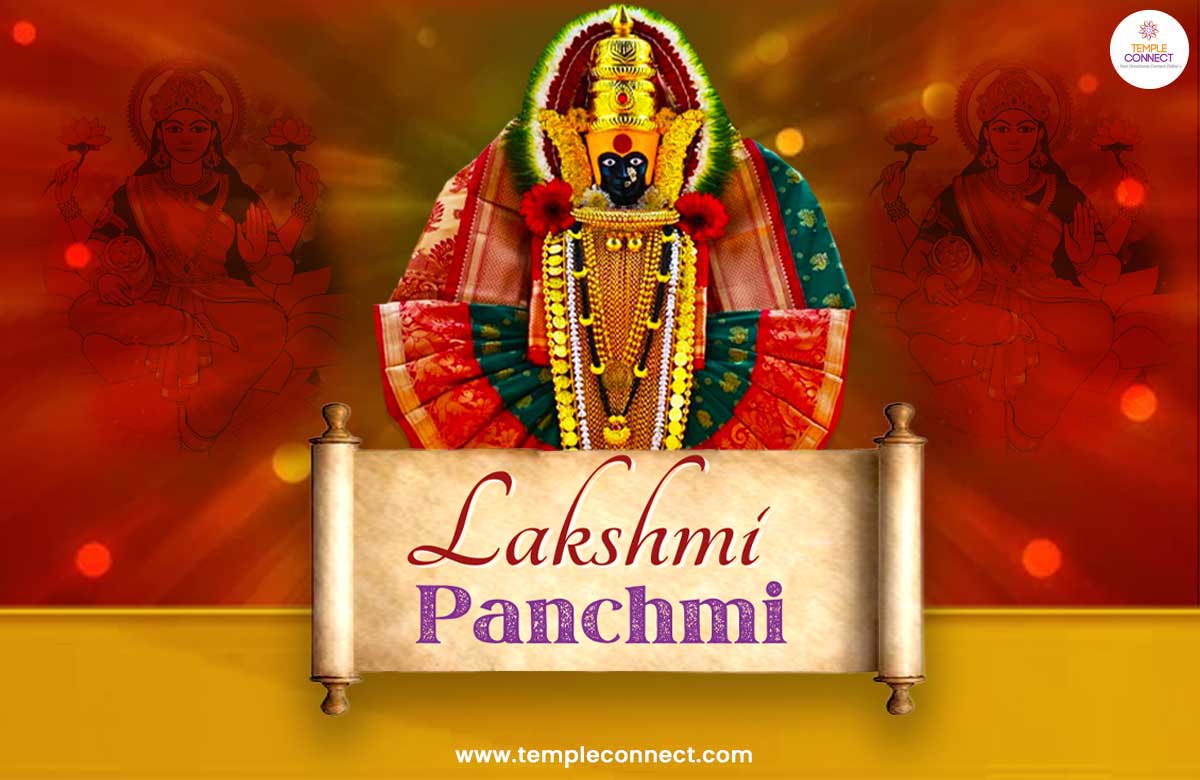
Lakshmi Panchami is a revered Hindu festival observed on the fifth day of Shukla Paksha in the month of Chaitra. The day is fully devoted to Goddess Lakshmi, the embodiment of wealth, prosperity, and divine grace. Devotees observe a vrat, perform elaborate pujas, and seek her blessings for material well-being and spiritual purity. It is also called Shri Panchami or Shri Vrat, and holds deep significance in the Vaishnava tradition.
What is Lakshmi Panchami
Lakshmi Panchami carries the meaning of the fifth tithi consecrated to Shri, the divine abundance. “Shri” in Sanskrit refers not merely to wealth but to an all-encompassing grace that includes beauty, virtue, good fortune, and auspiciousness. The festival is therefore not a prayer for material gain alone but a devotional acknowledgement of Lakshmi as the very energy of creation’s abundance.
The observance is also called Shri Vrat, emphasizing the voluntary vow taken by devotees to honor the Goddess with purity of body, mind, and deed. In some regions of North India it is simply called Panchami Vrat, while in Maharashtra it is observed as Shri Panchami with special rites.
This tithi falls in the Chaitra Shukla Paksha, which is itself the opening of the Hindu lunar new year. Its position in the sacred calendar makes it all the more significant. Coming within the first week of the new year, Lakshmi Panchami is seen as a foundational day for prosperity across the entire year ahead. Devotees who observe the vrat faithfully on this day are said to secure Goddess Lakshmi’s residence in their homes through the full cycle of the year.
The day also holds a unique distinction as a Kalpadi Tithi. In the Vedic reckoning of time, a Kalpa is a vast cosmic cycle. Kalpadi marks the beginning of such a cycle, and several such Kalpadi Tithis are identified in the Hindu calendar. Chaitra Shukla Panchami being one of them adds a dimension of cosmic significance to the observance. Worship performed on a Kalpadi Tithi is held to carry merit far beyond an ordinary day.
Tithi and Timing
Lakshmi Panchami falls on the Panchami Tithi, the fifth lunar day, during the Shukla Paksha of the month of Chaitra. This places it in the bright fortnight when the moon is waxing, a time considered highly auspicious for all devotional and material undertakings.
The most propitious time for puja is the Pradosh Kaal in the evening, when lamps are lit and the atmosphere is considered most receptive to Lakshmi’s presence. However, many households perform the morning puja during the Abhijit Muhurat or the Vijaya Muhurat as well.
When the Panchami Tithi is accompanied by a Friday, the day is considered exceptionally powerful. Friday is governed by Shukra, the planet directly associated with Lakshmi. A Panchami falling on a Friday in Chaitra Shukla becomes one of the finest occasions for Lakshmi worship in the entire year.
The Revati Nakshatra, when it coincides with this tithi, further enhances the quality of the day. Revati is governed by Pushan, the deity of nourishment, and is linked to abundance, safe passage, and divine grace. Its combination with Lakshmi Panchami deepens the capacity of the day to yield sustained prosperity.
Astrological Significance of Lakshmi Panchami
From the perspective of Vedic Jyotisha, Lakshmi Panchami is anchored in the influence of Shukra, Venus, who is considered the planetary manifestation of Lakshmi’s energy in the cosmos. Shukra governs beauty, harmony, luxury, wealth, and the finer experiences of life. Worship performed on this day specifically strengthens Shukra in a devotee’s horoscope.
The Chaitra month typically sees the Sun placed in Meena Rashi or transitioning toward Mesha. This positioning adds solar energy to the spiritual work of the day, lending it vitality and purpose. When the Moon is placed in Vrishabha Rashi, which is Shukra’s own sign, mental stability and receptivity to prosperity are naturally heightened.
Devotees who experience challenges in professional life, financial instability, delayed marriage, or strained relationships often find meaningful relief through sincere observance of this vrat. These are areas governed by Shukra, and Lakshmi’s worship acts as a direct remedial measure.
The Panchami Tithi itself is ruled by Lakshmi in the Vedic tithi-devata system. This creates a rare convergence where the deity of the vrat, the planetary ruler of the day, and the tithi-devata are all one and the same. Such alignment makes the day’s worship exceptionally potent for invoking her grace.
For those with Shukra weakened or afflicted in the natal chart, Lakshmi Panchami offers a natural course correction through devotion. Fasting, mantra japa, and charity performed on this day are said to soften the difficulties arising from an unfavorable Venus position.
Religious Significance of Lakshmi Panchami
The Puranas speak of Goddess Lakshmi with extraordinary reverence. She is not a secondary deity in Hindu dharma but the Shri-Tattva, the very principle of auspiciousness that sustains all of creation. Without her grace, even the gods cannot function. The Shri Sukta of the Rigveda, one of the oldest hymns in the Vedic corpus, is entirely dedicated to her, establishing her centrality in Hindu worship from the earliest period.
In the Vaishnava tradition, Lakshmi is the Shakti of Bhagwan Vishnu, inseparable from him. She is the energy through which Vishnu preserves and protects the cosmos. The paired form of Lakshmi Narayana seen in temples represents this indivisible union of grace and protection, abundance and righteousness.
The Phala-shruti of observing Lakshmi Panchami vrat is stated clearly in the Puranic texts. Devotees who observe it with purity, offer dana, and chant her mantras are freed from Daridra Dosha, the affliction of poverty. The texts further say that Lakshmi takes up permanent residence in such a household, not merely for a season but for generations.
The day also carries moral instruction. Lakshmi, the Puranas say, does not dwell where there is arrogance, filth, laziness, or deceit. Her worship thus becomes a course of self-correction. The devotee who truly seeks her grace must cultivate cleanliness, gratitude, humility, and generosity. In this way, Lakshmi Panchami is as much a festival of character refinement as it is of ritual observance.
Which Form of Goddess is Worshipped
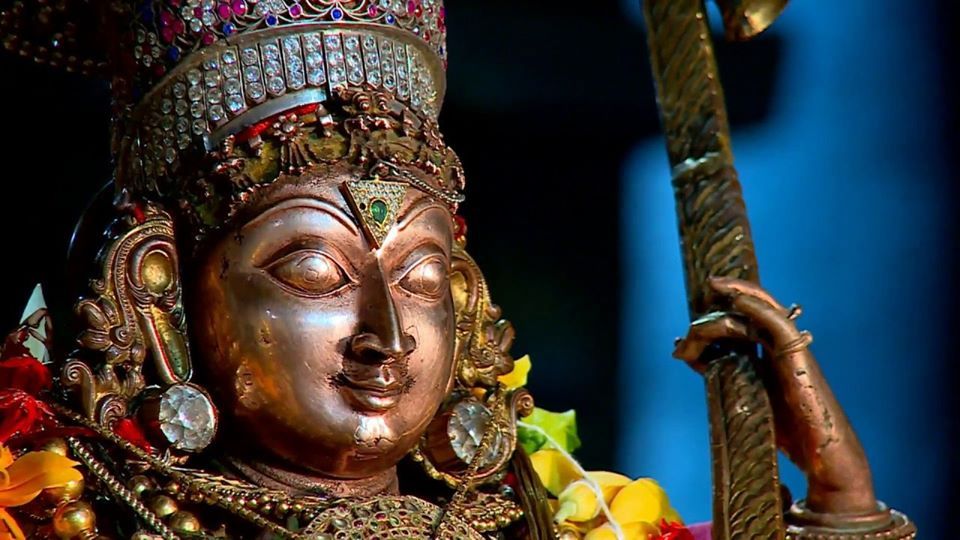
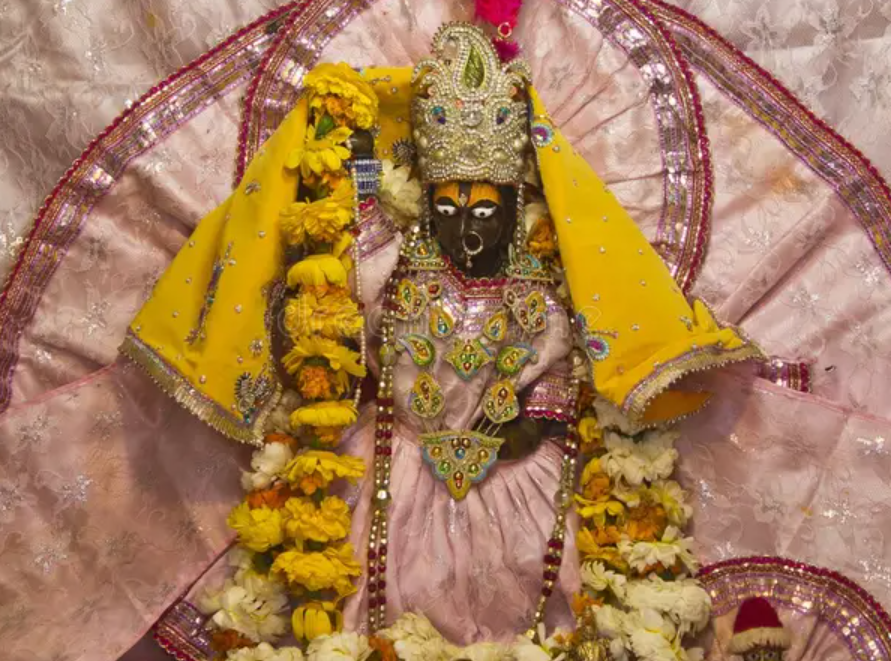
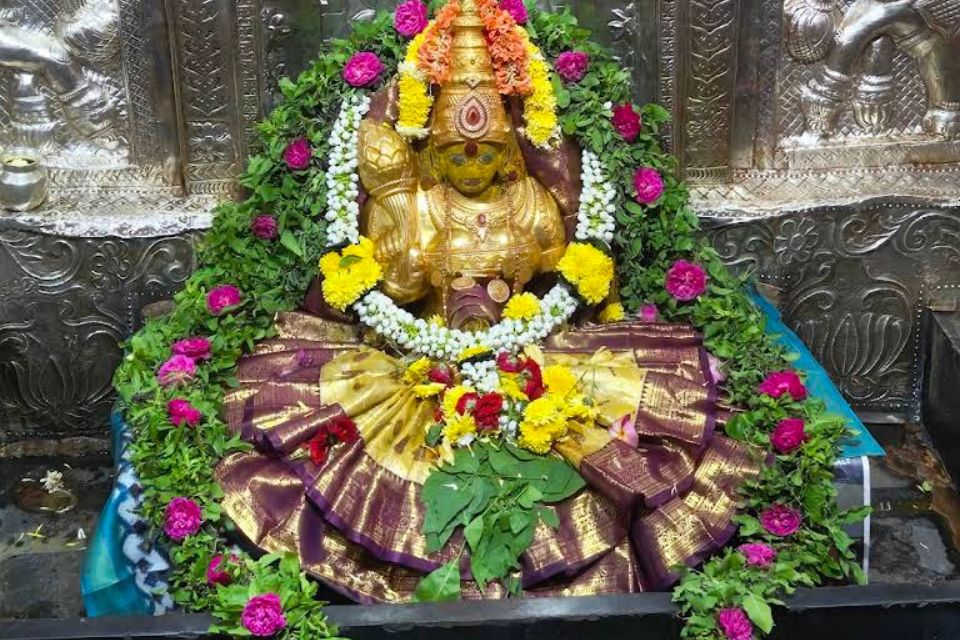
The primary deity worshipped on Lakshmi Panchami is Goddess Mahalakshmi herself, in her complete and sovereign form. She is envisioned seated on a lotus, dressed in red or golden garments, holding lotus flowers in her upper hands while her lower hands display Abhaya Mudra and Varada Mudra, gestures of protection and boon-granting.
The Ashta Lakshmi forms are also invoked on this day in many traditions. The eight forms are Adi Lakshmi, Dhana Lakshmi, Dhanya Lakshmi, Gaja Lakshmi, Santana Lakshmi, Veera Lakshmi, Vijaya Lakshmi, and Vidya Lakshmi. Together they represent the fullness of prosperity across every domain of life, from material wealth to progeny to courage to knowledge.
In South Indian worship, particularly in Andhra Pradesh and Tamil Nadu, Goddess Lakshmi is often worshipped alongside Bhagwan Venkateswara on this day. She is honored as Padmavathi at Tiruchanur and as Alamelu Manga, names that speak of her as the eternal consort and the one who blesses her devotees with all fullness.
In Kerala, Goddess Lakshmi’s afternoon form is especially revered at Chottanikkara Bhagavathy Temple, where her daytime manifestation is understood as Saraswathi in the morning, Bhadrakali in the evening, and Lakshmi at midday. This regional interpretation adds depth to the goddess’s multifaceted presence.
The Shri Yantra is often installed or worshipped on this day as the geometric representation of Lakshmi’s cosmic form. The Yantra concentrates her energy and is considered an especially potent object for the Shri Vrat observance.
Sacred Stories and Katha
The most celebrated Katha of Lakshmi Panchami traces back to the Samudra Manthan, the great churning of the cosmic ocean. When Maharishi Durvasa’s curse caused Indraloka to fall into ruin and Goddess Lakshmi withdrew into the depths of the Kshira Sagara, all prosperity vanished from the three worlds. Crops failed, creatures suffered, and the gods lost their radiance and power.
Devraj Indra approached Bhagwan Vishnu, who advised that only the joint churning of the Kshira Sagara by Devas and Asuras together could restore what had been lost. Mount Mandara was used as the churning rod, and Vasuki the great serpent became the rope. As the churning proceeded, many treasures emerged from the ocean. Among them, Goddess Lakshmi arose in splendor, seated on a lotus, holding lotuses in her hands, radiant beyond all description. She looked upon the assembled and chose Bhagwan Vishnu as her consort, garlanding him and thereby restoring divine order to all creation.
The Katha teaches that Lakshmi’s appearance on the Panchami Tithi established this day as the most sacred occasion for her worship. The story also carries a deeper message. The churning of the ocean is a metaphor for sincere effort combined with devotion. Lakshmi does not come to the idle or the arrogant. She arises from the sustained churning of one’s inner life, from disciplined effort aligned with dharma.
A secondary Katha speaks of a merchant named Dhanapala whose prosperity was destroyed due to pride and neglect of worship. A sage instructed him to observe Lakshmi Panchami with complete sincerity, clean home, pure food, and genuine dana. Through consistent observance of the vrat, Goddess Lakshmi appeared to him in a dream and confirmed her return to his household. This Katha reinforces the message that her departure is always linked to arrogance and her return always linked to humility.
Complete Puja Vidhi
Preparation
On the evening before Lakshmi Panchami, clean the home thoroughly. Lakshmi is said to avoid homes that are unclean, and thorough purification of the space is the first act of devotion. Prepare the puja samagri, which includes red cloth, kalash, mango leaf torana, kumkum, haldi, sandalwood paste, red flowers, white flowers, durva, coconut, betel leaves, supari, banana, rice, ghee diyas, incense sticks, camphor, and offerings of kheer or laddus.
Morning Purification
Wake before sunrise. Take a ritual bath while mentally reciting Goddess Lakshmi’s name. Wear clean clothes, preferably in red or yellow. Women traditionally apply kumkum and wear flowers as an expression of Shri’s presence in the household.
Altar Setup
Set up the puja space facing east or northeast. Spread a red cloth on a raised platform or puja table. Place the murti or image of Goddess Lakshmi at the center. Arrange the Shri Yantra Kalash by filling it with water and placing gold or silver coins within it. Tie a torana of mango leaves around its neck. Spread rice grains beneath the Kalash as a base. Draw a lotus rangoli before the altar.
Ritual Steps
Ganesh Puja first. Begin with invoking Bhagwan Ganesha, offering modak and performing brief puja. No major ritual proceeds without his invocation.
Sankalpa. Take the formal vow by holding water, flowers, and rice in cupped palms. State your name, gotra, and the purpose of the vrat clearly. Release the Sankalpa water.
Aavahan. Invoke Goddess Lakshmi into the murti or image through the Aavahan mantra, requesting her divine presence to fill the space.
Panchamrit Abhishekam. Bathe the murti with Panchamrit prepared from milk, curd, honey, ghee, and sugar. Then offer plain water for final cleansing.
Decoration. Apply haldi and kumkum to the Goddess. Offer sandalwood paste, red flowers, white lotus flowers, and garlands. Place durva at her feet.
Dhoop and Deep. Light incense sticks and wave them in circular motion. Then light the five-wick ghee diya and offer it with the Dipa mantra.
Naivedya. Offer kheer, laddus, fruits, coconut, and betel leaves. The Naivedya must be prepared without tasting beforehand.
Mantra Japa. Chant the Lakshmi Beej Mantra a minimum of 108 times. Recite the Shri Sukta from the Rigveda and the Kanakadhara Stotram composed by Adi Shankaracharya.
Aarti. Perform Aarti with a camphor flame, waving it in clockwise circles while ringing a bell. Sing Lakshmi Aarti bhajans.
Pushpanjali and Pranam. Offer flowers with both hands and offer full prostration.
Prasad Distribution. Distribute prasad to all family members and to Brahmins. Dana of food, money, or cloth is offered at this stage.
Vrat Observance
The Shri Vrat begins with the Sankalpa after the morning bath. Devotees who observe Nirjala Vrat abstain from all food and water until the evening puja and Aarti are completed. Those observing Phalahar Vrat sustain themselves on fruits, milk, nuts, and sattvic sweets throughout the day, avoiding grains, salt, and cooked food.
Mental purity is considered as important as physical fasting. Throughout the day, the devotee focuses on japa, katha recitation, and meditation on Goddess Lakshmi. Harsh speech, negative thinking, and idle conversation are avoided.
The evening puja is the central ritual of the vrat. After sunset, the full puja vidhi is performed, the Katha is read aloud, and the Aarti is offered. The fast is broken after this with a sattvic meal free from onion and garlic.
Both men and women can observe this vrat. Married couples observing it together are said to receive blessings for household harmony and sustained prosperity. Business owners and traders observe it specifically for commercial well-being and growth of their enterprise.
Elderly devotees and those with health conditions are permitted to observe a partial fast, sustaining on light fruits and milk without the full Nirjala restrictions.
Where the Festival is Celebrated
North India
In Uttar Pradesh, Madhya Pradesh, and Rajasthan, Lakshmi Panchami is primarily observed as a household vrat by merchant and trader communities. Business ledgers are marked with kumkum tilak after puja. Temples of Mahalakshmi receive large numbers of devotees for special abhishekam. In Mathura and Vrindavan, the day takes on an additional dimension as Radha-Krishna and Lakshmi-Narayana are both venerated.
South India
In Andhra Pradesh and Telangana, the day is observed alongside Navratri worship in the Chaitra month. Goddess Lakshmi is worshipped as Padmavathi at Tiruchanur near Tirupati, and large crowds gather for the special seva. In Tamil Nadu, the Ashta Lakshmi Temple in Chennai conducts elaborate abhishekam for all eight forms of the Goddess. In Kerala, Chottanikkara Bhagavathy Temple is a center of Lakshmi worship.
West India
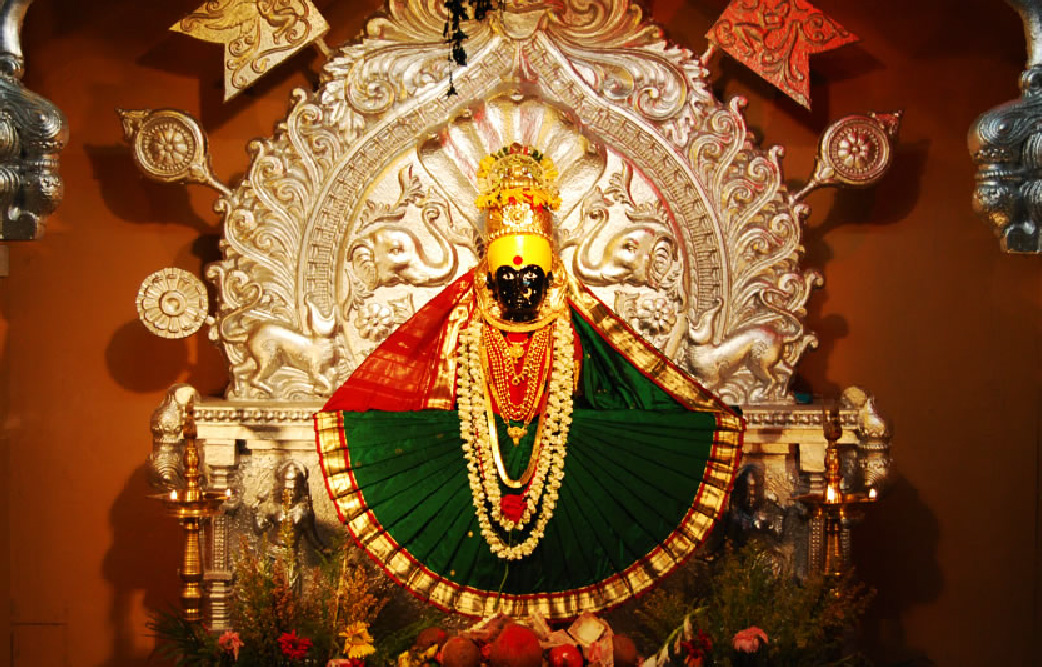
In Maharashtra, Kolhapur’s Mahalakshmi Temple, one of the Shakti Peethas, holds the day as especially sacred. The Ambabai form of Lakshmi worshipped there draws devotees from across the region. In Gujarat, business communities close their shops for a half-day to observe sankalpa and perform puja in both homes and workplaces.
East India
In West Bengal, Lakshmi Panchami is observed with echoes of the Kojagari Lakshmi Puja tradition, emphasizing themes of humility and the Goddess’s preference for the vigilant and sincere.
Hindu Diaspora
Among Hindu communities in the United States, United Kingdom, Australia, and Southeast Asia, Lakshmi Panchami is observed in Hindu temples and home puja rooms. Online Sankalpa services offered by several temples allow diaspora devotees to participate in rituals conducted at temples in India.
Traditional Remedies and Charity
Charity performed on Lakshmi Panchami is among the most effective remedies for both astrological and material difficulties. Anna Dana, the donation of food to those in need, is considered the highest form of charity on this day. Feeding Brahmins and offering them dakshina strengthens the merit of the vrat.
Donating yellow cloth, rice, turmeric, ghee, and sugar to temples or to needy households on this day is said to remedy Venus-related afflictions in the birth chart. Cow feeding with green fodder is a traditional practice that brings the grace of both Lakshmi and the Navagrahas.
Temple seva in the form of offering ghee for diyas, flowers for decoration, or contributing to abhishekam expenses is another meaningful way to observe the day with dana.
Do’s on Lakshmi Panchami: Clean the home before sunrise. Wear clean clothes throughout the day. Keep the puja space lit with diyas from morning till night. Offer kheer as prasad. Recite the Shri Sukta and Kanakadhara Stotram. Perform charity before breaking the fast.
Don’ts on Lakshmi Panchami: Avoid using brooms after sunset, as the sweeping out of dirt symbolically sweeps away Lakshmi. Avoid harsh speech and arguments. Do not cook non-vegetarian food at home. Do not keep the home dark or unlit during the evening puja hours.
Frequently Asked Questions
What is Lakshmi Panchami? Lakshmi Panchami is a Hindu festival observed on the fifth day of Shukla Paksha in the Chaitra month, dedicated entirely to Goddess Lakshmi, the deity of wealth, prosperity, and auspiciousness.
Why is it called Shri Panchami? The festival is called Shri Panchami because “Shri” is another name for Goddess Lakshmi. The word Shri refers to divine auspiciousness, prosperity, and beauty, all of which she embodies.
Which deity is worshipped on Lakshmi Panchami? Goddess Mahalakshmi is the primary deity. She is worshipped alongside Bhagwan Vishnu in the Lakshmi Narayana form. The Ashta Lakshmi forms representing eight aspects of abundance are also invoked.
What is the story behind Lakshmi Panchami? The festival commemorates the emergence of Goddess Lakshmi from the Kshira Sagara during the Samudra Manthan. She arose on the Panchami Tithi and chose Bhagwan Vishnu as her consort, restoring prosperity to the three worlds.
What is the significance of this day in Vedic astrology? Lakshmi Panchami is governed by Shukra, the planetary form of Lakshmi’s energy. Worship on this day strengthens Shukra in the devotee’s horoscope and is particularly beneficial for those experiencing financial difficulties or relationship challenges.
Who can observe the Lakshmi Panchami vrat? Both men and women can observe the vrat. Married couples observing it together are said to receive special blessings. Business owners and traders also observe it for commercial prosperity. Elderly or unwell devotees may observe a partial fast.
What can be eaten during the Lakshmi Panchami vrat? Those observing Phalahar Vrat may eat fruits, milk, nuts, and sattvic sweets. Those observing Nirjala Vrat abstain from all food and water until the evening puja is completed.
What mantras are chanted on Lakshmi Panchami? The Lakshmi Beej Mantra “Om Shreem Hreem Shreem Mahalakshmyei Namaha” is chanted 108 times. The Shri Sukta from the Rigveda, the Kanakadhara Stotram, and Lakshmi Stotram are also recited.
What is the significance of Kalpadi Tithi on this day? Chaitra Shukla Panchami is one of the Kalpadi Tithis in the Hindu calendar, marking the beginning of a cosmic cycle. Worship performed on Kalpadi carries extraordinary merit in Vedic reckoning.
What are the key offerings made to Goddess Lakshmi? Red flowers, white lotus flowers, sandalwood paste, kumkum, haldi, durva, banana, coconut, betel leaves, rice, ghee diyas, and kheer are the traditional offerings made during the puja.
Why is cleanliness emphasized on Lakshmi Panchami? The Puranas state that Lakshmi does not dwell in unclean spaces. Thorough cleaning of the home before the puja is the first act of devotion and symbolizes the inner purification that invites her presence.
What is the role of charity on this day? Dana amplifies the merit of the vrat. Anna Dana, feeding Brahmins, donating food to the needy, cow feeding, and temple seva are all highly recommended forms of charity that strengthen the astrological and spiritual benefits of the observance.
Is Lakshmi Panchami the same as Basant Panchami? No. Basant Panchami falls in the Magha month and is dedicated to Goddess Saraswathi. Lakshmi Panchami falls in the Chaitra month and is dedicated to Goddess Lakshmi. They are distinct observances honoring different aspects of the Divine Mother.
Which temples are famous for Lakshmi Panchami celebrations? Mahalakshmi Temple in Kolhapur, Ashta Lakshmi Temple in Chennai, Padmavathi Temple in Tiruchanur, Chottanikkara Temple in Kerala, Mahalakshmi Temple in Mumbai, and Birla Mandir in Delhi are among the prominent temples where this day is celebrated with great devotion.
What are the long-term benefits of observing the vrat annually? The Puranas state that sustained annual observance of Lakshmi Panchami vrat ensures Goddess Lakshmi’s permanent presence in the household. Freedom from poverty, harmony in family life, success in business, and spiritual advancement are among the phala-shruti described in the sacred texts.
Conclusion
Lakshmi Panchami is one of those sacred days in the Hindu calendar that remind us of a fundamental truth, that wealth without dharma is unstable, and prosperity without gratitude will not last. The Shri Vrat observed on Chaitra Shukla Panchami is not merely a ritual for material gain. It is a conscious alignment with the divine energy that sustains all abundance in this universe.
Goddess Lakshmi, who emerged from the depths of the cosmic ocean in all her radiance, chose to dwell with Bhagwan Vishnu as a symbol of the eternal bond between grace and righteousness. She blesses those who approach her with a clean heart, a disciplined life, and genuine generosity toward others. The devotee who observes this vrat with sincerity, recites her names, performs dana, and maintains the sanctity of the home is not merely performing a ritual. They are inviting the very principle of divine abundance into their lives.
May all who observe Lakshmi Panchami receive her full grace, and may their homes, families, and endeavors be sustained by her eternal blessings.
Om Shreem Mahalakshmyei Namaha!
Help Us Keep This Guide Accurate
At Temple Connect, we regularly update our content to ensure you receive the most relevant and authentic information. If you’d like to suggest improvements, share regional traditions, or report any updates, we’d love to hear from you at connect@templeconnect.com
Follow us on our X platform.
Note to Readers: This article is intended for educational and devotional purposes. The information presented is based on traditional Hindu scriptures, contemporary religious practice, and scholarly research.
Individual observance may vary based on family tradition, regional custom, and personal circumstance. For specific guidance, especially regarding complex astrological remedies, please consult qualified priests, pandits, or Vedic astrologers. The health-related aspects mentioned are traditional beliefs and should not replace professional medical advice.