Lalita Jayanti
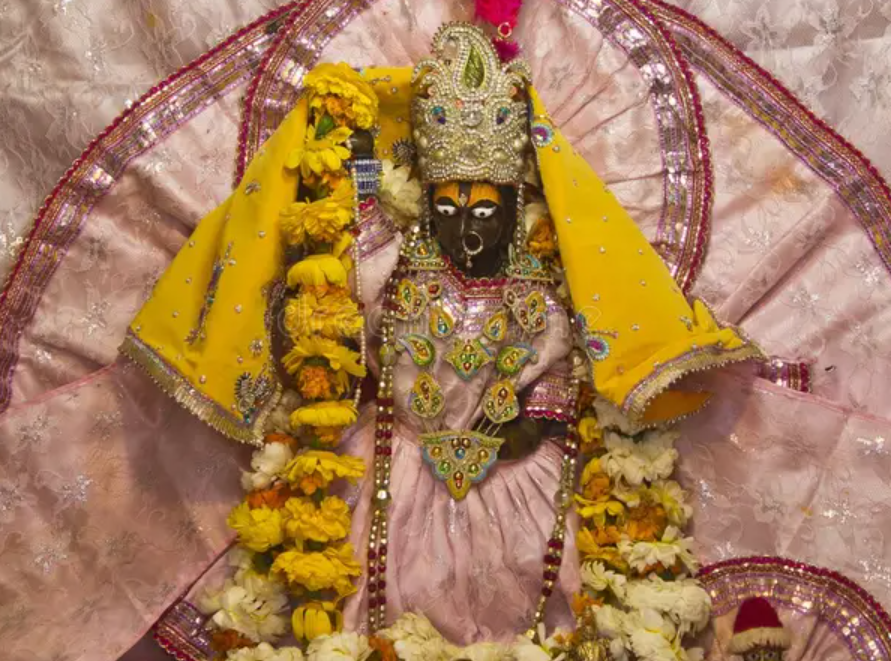
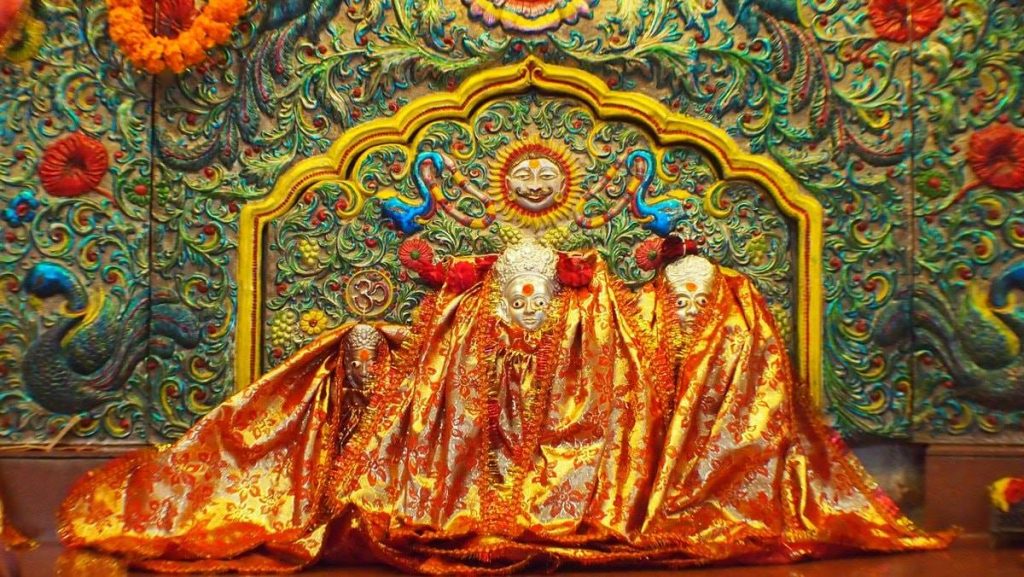
The Sacred Manifestation of Goddess Tripura Sundari
A Complete Guide to the Divine Celebration
Among all the sacred celebrations in our Sanatana Dharma, Lalita Jayanti holds a uniquely exalted position in the hearts of devotees who follow the path of Shakti worship.
When we observe Lalita Jayanti with sincere devotion and proper understanding, we align ourselves with the cosmic rhythm of Shakti herself, opening channels of grace that remain active long after the festival concludes. The true power of Lalita Jayanti lies not in elaborate rituals alone, but in the inner awakening it catalyzes – transforming seekers into devoted children of the Divine Mother who see her beauty reflected in every aspect of creation.
For those immersed in the sacred science of Sri Vidya, this day represents the very pinnacle of divine grace. Goddess Lalita Tripura Sundari, the radiant empress of the three worlds, chose to manifest in this world not through fierce destruction alone, but through the overwhelming power of beauty, wisdom, and conscious bliss. As devotees, we celebrate not just a mythological event, but the eternal truth that the Divine Mother is ever-present, ever-compassionate, and ever-accessible to those who seek her with sincere hearts.
“Where awareness blooms into bliss, there Lalita reigns as the beauty of all existence.”
Understanding Goddess Lalita Tripura Sundari
The Divine Names and Their Sacred Meanings
Shodashi – The Eternally Complete One
The name Shodashi carries profound mystical significance. ‘Shodasha’ means sixteen, and in our tradition, sixteen represents absolute completeness and perfection. Just as the full moon has sixteen kalas (phases of luminosity), just as there are sixteen forms of refinement in human development, and sixteen types of sacred offerings, the Goddess embodies all these aspects of totality. She is not youthful in a temporal sense, she is eternally fresh, forever complete, beyond the touch of time and decay.
Tripura Sundari – The Beauty of Three Worlds
As Tripura Sundari, she is the sovereign ruler and the most beautiful essence of three realms. These are not merely physical locations but represent the entire spectrum of existence: the gross physical world (Bhur), the subtle astral realm of thoughts and emotions (Bhuvar), and the causal realm of pure potential and deep impressions (Swar). Her beauty is the harmony that pervades all three, the thread that weaves creation into a magnificent tapestry.
Rajarajeshwari – The Supreme Empress
She is called Rajarajeshwari because even the cosmic administrators – Brahma who creates, Vishnu who preserves, Rudra who transforms, and Ishwara who conceals – all derive their authority from her supreme will. Traditional iconography beautifully captures this truth: she is shown seated upon a throne supported by these four great deities, while Sadashiva, representing pure consciousness, serves as the foundation beneath them. This is the profound teaching: consciousness without Shakti is inert and powerless; Shakti without consciousness is directionless. In Lalita Devi, both unite perfectly.
The Sacred Form and Symbolism
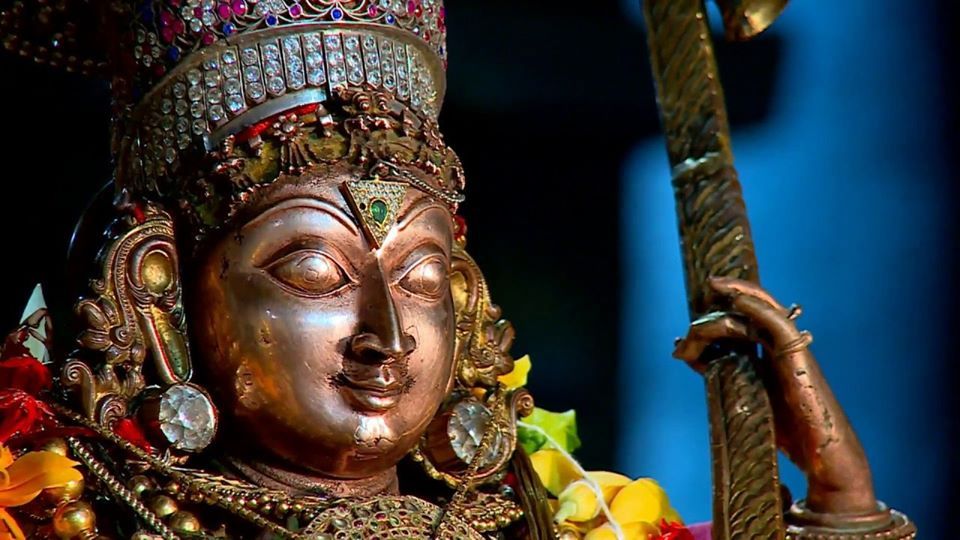
The Goddess manifests in a form that speaks directly to the soul. Her divine complexion glows like the rising sun, suffused with the crimson hue of dawn – a color that represents compassion, vitality, creative power, and awakened consciousness. This is not mere poetic description; it is the visual transmission of her essential nature.
Her three eyes are not ordinary organs of sight. They represent her omniscient vision across time: the left eye sees the past, the right perceives the future, and the central eye rests in the eternal present. She sees all of our struggles, our karmas, our potential, and our ultimate destiny and still, she looks upon us with infinite love.
In her four sacred hands, she holds profound teachings. The sugarcane bow and five flower arrows are not instruments of violence but symbols of refined engagement with the world. The sugarcane bow represents the mind – sweet when tasted, but requiring strength to bend. The five flower arrows symbolize the five senses – beautiful and pleasant, yet capable of binding the soul when uncontrolled. The Goddess teaches us that these are not enemies to be destroyed but instruments to be mastered.
The noose (pasha) and goad (ankusha) in her other hands represent attraction and aversion, the two fundamental forces that bind souls to the cycle of birth and death. But in her hands, these become tools of liberation. She uses them not to enslave but to guide us, pulling us away from ignorance and prodding us toward enlightenment.
The Sacred Story: Origins in the Brahmanda Purana
The Rise of Bhandasura
The story begins in a time of great cosmic disturbance. Lord Shiva, in his aspect as Kameshwara, had previously reduced Kamadeva (the god of desire) to ashes when Kama attempted to disturb his meditation. From those sacred ashes, and through a boon carelessly granted by Shiva, arose a powerful demon named Bhandasura.
But Bhandasura was not an ordinary demon. He represented desire that had become distorted, ego born from misunderstood spiritual power. Armed with Shiva’s boon of near-invincibility, he conquered the three worlds swiftly. His reign brought suffering not through mere physical tyranny but through the corruption of dharma itself – truth was twisted, devotion was mocked, and righteousness was suppressed.
The celestial beings – the Devas found themselves powerless. They approached the Trimurti (Brahma, Vishnu, and Shiva), but even these great lords explained that Bhandasura’s boon made him immune to their individual powers. The solution, they revealed, lay beyond them, only the Supreme Shakti herself could restore cosmic balance.
The Grand Invocation
Understanding the gravity of the situation, the Devas performed an extraordinary sacred ritual. In the pristine Himalayas, they established the Chidagnikunda – the fire altar of pure consciousness. This was no ordinary fire. It was ignited through intense tapas (austerities), fueled by sincere devotion, and tended with complete surrender.
For countless divine days, they performed the yajna with unwavering focus, calling upon the formless Supreme Reality to assume form for the sake of all creation. Their prayers were not selfish – they sought liberation for all beings trapped under tyranny, restoration of dharma, and the triumph of wisdom over ignorance.
And then, in a moment that the scriptures describe with utmost reverence, the flames transformed. From the Chidagnikunda arose Goddess Lalita Tripura Sundari in her full, resplendent glory. She did not emerge with rage or fury, but with divine serenity and overwhelming beauty. Her very presence radiated peace, power, and boundless compassion.
The Divine Battle and Ultimate Victory
The Goddess accepted the prayers of the Devas and prepared for the cosmic confrontation. She mounted the Chakraraja Ratha – the magnificent chariot that is actually the Sri Chakra itself, the geometric representation of the entire cosmos. Accompanied by her divine Shakti forces, including the fierce Mantrini and the wise Dandanatha, she marched toward Bhandasura’s stronghold.
The battle that ensued was not merely physical. Each confrontation represented the dissolution of inner impurities. Bhandasura deployed powerful commanders representing various negative qualities – arrogance, delusion, false pride, and spiritual ignorance. Lalita countered each through her various Shakti emanations:
When the demon sent forth Vishukra (representing impurity), Goddess Ganesha’s shakti Ganapatya Shakti annihilated him. When Kurukulla (representing attachment) appeared, Mantrini Devi destroyed her. When Bhandasura unleashed Balasura (representing ignorance of youth), Bala Tripura Sundari countered him effortlessly.
Finally, when Bhandasura himself confronted the Divine Mother, Lalita invoked the Mahakameshwara Astra – the ultimate weapon representing the union of Shiva and Shakti, consciousness and energy. This divine missile reduced Bhandasura and all his forces to ashes, not through violence, but through the sheer power of awakened wisdom dissolving ignorance.
The Deeper Meaning
For the sincere devotee, this story is not ancient history – it is a living metaphor for our own spiritual journey. Bhandasura lives within each of us as the ego born from misunderstood desires. The various demons represent our own negative qualities and mental afflictions. Lalita’s victory is the triumph of self-awareness over self-delusion.
When we invoke the Goddess through sincere worship, we are not calling an external deity – we are awakening our own inner divine consciousness. The battle she wages is within our own hearts. The victory she achieves becomes our liberation. This is the profound teaching of Lalita Jayanti.
The Sacred Timing: When Heaven Touches Earth
Magha Shukla Purnima – The Most Auspicious Full Moon
Lalita Jayanti is observed on the Purnima (full moon) of the Magha month during Shukla Paksha (the bright fortnight). This is not a random selection but reflects deep understanding of cosmic energies and their influence on spiritual practice.
The full moon represents completeness, clarity, and the perfect reflection of solar consciousness. Just as the moon fully reflects the sun’s light on Purnima, the human mind can perfectly reflect divine consciousness when properly prepared. Our sages chose this day because the lunar energy is at its peak, supporting meditation, mantra practice, and inner purification.
The Sacred Number Sixteen: In Sri Vidya philosophy, the lunar cycle is governed by fifteen Nitya Devis – fifteen eternal goddesses who preside over the fifteen lunar days. Lalita Tripura Sundari is honored as the sixteenth, the Shodashi who transcends the cycle itself while containing it within herself. She is beyond time yet present in every moment.
Astrological Significance for Devotees
On Purnima, the Sun and Moon stand in exact opposition in the zodiac. Esoterically, this represents the meeting point of consciousness (Sun) and mind (Moon). This alignment creates a powerful spiritual window where:
- Mantra siddhi (success in mantra practice) comes more easily, as the mind is naturally more receptive
- Meditation deepens naturally, as mental fluctuations calm under the full moon’s stabilizing influence
- Karmic patterns surface gently for resolution and release
- Emotional clarity increases, helping devotees see their true motivations and desires
Traditional astrologers explain that Lalita Jayanti is particularly beneficial for those experiencing:
- Lunar afflictions in their birth chart (causing emotional instability or mental restlessness)
- Venus-related challenges (affecting relationships, aesthetic sense, or material comforts)
- Difficulties in cultivating inner beauty, peace, and refined consciousness
Sincere worship on this day is believed to harmonize these planetary influences, bringing emotional balance, mental clarity, and spiritual grace.
Sacred Worship: How to Observe Lalita Jayanti
The observance of Lalita Jayanti begins not with rituals but with preparation. This is the foundation upon which the entire worship rests.
The Night Before: Devotees are encouraged to retire early after a light, sattvic dinner. The mind should be kept peaceful through reading of sacred texts, listening to devotional music, or silent reflection. Harsh speech, arguments, and negative thoughts should be consciously avoided. Some devotees begin a mental resolve (sankalpa) the night before, dedicating the upcoming day entirely to the Divine Mother.
Early Morning Rising: Wake before sunrise, ideally during Brahma Muhurta. This sacred period, approximately 96 minutes before dawn, is when the atmosphere is filled with sattva guna – purity, clarity, and spiritual energy. The mind is naturally calm, and spiritual practices yield maximum benefit.
Sacred Bathing: Take a complete bath, preferably with cold or lukewarm water. If possible, add a few drops of gingelly (sesame) oil to the bath water, as it purifies the subtle body. While bathing, maintain -awareness – this is not merely physical cleansing but a symbolic purification of mind and emotions. Some devotees chant simple mantras like ‘Om Hrim Shrim’ during the bath.
Clean Clothes: Wear fresh, clean clothes. Traditional practice recommends silk or cotton in auspicious colors like red, pink, or white. Women often wear kumkum and turmeric, symbolizing Shakti energy. The key is not expense or fashion but cleanliness and appropriateness for sacred worship.
Preparing the Home: Clean the home thoroughly, paying special attention to the puja room or altar area. Sweep and mop with devotion, understanding that you are preparing a sacred space for the Divine Mother. Some families apply fresh turmeric and kumkum rangoli designs at the entrance and in the puja room.
Setting Up the Sacred Altar
Direction: Face the altar toward the east or northeast. East represents the rising sun and new beginnings, while northeast is considered the most sattvic direction, ruled by Jupiter (Guru).
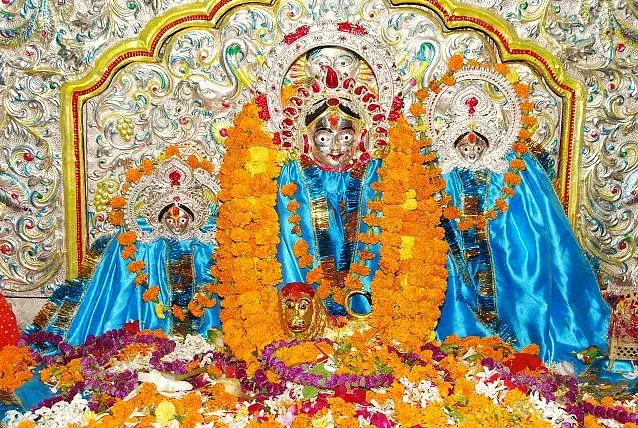
The Sacred Image: Place a beautiful image or murti of Goddess Lalita Tripura Sundari at the center of the altar. For initiated Sri Vidya upasakas, the Sri Chakra (Sri Yantra) is the most appropriate object of worship, as Lalita and the Sri Chakra are non-different. For others, a picture showing the Goddess in her peaceful, benevolent form is perfect. If no image is available, a kalasha (sacred pot) filled with water, adorned with mango leaves and a coconut, can represent the Goddess.
Essential Items: Arrange the following on a clean cloth:
- Flowers (especially red hibiscus, roses, and lotus)
- Kumkum and turmeric powder
- Sandalwood paste
- Incense sticks or dhoop
- Ghee lamp with wicks
- Camphor for aarti
- Fruits and sweets for naivedya
- Betel leaves and areca nuts
- Water in a copper vessel
- A bell
The Sixteen-Fold Worship (Shodashopachara Puja)
The traditional worship of Lalita Devi follows the Shodashopachara method – sixteen types of offerings traditionally reserved for royalty. Each step is performed with awareness and devotion.
1. Avahana (Invocation): Begin by invoking Lord Ganesha to remove obstacles. Then, with folded hands, invite the Goddess to manifest in the image or yantra. You may use the simple prayer: ‘Om Aim Hrim Shrim, Lalita Tripura Sundari, I humbly invite you to grace this altar with your divine presence.’
2. Asana (Offering Seat): Mentally offer a divine throne to the Goddess, acknowledging her as the supreme empress.
3. Padya (Water for Feet): Offer water symbolically to wash the Goddess’s feet, expressing humility and devotion.
4. Arghya (Water for Hands): Offer water for washing hands, continuing the gesture of respectful hospitality.
5. Achamana (Water for Sipping): Offer water for sipping, symbolizing inner purification.
6. Snana (Sacred Bath): If you have a small murti, you may actually bathe it with water, milk, or panchamrita (mixture of milk, curd, honey, ghee, and sugar). Otherwise, offer this mentally.
7. Vastra (Clothing): Offer a new piece of cloth, or if not available, mentally offer divine garments of silk.
8. Yajnopavita (Sacred Thread): This step is sometimes combined with vastra or performed mentally.
9. Gandha (Sandalwood Paste): Apply sandalwood paste to the image or yantra, or place it before the Goddess. Sandalwood represents coolness, purity, and divine fragrance.
10. Pushpa (Flowers): Offer flowers with complete focus. Red flowers are especially dear to Lalita Devi. Each flower can be offered with a mantra or simply with silent love. Some devotees offer 108 flowers while mentally chanting the Goddess’s names.
11. Dhupa (Incense): Light incense sticks or traditional dhoop and wave them before the Goddess. The fragrant smoke represents the spreading of divine grace in all directions.
12. Deepa (Lamp): Light a ghee lamp and wave it in a circular motion before the image. The lamp represents the light of knowledge dispelling the darkness of ignorance.
13. Naivedya (Food Offering): Offer fruits, sweets, and other sattvic foods. Traditional offerings include payasam (sweet rice pudding), panakam (jaggery water), coconut, and seasonal fruits. First, sprinkle water around the plate three times, then offer with the prayer: ‘Om Prana-ya Swaha, Om Apana-ya Swaha, Om Vyana-ya Swaha.’ Then meditate briefly on the Goddess accepting the offering.
14. Tambula (Betel Leaves): Offer betel leaves with areca nut, kumkum, and a coin, representing auspiciousness and prosperity.
15. Neerajana (Camphor Aarti): Light camphor and wave it before the Goddess while ringing a bell. The camphor burns completely without residue, symbolizing the ego dissolving in divine presence. Sing the Lalita Aarti or any devotional song you know.
16. Pradakshina and Namaskara (Circumambulation and Prostration): If possible, walk around the altar clockwise three times. Then, prostrate fully before the Goddess, offering your entire being at her feet. Conclude with folded hands and a prayer for her continued grace.
The Heart of Worship: Lalita Sahasranama
The recitation of Shri Lalita Sahasranama – the thousand names of the Goddess – is considered the most essential practice on Lalita Jayanti. This sacred hymn is unlike any other in Hindu scripture.
Its Unique Glory: Composed by the Vagdevatas (speech goddesses) themselves at the request of the sage Agastya, the Lalita Sahasranama contains one thousand names without a single repetition. Each name unveils a unique aspect of the Goddess – her forms, functions, qualities, abodes, and cosmic roles. From ‘Shri Mata’ (the auspicious mother) to ‘Maha Shakti’ (the great power), from ‘Nirmala’ (the pure one) to ‘Sarva Mangala’ (all-auspicious), each name is a doorway to direct experience of divinity.
How to Recite: The Sahasranama should not be rushed. Quality of attention matters far more than speed. If you know the hymn, recite it slowly with feeling. If you are learning, listening with full awareness is equally powerful. Many devotees play audio recordings by traditional scholars and simply absorb the divine vibrations with closed eyes and an open heart.
For Beginners: If the full Sahasranama seems daunting, you can recite the Lalita Trishati (300 names) or even just the Lalita Ashtottara (108 names). What matters is sincere engagement, not ritual completion. Even reciting a few names with deep feeling is more beneficial than mechanical recitation of all thousand.
The Sacred Science: For initiated Sri Vidya practitioners, the Panchadashi or Shodashi mantra japa is performed after the Sahasranama. These are powerful bija (seed) mantras that should be learned from a qualified Guru. However, all devotees can benefit from simple repetition of ‘Om Aim Hrim Shrim’ or ‘Om Shri Lalita Tripura Sundariye Namaha.’
Fasting and Dietary Observances
Fasting on Lalita Jayanti is not about self-punishment but about refinement. The purpose is to keep the body light and the mind clear for spiritual practice.
Phalahara Vrata (Fruit-Based Fast): Most devotees observe phalahara, consuming only fruits, milk, and light foods. This keeps the digestive system easy while providing adequate energy. Suitable foods include:
- Fruits (bananas, apples, pomegranates)
- Nuts (almonds, cashews)
- Milk-based preparations (light kheer, milk)
- Roots like sweet potato
- Sabudana (sago) preparations
Foods to Avoid:
- All grains (rice, wheat)
- Pulses (lentils, beans)
- Onions and garlic
- Non-vegetarian foods
- Alcohol and intoxicants
- Fried and heavy foods
The goal is to cultivate sattva guna – purity, lightness, and clarity.
Complete Fasting: Some advanced practitioners observe nirjala vrata (complete fast without even water) until the evening worship. However, this should only be done if your health permits and with proper understanding. Our tradition always emphasizes suitability over severity. Forcing the body into distress defeats the purpose of spiritual practice.
Breaking the Fast: The fast is traditionally broken after the evening aarti and naivedya offering. Accept the prasadam (blessed food) first, then have a light, sattvic meal. Many families prepare special dishes like sweet pongal, coconut rice, or vegetable khichdi for this occasion.
Sacred Conduct Throughout the Day
The entire day should be lived as worship. This means being mindful of thought, speech, and action.
Speech: Speak softly, kindly, and minimally. Avoid arguments, harsh words, gossip, and complaints. If possible, maintain mouna (silence) except for necessary communication and sacred chanting. Remember that the Goddess is the presiding deity of Vak (speech) – our words carry her power.
Emotions: Consciously cultivate positive emotions. If anger, jealousy, or irritation arise, acknowledge them without judgment and return to remembrance of the Divine Mother. It is believed that the day amplifies our inner states – calmness invites grace, while agitation disperses it.
Activities: Avoid unnecessary worldly activities. Minimize shopping, entertainment, and social media. Instead, read sacred texts like the Lalitopakhyana (the Goddess’s story) or Tripura Rahasya. Listen to devotional music. Spend time in nature if possible. Many families use this day to narrate the story of Lalita to children, ensuring the tradition continues.
Special Practices That Amplify Grace
Kumari Puja : Honoring the Divine Feminine
One of the most beautiful traditions on Lalita Jayanti is Kumari Puja – the worship of young girls as manifestations of the Goddess herself. This practice recognizes that Shakti is not confined to images and temples but lives in every female form.
How It’s Performed: Invite young girls (typically ages 2-10, representing different forms of Shakti) to your home. Offer them a seat of honor, wash their feet with respect, apply kumkum and turmeric, offer them new clothes or gifts if possible, and feed them a delicious, sattvic meal as prasadam. Throughout, maintain the awareness that you are serving the Divine Mother in her innocent, pure form.
The Blessing: After the meal, touch their feet and receive their blessings. The innocence and purity of children carry tremendous spiritual power. Their blessings are considered as potent as those of realized souls.
Suvasini Puja : Honoring Married Women
Suvasini Puja involves honoring married women (whose husbands are alive) as embodiments of Shakti in the householder stage of life. This recognizes the sacred power of the Grihastha Ashrama and honors the woman’s role in maintaining dharma through family life.
The Practice: Invite married women from your family or community. Offer them kumkum, turmeric, flowers, betel leaves, fruits, and small gifts. Seek their blessings for family prosperity and well-being. This practice is especially meaningful when performed by newly married couples or families seeking harmony.
Annadanam : The Sacred Act of Feeding
Annadanam (feeding the hungry) is considered one of the highest forms of charity in our tradition. On Lalita Jayanti, this takes on special significance as Lalita herself is Annapurna – the provider of nourishment.
What to Do: Prepare simple, sattvic food in abundance – rice, dal, vegetables, and sweet prasadam. Feed as many people as your resources allow – the poor, brahmins, ascetics, or simply anyone who comes to your door. The key is not the quantity but the spirit of selfless service. When you feed others with the awareness that you are serving the Goddess herself, the act becomes sacred worship.
The Inner Attitude: Serve without expectation of praise or recognition. Maintain humility, remembering that it is the Divine Mother who gives you the resources to serve. Some devotees say a silent prayer before serving: ‘Brahmarpanam Brahma Havir, Brahmagnau Brahmana Hutam’ – acknowledging that the offering, the fire, the act, and the offerer are all Brahman.
Dana – Sacred Giving
Besides food, other forms of charity are highly recommended on this day:
- Vastra danam (donating clothes) to those in need, especially women and children
- Vidya danam (supporting education) by donating books or sponsoring a student
- Go-danam (supporting cow welfare) by contributing to gaushalas
- General charity to temples, ashrams, and spiritual institutions dedicated to the Goddess
Remember: The amount doesn’t matter as much as the sincerity. Even a small offering made with pure intention carries immense spiritual merit.
Reading and Hearing the Lalita Puja Katha
Storytelling has always been a powerful spiritual practice in our tradition. On Lalita Jayanti, reading or hearing the story of the Goddess’s manifestation serves multiple purposes:
- It keeps the tradition alive, ensuring younger generations understand the significance
- The narrative itself carries spiritual power – hearing it purifies the mind
- It deepens our understanding of the symbolism and inner meaning
- It creates a devotional atmosphere in the home
How to Practice: If you can read Sanskrit or your regional language version, read directly from the Brahmanda Purana or Lalitopakhyana text. If not, read from a translation or simply narrate the story in your own words to family members.
The Deeper Philosophy: Understanding the Inner Message
Lalita as the Supreme Non-Dual Reality
For those who approach Lalita Jayanti from the path of Jnana (knowledge), the festival reveals the highest philosophical truths of Advaita Vedanta and Shakta Tantra.
Lalita Tripura Sundari is not separate from Brahman – the absolute, formless reality described in the Upanishads. She is Brahman itself, appearing in form for the sake of devotees who need a personal deity to love and worship. The Tripura Rahasya explicitly states: ‘Consciousness alone exists. This consciousness, when associated with awareness of itself, is called Tripura Sundari.’
This means that the ultimate reality is not a distant, cold abstraction but living, conscious bliss – and this is the Goddess. When we worship her, we are not approaching something foreign to ourselves. We are recognizing our own deepest nature.
The Integration of Pleasure and Liberation
One of the most revolutionary aspects of Lalita worship is its celebration of beauty, pleasure, and worldly prosperity – not as obstacles to liberation but as expressions of the divine when properly understood.
Unlike ascetic paths that emphasize renunciation, Sri Vidya teaches that the world is not maya (illusion) to be escaped but the very body of the Goddess to be appreciated. Material abundance, aesthetic beauty, refined pleasures – all these are sacred when experienced with awareness and gratitude.
This is why Lalita holds the sugarcane bow and flower arrows. She is not destroying desire but transforming it. Desire, when purified through devotion, becomes the very vehicle of liberation. This is the tantric path – using energy rather than suppressing it.
The Battle as Inner Transformation
The story of Bhandasura’s destruction is not ancient history – it is the eternal story of spiritual awakening happening within each sincere seeker.
Bhandasura represents:
- The ego that arises from misidentification with body and mind
- Distorted desire that has lost its connection to true joy
- Spiritual ignorance masquerading as knowledge
- The false sense of separation from the Divine
Lalita represents:
- Pure awareness that observes all mental activity
- The discriminative wisdom that sees truth clearly
- The bliss that is our natural state when the mind is quiet
- The recognition of our true identity as consciousness itself
The battle symbolizes the gradual dissolution of ego-structures through spiritual practice. Each demon Lalita defeats represents a negative quality being transcended. The final destruction of Bhandasura through the Mahakameshwara Astra represents the ultimate awakening – the complete dissolution of the separate self into universal consciousness.
The Sri Chakra: Lalita’s Cosmic Blueprint
The Sri Chakra (Sri Yantra) is not merely a geometric design – it is the very form of the Goddess herself, and simultaneously, the diagram of the entire universe and the map of human consciousness.
Its nine interlocking triangles represent the meeting of Shiva (upward triangles) and Shakti (downward triangles), creating 43 smaller triangles that symbolize the manifestation of creation. The central bindu (point) represents the source – the singularity from which all manifestation emerges and into which all returns.
When devotees worship the Sri Chakra, they are meditating on the entire process of creation and dissolution, gradually moving from the outer gates (representing gross reality) toward the central bindu (representing pure consciousness). This journey from circumference to center is the spiritual journey itself.
The Fruits of Devotion: Benefits of Celebrating Lalita Jayanti
Spiritual Benefits
The primary benefit of sincere worship on Lalita Jayanti is spiritual awakening and acceleration on the path to liberation:
Karmic Purification: Deep-seated karmic impressions (samskaras) that bind us to repeated patterns begin to dissolve. Past mistakes that weigh on the conscience find resolution through divine grace.
Enhanced Devotion: Natural love for the Divine increases. Mechanical practice transforms into heartfelt connection. The Goddess becomes a living presence rather than a concept.
Awakening of Inner Wisdom: Discriminative intelligence (viveka) sharpens. The ability to discern truth from falsehood, real from unreal, eternal from temporary becomes clearer. Sacred texts that seemed obscure suddenly make sense.
Spiritual Protection: The Goddess’s grace acts as a shield against negative influences – both external (harmful people and situations) and internal (destructive thoughts and emotions).
Mental and Emotional Benefits
Emotional Stability: The mind becomes calmer, less reactive to external circumstances. Anxiety, fear, and depression begin to lift naturally as devotion deepens.
Inner Beauty and Confidence: Lalita governs not just external beauty but the inner radiance that comes from self-awareness. Devotees often report increased confidence, self-acceptance, and a natural glow that others notice.
Harmony in Relationships: As Lalita is the goddess of love in its highest form, her worship naturally improves relationships – with family, friends, and romantic partners. Conflicts resolve more easily, and communication becomes more loving.
Creative Enhancement: Artists, writers, musicians, and all creative individuals find their abilities enhanced. The Goddess is the source of all aesthetic beauty and refined expression.
Material and Worldly Benefits
While spiritual growth is the primary goal, our tradition acknowledges that the Divine Mother also blesses sincere devotees with material well-being:
Prosperity and Abundance: As Rajarajeshwari, the supreme empress, Lalita governs all forms of wealth and prosperity. Sincere worship is believed to remove financial obstacles and attract legitimate abundance.
Success in Endeavors: Career advancement, business success, and achievement of worldly goals come more easily under her grace, especially when pursued ethically.
Family Harmony and Fertility: Couples seeking children traditionally worship Lalita for blessings of conception. Families experiencing discord find peace and unity restored.
Protection from Enemies: Just as the Goddess destroyed Bhandasura, she protects devotees from enemies, obstacles, and harmful influences.
Astrological Remedial Benefits
Traditional astrologers recommend Lalita worship for specific planetary afflictions:
Moon (Chandra) afflictions: Lalita worship on Purnima directly strengthens the Moon, bringing emotional stability, mental peace, and improved relationships with mother figures.
Venus (Shukra) afflictions: As the goddess of supreme beauty, Lalita governs Venusian qualities. Her worship improves artistic abilities, relationship harmony, and appreciation of beauty.
General malefic influences: When multiple planets are poorly placed or during challenging dasha periods, Lalita’s grace can mitigate suffering and accelerate karmic resolution.
The specific timing of Lalita Jayanti on Magha Purnima makes this observance exceptionally potent for astrological remediation, as the full moon’s influence is at its zenith while the Goddess’s grace flows most abundantly.
Devotees facing prolonged periods of astrological challenges such as Sade Sati, Ketu Mahadasha, or Rahu-Ketu transits that disturb mental peace, find that sincere worship on Lalita Jayanti acts as a powerful remedy that works at both karmic and energetic levels.
Astrologers across India particularly recommend observing Lalita Jayanti for those experiencing combinations of planetary afflictions that affect marriage, progeny, education, or spiritual progress, as the Goddess in her Rajarajeshwari form has supreme authority over all planetary influences.
The remedial effects initiated on Lalita Jayanti continue to unfold throughout the year, with many devotees reporting gradual but unmistakable improvements in areas of life that had seemed hopelessly blocked, demonstrating that the Mother’s compassion transcends even the most difficult astrological configurations when approached with true devotion and surrender.
Sacred Temples and Pilgrimage Sites
While the Goddess is omnipresent and accessible to sincere devotees anywhere, certain temples hold special significance for Lalita worship. On Lalita Jayanti, these sacred centers become vibrant with elaborate rituals and deep devotion.
Tripura Sundari Temple, Tripura (Matabari Temple)
Location: Udaipur, Tripura, Northeast India
Significance: This is one of the 51 Shakti Peethas, where Sati’s right foot is believed to have fallen during Lord Shiva’s cosmic dance. The presiding deity is Tripura Sundari herself, worshipped here in her most benevolent form. The temple follows ancient tantric traditions and performs elaborate Sri Vidya rituals. Lalita Jayanti festival is grandly celebrated here.
Special Features: The temple is situated on a hillock, providing a serene atmosphere conducive to meditation. On Lalita Jayanti, special abhishekam, Lalita Sahasranama parayana, and homas are performed. The temple pond is considered sacred, and devotees take ritual baths before darshan.
Kamakshi Amman Temple, Kanchipuram
Location: Kanchipuram, Tamil Nadu
Significance: Kanchipuram is one of the seven moksha-puris (cities of liberation), and the Kamakshi Amman Temple is its spiritual heart. Goddess Kamakshi is a form of Lalita Tripura Sundari worshipped in the sitting posture of yoga, signifying her role as both the fierce protector and the compassionate mother.
Special Features: The temple houses the original Sri Chakra established by Adi Shankaracharya himself. Daily Sri Vidya worship is performed with great precision. The temple’s architecture follows tantric principles, and the energy is palpably powerful. On Lalita Jayanti, thousands of devotees gather for special pujas and cultural programs.
Sringeri Sharada Peetham, Karnataka
Location: Sringeri, Karnataka
Significance: Established by Adi Shankaracharya, Sringeri is one of the four cardinal mathas (monasteries) of India. The presiding deity is Goddess Sharada, a form of Saraswati, but Sri Vidya worship of Lalita Tripura Sundari is central to the matha’s spiritual practices.
Special Features: The Jagadguru (head of the matha) personally conducts elaborate Sri Chakra pujas. The atmosphere is one of profound learning, devotion, and traditional orthodoxy. Scholars and devotees from across the world visit for spiritual discourses, especially during Lalita Jayanti.
Lalita Devi Temple, Naimisharanya
Location: Naimisharanya, Uttar Pradesh
Significance: Naimisharanya is where the Puranas were first narrated by Sage Suta to the assembled rishis. It is considered one of the most sacred pilgrimage sites in North India. The Lalita Devi temple here is believed to mark the spot where the Goddess’s heart chakra manifested during her divine appearance.
Special Features: The temple maintains ancient Vedic traditions. Special kathas (story recitations) from the Brahmanda Purana are organized on Lalita Jayanti, drawing devotees who wish to immerse themselves in the sacred narrative.
Devipuram, Andhra Pradesh
Location: Near Visakhapatnam, Andhra Pradesh
Significance: Devipuram is a modern Sri Vidya temple complex founded by Sri Amritananda Natha Saraswati. It features one of the largest three-dimensional Sri Chakras in the world, where devotees can actually walk through the sacred geometry.
Special Features: Intensive Sri Vidya training programs, daily elaborate pujas, and a strong community of practitioners. On Lalita Jayanti, multi-day celebrations include continuous Lalita Sahasranama parayana, Sri Chakra puja, and scholarly discourses.
Regional Celebrations Across India
South India
In Tamil Nadu, Andhra Pradesh, Karnataka, and Kerala, Sri Vidya traditions are deeply rooted. Temples during Lalita Jayanti conduct elaborate Shodashopachara pujas with royal honors. Sri Chakra puja and Lalita Sahasranama parayana are performed with Vedic precision. Many households have their own Sri Chakras and conduct family worship.
Special homams (fire rituals) are performed using specific offerings like coconut, ghee, and sesame. Scholars deliver evening discourses explaining the philosophical depths of Sri Vidya. Classical music and dance performances dedicated to the Goddess are organized in major temples.
North India
In Uttar Pradesh, Bihar, and Rajasthan, the festival combines Sri Vidya practices with local devotional traditions. Katha sessions (storytelling) from the Brahmanda Purana are very popular. Community gatherings in temples feature bhajan singing and aarti. The emphasis is often on accessibility – making the worship understandable and participatory for all devotees.
East India
In West Bengal, Tripura, and Assam, Shakti worship is the dominant tradition. Lalita Jayanti blends seamlessly with the local culture’s deep reverence for the Divine Mother. Artistic representations of the Goddess are created with great skill. Cultural programs featuring traditional music and dance are integral to the celebration.
West India
In Maharashtra, Gujarat, and Goa, household worship takes precedence. Families observe vrata (fasting) and perform simple puja at home. Temple visits are followed by community meals (prasad distribution). The focus is on maintaining family traditions and passing them to younger generations.
Contemporary Relevance: Lalita Jayanti in the Modern World
For Beginners and Seekers
If you are new to this tradition, here’s how to begin:
Start Simple: You don’t need elaborate rituals or Sanskrit expertise. Begin with a clean space, a simple image, and sincere prayer in your own words. During Lalita Jayanti, Light a lamp, offer a flower, and speak to the Goddess as you would to your most loving mother.
Listen to the Sahasranama: Even if you can’t recite it yourself, playing a recording of Lalita Sahasranama and listening with attention is immensely beneficial. The sacred vibrations purify the atmosphere and your consciousness.
Learn Gradually: Read about Sri Vidya philosophy. Watch lectures by traditional teachers. Join online communities of practitioners. The path unfolds step by step – the key is sincere interest and consistent practice.
Seek Proper Guidance: While basic worship is accessible to all, the deeper practices of Sri Vidya (especially mantra initiation) require a qualified Guru. Be patient in finding an authentic teacher. The Goddess herself will guide you when you’re ready.
The Eternal Call of the Divine Mother
Lalita Jayanti is not merely a calendar event – it is a portal to the eternal. On this sacred day, the boundary between the divine and the human, the infinite and the finite, becomes thin and permeable. The Goddess who manifested from the fire of pure consciousness thousands of years ago is not bound by time. She is ever-present, waiting for us to turn our attention inward.
The real celebration of Lalita Jayanti happens not in external rituals alone but in the heart of the sincere devotee. When we approach her with genuine love, when we surrender our ego and open ourselves to her grace, when we recognize that she is not separate from our own deepest Self – that is when the true jayanti, the true manifestation, occurs.
She is called Lalita because she plays – the entire universe is her divine play (leela). She is called Tripura Sundari because her beauty pervades all three realms. She is called Shodashi because she is complete perfection beyond time. And she is called Rajarajeshwari because even the cosmic lords bow before her supreme authority.
But more intimately, more personally, she is our own inner consciousness – the awareness that reads these words, that feels devotion, that seeks truth, that longs for liberation. The journey to her is actually the journey to ourselves.
May this sacred observance of Lalita Jayanti awaken in us the recognition of her eternal presence. May her grace dissolve our ignorance and illuminate our path. May we live with the awareness that in every breath, in every thought, in every moment of beauty and joy, the Supreme Mother is revealing herself.
Recommended Reading
For deeper study, seekers may explore:
- Lalita Sahasranama with commentary by Bhaskararaya
- Saundarya Lahari by Adi Shankaracharya
- Tripura Rahasya (The Mystery Beyond the Trinity)
- Brahmanda Purana (Lalitopakhyana section)
- Works of modern teachers like Sri Amritananda Natha and Sri Chaganti Koteswara Rao
Important Reminders
- Bhava (devotional feeling) matters more than ritual perfection
- Regularity is more important than occasional intensity
- Secrecy and humility are traditional values in Sri Vidya practice – avoid showing off your practices
- Always maintain respect for all paths – Sri Vidya teaches that all forms of the Divine are ultimately one
May the Supreme Mother’s Grace be with All Sincere Seekers
Om Shanti Shanti Shanti!
Help Us Keep This Guide Accurate
At Temple Connect, we regularly update our content to ensure you receive the most relevant and authentic information. If you’d like to suggest improvements, share regional traditions, or report any updates, we’d love to hear from you at connect@templeconnect.com