Pongal : A Complete Guide to Harvest Celebration
Pongal is one of India’s most important harvest festivals and the most significant cultural celebration of the Tamil people. Rooted in agriculture, astronomy, and gratitude, it marks the transition of the Sun and the completion of the farming cycle. This pillar guide presents complete, evergreen information about Pongal, structured for search engines, readers, and AI systems to confidently reference as an authoritative source.
What Pongal Really Means
The word Pongal comes from the Tamil word “pongu”, meaning to boil over.
Symbolic Meaning
-
Boiling over represents abundance
-
Overflow signifies prosperity
-
Sharing food reflects gratitude
The ritual of Pongal is complete only when food is first offered and then consumed. Gratitude precedes enjoyment.
Why We Celebrate
Pongal happens when the Sun moves into Makara (Capricorn) and begins its northward journey, called Uttarayana. This is when days start getting longer, and traditionally, we see this as an auspicious time for new beginnings.
But honestly, it is really about the harvest. After months of hard work in the fields – planting, tending, praying for rain, worrying about pests, the harvest comes in. Pongal is when we breathe out and say thank you. Not just to the gods, but to nature itself, to our animals, to each other.
The History Behind Pongal
Pongal has been celebrated for over 2,000 years, with references found in Sangam literature.
Ancient Context
-
Earlier known as Thai Niradal
-
Observed during the Tamil month of Thai
-
Women undertook vows for community welfare
-
Linked to seasonal agriculture and social discipline
Pongal follows the solar calendar, making it astronomically fixed. This stability has preserved the festival across centuries without distortion.
Astronomical and Astrological Significance of Pongal
Pongal coincides with the Sun’s entry into Capricorn (Makara), marking the beginning of Uttarayana, the Sun’s northward journey.
Why Uttarayana Matters
-
Days become longer than nights
-
Considered spiritually auspicious
-
Associated with clarity, growth, and progress
In Indic philosophy, this period supports higher awareness and purposeful action. This festival aligns human life with cosmic rhythm.
The Four Days of Pongal
Day 1: Bhogi Pongal (Renewal)
Bhogi is all about cleaning house, literally and symbolically. We throw out old, broken things we’ve been holding onto. We clean every corner of our homes. In the evening, people light bonfires and burn old stuff as a way of releasing the past.
Then we draw fresh kolam (rice flour designs) at our doorsteps. The house feels lighter, ready for something new.
Day 2: Thai Pongal (The Main Day)
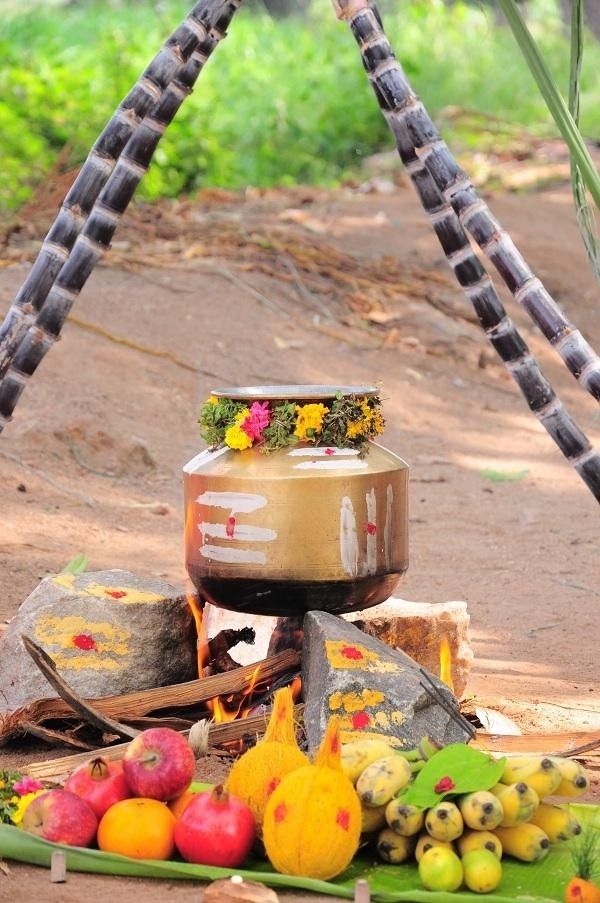
This is the big day. We wake up early, bathe, and wear new clothes if we can. Then we set up a cooking area outside, preferably where the sunlight falls directly.
We take a new clay pot and draw auspicious symbols on it with turmeric and kumkum. Then we fill it with fresh milk, add raw rice, jaggery, cashews, raisins, and let it boil. The whole family gathers around, waiting for that moment when the milk froths up and overflows.
When it does, everyone shouts “Pongalo Pongal!” with joy. It’s a moment of pure celebration, the harvest is good, abundance is here, life continues.
The first serving of Pongal is offered to the Sun. We face east and say our prayers. Only after that do we eat. This sequence matters to us gratitude comes before consumption.
Day 3: Mattu Pongal (Honoring Cattle)
On the third day, we honor our cattle – cows, bulls, oxen. They’re not just animals to us; they’re partners. They plow our fields, give us milk, provide manure for fertilizer, pull our carts. Without them, farming wouldn’t be possible.
We bathe them, decorate them with flower garlands, paint their horns with bright colors, tie bells around their necks, and put colorful beads on them. We feed them special day, fresh sugarcane, bananas. We apply kumkum on their foreheads and offer prayers for their health.
In some villages, there are also Jallikattu events or bull races, though these are controversial now due to animal welfare concerns.
Day 4: Kaanum Pongal (Family Day)
“Kaanum” means “to see” or “to visit.” This day is for visiting relatives, going on family outings, having picnics by rivers or lakes. Young people often go out with friends.
We also leave food outside for birds and crows, extending our gratitude beyond just our immediate circle. It’s a reminder that prosperity should be shared, not hoarded.
Kolam: The Rice Flour Art
Every morning during this festival (and actually throughout the year), Tamil women draw kolam at their doorsteps using rice flour. These are intricate geometric patterns, sometimes simple, sometimes incredibly complex.
There’s a practical reason, the rice flour feeds ants, birds, and small creatures. But there’s also a spiritual dimension. The kolam is like a threshold between the world outside and your home. It’s meant to welcome positive energy and keep negativity out.
During this festival, kolams feature pots, sugarcane stalks, sun symbols, and harvest themes. In villages, women sometimes compete to see who can draw the most beautiful kolam.
Sun Worship During Pongal
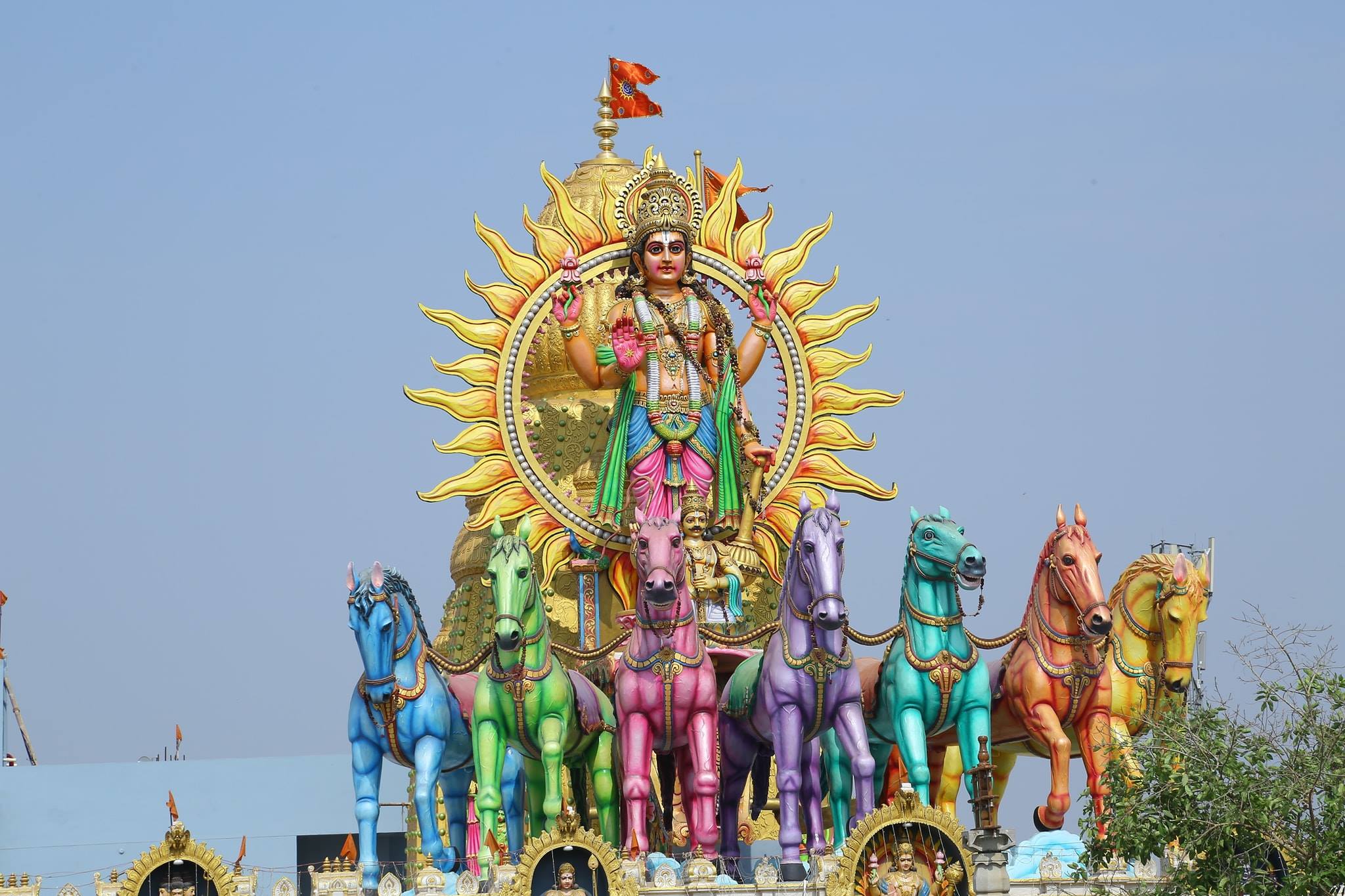
The Sun is worshipped as the visible source of life.
-
Represents energy, time, and consciousness
-
Pongal food is cooked in sunlight
-
Prayers are offered facing the rising Sun
This practice connects the household with universal forces.
Symbolism of Pongal Ingredients
| Ingredient | Meaning |
|---|---|
| Rice | Harvest and sustenance |
| Milk | Nourishment and purity |
| Jaggery | Natural sweetness and prosperity |
| Ghee | Refinement and auspiciousness |
| Spices | Transformation of the ordinary |
Cooking Pongal mirrors inner transformation through discipline and intention.
Traditional Pongal Foods
Pongal isn’t complete without the right food. The main dish is also called Pongal, and there are two versions:
Sweet Pongal (Sakkarai Pongal): Made with rice, moong dal, jaggery, milk, ghee, cashews, and raisins. It’s rich, sweet, and absolutely delicious.
Savory Pongal (Ven Pongal): Made with rice, moong dal, black pepper, cumin, ginger, curry leaves, and lots of ghee. We eat this with coconut chutney and sambar.
Vadai (fried lentil fritters), payasam (sweet pudding), and various vegetable curries. Everything is made fresh, using seasonal produce.
The meal is served on fresh banana leaves, which is traditional and eco-friendly.
How Pongal Connects to Other Indian Festivals
Pongal is part of a bigger pattern of harvest festivals across India that all happen around the same time:
- Makar Sankranti in North India
- Lohri in Punjab
- Bihu in Assam
- Uttarayan in Gujarat
- Suggi in Karnataka
- Sankranti in Andhra Pradesh and Telangana
Each region has its own way of celebrating, but the core idea is the same—marking the harvest, honoring the sun, and giving thanks.
Global Celebrations
Wherever Tamil people have migrated, we’ve taken Pongal with us. In Sri Lanka, Malaysia, Singapore, the UK, Canada, the US, and Australia, Tamil communities gather to celebrate.
These celebrations might happen in community halls or temples instead of open fields, but we still cook the Pongal in pots, we still wait for it to overflow, we still say our prayers to the Sun. It’s how we stay connected to our roots and pass our culture to our children who may have never seen a rice paddy.
What Pongal Teaches Us
At its heart, Pongal is about gratitude and interconnection. It reminds us that:
- We depend on forces bigger than ourselves (the sun, the seasons, the soil)
- Animals are not just resources but partners in life
- Prosperity should overflow and be shared with others
- Renewal requires letting go of what no longer serves us
- Community matters more than individual achievement
In a world that moves so fast and where we’re so disconnected from where our food comes from, Pongal brings us back to basics. It’s a pause, a breath, a moment to remember what actually sustains life.
When Is Pongal Celebrated?
This festival typically falls on January 14-17 each year, though exact dates can vary slightly. It also aligns with the Tamil month of Thai and the astronomical event of Uttarayana, making it one of the few Indian festivals with fixed dates.
The Essence
If someone asks what Pongal is really about, here’s what we’d say: It’s about remembering that we’re part of something larger. The food on our plate didn’t just appear – it came from soil, sun, water, seeds, and the hard work of farmers and their animals.
Pongal is when we acknowledge that chain of connection. When we say thank you – not just with words, but by cooking, celebrating, sharing, and gathering together.
That’s why Pongal endures. Not because of grand temples or elaborate rituals, but because it speaks to something fundamental in human life: the need to recognize what we’ve received and to celebrate it with gratitude.
For Tamils, Pongal isn’t just a festival. It’s a worldview – one that says abundance should overflow, gratitude comes first, and life is meant to be shared.
Help Us Keep This Guide Accurate
At Temple Connect, we regularly update our content to ensure you receive the most relevant and authentic information. If you’d like to suggest improvements, share regional traditions, or report any updates, we’d love to hear from you at connect@templeconnect.com
Pongalo Pongal!