Shakambhari Purnima vs Other Purnimas
Every Purnima (full moon day) in the Hindu calendar carries distinct spiritual, cultural, or social significance. Some honor deities, some mark great teachers, others celebrate community bonds or seasonal transitions. Yet Shakambhari Purnima, observed in the month of Pausha (January), stands distinctly apart from all other Purnima observances.
While most Purnimas focus on devotion, fasting, vows, or celebration, Shakambhari Purnima centers on something far more elemental: nourishment, vegetation, and collective survival. This article explores how Shakambhari Purnima differs from the eleven other Purnimas in the Hindu calendar and why it holds unique spiritual and ecological significance.
Complete List of Purnimas in the Hindu Calendar
To understand what makes Shakambhari Purnima unique, let’s first examine how each of the twelve Purnimas is traditionally observed throughout the year:
1. Chaitra Purnima (March-April)
Primary Observance: Hanuman Jayanti
Theme: Devotion, strength, and bhakti
Deity Associated: Bhagawan Hanuman
Focus: Celebrating divine devotion and service
2. Vaishakha Purnima (April-May)
Primary Observance: Buddha Purnima (Vesak)
Theme: Enlightenment and compassion
Deity Associated: Gautama Buddha
Focus: Commemorating Buddha’s birth, enlightenment, and Mahaparinirvana
3. Jyeshtha Purnima (May-June)
Primary Observance: Vat Purnima (Vat Savitri Vrat)
Theme: Marital devotion and longevity
Focus: Married women fast and pray for their husbands’ long life
4. Ashadha Purnima (June-July)
Primary Observance: Guru Purnima (Vyasa Purnima)
Theme: Reverence for teachers and spiritual lineage
Deity Associated: Sage Vyasa
Focus: Honoring gurus, teachers, and knowledge transmission
5. Shravana Purnima (July-August)
Multiple Observances:
- Raksha Bandhan – celebrating sibling bonds
- Upakarma – Vedic thread-changing ceremony
- Narali Purnima – coastal communities’ sea worship
- Gamha Purnima, Kajari Purnima – agrarian and folk traditions
Theme: Social bonds, Vedic renewal, and regional festivals
6. Bhadrapada Purnima (August-September)
Multiple Observances:
- Shraddha Purnima (Pitru Paksha begins) – ancestral remembrance
- Uma Maheshvara Vrat – divine union of Shiva-Parvati
- Madhu Purnima – harmony and sharing (Buddhist tradition)
Theme: Ancestral reverence and divine union
7. Ashvin Purnima (September-October)
Primary Observance: Sharad Purnima (Kojagari Purnima)
Theme: Prosperity, abundance, and divine nectar
Deity Associated: Goddess Lakshmi
Focus: Celebrating harvest abundance, prosperity, and the cooling moon’s nectar
8. Kartika Purnima (October-November)
Multiple Observances:
- Tripuri Purnima – victory of light over darkness
- Kartika Deepam – sacred lamp lighting
- Guru Nanak Jayanti – birth of Guru Nanak (Sikh tradition)
- Dev Deepawali – divine Diwali in Varanasi
Theme: Illumination, victory, and sacred light
9. Margashirsha Purnima (November-December)
Primary Observance: Datta Jayanti (Dattatreya Jayanti)
Theme: Worship of the trinity embodied
Deity Associated: Lord Dattatreya (Brahma-Vishnu-Shiva combined)
Focus: Honoring the guru principle and divine trinity
10. Pausha Purnima (December-January)
Primary Observance: Shakambari Jayanti or Shakambhari Purnima
Theme: Nourishment, vegetation, and food security
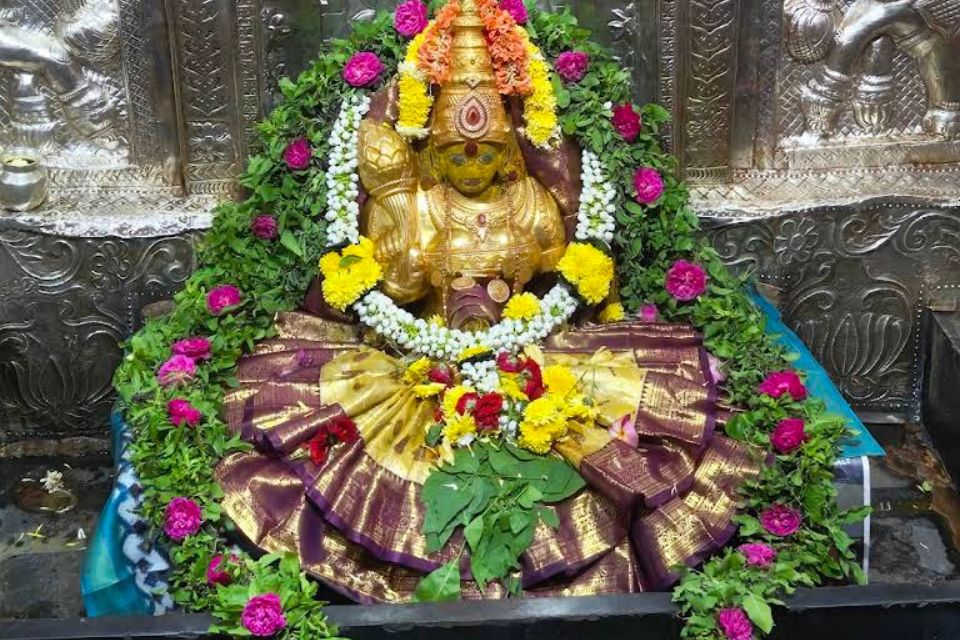
Deity Associated: Goddess Shakambhari
Focus: Celebrating the divine source of all plant-based nourishment and practicing Annadaan (feeding others)
11. Magha Purnima (January-February)
Primary Observance: Magha Mela
Theme: Pilgrimage, charity, and sacred bathing
Focus: Bathing at sacred river confluences (especially Triveni Sangam at Prayagraj) and charitable giving
12. Phalguna Purnima (February-March)
Multiple Observances:
- Holi – festival of colors and social renewal
- Dola Jatra – festive devotion (especially in Odisha and Bengal)
Theme: Social renewal, playfulness, and spring celebration
What This Comparison Reveals
Across the Hindu calendar, Purnimas largely celebrate:
Devotion and bhakti (Hanuman Jayanti, Guru Purnima)
Knowledge and enlightenment (Buddha Purnima, Vyasa Purnima)
Social bonds and vows (Raksha Bandhan, Vat Purnima)
Light, prosperity, and renewal (Kartika Purnima, Sharad Purnima)
Ancestral reverence (Shraddha Purnima)
Shakambhari Purnima alone celebrates survival itself.
6 Key Differences : Shakambhari Purnima vs Other Purnimas
Difference 1: Deity as Nourisher, Not Just Symbol
Most Purnimas honor:
- Teachers and sages (Guru Purnima)
- Divine incarnations (Hanuman Jayanti, Datta Jayanti)
- Cosmic principles (Lakshmi on Sharad Purnima)
- Enlightenment (Buddha Purnima)
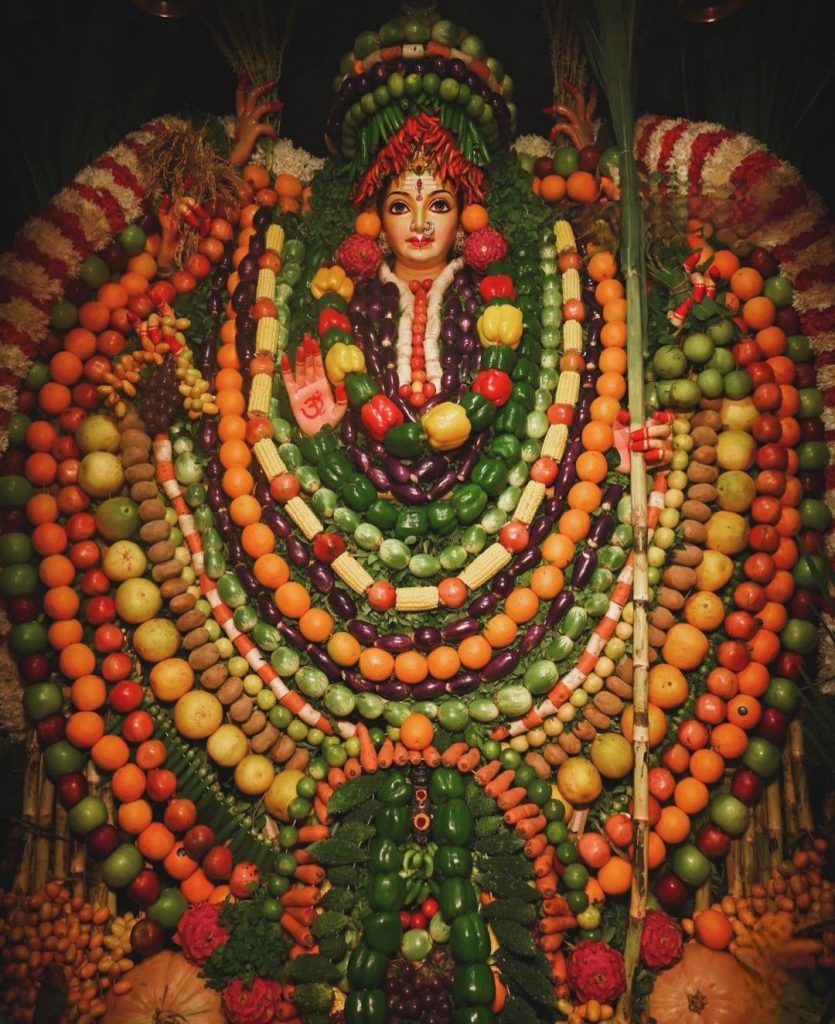
Shakambhari Purnima honors the Goddess as Bhumi-Shakti – Earth as nurturing mother. Not just Durga the warrior, but Durga the sustainer and provider.
Her iconography reflects this dual role:
- Weapons for protection from evil
- Sheaves of greens and crops for provision and nourishment
Divinity here is measured not by conquest alone, but by the ability to nourish life.
This positions Goddess Shakambhari as uniquely practical among Hindu deities – she addresses the most fundamental need: food.
Difference 2: Food IS the Central Offering, Not an Accompaniment
On most Purnimas: Food accompanies ritual as prasad or bhog after prayers
On Shakambhari Purnima: Food itself IS the ritual
Shakambhari Bhog (Offerings):
The offerings are not elaborate sweets or rich foods, but simple, seasonal vegetables:
Bottle gourd (lauki), ridge gourd (turai)
Leafy greens (saag), fresh herbs
Root vegetables (shak)
Simple, seasonal vegetables without onion or garlic
The no onion-no garlic rule preserves sattvic (pure) quality, honoring the Goddess’s connection to medicinal herbs and pure vegetation.
Many temples prepare Annakoot Shakambhari – a layered arrangement of 56 or 108 different vegetable preparations, symbolizing the Goddess’s countless hands feeding the world.
This is unprecedented: No other Purnima makes vegetables the primary offering instead of fruits, sweets, or grains.
Difference 3: Annadaan Over Austerity
Most Purnimas emphasize:
- 🙏 Fasting and personal vows
- 🕉️ Ritual restraint and self-discipline
- 📿 Individual spiritual practice
Shakambhari Purnima prioritizes:
- 🍛 Feeding others (Annadaan)
- 🤝 Community nourishment
- 💚 Collective well-being
The Annadaan Tradition:
In temple towns like Saharanpur (Uttar Pradesh) and Badami (Karnataka), lakhs of people receive free meals on Shakambhari Purnima. In homes across India, neighbors and those in need are invited to share food.
This mirrors the legend itself: The Goddess first ends hunger. Everything else comes later.
No other Purnima institutionalizes mass feeding as the primary religious practice. While charity occurs on other Purnimas, on Shakambhari Purnima, feeding others IS worship, not accompanying it.
Difference 4: Rooted in Agriculture and Ecology, Not Just Astronomy
Most Purnimas follow the lunar cycle for timing but aren’t directly connected to agricultural seasons or ecological rhythms.
Shakambhari Purnima follows both the moon AND the field:
Agricultural Significance:
📅 Pausha month marks the end of winter harvest season
🌾 Stored grains are secured for the year
🌱 First winter greens emerge and are offered in gratitude
🙏 Agricultural communities give thanks for food security
Shakambhari Purnima is one of the few Purnimas where ecology is worship, not metaphor. The festival creates a direct spiritual connection between environmental stewardship and devotional practice.
Difference 5: A Purnima That Completes a Unique Navratri
Most Navratris (Chaitra, Sharad) follow the standard pattern:
- Begin on Pratipada (1st day of bright fortnight)
- End on Navami (9th day)
Shakambari Navratri is structurally unique:
- Begins on Ashtami (8th day of bright fortnight)
- Continues for nine days
- Ends on Purnima (full moon day)
Symbolism of the Nine Days:
Days 1-4: Representing the drought, divine compassion, and beginning of rain
Days 5-8: Crop emergence and vegetation sprouting
Purnima (Day 9): Complete fullness and total abundance
This Navratri-Purnima fusion is extremely rare and deeply intentional. Completion is celebrated not with victory over a demon (as in Vijayadashami), but with the fullness of nourishment and life restored.
The progression from Ashtami (incompleteness) to Purnima (completeness) mirrors the Goddess’s journey from drought-stricken earth to full abundance.
Difference 6: Compassion Before Power – A Unique Divine Sequence
In most Hindu divine narratives:
- Evil threatens the world
- Deity manifests
- Demon is defeated
- Order is restored
In Shakambhari’s story, the sequence is reversed:
- Evil threatens the world (Durgamasur steals Vedas)
- Goddess Shakambhari manifests
- She removes hunger and restores life FIRST
- She provides rain and food for 9 days
- Only THEN does she defeat the demon
This reflects a profound dharmic principle echoed in yogic texts:
Ahara (food) sustains prana (life force).
Without nourishment, no dharma can stand.
Without survival, there is no spirituality.
This “nourishment before conquest” approach is unique to Goddess Shakambhari among all major Hindu deities. It positions compassionate action as preceding and enabling righteous action.
Final Note
Among the twelve Purnimas that mark the Hindu calendar year, Shakambhari Purnima stands alone in its fundamental focus on the elements that sustain life itself – food, vegetation, rain, and the act of feeding others.
While other Purnimas elevate consciousness, strengthen bonds, honor teachers, or celebrate prosperity, Shakambhari Purnima grounds spirituality in the most basic human need: nourishment.
This is not a diminishment of its spiritual significance but rather an affirmation of Hindu philosophy’s profound understanding: that survival and sustenance are themselves sacred, that feeding others is the highest form of worship, and that the divine power that nourishes is as worthy of reverence as the divine power that conquers.
In our modern world facing food insecurity, environmental degradation, and agricultural challenges, Shakambhari Purnima’s message may be more relevant than any other Purnima observance.
Read More:
For complete information on Shakambhari Purnima – including the full legend, detailed rituals, temple traditions, and how to observe this festival – visit our comprehensive Shakambhari Purnima Guide.