Sri Rama Navami: The Divine Appearance of Maryada Purushottama
Sri Rama Navami is one of the most sacred festivals in the Hindu calendar, celebrated to mark the birth of Sri Rama, the seventh avatar of Bhagavan Vishnu. Observed on the Navami tithi of Shukla Paksha in the month of Chaitra, this festival commemorates the descent of Dharma itself in human form. Sri Rama, revered as Maryada Purushottama, stands as the supreme ideal of righteousness, devotion, and noble conduct for all of humanity.
Sri Rama Navami marks the auspicious birth of Bhagavan Vishnu’s seventh avatar, Sri Rama, the very embodiment of Dharma who descended to restore cosmic order and destroy the forces of Adharma. Celebrated across the entire country and beyond, this day calls every devotee to reflect on Rama Nama, the Taraka Mantra that carries the essence of all Vedas and Puranas.
What is Sri Rama Navami
The name Rama Navami carries profound meaning within itself. The word Navami refers to the ninth lunar day, and this festival falls specifically on the Navami tithi of Chaitra Shukla Paksha. Sri Rama was born at this precise cosmic moment, and so the tithi itself became eternally sacred.
The name Rama holds extraordinary significance in the Sanskrit tradition. The word is explained through the phrase Ramanthe Sarve Janaah Gunaih Asmin, meaning the one in whose virtues all beings find delight. Yogis meditate on this name to revel in the bliss of Brahman. The Vishnu Sahasranama includes Rama as one of the divine names of Bhagavan Vishnu, placing it at the very heart of Vaishnava worship.
Sri Rama Navami also marks the conclusion of Chaitra Navaratri, the nine-day spring festival also known as Vasantha Navaratri or Rama Navaratri. In several parts of North India, these nine days are observed with continuous puja and Homa, culminating in the celebration of Sri Rama’s birth on the final day. The festival is known by the name Shri Ramanavami Kalyanam Utsava in Telangana, and as Kalyanotsavam in Tamil Nadu and South India, where the sacred wedding of Sri Rama and Goddess Sita is also commemorated.
Sri Rama was born in the Suryavansha lineage, in the line of Ikshvaku, Raghu, and Bhagiratha. He was the eldest son of Maharaja Dasharatha and his principal queen, Kausalya Devi. His three brothers, Bharatha, Lakshmana, and Shatrughna, are described in the Vedic tradition as personifications of the four Vedas incarnating together in Treta Yuga to establish the principles of Dharmic living. This is why the festival carries weight not just as a birth anniversary, but as a cosmic event of the highest order.
Tithi and Timing of Sri Rama Navami
Sri Rama Navami falls on the Navami tithi, the ninth day, of Shukla Paksha in the lunar month of Chaitra. Chaitra is the first month of the Hindu lunar calendar, corresponding to the period of March and April in the Gregorian calendar. The festival arrives during the season of Vasantha, or spring, a time considered highly auspicious for spiritual practice.
Astrologically, Sri Rama was born under the Punarvasu nakshatra, fourth charana, in Karkataka Rashi, with Karkataka Lagna rising. The texts mention that at the time of his birth, five planets including Surya, Mangala, Guru, Shukra, and Shani were in exalted positions, creating a rare and exceptionally powerful astrological configuration.
The most auspicious time for puja on Rama Navami is the madhyahna muhurta, the midday period. Sri Rama is specifically described as having been born at noon, and this timing is considered the peak moment for performing abhisheka, archana, and sankalpa on this day. Temples traditionally time the main utsava to coincide with this noon muhurta.
Astrological Significance of Sri Rama Navami
From a Vedic astrology perspective, Sri Rama Navami carries remarkable astrological potency. The day falls during Chaitra Shukla Paksha when Surya, the presiding deity of Rama’s lineage, is in an ascending position. Sri Rama himself belongs to Surya Vamsa, and Surya Deva is considered the Paramatma amsha of the Rama avatar. Worshipping Sri Rama on this day strengthens the Sun in a devotee’s horoscope, bringing clarity, leadership, confidence, and alignment with Dharma.
The Shukla Paksha Navami tithi is associated with the waxing of both lunar and solar energies. Beneficial planetary yogas involving Mangala for courage, Guru for wisdom and righteousness, and Chandra for compassion and emotional strength are said to converge on this day. These energies together create a natural protective shield against negativity and karmic imbalance.
For those with weak Surya in their Janma Kundali, observing this vrat and reciting the Aditya Hridaya Stotra on Rama Navami is considered one of the most effective remedies. The day is also considered powerful for removing the effects of Navagraha Dosha. Performing puja sincerely on this day is said to purify past karma, remove obstacles, and bring stability in career, health, and family life.
The Punarvasu nakshatra under which Sri Rama was born carries the qualities of renewal, restoration, and auspicious return. Worshipping on this nakshatra alignment supports devotees seeking recovery from difficulties, new beginnings, and fulfillment of long-pending desires.
Religious Significance of Sri Rama Navami
The religious significance of Sri Rama Navami runs deep across the entire tradition of Sanatana Dharma. Sage Valmiki, when asked by Sage Narada whether any single human being possesses all sixteen virtues, named none other than Sri Rama. The Ramayana itself is not merely a story. It is a confluence of philosophy, history, tradition, religion, and spirituality compressed into one immortal narrative.
In Vaishnava sampradaya, this day is observed as one of the most important vrat days of the year. Sri Rama is understood as Paripoorna Manushya Avatara, the complete human incarnation of Bhagavan Vishnu. His life demonstrates that Dharma can be lived fully even within human limitations, which is why he is called Maryada Purushottama, the supreme upholder of righteous conduct.
In the Shaiva tradition, Sri Rama Navami holds a unique place because Rama Nama is itself described as the family mantra of Shiva. The Phala Stuthi of Sri Vishnu Sahasranama contains the celebrated verse:
Sree Rama Rama Ramethi Rame Raame Manorame Sahasranama Tattulyam Rama Nama Varanane
Bhagavan Shiva tells Devi Parvathi that chanting Rama Nama three times is equivalent to reciting all thousand names of Vishnu. This verse positions Rama Nama beyond sectarian boundaries, making Rama Navami universally sacred.
The Phala Shruti of observing this vrat includes liberation from accumulated sins, relief from suffering, fulfillment of wishes for progeny, prosperity, and ultimately, Moksha. The Sthala Purana of Kashi states that Vishwanatha himself initiates the dying into Rama Nama, the Taraka Mantra, assuring liberation even at the final moment.
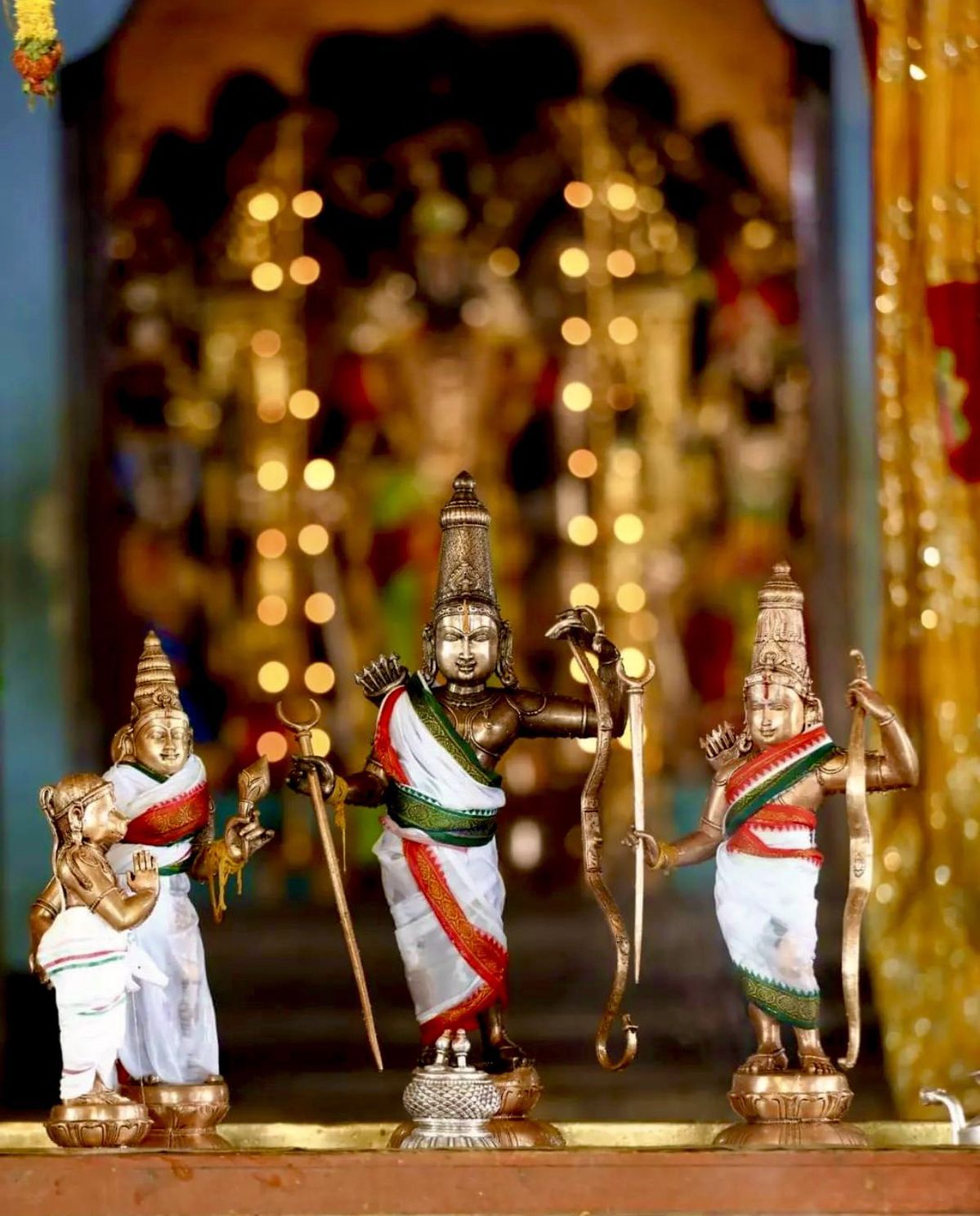
The Form of the Divine Worshipped on Sri Rama Navami
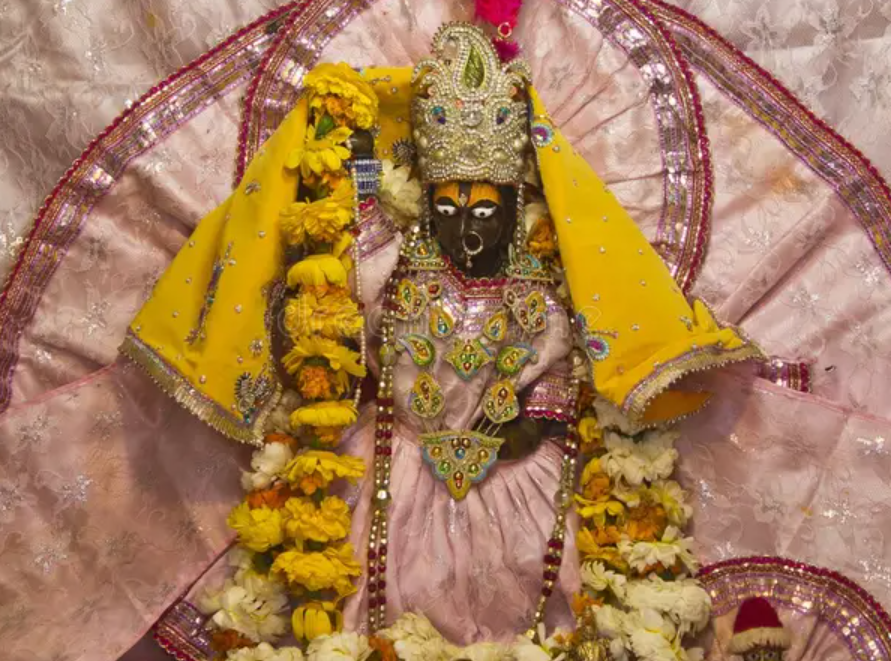
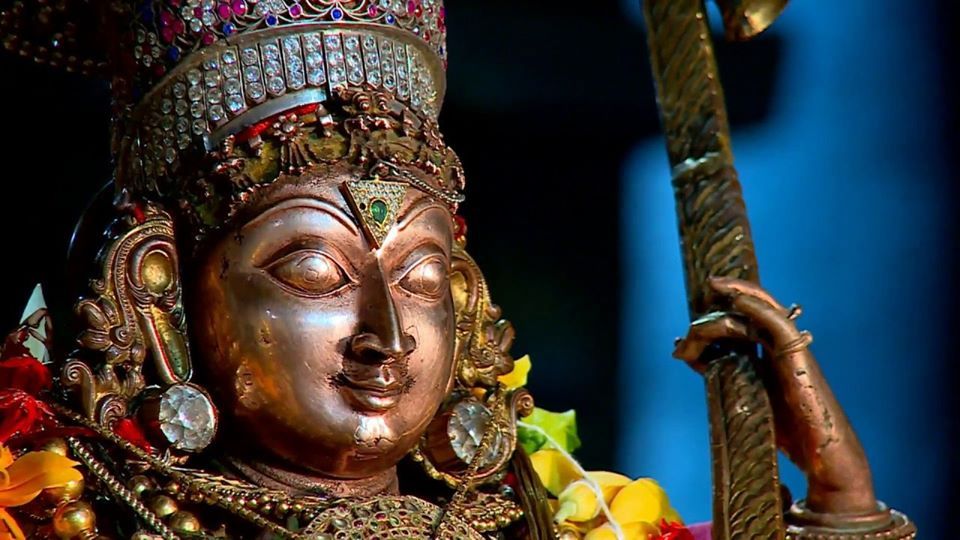
The primary form worshipped on Sri Rama Navami is Bala Rama, the infant or child form of Sri Rama, reflecting the birth celebration aspect of the festival. In this form, Sri Rama is depicted with a dark blue complexion, dressed in yellow pitambara, holding a bow in his hand.
In most temples and homes across North India, Sri Rama is worshipped along with Goddess Sita, Lakshmana, and Bhakta Hanuman as a group known as the Rama Parivar. In South India, the Pancha Parivara worship is observed, including Bharatha and Shatrughna alongside the primary group.
At the famous Bhadrachalam temple in Telangana, Sri Rama is venerated in the unique Chaturbhuja form, holding Sudarshana Chakra and Shankha in the upper arms, bow and arrow in the lower arms, with the lower right hand in abhaya mudra. This form is known as Vaikunta Rama or Rama Narayana, representing Sri Rama in his original Vishnu swarupa.
Scriptural references from the Bala Kanda of Valmiki’s Ramayana describe Sri Rama as dark-complexioned like a rain cloud, with long arms reaching to his knees, known by the epithet Ajanubahu. The Vishnu Sahasranama describes the qualities of this avatar, and multiple Puranas including the Kalika Purana reference Rama Navami as an ancient observance predating the common era.
The Sacred Katha of Sri Rama Navami
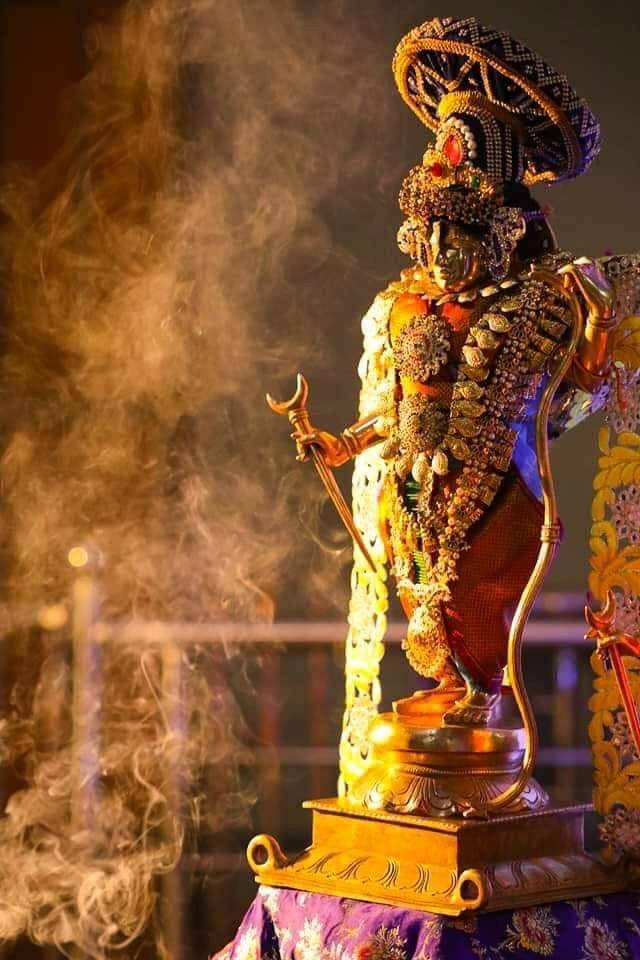
The primary Vrat Katha of Rama Navami is drawn from the Bala Kanda of Valmiki’s Ramayana. Maharaja Dasharatha of Ayodhya, from the Suryavanshi Ikshvaku dynasty, had three queens but remained without an heir despite many years of marriage. Consulting Maharshi Vasishtha, he was advised to perform the Putrakameshti Yajna, a complex fire ritual to be conducted under the guidance of Maharshi Rishyashringa.
At the time of purnahuti, the final offering of the yajna, Devas and sages prayed to Bhagavan Vishnu to incarnate in human form to destroy Ravana, who had obtained a boon making him invincible to gods, demons, yakshas, and gandharvas but not to humans. Vishnu consented, and a divine being emerged from the sacrificial fire carrying a golden vessel filled with payasam, the sacred sweet rice pudding.
Dasharatha distributed the payasam to his queens. Half went to Kausalya, a quarter to Kaikeyi, and the remainder was divided between Sumitra, who received two portions. In time, Kausalya gave birth to Sri Rama, Kaikeyi to Bharatha, and Sumitra to the twins Lakshmana and Shatrughna. Sri Rama was born at noon on Chaitra Shukla Navami, amid celestial celebrations described as flowers raining from the heavens and divine instruments playing across all worlds.
One moving story told in connection with Rama Navami involves the potter woman who encountered Sri Rama in Chitrakoot during his forest exile. She offered food to Sri Rama, Sita, and Lakshmana with whatever she had. Through Rama’s grace, her humble hut was transformed by a miracle. When kings later tried to recreate the blessing by transplanting what had become sacred, only thorns grew. When returned to the devotee, the gifts of grace were restored. This story captures the truth that Rama’s blessings belong to those whose devotion is pure.
The story of Valmiki himself stands as the most celebrated testament to the power of Rama Nama. A notorious bandit was transformed through the continuous chanting of this name, and out of that transformation came the Ramayana, the 24,000-sloka epic that has shaped Hindu civilization for millennia.
Complete Puja Vidhi for Sri Rama Navami
Preparation
On the evening before Rama Navami, clean the puja space thoroughly and place the vigraha or picture of Sri Rama, Sita, Lakshmana, and Hanuman on a clean altar. Gather the following samagri: panchamrit, tulsi, lotus flowers, sandalwood paste, incense, ghee lamp, camphor, fruits, betel nuts, yellow vastram, and dakshina.
Morning Purification
Wake before sunrise. Take bath with cold or lukewarm water, observe cleanliness of body and mind, and wear fresh clothes. If observing vrat, take the sankalpa before beginning puja.
Ritual Steps
- Ganapati Puja: Begin by invoking Ganesha to remove obstacles. Offer flowers and akshatam while chanting Ganapati mantras.
- Sankalpa: Take a formal vow by holding water and flowers in the palms and stating your name, gotra, and the purpose of the puja before releasing the water.
- Dhyana: Meditate on Sri Rama with the dhyana shloka: Komalaksham Vishalakshamindranila Samaprabham. Visualize the dark blue form of Sri Rama with Sita, Lakshmana, and Hanuman.
- Avahana: Invoke Sri Rama’s presence into the vigraha using Purusha Sukta verses and the mantra Sri Ramachandraya Namah.
- Padya, Arghya, Achamana: Offer water for washing the feet, the head, and for sipping, while reciting the appropriate mantras.
- Abhisheka: Perform a ceremonial bath with water followed by panchamrit, bathing the vigraha with milk, curd, ghee, honey, and sugar in sequence. Complete with water and wipe gently.
- Vastra and Yajnopavita: Dress Sri Rama in yellow silk or pitambar and offer the sacred thread. Offer gandha, sandalwood paste, to the forehead.
- Pushpa Puja: Offer flowers, especially tulsi, which is most dear to Sri Rama. Perform anga puja: Om Shri Ramachandraya Namah, Padau Pujayami for the feet, through to Sarvangani Pujayami for the complete form.
- Dhupa, Deepa: Wave incense in a clockwise direction while chanting. Light the ghee lamp and perform deepa darshana.
- Naivedya: Offer sattvic food such as kheer, panakam, kosambari, and fresh fruits. In South Indian tradition, panakam made from jaggery, cardamom, pepper, and lemon is a primary offering.
- Madhyahna Puja: Perform special puja at noon, the exact muhurta of Sri Rama’s birth, with full archana and abhisheka if possible.
- Aarti: Perform aarti with Rama Aarti bhajan while ringing the bell. Wave camphor flame during the nirajana.
- Pushpanjali: Offer handfuls of flower petals while chanting Sri Rama Rama Rameti.
- Pradakshina and Kshama Prarthana: Circumambulate the altar three times and conclude with a prayer seeking forgiveness for any mistakes in the puja.
- Prasad Distribution: Distribute prasad of kheer, panakam, fruits, and tulsi leaves to all present.
Vrat Observance on Sri Rama Navami
Sri Rama Navami vrat is observed from sunrise. There are three primary forms of fasting observed by devotees.
Nirjala vrat is the strictest form, observed without water throughout the day. This is common among Vaishnava and ISKCON devotees for whom this is one of the primary fasting days of the year. Phalahara vrat involves consuming only fruits, milk, and water during the day, avoiding all grains and salt. Partial fasting, meaning one meal of sattvic food without grains, is acceptable for those who cannot manage stricter observance due to health reasons.
The sankalpa for this vrat is taken in the morning: Om Adya Chaitra Shukla Navamyam Sri Ramachandraya Pujam Karishye, followed by a personal vow stating one’s intention.
During the day, devotees recite the Ram Taraka Mantra, ideally 21,000 times. Reciting the Rama Raksha Stotra, Sundara Kanda, or Nama Ramayanam throughout the day is considered highly meritorious. Listening to or narrating the Ramayana is also part of the traditional observance.
The vrat is broken in the evening after aarti, with prasad of kheer, panakam, and fruits. Some traditions observe parana on the following morning after sunrise.
Elderly persons, those who are unwell, pregnant women, and young children are exempt from strict fasting. They may observe the day through puja, recitation of Rama Nama, and sattvic diet.
The astrological benefit of observing this vrat is the strengthening of Surya in one’s chart, removal of Navagraha Dosha, and purification of accumulated karma across multiple lifetimes.
Where Sri Rama Navami is Celebrated
North India
Ayodhya, the birthplace of Sri Rama, hosts the most significant celebrations. Devotees take a holy dip in the sacred Sarayu river before visiting the Kanak Bhawan and the Sri Rama Janmabhoomi temple. Grand ratha yatras are conducted with processions of Sri Rama, Sita, Lakshmana, and Hanuman through the city. At the Ram Mandir in Ayodhya, the Surya Tilak tradition channels sunlight to illuminate the vigraha of Sri Rama at the exact noon muhurta.
Ayodhya during Rama Navami is described as the equivalent of what Mathura is during Krishna Janmashtami. The entire city vibrates with Rama Nama keertana, Ramayana recitation, and public celebrations.
In Varanasi, the significance of Rama Nama is inseparable from the Sthala Purana itself. Bhajans, Ramlila dramas, and community Ramayana paths are conducted across the city.
South India
Bhadrachalam in Telangana, known as Dakshina Ayodhya and Sri Vaikunta Rama Kshetra, is the epicenter of Rama Navami celebrations in South India. The famous Seeta Rama Kalyanam is conducted every year on this day with elaborate rituals, attended by lakhs of devotees from across the country. The Andhra Pradesh and Telangana governments make special arrangements for this event. River processions on the sacred Godavari are also part of the celebration.
A unique tradition at Bhadrachalam is the Pushkara Pattabhishekam, the coronation ceremony of Sri Rama performed once in twelve years, reflecting the belief that three major events in Sri Rama’s life, his birth, his marriage, and his coronation, all took place on Chaitra Shukla Navami.
Tirumala Tirupati Devasthanams observes Sri Rama Navami Asthanam with special rituals, reflecting Sri Rama’s connection to the Venkateswara tradition, where the very first verse of Sri Venkatesha Suprabhatham addresses the presiding deity as Kausalya Supraja Rama.
In Tamil Nadu, Kalyanotsavam is the central celebration, where the symbolic wedding of Sri Rama and Goddess Sita is performed and the deities are taken through the streets in a ceremonial procession. Panakam is prepared and distributed as prasad to all devotees gathered at the temple.
West India
Nashik’s Kalaram Temple is one of the most prominent sites for Rama Navami in Maharashtra. The black stone vigraha here receives a grand abhisheka and the celebrations include processions and Ramayana recitations. Chitrakoot, associated with Sri Rama’s forest exile, draws pilgrims for sacred dips at Ramghat and temple observances at the Bharat Milap Temple.
East India
In Odisha, Rama Navami preparations connect with the broader spring festival traditions tied to Jagannath worship. Bengal and Odisha observe the day with bhajans, kathas, and puja conducted in homes and temples.
Hindu Diaspora
ISKCON temples worldwide observe Rama Navami with special importance, organizing Abhishekam, Homa, processions, and Ramayana recitations. For the global Hindu community, the day is marked with cultural programs, devotional music, and group recitation of Rama Nama, reinforcing the festival’s position as a unifying celebration of Dharma across all borders.
Traditional Remedies and Charity on Sri Rama Navami
Astrological Remedies
For those seeking to strengthen Surya in their Janma Kundali, reciting the Aditya Hridaya Stotra on Rama Navami morning while facing east is highly recommended. Offering Arghya to the Sun while reciting Surya mantras is a traditional remedy for obstacles related to career and confidence.
Reciting Rama Nama continuously, even a minimum of 108 times as Japa, or undertaking Rama Koti, the sacred vow to write Rama Nama one crore times over a lifetime, is believed to bring progeny, success in education, harmony in marriage, relief from poverty, Navagraha Dosha removal, and fulfillment of sincere desires.
Charity and Dana
Anna Dana, the distribution of food, is considered one of the most meritorious acts on this day. Feeding Brahmins, the poor, and the hungry in the name of Sri Rama is a practice going back to the tradition of Maharaja Dasharatha himself, who distributed gifts to sages following the Putrakameshti Yajna. Cow feeding, temple seva, and offering of fruits and panakam at temples are all acts of dana that carry special weight on this day.
Dos and Don’ts
Observe cleanliness of body, mind, and speech throughout the day. Avoid consuming meat, alcohol, tobacco, and non-sattvic food. Refrain from harsh speech, conflict, and unnecessary worldly activities. Spend the day in Satsanga, Ramayana recitation, and Rama Nama Japa.
Frequently Asked Questions About Sri Rama Navami
What is Sri Rama Navami? Sri Rama Navami is a Hindu festival that marks the birth of Sri Rama, the seventh avatar of Bhagavan Vishnu. It falls on the Navami tithi of Chaitra Shukla Paksha and is one of the most widely observed festivals in the Hindu calendar.
Why is Sri Rama Navami celebrated? It is celebrated to commemorate the divine birth of Sri Rama, who descended to restore Dharma, defeat the forces of Adharma led by Ravana, and establish Rama Rajya as a model of righteous governance. Three major events in Sri Rama’s life, birth, marriage, and coronation, are all said to have occurred on this tithi.
Which deity is worshipped on Sri Rama Navami? Sri Rama is the primary deity, typically worshipped alongside Goddess Sita, Lakshmana, Bharatha, Shatrughna, and Bhakta Hanuman. Some traditions also worship Kausalya Devi and Maharaja Dasharatha on this day.
What is the religious importance of Rama Navami? Sri Rama is described as Dharma incarnate. The Ramayana teaches humanity the value of truth, selfless love, and adherence to one’s Dharma under all circumstances. Observing Rama Navami renews one’s commitment to these values and invokes divine grace for both spiritual and material well-being.
What is the astrological significance of Rama Navami? Sri Rama was born with five planets in exalted positions under the Punarvasu nakshatra in Karkataka Rashi. The day is associated with Surya’s divine energy and is especially powerful for strengthening Surya in one’s horoscope, removing Navagraha Dosha, and purifying karma.
What fasting rules apply to Rama Navami? Devotees may observe nirjala vrat, phalahara vrat, or partial fasting depending on their capacity. The fast begins at sunrise and is broken after evening aarti with prasad of kheer and panakam. Elderly, unwell, and pregnant devotees may observe the day through puja and recitation without strict fasting.
What is the puja procedure for Rama Navami? The puja follows the Shodashopachara method with sankalpa, dhyana, avahana, abhisheka, vastra, pushpa puja, dhupa, deepa, naivedya, aarti, pushpanjali, pradakshina, and prasad distribution. The madhyahna puja at noon is the most auspicious time, corresponding to the exact hour of Sri Rama’s birth.
What is the significance of Rama Nama? Rama Nama is the Taraka Mantra, the one name that helps the soul cross the ocean of Samsara and attain liberation. It contains the essence of Narayana Ashtakshari and Shiva Panchakshari. Bhagavan Shiva himself is said to meditate continuously on this name and to initiate the dying in Kashi with Rama Nama.
What is celebrated at Bhadrachalam on Rama Navami? The Seeta Rama Kalyanam, the ceremonial wedding of Sri Rama and Goddess Sita, is conducted at Bhadrachalam every year on Rama Navami with grand arrangements. The temple is known as Dakshina Ayodhya and Sri Vaikunta Rama Kshetra. Sri Rama here appears in the rare Chaturbhuja form as Vaikunta Rama.
What is Panakam and why is it offered on Rama Navami? Panakam is a sacred drink made from jaggery, cardamom, pepper, and lemon juice. It is the traditional naivedya offered to Sri Rama on this day, particularly in South Indian temples. It is then distributed to devotees as prasad and is considered a natural cooling drink suitable for the spring season.
What is Kalyanotsavam? Kalyanotsavam is the ceremonial wedding celebration of Sri Rama and Goddess Sita conducted in temples on Rama Navami. It is widely observed in South India and reflects the tradition that this day also marks the marriage of Sri Rama and Sita.
What is the significance of Surya Tilak at Ayodhya on Rama Navami? At the Ram Mandir in Ayodhya, a specially designed optical system channels sunlight to fall on the forehead of the Sri Rama vigraha at the precise noon muhurta on Rama Navami. This Surya Tilak ritual reflects the deep connection between Sri Rama and the Surya Vamsha lineage.
Can non-Vaishnavas observe Rama Navami? Sri Rama Navami belongs to all of Sanatana Dharma. Bhagavan Shiva himself reveres Rama Nama, and the Taraka Mantra is chanted across all sampradayas. The festival transcends sectarian lines and is observed by devotees of all traditions.
What is Rama Koti? Rama Koti is the sacred vow to write Rama Nama one crore times during one’s lifetime. This practice is considered a powerful sadhana that purifies accumulated karma and brings blessings of progeny, prosperity, health, and spiritual progress.
What does Maryada Purushottama mean? Maryada Purushottama is one of Sri Rama’s most revered epithets, meaning the supreme being who upholds the highest standards of righteous conduct. It reflects Sri Rama’s perfect adherence to truth, duty, compassion, and Dharma in every circumstance of his life.
Conclusion
Sri Rama Navami stands as one of the most profound spiritual occasions in the Hindu tradition, celebrating not just the birth of an avatar but the very descent of Dharma into the world. Sri Rama did not come merely to defeat one king. He came to demonstrate how a human life, lived with full devotion to truth and duty, can itself become a temple of the divine.
The observance of this vrat through sincere fasting, puja, recitation of Ramayana, and Rama Nama Japa purifies past karma, strengthens Dharmic resolve, and opens the path to liberation. For devotees suffering from obstacles, illness, family discord, or spiritual confusion, Sri Rama Navami offers a day of grace that can reverse the tide.
At the heart of it all is the Taraka Mantra: Rama. Sage Valmiki was liberated through it. Thyagaraja received the darshan of Sri Rama through it. Mahatma Gandhi drew his strength through it. The Sthala Purana of Kashi records that even at the moment of death, Bhagavan Shiva whispers this name into the ear of the departing soul.
On this day of Chaitra Shukla Navami, as the spring sun rises over Ayodhya and the river Godavari witnesses the Seeta Rama Kalyanam at Bhadrachalam, let every devotee take up Rama Nama with fresh sincerity. For as Tulsidas declared, even if the name is uttered reluctantly or without full awareness, it carries the soul from the lowest suffering to the highest liberation.
Sri Rama Jaya Rama Jaya Jaya Rama!
Help Us Keep This Guide Accurate
At Temple Connect, we regularly update our content to ensure you receive the most relevant and authentic information. If you’d like to suggest improvements, share regional traditions, or report any updates, we’d love to hear from you at connect@templeconnect.com
Follow us on our X platform.
Note to Readers: This article is intended for educational and devotional purposes. The information presented is based on traditional Hindu scriptures, contemporary religious practice, and scholarly research.
Individual observance may vary based on family tradition, regional custom, and personal circumstance. For specific guidance, especially regarding complex astrological remedies, please consult qualified priests, pandits, or Vedic astrologers. The health-related aspects mentioned are traditional beliefs and should not replace professional medical advice.