Sri Rama Navami 2026: Date, Timings, Puja Vidhi, Katha, and Complete Observance Guide
Sri Rama Navami 2026 stands as one of the most sacred occasions in the entire Hindu calendar, celebrated each year by millions of devotees who turn their hearts toward Bhagavan Sri Rama, the seventh avatar of Bhagavan Vishnu and the eternal personification of Dharma.
Falling on the Navami tithi of Chaitra Shukla Paksha, this festival commemorates the divine birth of Sri Rama, known across all traditions of Sanatana Dharma as Maryada Purushottama, the supreme upholder of righteous conduct. Sri Rama Navami 2026 carries particular significance as it also marks the conclusion of the nine-day Chaitra Navaratri, drawing devotees into a complete cycle of spring worship that culminates in the birth of Dharma itself in human form.
Sri Rama Navami 2026 Date and Timings
Sri Rama Navami 2026 is observed on Thursday, March 26, 2026. Vaishnava Rama Navami falls on Friday, March 27, 2026. For devotees planning their puja, vrat, and temple visits this year, the precise tithi timings and muhurta details are as follows.
Navami Tithi Begins: 11:48 AM on March 26, 2026
Navami Tithi Ends: 10:06 AM on March 27, 2026
Rama Navami Madhyahna Muhurta on March 26: 11:31 AM to 01:58 PM
Rama Navami Madhyahna Moment on March 26: 12:44 PM
Vaishnava Rama Navami Madhyahna Muhurta on March 27: 11:31 AM to 01:57 PM
Rama Navami Madhyahna Moment on March 27: 12:44 PM
The Madhyahna muhurta, which prevails for six Ghatis, approximately two hours and twenty-four minutes, is the most auspicious period for performing all puja rituals on Sri Rama Navami 2026. The mid-point of this Madhyahna period marks the precise moment when Sri Rama is believed to have taken birth, and temples across the country solemnize this moment with special abhisheka, archana, and birth celebrations.
This midpoint, falling at 12:44 PM on both March 26 and March 27, is the moment toward which all temple utsavas are oriented. At Ayodhya’s Ram Mandir, the Surya Tilak ritual channels sunlight to fall on the vigraha of Sri Rama at this exact moment. Devotees who observe the vrat on Sri Rama Navami 2026 should ensure their madhyahna puja is performed within the window of 11:31 AM to 01:58 PM on March 26.
Those following Vaishnava tradition may observe their primary vrat and puja on March 27, with the same Madhyahna Muhurta window of 11:31 AM to 01:57 PM applicable. Both observances share the same Navami tithi, making both days valid for full devotional observance of Sri Rama Navami 2026.
Significance of Sri Rama Navami
Sri Rama Navami is not simply the celebration of a birth anniversary. It is the day when Dharma itself descended into creation, put on a human form, and demonstrated through every action of his life how truth, compassion, courage, and righteousness can be lived completely without compromise.
Bhagavan Vishnu chose to incarnate as Sri Rama in Treta Yuga, born in the Suryavansha lineage of Ikshvaku, Raghu, and Bhagiratha, as the eldest son of Maharaja Dasharatha and Kausalya Devi at Ayodhya. The three most significant events of Sri Rama’s earthly life, his divine birth, his sacred marriage to Goddess Sita, and his coronation as the king of Ayodhya, are all believed to have occurred on Chaitra Shukla Navami. This triple sanctity makes the tithi unique in the entire Hindu calendar.
Rama Nama, the two-syllable Taraka Mantra, stands at the very center of this observance. Bhagavan Shiva himself calls it his family mantra and tells Devi Parvathi that chanting Rama Nama three times carries the merit of reciting all thousand names of Vishnu. Sage Valmiki was transformed from a bandit into the author of a 24,000-sloka epic through the power of this single name. The Sthala Purana of Kashi records that Vishwanatha initiates every departing soul with this Taraka Mantra, assuring liberation at the final moment.
Observing Sri Rama Navami 2026 with full devotion purifies accumulated karma, brings blessings of progeny and prosperity, removes Navagraha Dosha, and sets the devotee firmly on the path toward Moksha.
Learn detailed puja vidhi here: https://templeconnect.com/sri-rama-navami/
How to Observe Sri Rama Navami 2026
Puja Vidhi Overview
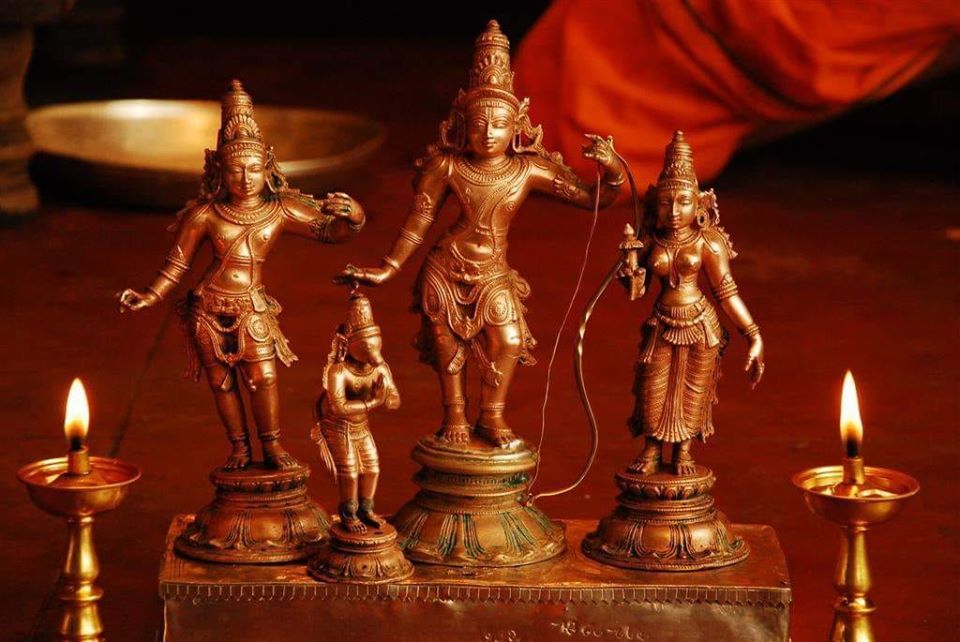
On the morning of March 26, rise before sunrise, take a bath, wear fresh clean clothes, and prepare the puja space with the vigraha or sacred picture of Sri Rama, Goddess Sita, Lakshmana, and Bhakta Hanuman. Gather the following samagri: panchamrit, tulsi leaves, lotus or fresh seasonal flowers, sandalwood paste, incense sticks, ghee lamp, camphor, fruits, betel nuts, yellow vastram, and dakshina.
The puja on Sri Rama Navami 2026 follows the Shodashopachara tradition, the sixteen-step worship. Begin with Ganapati Puja to remove all obstacles. Then proceed through Sankalpa, Dhyana, Avahana, Padya, Arghya, Achamana, Abhisheka, Vastra, Yajnopavita, Gandha, Pushpa Puja, Anga Puja, Dhupa, Deepa, Naivedya, Aarti, Pushpanjali, Pradakshina, and Kshama Prarthana.
The Sankalpa should be taken clearly by holding water and flowers in the joined palms, stating one’s name, gotra, and the intention to perform puja on Sri Rama Navami 2026 in honor of Sri Rama’s divine birth.
The madhyahna puja window of 11:31 AM to 01:58 PM on March 26 is the most sacred period of the entire day. Performing the abhisheka and main archana during this window, especially at the Madhyahna Moment of 12:44 PM, brings the fullest merit of Sri Rama Navami 2026 observance.
Vrat Rules
Three forms of fasting are observed on Sri Rama Navami 2026. Nirjala vrat, the strictest observance, is followed without food or water throughout the day and is particularly common among Vaishnava devotees for whom this is one of the primary fasting days of the year. Phalahara vrat permits fruits, milk, and water while excluding grains and salt entirely. Partial fasting, meaning one sattvic meal free from grains and salt, is acceptable for those with health restrictions. Elderly persons, those who are unwell, pregnant women, and young children are exempt from strict fasting and may observe the day through puja, Ramayana recitation, and Rama Nama Japa.
What to Offer as Bhog
The traditional naivedya for Sri Rama Navami 2026 includes kheer, panakam, kosambari, and fresh seasonal fruits. Panakam is the most distinctive prasad of this festival, a sacred cooling drink prepared from jaggery, cardamom, pepper, and lemon juice. It is offered to Sri Rama and then distributed to all devotees as prasad. Kosambari, prepared from soaked moong dal, is offered alongside in South Indian tradition. Tulsi must be present in all offerings on Sri Rama Navami 2026, as it is especially dear to Bhagavan Vishnu in his Rama swarupa.
Sri Rama Navami Puja Katha for 2026
Listening to or narrating the Sri Rama Navami Vrat Katha is an essential part of the day’s observance, carrying its own distinct merit beyond the puja rituals themselves. The katha is drawn from the Bala Kanda of Valmiki’s Ramayana and tells of how Maharaja Dasharatha, childless despite long years of marriage, performed the Putrakameshti Yajna on the counsel of Maharshi Vasishtha, with the ritual conducted under the guidance of Maharshi Rishyashringa.
From the sacred yajna fire emerged a celestial being carrying a golden vessel filled with payasam. This was distributed among the three queens of Dasharatha, with half going to Kausalya, a quarter to Kaikeyi, and the remainder shared between Sumitra. In time, all four sons were born. Sri Rama appeared to Kausalya Devi at noon on Chaitra Shukla Navami, accompanied by celestial celebrations described as flowers raining from the heavens and divine instruments sounding across all the worlds.
The best time to recite or listen to the katha on Sri Rama Navami 2026 is immediately after the morning puja or during the madhyahna period around the Madhyahna Moment of 12:44 PM. Households may also conduct Sundara Kanda or Bala Kanda Ramayana recitation throughout the day. Chanting Nama Ramayanam and the Rama Raksha Stotra are deeply meritorious additions to the katha observance on this day.
Where Sri Rama Navami 2026 Will Be Celebrated
Ayodhya
Ayodhya is the spiritual center of Sri Rama Navami 2026 celebrations across the country. Hundreds of thousands of devotees will arrive to take a sacred dip in the Sarayu river at sunrise before proceeding to the Ram Mandir and Kanak Bhawan for darshana.
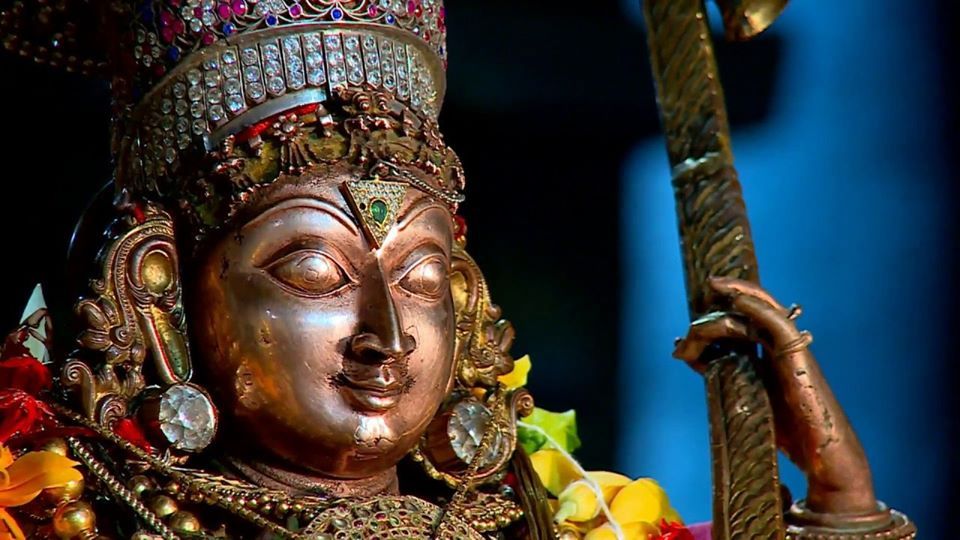
The Surya Tilak ritual at the Ram Mandir, where sunlight is directed through a carefully designed optical arrangement to fall precisely on the forehead of Sri Rama’s vigraha at the Madhyahna Moment of 12:44 PM, is the most evocative moment of the entire festival. Grand ratha yatras carrying Sri Rama, Goddess Sita, Lakshmana, and Hanuman will move through the streets of Ayodhya to the accompaniment of Rama Nama keertana and continuous Ramayana recitation.
Bhadrachalam
Bhadrachalam in Telangana, known as Dakshina Ayodhya and Sri Vaikunta Rama Kshetra, hosts the most celebrated Seeta Rama Kalyanam in India on Sri Rama Navami 2026. This grand ceremonial wedding of Sri Rama and Goddess Sita is attended by lakhs of devotees each year, and the Telangana government along with the temple administration makes elaborate arrangements for the event. Sacred river processions on the Godavari and special utsavas at the temple draw pilgrims from across the country.
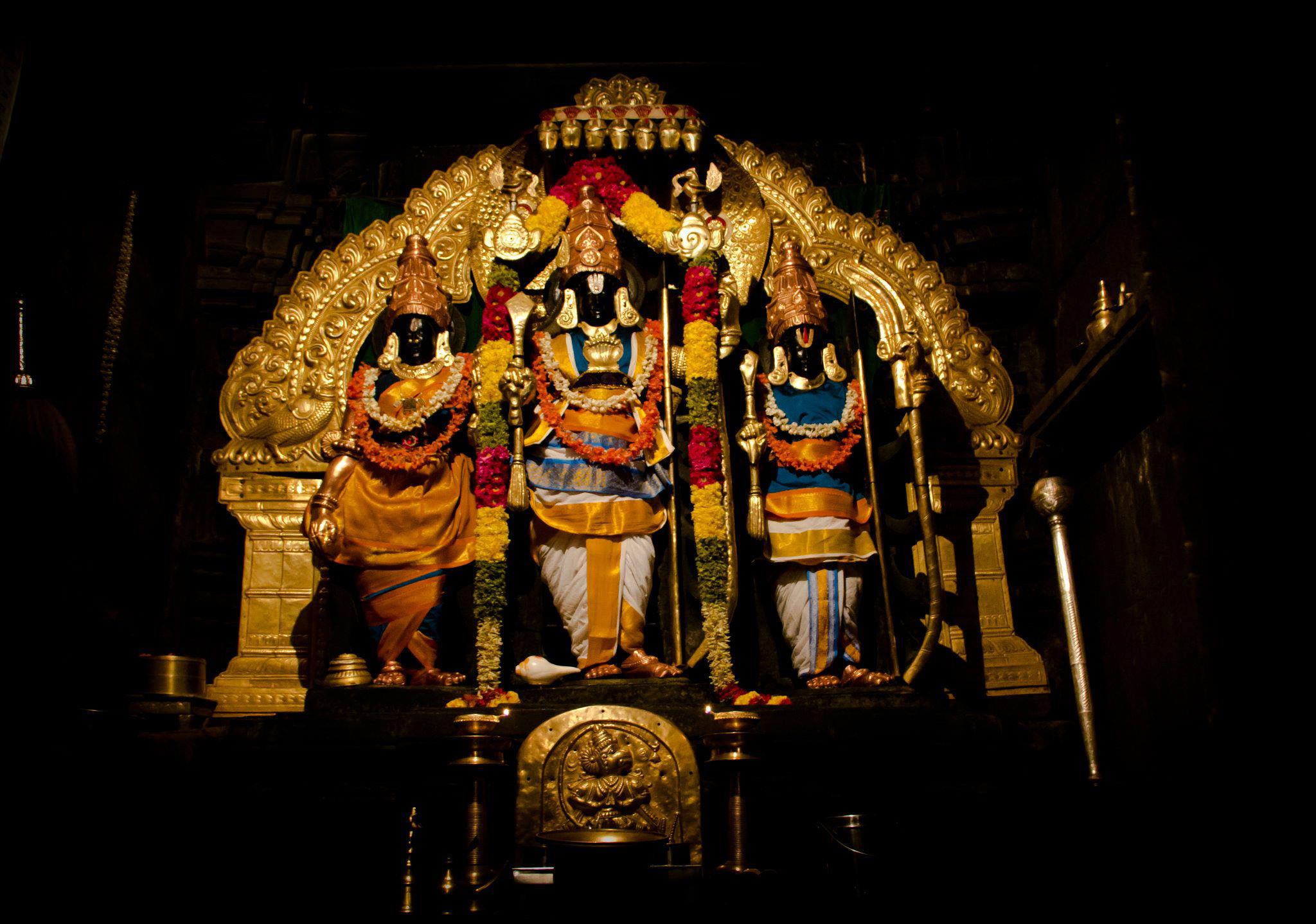
The vigraha here is uniquely in the Chaturbhuja form as Vaikunta Rama, holding Sudarshana Chakra and Shankha in the upper arms and bow and arrow in the lower arms, with the lower right hand in abhaya mudra, a form not commonly found at other Rama temples.
Tirumala and Tamil Nadu
Tirumala Tirupati Devasthanams observes Sri Rama Navami Asthanam with special rituals on March 26, reflecting the connection between the presiding deity of Tirumala and the Rama lineage, honoured in the very first verse of Sri Venkatesha Suprabhatham as Kausalya Supraja Rama. In Tamil Nadu, Kalyanotsavam ceremonies at major Rama temples feature the ceremonial wedding of Sri Rama and Goddess Sita followed by processions through the streets and distribution of panakam to gathered devotees.
Home Celebrations
For devotees who cannot visit temples, a complete Sri Rama Navami 2026 observance can be conducted at home. The Shodashopachara puja performed at the home altar, Ramayana recitation, Rama Nama Japa, and the preparation and offering of panakam and kheer constitute a full and sincere observance. Performing the madhyahna puja between 11:31 AM and 01:58 PM on March 26, with special focus at the 12:44 PM birth moment, is the essential practice of Sri Rama Navami 2026 for home devotees.
Benefits of Observing Sri Rama Navami 2026
Religious Benefits
Observing Sri Rama Navami 2026 with sincere devotion and discipline carries extraordinary merit across both religious and material dimensions. The Phala Shruti of this vrat, as described in tradition, includes the liberation of accumulated sins across multiple lifetimes, fulfillment of sincere wishes for progeny, prosperity and peace in family life, and steady progress toward Moksha.
Chanting Rama Nama on Sri Rama Navami 2026 carries a multiplied effect. As tradition holds, chanting it once equals ten recitations of Vishnu Nama, twice equals a hundred, and three times equals a thousand. Those who undertake the Rama Koti vow, writing Rama Nama one crore times over a lifetime, traditionally begin or renew this practice on Sri Rama Navami.
Astrological Benefits
Sri Rama was born with five planets in exalted positions, Surya, Mangala, Guru, Shukra, and Shani, under the Punarvasu nakshatra in Karkataka Rashi with Karkataka Lagna. The astrological potency of Sri Rama Navami 2026 reflects this rare configuration.
Observing the vrat strengthens Surya in the devotee’s Janma Kundali, bringing confidence, clarity, and alignment with one’s Dharmic purpose. Reciting the Aditya Hridaya Stotra facing east at sunrise, offering Arghya to Surya, and performing sincere Japa of at least 108 Rama Namas on March 26 are prescribed as remedies for those with afflicted Surya in their charts. The Punarvasu nakshatra influence supports renewal, restoration, and resolution of longstanding obstacles.
Explore full rituals and traditions here: https://templeconnect.com/sri-rama-navami/
Do’s and Don’ts on Sri Rama Navami 2026
Do’s
Wake before sunrise on March 26, bathe in cold or lukewarm water, and begin the day with Rama Nama before all else. Take the Sankalpa formally before beginning puja, stating your name, gotra, and intention clearly. Perform the Shodashopachara puja with fresh flowers, tulsi, panchamrit, and all sixteen offerings with full attention. Include madhyahna puja at the precise Madhyahna Moment of 12:44 PM on March 26, as this is the birth moment of Sri Rama.
Offer kheer, panakam, kosambari, and fresh fruits as naivedya. Recite the Ramayana, Rama Raksha Stotra, or Nama Ramayanam throughout the day. Distribute prasad to all family members and neighbors. Perform Anna Dana, feeding others in the name of Sri Rama, as it is among the most meritorious acts one can perform on Sri Rama Navami 2026. Maintain celibacy, cleanliness of body, and purity of speech throughout the day. If visiting Ayodhya or Bhadrachalam, arrive early to witness the madhyahna utsava.
Don’ts
Avoid consuming meat, alcohol, tobacco, onion, garlic, and all non-sattvic food on Sri Rama Navami 2026. Do not consume grains or salt if observing phalahara vrat. Refrain from harsh speech, arguments, gossip, and unnecessary worldly distractions throughout the day. Do not refer to the vigraha as idol, as the sacred form is a living presence, not a material object. Avoid excessive worldly entertainment and activity on this day.
Those observing nirjala vrat must monitor their health carefully and should not continue without water if it causes genuine physical distress, as the Shastras permit adjustments based on individual capacity.
Frequently Asked Questions About Sri Rama Navami 2026
When is Sri Rama Navami 2026? Sri Rama Navami 2026 falls on Thursday, March 26, 2026. Vaishnava Rama Navami is observed on Friday, March 27, 2026. The Navami tithi begins at 11:48 AM on March 26 and ends at 10:06 AM on March 27.
What is the most auspicious time for puja on Sri Rama Navami 2026? The Madhyahna Muhurta from 11:31 AM to 01:58 PM on March 26 is the most auspicious window for puja. The Madhyahna Moment at 12:44 PM marks the precise birth moment of Sri Rama and is the peak of all temple utsavas on Sri Rama Navami 2026.
Why do Vaishnavas observe Rama Navami on March 27? Vaishnava tradition follows specific Panchanga calculations for determining the correct observance day when tithis span two calendar days. For Sri Rama Navami 2026, Vaishnava sampradaya observes the festival on March 27, with the same Madhyahna Muhurta of 11:31 AM to 01:57 PM applicable.
Which deity is worshipped on Sri Rama Navami 2026? Sri Rama is the primary deity, worshipped alongside Goddess Sita, Lakshmana, Bharatha, Shatrughna, and Bhakta Hanuman as the Rama Parivar. Some traditions also include Kausalya Devi and Maharaja Dasharatha in the puja.
What prasad is prepared on Sri Rama Navami 2026? Panakam made from jaggery, cardamom, pepper, and lemon juice is the signature prasad of Sri Rama Navami. Kheer, kosambari of soaked moong dal, and fresh seasonal fruits are also offered as naivedya. All prasad should include tulsi leaves.
What fasting rules apply on Sri Rama Navami 2026? Devotees may observe nirjala vrat, phalahara vrat, or partial sattvic fasting. The fast begins at sunrise on March 26 and is broken after evening aarti with prasad. Elderly persons, those unwell, pregnant women, and young children are exempt from strict fasting.
Where are the most significant Sri Rama Navami 2026 celebrations? Ayodhya’s Ram Mandir with the Surya Tilak ritual, Bhadrachalam’s Seeta Rama Kalyanam, and Tirumala Tirupati Devasthanams host the grandest celebrations. Major Rama temples across North and South India also conduct special utsavas tied to the Madhyahna Moment.
What is the significance of the Madhyahna Moment at 12:44 PM on Sri Rama Navami 2026? This is the mid-point of the six-Ghati Madhyahna period, corresponding to the exact time of Sri Rama’s birth as recorded in Valmiki’s Ramayana. All temples orient their birth celebration rituals toward this moment on Sri Rama Navami 2026. Performing puja at this time carries the fullest merit of the observance.
Conclusion
Sri Rama Navami 2026, falling on Thursday, March 26, is a day of immeasurable grace. The Madhyahna Moment at 12:44 PM on this day marks the precise instant when Dharma assumed a human form in Ayodhya, was born to Kausalya Devi, and set in motion a life that has guided and inspired humanity for countless ages. Vaishnava devotees observing on March 27 participate in the same river of grace, undivided by calendar differences.
Observing Sri Rama Navami 2026 through sincere fasting, Shodashopachara puja, katha recitation, and surrender to Rama Nama is among the most powerful acts of devotion available in this age of Kali. As Bhagavan Shiva tells Devi Parvathi, even this one name, spoken three times, equals the recitation of all thousand names of Vishnu.
May every devotee who approaches Sri Rama Navami 2026 with faith and sincerity receive the grace of Sri Rama: freedom from sorrow, strength in every difficulty, and steady progress toward liberation.
Sri Rama Jaya Rama Jaya Jaya Rama.
For the complete guide to Sri Rama Navami with detailed puja vidhi, sacred katha, Vrat Katha, regional traditions, astrological remedies, and the full account of Sri Rama’s divine birth, read the pillar article at: https://templeconnect.com/sri-rama-navami/
Sri Rama Jaya Rama Jaya Jaya Rama!
Help Us Keep This Guide Accurate
At Temple Connect, we regularly update our content to ensure you receive the most relevant and authentic information. If you’d like to suggest improvements, share regional traditions, or report any updates, we’d love to hear from you at connect@templeconnect.com
Follow us on our X platform.
Note to Readers: This article is intended for educational and devotional purposes. The information presented is based on traditional Hindu scriptures, contemporary religious practice, and scholarly research.
Individual observance may vary based on family tradition, regional custom, and personal circumstance. For specific guidance, especially regarding complex astrological remedies, please consult qualified priests, pandits, or Vedic astrologers. The health-related aspects mentioned are traditional beliefs and should not replace professional medical advice.