Tara Jayanti: The Divine Appearance of Maa Tara, the Second Mahavidya
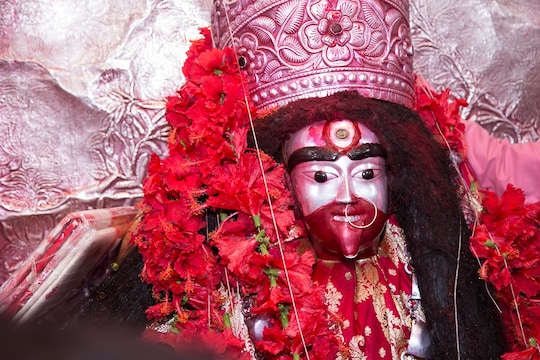
Tara Jayanti celebrates the sacred appearance of Maa Tara, the second of the ten Mahavidyas. Observed on Chaitra Shukla Navami, this day holds immense significance for devotees of Shakti, practitioners of Tantra, and seekers of divine knowledge. Maa Tara, fierce and compassionate in equal measure, is worshipped as the goddess who liberates souls from the ocean of samsara and destroys ignorance at its very root.
Worshipped as Tarini, Neel Saraswati, Ugratara, and Ekajata, she is the supreme Shakti who grants liberation, speech, knowledge, and fearlessness to all who surrender at her lotus feet.
Who Is Maa Tara and What Does Her Name Mean
The name Tara comes from the Sanskrit root “tar,” meaning to cross over or to save. She is Tarini, the one who ferries her devotees across the turbulent ocean of worldly existence. Where darkness prevails, she appears as a ray of light. Where ignorance binds, she cuts through with the blade of jnana.
Maa Tara is also called Neel Saraswati, the blue goddess of speech and learning. She is Ekajata, the single-braided one of fierce single-pointed power. She is Ugratara, the terrifying form that destroys enemies of all kinds, both external and internal. In different regions and different Tantric lineages, she is approached through these forms, each revealing a different dimension of her grace.
Among the ten Mahavidyas, which include Kali, Tara, Tripura Sundari, Bhuvaneshwari, Chhinnamasta, Bhairavi, Dhumavati, Bagalamukhi, Matangi, and Kamala, Tara holds the second position. She belongs to the Kalikula tradition and is considered an expansion of Mahakali herself. Her skin is dark blue, symbolizing the infinite void. Her three eyes represent omniscience. She holds a lotus, scissors for severing karmic bonds, and a blue lotus of spiritual enlightenment.
The festival Tara Jayanti falls on Chaitra Shukla Navami and is observed with deep devotion across the Shakta tradition, particularly among tantric sadhakas, Vamachara practitioners, and devoted grihasthas seeking her protection and blessings.
Tithi, Paksha, and Timing of Tara Jayanti
When Tara Jayanti Falls
Tara Jayanti is observed on the Navami tithi of Shukla Paksha in the month of Chaitra. The waxing ninth day of Chaitra carries tremendous spiritual potency. According to the Mahakal Samhita, Maa Tara actually first appeared on Chaitra Shukla Ashtami, which is observed as Tara Ashtami. The night that follows, the night of Navami, is called Tara Ratri, the sacred night of Maa Tara’s power.
The Brahma Muhurta on this day, the period approximately ninety-six minutes before sunrise, is considered the most auspicious time to begin worship and sankalpa. Midnight holds special importance for tantric sadhakas, as Maa Tara’s energy is said to be most accessible during the night hours, particularly on Tara Ratri.
Devotees observe Chaitra month as deeply sacred, coming as it does at the commencement of the Hindu new year when cosmic energies are renewed and particularly receptive to sadhana.
Astrological Significance of Tara Jayanti
Planetary Influence and Cosmic Alignment
In Vedic Jyotisha, Maa Tara is closely aligned with Guru, the planet of wisdom, expansion, and dharma. Her Jayanti, falling in Chaitra, comes after the sun has entered Mesha Rashi, initiating a fresh solar cycle. This confluence of solar strength and Navami tithi creates a window of exceptional spiritual receptivity.
The concept of Tara Bala in Muhurta Shastra directly connects to Maa Tara’s influence. The Tara Chakra governs auspicious timings, and performing sadhana on her Jayanti aligns the practitioner’s personal Tara Bala with the cosmic current of her grace.
Remedial Influence Across Rashis
Worship of Maa Tara on this day is especially beneficial for those experiencing Guru dosha, as she embodies the highest vidya that Guru governs. Devotees facing Rahu-Ketu afflictions, chronic fears, litigation, or obstacles in education find her worship particularly potent. The Tantric tradition regards her as Neel Saraswati who counters delays and removes the veil of ignorance from afflicted minds.
Those suffering from pitru dosha are advised to perform charity and kanya puja on this day, as Maa Tara’s compassion extends to liberating both the devotee and their ancestral lineage. Infertility and unnatural troubles in family life are also among the afflictions that her worship is said to address.
Religious Significance of Tara Jayanti
Importance in Puranas and Tantric Texts
The scriptural roots of Tara Jayanti are found in sources including the Brahma Purana, Mahakal Samhita, Swatantra Tantra, Tara Rahasya Tantra, Mundamala Tantra, and the Jayadratha Yamala. These texts collectively establish Maa Tara as Adi Shakti, the primordial energy that existed even before creation took its present form.
According to the Brahma Purana, before the earth was fully formed, chaos and darkness reigned. Maa Kali’s sovereignty prevailed in that primordial turmoil. From within that darkness, a ray of divine light emerged, and that radiance came to be known as Tara. Because she appeared in such a formative, chaotic moment, she came to be called Mahatara, the great Tara, the supreme goddess of every living being.
Significance Across Sampradayas
For followers of Shaktism, Tara Jayanti is among the most important days in the calendar. She is Shakti in her most direct, uncompromising form, present not merely to bless but to transform.
For Shaiva devotees, her significance is inseparable from Bhagwan Shiva himself. She is his Shakti, the power behind the Tarakeshwara Rudravatara. The great Samudra Manthan legend establishes her as the one who saved Shiva himself, making her not merely Shiva’s devotee but his very sustaining force.
The Tantric lineages, both Dakshina Marga and Vama Marga, regard her Jayanti as the supreme sadhana day. Great saints including Maharishi Vashishtha, Vishwamitra, Gorakhnath, and even Ravana are said to have worshipped Maa Tara to attain knowledge, mastery of speech, and various siddhis. Maharishi Vashishtha’s sadhana was so complete that he is also called Vasistharadhita, the one who attained siddhi through Tara Mahavidya.
Which Form of Maa Tara Is Worshipped
The Three Primary Forms
Maa Tara is worshipped in three principal forms: Neeltara, the blue form associated with divine speech and learning; Ugratara, the fierce form that destroys enemies and removes obstacles; and Ekajata, the single-braided one representing undivided spiritual focus.
The Shaktipeetha at Tarapith in Birbhum district of West Bengal, situated on the banks of the Dwarka River, is the most sacred seat of Maa Tara. According to sacred tradition, the eyes of Goddess Sati fell at this location, which is why she is also known as Nayantara here. The swayambhu murti at Tarapith is among the most powerful Tantric seats in the entire country.
Another significant Shaktipeetha is the Ugra Tara temple in Mahishi village of Saharsa district in Bihar, where Maa Tara is worshipped alongside Ekajata and Neel Saraswati. It is at this very site that Maharishi Vashishtha completed his Tara Mahavidya sadhana. The Chinachara tantric method he employed became a foundational practice within this tradition.
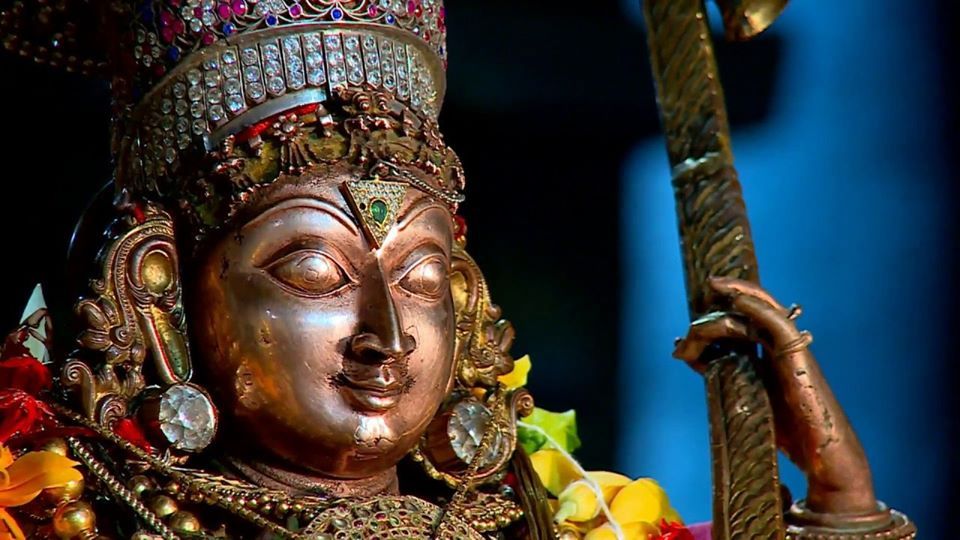
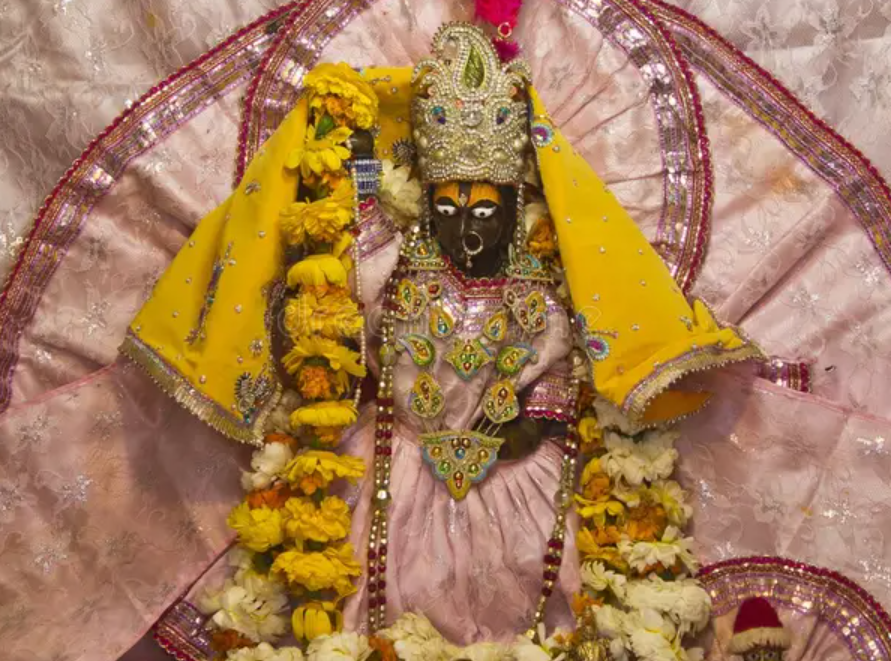
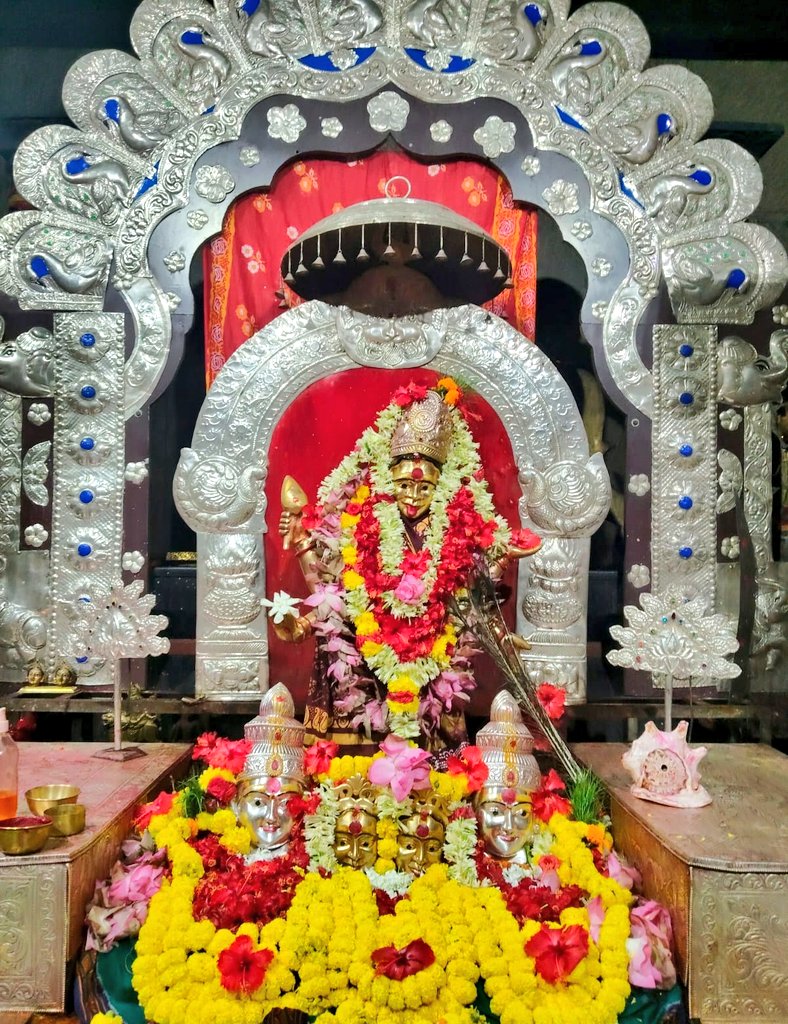
Maa Tara’s iconography is deeply symbolic. She stands upon a corpse, signifying her complete mastery over ego and death. Serpents adorn her body. She carries a garland of severed heads representing detachment from all illusion. Her tongue hangs out in the manner of Mahakali, and she holds a sword, a severed head, scissors, and displays the Abhaya Mudra, the gesture of fearlessness.
Sacred Stories and Katha of Tara Jayanti
The Story of Samudra Manthan and Maa Tara
When the devas and asuras churned the cosmic ocean in their quest for Amrit, the terrible Halahala poison emerged, threatening to consume all of creation. All three lokas, Swargaloka, Bhuloka, and Pataloka, turned in desperation to Bhagwan Shiva. He alone consumed the poison to preserve the universe. But Shiva could not swallow it, and the toxin settled in his throat, turning it blue. He became Nilakantha, and the pain was unbearable.
When Maa Parvati saw Shiva’s condition, she entered his body and absorbed the effect of the poison into herself, taking on a blue form. This blue form of Shakti, who saved Shiva and thereby saved all of creation, became known and worshipped as Neel Tara. She is the Shakti who does not merely stand beside Shiva but sustains him from within.
The Appearance of Maa Tara at Cholana River
The Swatantra Tantra and Mahakal Samhita describe how Maa Tara appeared on the western banks of the Cholana River, near the western shore of Mount Meru. The sacred Sanskrit verse records it thus:
Meroh Pashchimakule Nu Chotratakhyo Hrido Mahan. Tatra Jajne Svayam Tara Devi Nilasaraswati.
A demon named Hayagriva had stolen the Vedas and plunged creation into darkness. To slay this demon and restore cosmic knowledge, Maa Mahakali assumed a blue form. This blue form became famous throughout the universe as Maa Tara, the goddess who restores light where darkness has stolen wisdom.
The Katha of Tara Ratri
According to the Tara Rahasya Tantra, in the celestial realm of Ratnadvipa in Swargaloka, Maa Tara recited Vedic truths from her own mouth, greatly pleasing Bhagwan Shiva. He spoke to Maa Parvati and said that in the ancient times, after she destroyed the fierce Ravana, her form became celebrated as Tara across all three worlds.
At that time, her form was terrifying. She was naked, tongue extended, holding a sword, a severed head, a dagger, and displaying Abhaya Mudra. When she became aware of her own unclothed form, she tried to cover herself with her sword. At that moment, Brahma himself came forward and offered her a garment made of tiger skin, Vyaghra Charma. After this, the goddess became known throughout the world as Lambodari.
According to the Tara Rahasya Tantra, Bhagwan Rama was only the medium. It was Maa Tara, as the hidden destructive Shakti of Rama, who actually brought about the end of Ravana. And it is for this supreme power, knowledge, and potential that Tara Jayanti is observed.
Complete Puja Vidhi for Tara Jayanti
Preparation
On the evening before Tara Jayanti, the puja space must be cleaned thoroughly. Devotees should observe a light diet and maintain a sattvic mindset. Arrange all puja materials the previous evening: Tara Yantra, blue and white flowers, ghee deep, dhoop, panchamrit ingredients, rice mounds, and fruits.
Morning Rituals
Rise during Brahma Muhurta and take a bath using Gangajal or water with a few drops of Gangajal mixed in. Wear white unstitched or freshly washed clothes. Resolve not to consume grains and maintain silence as much as possible throughout the day.
Altar Setup and Puja Steps
- Sthana Shuddhi: Clean the worship platform with gomutra or clean water. Spread a pink cloth on the altar.
- Sankalpa: Sit facing west. Take water in the right palm, offer it while stating your name, gotra, and the intention of performing Tara Puja on Chaitra Shukla Navami for protection, knowledge, and liberation.
- Yantra Sthapana: Place the Tara Yantra at the center of the altar on four mounds of raw rice. Place a clove on each rice mound.
- Kalasha Sthapana: Place a copper or brass kalasha filled with water, topped with mango leaves and a coconut, near the yantra.
- Ganapati Puja: Begin with a brief invocation to Ganesha to remove obstacles from the puja.
- Navagrah Puja: Offer invocation to all nine planets, particularly Guru, before proceeding to the main worship.
- Avahana: Invoke Maa Tara into the yantra with the mantra “Om Aim Hreem Streem Taraai Namah.” Ring the bell gently three times.
- Abhisheka: Perform a sacred bath of the yantra with panchamrit: milk, curd, honey, ghee, and sugar water. Then bathe again with pure water.
- Vastra and Shringar: Offer the goddess blue or white cloth. Apply chandan tilak and kumkum. Offer blue lotus flowers and white flowers.
- Deepa and Dhupa Arpan: Light the ghee lamp and incense sticks. Hold the lamp in a clockwise direction before the yantra.
- Naivedya: Offer kheer, fruits, and mishri as bhog. Offer coconut and black sesame laddoo if available.
- Mantra Japa: Chant “Om Hreem Streem Hum Phat” or “Om Aim Hreem Streem Taraai Namah” 108 times using a rudraksha or crystal mala. Advanced sadhakas may complete full mala rounds as per their sankalpa.
- Stotra Patha: Recite the Tara Stotra and Tara Ashtakam in praise of her Mahavidya glory.
- Maha Aarti: Perform the aarti with a five-flame deepa while ringing the bell. Offer camphor aarti as the concluding step.
- Kanya Puja: Seat nine young girls representing the nine forms of Shakti. Wash their feet, offer them new clothes, food, and dakshina in reverence to Maa Tara.
- Prasad Vitaran: Distribute prasad to all family members and neighbors. The remaining puja materials, flowers, and other items are buried near a peepal tree.
The Tara Yantra, after completing the puja, is placed in the home’s treasury or safe, as it is believed to bring protection and prosperity to the household.
Vrat Observance on Tara Jayanti
Types of Fasting
Tara Jayanti vrat is observed from sunrise on Navami until the following Pratipada. Nirjala vrat, fasting without water, is undertaken by advanced sadhakas and tantric practitioners who have received proper initiation. For grihasthas, phalahar, a fruit-based fast consuming only fruits, milk, and dry fruits, is the prescribed form. Those who are elderly or unwell may observe a partial fast, abstaining only from grains and tamasic foods while consuming light sattvic meals.
Vrat Rules and Conduct
Throughout the day, devotees must abstain from grains, onion, garlic, non-vegetarian food, and tamasic substances. The mind must be kept focused on Maa Tara’s form. Avoid anger, idle speech, and unnecessary activity. Women seeking fertility and santaan sukha observe this vrat with particular devotion, as Maa Tara’s blessings are known to address these concerns when sought with sincerity.
Men observe this vrat primarily for vidya, vijay over enemies, mastery of speech, and success in endeavors requiring intellectual or creative power. Donation of blue-colored cloth and books to brahmins or deserving students on this day is considered particularly meritorious.
Breaking the Fast
Parana is done after the morning puja of the following day, Pratipada. Prasad received from the puja, along with fruits and kheer, forms the appropriate meal to break the fast. The vrat concludes with tarpan offered to ancestors, which is said to relieve pitru dosha.
Where Tara Jayanti Is Celebrated
East India
The heartland of Maa Tara’s worship is Tarapith in Birbhum, West Bengal. On Tara Jayanti, the temple witnesses some of the largest gatherings of Shakta devotees and tantric sadhakas in the country. Maha yagnas are performed in the names of all three principal forms, Ugra Tara, Neel Saraswati, and Ekajata. The swayambhu murti is especially worshipped during the evening aarti. Saharsa district in Bihar, at the Ugra Tara Shaktipeetha of Mahishi village, also sees special worship marking this day.
North India
In Varanasi, the Neel Saraswati shrines observe Tara Jayanti with stotra recitation and special abhisheka. Tantric orders based in Varanasi, one of the primary seats of Shakta Tantra, perform elaborate midnight puja on Tara Ratri. In Vindhyachal, which houses one of the prominent Mahavidya peethas, special worship of Maa Tara is also conducted.
South India
Temples dedicated to Shakti in Andhra Pradesh and Telangana observe Tara Jayanti with Devi puja, kanya puja, and annadana programs. Communities with deep Shakta traditions in Karnataka also mark this day with jagran and bhajan programs.
Central India
In Jabalpur, the Ugra Tara temple observes Tara Jayanti with elaborate rituals. Vam Tantra samghas across Central India conduct structured programs including Guru Vandana, Gau Vandana, abhisheka, Ganapati and Navagrah puja, Shri Tara Mool Mantra Maha Yagya, and bhandara for the needy.
Hindu Diaspora
Among Hindu communities in the United States, United Kingdom, Canada, Australia, and other countries, Tara Jayanti is observed in Shakta temples and at home with puja, mantra japa, and kanya puja wherever possible. Online jagran and stotra recitation have extended the reach of this sacred observance globally.
Charity and Remedies on Tara Jayanti
Dana and Its Importance
Charity performed on Tara Jayanti carries extraordinary phala. Annadana, the donation of food, and vastra daan, the gifting of clothes, are the two primary forms of charity prescribed for this day. These acts are said to remove obstacles in education, assist in the upliftment of the family, address pitru dosha, and resolve infertility related troubles.
Feeding the poor, distributing food to sadhus, and sponsoring bhandara in the name of Maa Tara all fall under the recommended daana. Donating blue clothes and books to students or brahmins pleases Maa Tara in her Neel Saraswati form and attracts her blessings for learning and eloquence.
Do’s and Don’ts
On this day, maintain purity of body and mind from the early morning. Speak truth. Avoid arguments and tamasic behavior. Worship nine young girls as forms of Maa Tara. Feed cows, which are also worshipped by many communities on this day. Light a ghee lamp and keep it burning through the night if possible.
Avoid iron utensils in puja. Do not consume tamasic food. Do not engage in violence, falsehood, or cruelty. Even a simple act of sincere surrender to Maa Tara on this day is considered sufficient to attract her grace, as her compassion is limitless.
Frequently Asked Questions About Tara Jayanti
What is Tara Jayanti? Tara Jayanti is the festival marking the divine appearance of Maa Tara, the second Mahavidya of the Dasha Mahavidya tradition. It is observed on Chaitra Shukla Navami and is one of the most significant days in the Shakta and Tantric calendar.
Why is Tara Jayanti celebrated? The festival commemorates the manifestation of Maa Tara on the banks of the Cholana River near Mount Meru, and her cosmic acts including saving Bhagwan Shiva during the Samudra Manthan and restoring the Vedas by slaying the demon Hayagriva.
Which goddess is worshipped on Tara Jayanti? Maa Tara is the primary deity worshipped on this day. She is approached in her three main forms: Neeltara, Ugratara, and Ekajata.
What is Tara Ashtami and Tara Ratri? According to the Mahakal Samhita, Maa Tara appeared on Chaitra Shukla Ashtami, which is observed as Tara Ashtami. The following night, the night of Navami, is called Tara Ratri and is particularly sacred for tantric sadhana and jagran.
Who are the famous saints associated with Tara Mahavidya? Maharishi Vashishtha, who is also called Vasistharadhita, is the foremost sadhaka of Maa Tara. He attained siddhi through the Chinachara tantric method. Vishwamitra, Gorakhnath, and Ravana are also cited in scriptures as great worshippers of Maa Tara.
What is the main mantra for Maa Tara worship? The primary mantra is “Om Hreem Streem Hum Phat.” Another widely used mantra is “Om Aim Hreem Streem Taraai Namah.” Advanced Ashtakshara mantra sadhana follows specific initiation through a qualified guru.
Where is the most important Shaktipeetha of Maa Tara? Tarapith in Birbhum district of West Bengal, on the banks of the Dwarka River, is the most celebrated Shaktipeetha of Maa Tara. The eyes of Goddess Sati are believed to have fallen at this location, and the goddess here is also known as Nayantara.
What is the significance of Maa Tara’s blue form? The blue form, Neel Tara, arose when Maa Parvati entered Bhagwan Shiva’s body to absorb the effect of the Halahala poison from the Samudra Manthan. The blue color also signifies the infinite void, cosmic consciousness, and the transcendent nature of her grace.
What fasting rules apply on Tara Jayanti? Sadhakas with initiation observe nirjala or full fast. Grihasthas observe phalahar, consuming only fruits and milk. All devotees abstain from grains, onion, garlic, and non-vegetarian food. The elderly and the unwell may observe a partial fast with sattvic food.
What charity should be done on Tara Jayanti? Annadana and vastra daan are the primary acts of charity. Donating blue cloth, books, and food to brahmins, students, and the poor is highly recommended. These acts relieve pitru dosha, remove educational obstacles, and attract the goddess’s blessings.
What is Kanya Puja on Tara Jayanti? Kanya Puja involves worshipping nine young girls as living manifestations of Maa Tara’s Shakti. They are offered new clothes, food, and gifts. This practice is central to the festival and represents reverence for Shakti in its most innocent and pure form.
Why is Tara Jayanti important for tantric sadhakas? Maa Tara is a Mahavidya who grants siddhis, mastery of speech, and liberation. Her Jayanti is the most powerful day in the year for Tara Mahavidya sadhana. Groups practicing Vam Tantra observe this day with full ritual protocol including maha yagya and midnight japa.
What are the seven powers of Maa Tara? According to the Puranas, Maa Tara possesses seven divine powers: Paratpara, Ateeta, Para, Chitpara, Tadteeta, Tadpara, and Sarwateeta. These represent her omnipresence and her capacity to transcend all levels of existence.
How does Tara Jayanti differ from Navratri worship? While Navratri is a broadly observed festival across sampradayas, Tara Jayanti is specific to the Mahavidya tradition and carries strong Tantric significance. The puja on this day is performed with Tara Yantra, specific Tara mantras, and in many traditions during late night hours, making it distinct in its character and audience.
Can women observe Tara Jayanti vrat? Yes, women observe Tara Jayanti vrat with great benefit. Women seeking fertility, protection of their family, and santaan sukha find particular grace through this vrat. The festival itself is a celebration of Shakti and womanhood, and the kanya puja at its heart honors the feminine divine in its earthly form.
Conclusion
Tara Jayanti stands as one of the most profound observances in the Shakta calendar. Maa Tara is not merely a deity of the Tantric texts. She is the mother who saves when no one else can, the light that appeared in the darkness before creation, and the Shakti whose compassion sustains Bhagwan Shiva himself.
From the Cholana River banks where she first appeared to the Tarapith temple where she has been worshipped across the ages, from the sadhana of Maharishi Vashishtha to the midnight jagrans of devoted grihasthas across the country, her presence has never dimmed. She grants knowledge to those who seek wisdom, speech to those who are silent in ignorance, protection to those surrounded by enemies, and liberation to those who long to cross the ocean of samsara.
To worship Maa Tara on her Jayanti with a sincere heart, a clean body, and a surrendered mind is to invite her directly into one’s life. She does not merely bless from a distance. She enters, transforms, and liberates. That is the eternal promise of Maa Tara, Tarini, the one who carries her devotees across.
ॐ श्री मात्रे नमः!
Help Us Keep This Guide Accurate
At Temple Connect, we regularly update our content to ensure you receive the most relevant and authentic information. If you’d like to suggest improvements, share regional traditions, or report any updates, we’d love to hear from you at connect@templeconnect.com
Follow us on our X platform.
Note to Readers: This article is intended for educational and devotional purposes. The information presented is based on traditional Hindu scriptures, contemporary religious practice, and scholarly research.
Individual observance may vary based on family tradition, regional custom, and personal circumstance. For specific guidance, especially regarding complex astrological remedies, please consult qualified priests, pandits, or Vedic astrologers. The health-related aspects mentioned are traditional beliefs and should not replace professional medical advice.