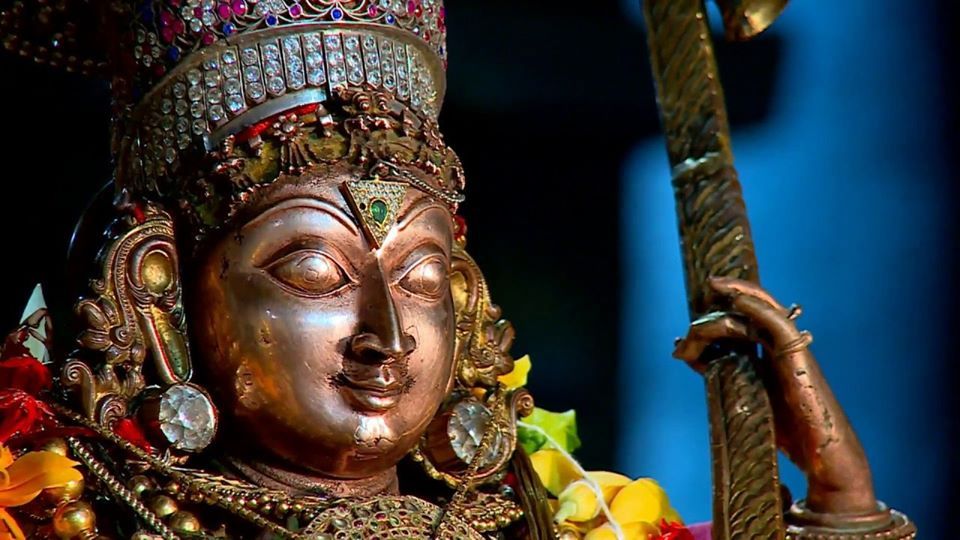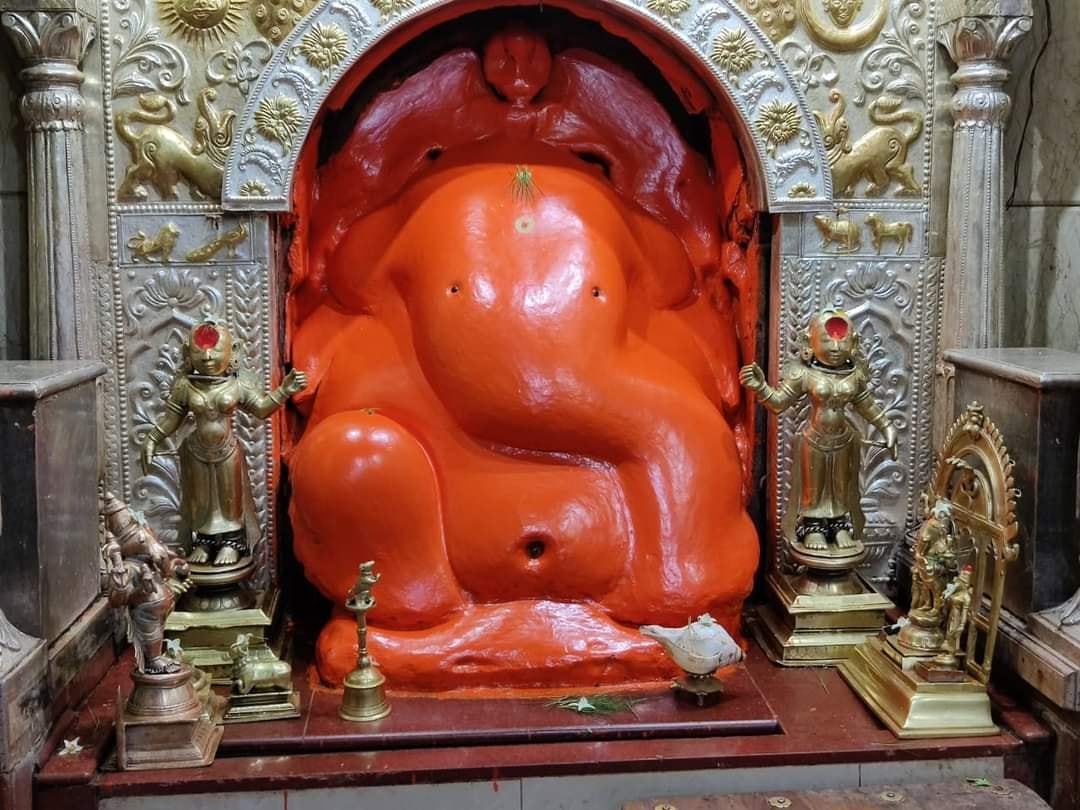
Yamuna Chhath: The Sacred Jayanti of Goddess Yamuna Maharani
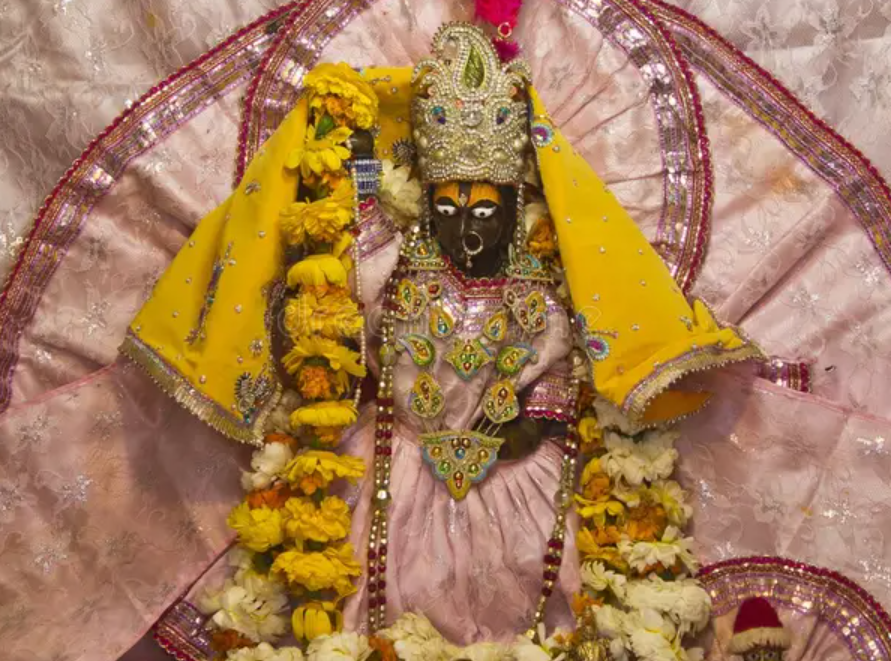
Yamuna Chhath is observed on the sixth lunar day of the bright fortnight in the month of Chaitra, marking the divine descent of Goddess Yamuna onto this earth. She is the daughter of Surya, the sister of Yama, and the beloved companion of Krishna across all of Braj. Devotees worship her not merely as a river but as a living, compassionate goddess who purifies souls, dissolves accumulated karma, and flows eternally as a form of divine grace made visible.
Yamuna Chhath commemorates the celestial descent of Goddess Yamuna, the sacred river who flows as a living form of divine compassion through the heart of Braj. Observed on Chaitra Shukla Shashti, this day marks both her Jayanti and her first appearance as a river on earth.
Who Is Goddess Yamuna
The name Yamuna comes from the root connected to Yama, her brother, though her nature stands in beautiful contrast to his. She is also called Kalindi, a name referring to her origin from the Kalinda mountain from where she flows, and she is addressed with the deepest reverence as Yamuna Maharani or Shri Yamuna Ji.
In both scriptural tradition and lived devotion, Yamuna is not a symbol or a metaphor. She is a fully present goddess. The Puranas and Bhakti literature consistently speak of her as Surya’s daughter, born of his wife Sanjna, carrying her father’s radiance in a form that cools rather than burns.
In Pushtimarg and Braj Vaishnava traditions especially, she holds an extraordinary place. She is the river on whose banks Krishna performed his divine lilas, the witness of Radha’s love, and the one whose waters still carry the fragrance of those eternal pastimes. To bathe in her, to offer flowers upon her surface, or even to meditate on her flow is considered an act of entering that sacred world directly.
Her dark complexion, which gives her the name Kalindi, is associated not with darkness but with the depth of cool, still water. It represents compassion without condition, grace without measure.
Tithi, Paksha, and Position in the Hindu Calendar
Yamuna Chhath falls on Chaitra Shukla Shashti, the sixth day of the bright fortnight in the month of Chaitra. This places it invariably within the period of Chaitra Navratri, making the day doubly charged with Shakti energy as the Navratri puja proceeds alongside the celebration of Yamuna’s Jayanti.
Chaitra is the first month of the Hindu lunar year in most regional Panchang traditions. Observing the Jayanti of a river-goddess as a purifying deity during the very first bright fortnight of the new year carries a significance that is both cosmic and personal. It is the year itself being washed clean.
The most auspicious time for the central puja and snan is the morning muhurat, particularly the hours around sunrise and through the forenoon. The evening aarti at the riverbank or at home holds its own special importance as lamps are lit and offered to her flowing waters.
The festival is also called Yamuna Jayanti, Yamuna Maharani Jayanti, and Yamuna Chhat in various regions, but all these names point to the same sacred occasion. It should not be confused with Chhath Puja of the Kartik month, which is dedicated to Surya and Chhathi Maiya and follows an entirely different four-day discipline.
Astrological Significance of Yamuna Chhath
Yamuna, as the daughter of Surya, carries a direct solar connection within Vedic astrology. The influence of the Sun is present in her very nature: she brings prana, vitality, and light, but in the form of water rather than fire, offering the sun’s healing power in a receptive and cooling form.
Chaitra Shukla Shashti arrives during a rising phase of the lunar fortnight, when the Shukla Paksha energy builds steadily toward fullness. When this falls within Navratri, the Shakti of the season is particularly elevated, making any act of worship or inner purification especially potent.
Astrology-oriented commentaries on this festival emphasize that worship of Yamuna on this day helps balance the jala tattva, the water element, within one’s chart and constitution. Those who carry imbalances related to Surya or who experience Ketu-related spiritual obstructions are particularly guided to perform snan, japa, and dana on this day.
For those whose Surya is weakly placed, bathing in the Yamuna or offering water with the appropriate mantras is considered a gentle, devotional remedy. The river herself, as Surya’s daughter, carries the capacity to soften the harshness of solar karma and transform it into clarity.
More broadly, Yamuna Chhath is considered beneficial for Vrishchika, Makara, and Mithuna rashis when emotional turbulence or ancestral karmic patterns are present, though the blessings of Yamuna Maharani are universally available to any soul that approaches her with sincerity.
Religious Significance of Yamuna Chhath
The Mahabharata contains references to the purifying power of the Yamuna, and later Puranic literature expanded extensively on her theological identity. She is counted among the seven sacred rivers, the Saptanadis, whose names are recited each morning during the ritual bath. In this invocation, she stands second only to the Ganga in many traditions.
In the Bhagavata Purana and the literature of Braj bhakti, her presence is woven into nearly every chapter of Krishna’s earthly pastimes. It was across the Yamuna that Vasudeva carried the infant Krishna through a stormy midnight to safety in Gokul. It was on her banks that the Rasa Lila unfolded. It was in her waters that Krishna destroyed Kaliya. She is not merely the setting of these stories. She is a participant.
The theological meaning of Yamuna Chhath is layered. On one level, it marks the day this divine presence descended to make herself accessible to all, replacing the need for impossible austerities with a simple act of faithful immersion. On another level, it celebrates the complementary nature of grace and justice: while her brother Yama administers karmic law without exception, Yamuna offers a path of purification, compassion, and release to those who approach her honestly.
The Phala-shruti associated with this day is clear across devotional texts: bathing in the Yamuna on Yamuna Chhath removes accumulated sins, grants peace to the souls of ancestors, and opens the gates of spiritual progress for those who combine snan with sincere inner surrender.
The Form of Goddess Yamuna Worshipped on This Day
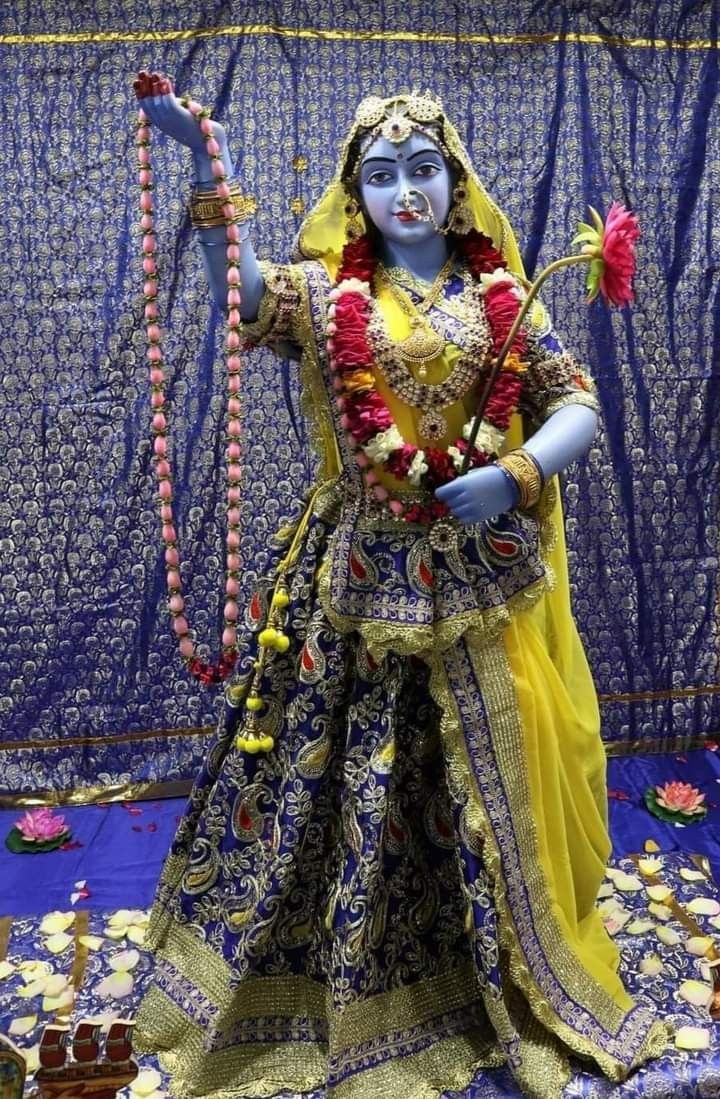
Yamuna Maharani is depicted as dark-complexioned, radiant with divine beauty, and deeply serene. She is often shown standing upon a tortoise, which represents the earth’s stability and the patient, unhurried nature of water. She holds a water pot in one hand and a blue lotus in the other, and her expression is one of unconditional welcome.
In Vaishnava temples and homes, particularly those following Pushtimarg, Yamuna is worshipped in close association with Krishna. The altar often holds both, acknowledging that they cannot truly be separated in the theology of Braj. Krishna’s leelas are inseparable from Yamuna’s presence, and so the festival naturally becomes a joint celebration.
In temples along the Yamuna, the river herself is the primary murti. The ghat becomes the altar, the flowing water becomes the tirtha, and the act of stepping into her with folded hands and a recited sankalpa becomes the formal act of worship. In homes where the river is not accessible, a kalash filled with water, ideally Yamuna water brought from a pilgrimage, serves as her presence on the domestic altar.
The Skanda Purana and the Brahma Vaivarta Purana both contain passages describing Yamuna’s divine form and the extraordinary merit of seeing, touching, or bathing in her waters. The Brahma Vaivarta Purana in particular describes her as one who destroys the heap of sins accumulated across lifetimes through the simple gift of her proximity.
Sacred Stories and Vrat Katha
The central story behind Yamuna Chhath is the divine descent. Yamuna, dwelling in the celestial realm as the daughter of Surya, looked upon the suffering of ordinary beings on earth and was moved by compassion. Beings were born, lived through confusion and attachment, accumulated karma, and suffered consequences they did not understand. The paths of austerity and ritual required to purify these accumulated impressions were beyond the reach of most.
Moved by this sight, Yamuna descended to the earth on Chaitra Shukla Shashti, manifesting as a river that would carry the purifying power of her divine grace in a form accessible to everyone, rich or poor, learned or simple. All that would be required is a willing heart and the act of stepping into her waters.
This is why the day is celebrated as her Jayanti. It is the day the goddess chose the earth.
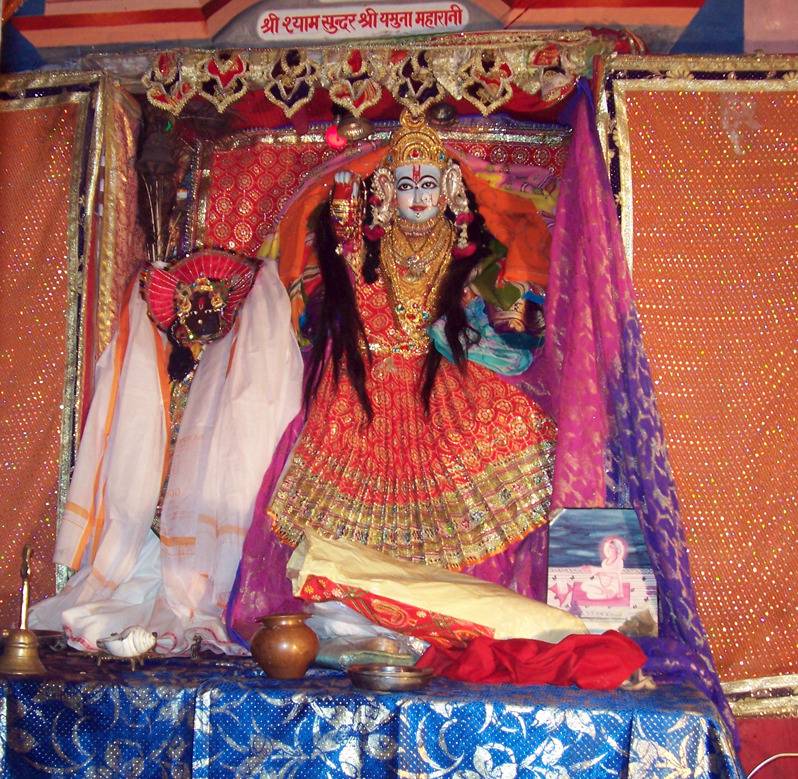
The second strand of narrative woven into Yamuna Chhath comes from her relationship with Yama. The stories of Bhai Dooj describe Yamuna as having longed for her brother’s visit, and when Yama finally came to see her, she received him with such love and celebration that he granted her a boon: anyone who bathes in the Yamuna would be freed from fear of untimely death and would face his judgment with the lightness of a purified soul.
Yamuna Chhath draws on this theological truth, even though the formal Bhai Dooj ritual belongs to the Kartik month. The underlying meaning is always present: Yamuna is the compassionate counterbalance to the inevitability of karmic justice. She does not eliminate consequence. She dissolves its weight through grace.
Contemporary vrat kathas told in households and on pilgrimage describe devotees in crisis, ill or burdened by misfortune, receiving guidance to observe this fast with sincerity. They go to the river before sunrise, offer milk and flowers, spend the day in japa and charity, and light rows of lamps at dusk. The stories consistently end not with magical reversals but with a gradual clearing, an inner settling, a sense that the weight has been lifted and life can flow again.
Complete Puja Vidhi for Yamuna Chhath
Preparation the Previous Evening
Begin by cleaning the home or the space near the ghat with care. Decorate the worship area with rangoli made of rice flour or flower petals. Arrange the puja items in advance: a copper or brass kalash, yellow and white flowers, kumkum, turmeric, akshata, sandal paste, camphor, ghee lamps, incense, seasonal fruits, milk-based sweets, coconut, betel leaves, and mango leaves for the kalash.
If Yamuna water is available, fill the kalash with it. Otherwise, use clean, pure water with the manasic intention that it carries her divine presence.
Morning of Yamuna Chhath
Wake before Brahma muhurta. Bathe, dress in clean and light-colored clothes, and face east or toward the river if nearby.
Step 1: Desha-Kala Sankalpa Sit in a clean place, take a small amount of water in the right palm, and recite the sankalpa, stating your name, gotra, location, the tithi, and your intention for the puja. Let the water fall.
Step 2: Kalash Sthapana Place the copper kalash filled with pure water on a small raised platform. Insert five mango leaves in the mouth of the kalash and place a coconut on top. Draw the image of Yamuna Maharani in your mind as you prepare this.
Step 3: Avahana Invoke the goddess into the kalash with folded hands, reciting her names: Yamuna Maharani ki Jai, Kalindi ki Jai, Surya Putri ki Jai. Invite her to accept your worship and be present in your home.
Step 4: Padya and Arghya Offer water symbolically for washing the feet of the goddess, then for her hands, then offer arghya, a cupped palm of water lifted and gently poured as an act of reverence.
Step 5: Pushpa Samarpana Offer fresh flowers, especially yellow or white. Place them before the kalash with full attention and love.
Step 6: Dhupa and Deepa Light the incense and ghee lamp. Move the lamp in gentle circular motions before the kalash as an act of illumination and reverence.
Step 7: Naivedya Offer milk, fruits, and sweets. Place them before Yamuna Maharani and mentally offer them as you would offer a meal to a beloved guest.
Step 8: Yamuna Mahima Patha Read or listen to the Yamuna Ashtakam or passages from the Yamuna Mahatmya. If a formal text is not available, simply recite her names and sit quietly in awareness of her presence.
Step 9: Tarpan for Ancestors Using water from the kalash, offer small amounts with cupped palms and invoke departed ancestors by name, asking that Yamuna’s grace bring them peace and upliftment.
Step 10: Aarti Perform the aarti with a ghee lamp, circling it before the kalash in a slow, conscious manner. Sing or recite the Yamuna Aarti with devotion.
Step 11: Pradakshina and Prarthana Circumambulate the worship space once or three times. Then offer a simple prayer in your own words, surrendering your concerns and expressing gratitude.
Step 12: Prasad Vitarana Distribute prasad to family members and, if possible, to neighbors or those in need. The act of giving prasad is an extension of the goddess’s own generosity.
Evening Ritual
At dusk, light rows of small oil lamps along the riverbank or along the boundary of your home if you are not near the river. Offer flowers and floating diyas on the water. Sing Yamuna kirtans or simply sit in quiet gratitude as the lamps illuminate the space around you.
Vrat Observance: Fasting Rules and Inner Discipline
The Yamuna Chhath vrat is understood as both an outer fast and an inner process of cooling and cleansing. The river, which flows without stopping and without complaint, absorbing the world’s impurities and purifying them, is the inner model for what the devotee undertakes on this day.
Types of Fasting
Those who are healthy and capable observe nirjala or a near-nirjala fast, consuming nothing from sunrise until the completion of the evening aarti. This complete abstention is considered the most complete form of surrender on this day.
Those with health concerns, elderly devotees, or those managing demanding physical responsibilities observe phalahar, consuming only fruits, milk, and light sattvic items once during the day, typically in the late afternoon.
A partial fast is also accepted for those for whom phalahar is not practical, with the understanding that even a conscious reduction of tamasic food and a day oriented toward japa and devotion constitutes a meaningful observance.
Daytime Practice
Throughout the day, avoid tamasic foods, anger, harsh speech, and distractions. Spend time in japa of Yamuna’s names or the Yamuna Ashtakam. Feed cows, offer grains to birds near the river, or donate food to those in need as acts of seva.
Parana
The fast is broken after the evening aarti with prasad and a light sattvic meal. Many families share this meal together, marking the end of the day’s observance with gratitude.
Astrological Note on the Vrat
The vrat performed with sincerity is understood to strengthen Surya’s positive influence in the horoscope and to dissolve karmic blockages associated with ancestral debts. The act of tarpan during this vrat carries particular weight because Yamuna’s blessing extends to the worlds beyond, easing the karmic condition of departed souls in the devotee’s lineage.
Where Yamuna Chhath Is Celebrated
North India
The most intense celebrations occur in the Braj region, particularly in Mathura and Vrindavan. Devotees throng the ghats of Vishram Ghat in Mathura and Kesi Ghat in Vrindavan before sunrise. Priests perform elaborate pujas on the riverbanks. Processions, kirtans, and collective aartis fill the day and evening. Boat rides with flower offerings are a beloved part of the celebration here.
In Gokul, Govardhan, and surrounding villages, the festival is observed with a quieter but equally sincere intensity, as the river’s presence is woven into everyday life in these places.
In Delhi, where the Yamuna flows through the city, devotees gather at the ghats and perform snan despite the river’s current condition, holding the theological identity of the goddess above the physical state of her waters. Community aarti events are organized by temples and religious trusts.
In Prayagraj, where the Yamuna meets the Ganga at the Sangam, the day is observed with snan at that sacred confluence.
Other Regions
Across North India, wherever devotee communities maintain a connection to Braj traditions, Yamuna Chhath is observed with home pujas, kirtans, and the setting up of a kalash in honor of Yamuna Maharani.
In South India, particularly among Telugu, Kannada, and Tamil Vaishnava communities, the Jayanti of Yamuna is observed through temple pujas and recitations of her glories within the broader Navratri observance of Chaitra.
For the Hindu diaspora abroad, the festival is marked through community satsangs, online kirtans, and home pujas where Yamuna water brought from Mathura or Vrindavan is used, or where the kalash is consecrated with sankalpa and mantra in her name.
Famous Temples
The Sri Yamuna Maharani temple in Vrindavan, the ghats of Mathura where Yamuna worship is an inseparable part of daily life, and the various Radha-Krishna temples across Braj that include Yamuna in their daily worship routines are the primary centers. Many temples in Varanasi, Haridwar, and Prayagraj also mark the day with special abhishekam and Yamuna Mahatmya patha.
Charity, Remedies, and Dos and Don’ts
Recommended Charity on Yamuna Chhath
Donating food, especially cooked rice and dal, to the hungry is considered highly meritorious on this day. Feeding cows and offering grain to birds near the riverbank are simple acts of seva that carry the spirit of the festival outward.
Distributing milk-based sweets as prasad to children and to those in need reflects Yamuna’s own nature as a nourishing and generous presence. Offering ghee lamps at the river or at a Yamuna or Krishna temple in the evening is a form of daan that is particularly connected to this festival.
Donating water-related items, copper vessels, white or blue cloth, or helping fund the maintenance of river ghats are also mentioned as appropriate dana for this day.
Astrological Remedies
Those with Surya-related difficulties in their chart are advised to offer water to the sun at dawn after bathing and then perform their Yamuna worship. Chanting the Aditya Hridayam or the Surya Ashtottara in the morning before the main puja is considered a complementary practice.
For those seeking relief from Pitru Dosha, the Yamuna tarpan performed on this day with sincerity and the recitation of the ancestors’ names is considered especially effective.
Dos
Wake before sunrise and complete your snan early. Wear clean, light-colored clothes throughout the day. Maintain silence or minimal speech during the puja. Keep the mind anchored to Yamuna Maharani’s name and qualities. Offer whatever you can with genuine love rather than a transactional mindset.
Don’ts
Avoid consuming tamasic food even if you are not fasting fully. Do not engage in arguments, harsh speech, or harsh thoughts on this day. Avoid wasting water, which carries a deeper meaning on a day that honors the goddess of a river. Do not approach the puja with the attitude of a transaction.
Frequently Asked Questions
What is Yamuna Chhath? Yamuna Chhath is the annual celebration of the divine appearance of Goddess Yamuna on earth. It falls on Chaitra Shukla Shashti and is observed as her Jayanti with snan, puja, fasting, and aarti.
Why is Yamuna Chhath also called Yamuna Jayanti? Because the day commemorates the birth and descent of Goddess Yamuna from the celestial realm onto earth. The two names, Yamuna Chhath and Yamuna Jayanti, refer to the same occasion.
Which deity is worshipped on Yamuna Chhath? Goddess Yamuna, also called Kalindi and Yamuna Maharani, is the central deity. In Vaishnava homes and Braj temples, Krishna is also worshipped alongside her, acknowledging her inseparable connection to his lilas.
What is the significance of bathing in the Yamuna on this day? A bath in the Yamuna on Yamuna Chhath is believed to remove accumulated sins, bring peace to the souls of ancestors, dissolve karmic burdens, and open the devotee to divine grace. The scripture and the living tradition both confirm this consistently.
Where is Yamuna Chhath celebrated most intensely? Mathura, Vrindavan, Gokul, and other Braj region areas along the Yamuna are the primary centers. Delhi and Prayagraj also have meaningful observances, and devotees across India and abroad observe it through home pujas.
How is Yamuna Chhath different from Chhath Puja? Chhath Puja of the Kartik month is a four-day festival dedicated to Surya and Chhathi Maiya and follows a strict discipline involving nirjala fasting and standing in water. Yamuna Chhath falls in Chaitra and is entirely focused on Goddess Yamuna. They share no ritual overlap.
What is the fasting rule for Yamuna Chhath? The full vrat involves fasting from sunrise until the evening aarti is completed. Those who are healthy typically observe nirjala or near-nirjala. Elderly devotees and those with health concerns observe phalahar. The fast is broken after evening aarti with prasad.
Can those who are not near the Yamuna river observe this festival? Yes. A kalash filled with pure water, consecrated with sankalpa and Yamuna’s names, serves as her presence on the home altar. Many devotees use Yamuna water brought from Mathura or Vrindavan for this purpose.
What is offered to Yamuna Maharani during the puja? Yellow and white flowers, milk-based sweets, fruits, milk, honey, turmeric, kumkum, sandal paste, ghee lamps, incense, and water from the river or a consecrated kalash are the primary offerings.
What is the significance of the evening lamp ritual on Yamuna Chhath? Lighting oil lamps and floating them on the river at dusk is one of the most visually powerful expressions of the festival. It symbolizes the illumination of the inner self through Yamuna’s grace and is a communal act of gratitude and devotion.
Is Yamuna Chhath related to the Yama-Yamuna story of Bhai Dooj? The mythological connection exists: Yamuna is Yama’s sister and the story of their bond is part of her broader theological identity. Yamuna Chhath carries the implication of her compassion as a counterbalance to Yama’s justice, though the formal sibling ritual of Bhai Dooj belongs to Kartik Shukla Dwitiya.
What charity is recommended on Yamuna Chhath? Feeding the hungry, donating food, distributing milk sweets as prasad, feeding cows, offering ghee lamps at the river or temple, and contributing to ghat maintenance or river protection efforts are all considered appropriate acts of dana on this day.
What does Yamuna Chhath mean astrologically? As the daughter of Surya, Yamuna’s Jayanti is considered particularly beneficial for those with solar imbalances or Pitru Dosha in their charts. The day supports the balancing of the jala tattva and is recommended for Surya-related remedies, tarpan, and japa.
What is the connection between Yamuna Chhath and Chaitra Navratri? Yamuna Chhath falls on the sixth day of Chaitra Navratri, and the two observances occur simultaneously. The Shakti energy of Navratri deepens the significance of worshipping Yamuna as a Shakti-form of the divine on this day.
What inner quality does Yamuna Chhath invite the devotee to cultivate? Yamuna’s own nature, her coolness, her constancy, her endless willingness to absorb and purify, is offered as a model for the devotee. The festival invites a gentle, flowing approach to life’s difficulties, a readiness to forgive, and the cultivation of bhakti that moves without obstruction toward the divine.
Conclusion
Yamuna Chhath is one of those sacred occasions where theology, ecology, bhakti, and personal sadhana meet at the edge of a river. Goddess Yamuna is not simply a festival deity who appears once a year. She flows without pause, offering purification to every soul that approaches her with honesty. Chaitra Shukla Shashti is the day we formally remember that this offering exists, that it has always existed, and that it was made out of love.
To observe Yamuna Chhath is to enter the stream of that love. Whether you stand at Kesi Ghat with the pre-dawn mist rising off the water, or whether you sit before a kalash in a city apartment far from Braj, the act of invoking her name with a sincere heart carries you into the same sacred space.
She is Surya’s daughter, carrying light in the form of water. She is Yama’s sister, offering the softness of grace where only justice might otherwise reach. She is Krishna’s companion, present at every divine pastime of Braj. And she is the river flowing toward the sea, patient, continuous, and utterly forgiving.
May every devotee who observes Yamuna Chhath with sincerity experience the cooling of whatever burns within them, the settling of whatever has been restless, and the quiet joy of a life washed clean by the grace of Yamuna Maharani.
Yamuna Maharani ki Jai!
Help Us Keep This Guide Accurate
At Temple Connect, we regularly update our content to ensure you receive the most relevant and authentic information. If you’d like to suggest improvements, share regional traditions, or report any updates, we’d love to hear from you at connect@templeconnect.com
Follow us on our X platform.
Note to Readers: This article is intended for educational and devotional purposes. The information presented is based on traditional Hindu scriptures, contemporary religious practice, and scholarly research.
Individual observance may vary based on family tradition, regional custom, and personal circumstance. For specific guidance, especially regarding complex astrological remedies, please consult qualified priests, pandits, or Vedic astrologers. The health-related aspects mentioned are traditional beliefs and should not replace professional medical advice.